
Brenner Base Tunnel Breakthrough Unites Italy and Austria Beneath the Alps in 2026
Excavation teams achieved a landmark breakthrough in the Brenner Base Tunnel on July 28, 2026, linking Italy and Austria beneath the Alps and reshaping future north–south rail travel.

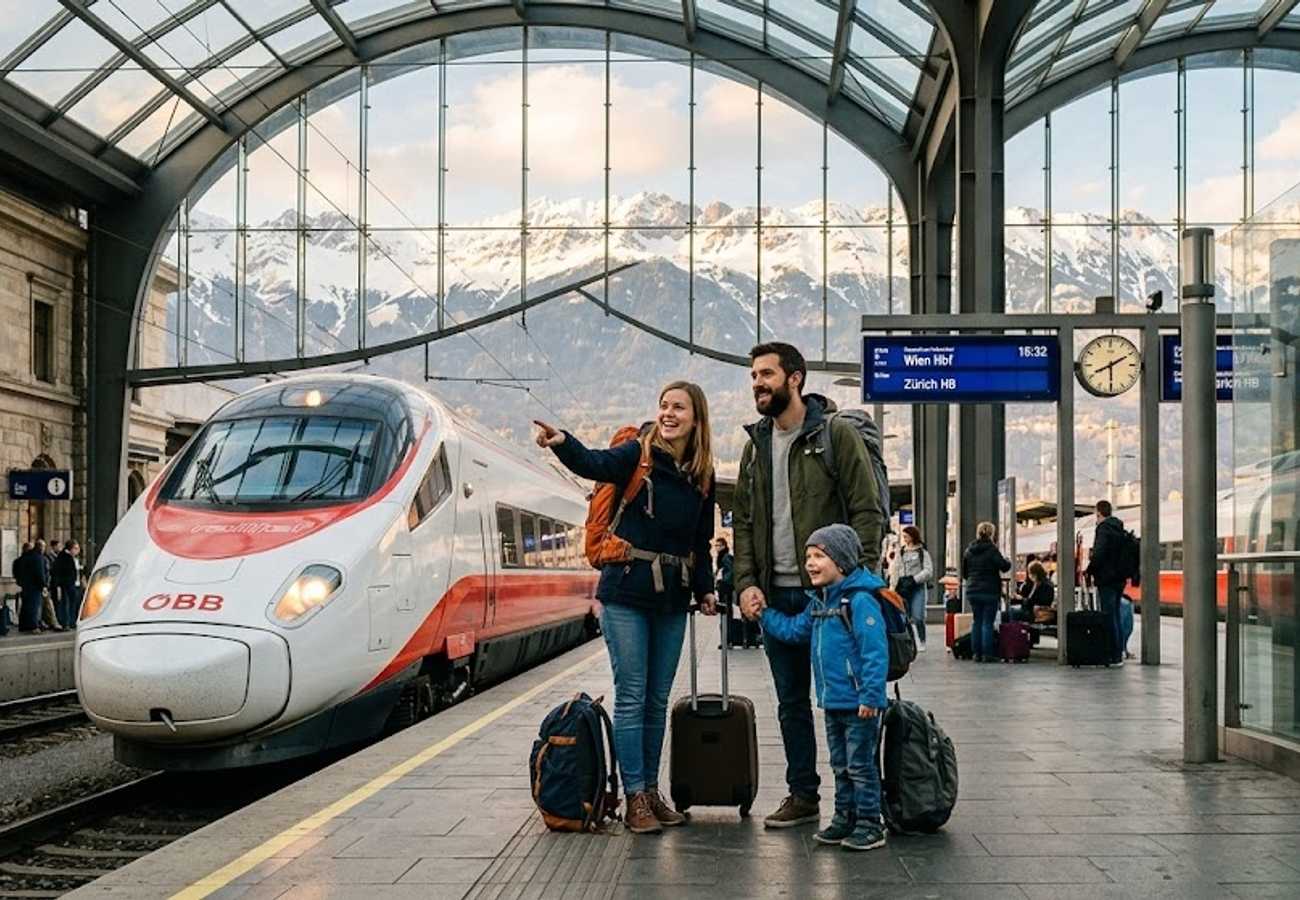
Image generated by AI
On July 28, 2026, excavation crews achieved a historic breakthrough in the Brenner Base Tunnel, linking the main rail tubes between Austria and Italy beneath the Alps. This milestone creates a continuous underground rail link for the first time, setting the stage for halved travel times between Innsbruck and Fortezza.
Historic Link Beneath the Alps
The latest breakthrough took place on July 28, 2026, in construction lot H53 Pfons–Brenner on the Austrian side of the project. Here, drill-and-blast excavation from the north met the already completed main tunnel sections from the Italian lot H61 Mauls 2–3. Publicly available information from the project company and construction consortia indicates that the western and eastern main tubes both reached the border almost simultaneously, creating a continuous underground rail link between the two countries for the first time.
This new connection builds on an earlier cross-border breakthrough in the exploratory tunnel, achieved in 2025, but extends the achievement to the twin main railway tubes that will carry passenger and freight trains. Project updates describe it as a decisive step toward completing what is planned to become one of the world's longest railway tunnels, at around 55 kilometers between Innsbruck in Austria and Fortezza in Italy.
Reports from regional authorities in Tyrol and South Tyrol characterize the event as historic for Alpine transport policy, closing a key gap in the north–south corridor that links Scandinavia and central Europe with the Italian peninsula. With excavation now continuous under the Brenner Pass in all three parallel tubes, attention is expected to shift increasingly from rock removal to lining, fit-out, and systems installation.
Engineering Milestone for Europe's Longest Base Tunnel
The Brenner Base Tunnel is designed as a twin single-track tunnel with a central exploratory and service tube, running mostly flat deep under the mountain massif to avoid the steep gradients of the existing Brenner railway. Project data in public reports show that the newly connected Austrian lot H53 Pfons–Brenner includes approximately 25 kilometers of main tunnel excavation, plus several additional kilometers of connecting structures and inner linings.
Construction updates indicate that the Austrian breakthrough involved some of the last remaining sections of drill-and-blast tunneling on the project, complementing extensive use of tunnel boring machines elsewhere. Two large tunnel boring machines, known as Olga and Wilma, have been advancing from the Innsbruck area toward the border, with project notes earlier in 2026 highlighting their progress as the final phases of mechanized excavation for the cross-border scheme.
The breakthrough also confirms the geometric accuracy of years of survey and design work. Crews starting from opposite sides of the Alps had to align within centimeters after advancing through complex geology and varying rock conditions. Technical briefings from contractors and engineering firms involved in the work point to significant use of 3D modeling, monitoring systems, and adaptive excavation methods to keep the drives on course.
Transit Schedule and Route Specifications
| Route Parameter | Specification Details |
|---|---|
| Total Tunnel Length | Approximately 55 kilometers |
| Endpoints | Innsbruck, Austria to Fortezza, Italy |
| Tunnel Configuration | Twin single-track tubes with central exploratory/service tube |
| Breakthrough Date | July 28, 2026 |
| Austrian Construction Lot | H53 Pfons–Brenner (approx. 25 km of main excavation) |
| Italian Construction Lot | H61 Mauls 2–3 |
| Excavation Machinery | Tunnel boring machines Olga and Wilma (Austrian side) |
| Expected Opening | Early 2030s |
| Projected Travel Time | Roughly halved between Innsbruck and Fortezza compared to existing railway |
Traveler Logistics Guide
From a ground-level perspective, navigating the future transalpine rail network requires strategic planning. Once operational, the Brenner Base Tunnel will significantly alter connection times between southern Germany, Austria, and northern Italy. Travelers should anticipate a roughly 50 percent reduction in travel time between Innsbruck and Fortezza compared to the existing mountain railway.
When booking connections through Munich or Verona, optimal layover times will shift. It is advisable to maintain at least a 45-minute transfer window at major hubs like Innsbruck Hauptbahnhof or Verona Porta Nuova to accommodate potential platform changes for cross-border services. As the corridor integrates into the wider European timetable, direct high-speed services will likely replace current routes that require mountain-passenger train changes.
For digital transit policies, European travelers must prepare for the implementation of the European Travel Information and Authorisation System (ETIAS). While Schengen area residents will bypass standard border checks, third-country nationals utilizing the new Munich-Verona high-speed corridor must ensure their ETIAS authorization is linked to their passport prior to departure. Rail operators are expected to integrate digital ticketing systems that automatically verify these transit credentials at station gates, streamlining the boarding process for cross-border routes.
Infrastructure Impact Assessment
The breakthrough redefines regional connectivity by closing a critical gap in the Scandinavian–Mediterranean core network corridor. By running mostly flat deep under the mountain massif, the tunnel avoids the steep gradients of the existing Brenner railway. This design is engineered to shift heavy truck volumes from the Brenner motorway to rail, addressing air quality and noise issues in mountain valleys.
Transport analysts view the Brenner link as a central element of a continuous low-gradient rail spine through the central Alps. For logistics operators, the flat gradient allows for longer through trains, lower energy consumption, and fewer weather-related disruptions. However, the long-term benefits depend heavily on the Brenner North Access route in Germany, which is still navigating planning and political approval stages.
Environmental groups and local communities along the corridor continue to scrutinize both the base tunnel and its access routes, with debates focusing on territorial impacts, noise, and the distribution of costs and benefits between transit traffic and local residents. Published coverage in regional outlets indicates the breakthrough is a technical success but also a catalyst for renewed calls regarding modal shift targets, accompanying measures like rolling highway terminals, and stricter road pricing for heavy trucks.
From Construction Site to Future Alpine Rail Artery
With the main tubes now linked under the border, the Brenner Base Tunnel project enters a new phase. The raw underground shell must be transformed into a fully equipped railway. Next steps include waterproofing, concrete inner linings, track installation, catenary systems, ventilation, drainage, fire safety systems, and digital train control technology. Many of these activities can now proceed across long continuous sections, potentially allowing more efficient use of resources and equipment.
Attention is also turning to how the tunnel will be integrated into wider European rail timetables and freight corridors. Planning documents foresee coordinated upgrades on lines connecting Munich, Verona, and beyond. Rail operators and infrastructure managers are expected to refine service concepts over the coming years, balancing high-speed passenger trains, regional links, and freight paths through the new bottleneck-free alignment.
The July 2026 breakthrough beneath the Brenner Pass offers a tangible sign that this long-planned transformation of Alpine rail is moving from concept toward reality. While years of work remain before the first commercial trains pass through the new base tunnel, travelers and freight shippers from northern to southern Europe can now point to a continuous underground route that did not exist just days ago.
The physical connection of the Alps marks a new era for European transit, pending the finalization of the northern access routes.
Related Travel Guides
Disclaimer
This article is for informational and educational purposes only. It does not constitute legal, financial, or professional advice. While we strive to provide accurate and up-to-date information, travel policies, regulations, and conditions change rapidly. Always verify information with official sources before making travel decisions. Nomad Lawyer makes no representations about the accuracy, reliability, completeness, or suitability of the information provided. Readers should consult qualified professionals for advice specific to their circumstances. The views expressed in this article are those of the author and do not necessarily reflect the views of Nomad Lawyer.
Kunal K Choudhary
Co-Founder & Contributor
A passionate traveller and tech enthusiast. Kunal contributes to the vision and growth of Nomad Lawyer, bringing fresh perspectives and driving the community forward.
Learn more about our team →