
Bahia Surges 18.7% as Brazil Posts Record R$25.5 Billion Tourism Revenue in July 2026
Brazil's tourism economy reaches historic highs with R$25.5 billion generated in July 2026, fueled by Bahia's 18.7% growth and São Paulo's commercial lead.

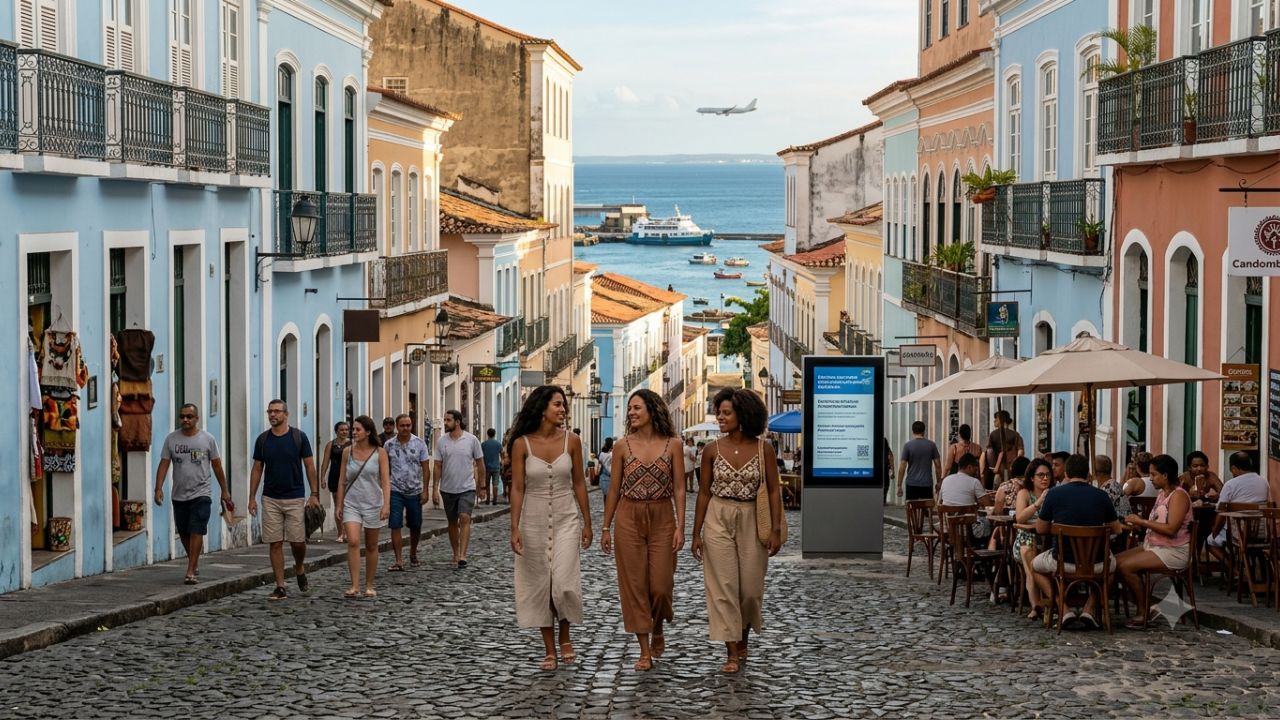
Bahia led Brazil's regional tourism expansion with an 18.7% revenue leap in July, while the nation recorded an all-time high of R$25.5 billion.
Brazil’s national travel economy achieved an unprecedented milestone in July 2026, generating a record R$25.5 billion in tourism revenue—the highest single-month July result recorded since tracking began in 2012. According to joint economic survey data released by the Federation of Commerce of Goods, Services and Tourism of the State of São Paulo (FecomercioSP) and the Brazilian Institute of Geography and Statistics (IBGE), the surge was propelled by an extraordinary 18.7% year-on-year revenue expansion in the northeastern state of Bahia, alongside massive corporate and leisure spending in the economic powerhouse of São Paulo.
With cumulative national tourism receipts reaching R$168.8 billion across the first seven months of 2026 (a 3.4% rise over 2025), economic analysts project that Brazil's total annual tourism revenue will approach the landmark R$300 billion threshold by the end of the year.
National Tourism Performance and Regional Revenue Breakdown
The nationwide growth reflects a dynamic balance between high-volume corporate commerce in the southeast and booming seasonal holiday leisure travel across the northeast and northern regions.
| Economic Indicator & Region | July 2026 Performance | Jan–Jul 2026 Cumulative | Strategic Travel Drivers |
|---|---|---|---|
| National Tourism Total | R$25.5 billion (Record) | R$168.8 billion (+3.4%) | Strong winter school holidays, domestic flights, corporate MICE |
| São Paulo (Revenue Leader) | ~R$7.0 billion | ~R$46.2 billion | Financial conventions, international flights, business travel |
| Bahia (Growth Leader) | R$759 million (+18.7%) | R$5.4 billion (+10.2%) | Post-São João festivals, Salvador culture, Costa do Descobrimento |
| Roraima (Northern Hub) | Robust regional gains | Cumulative +8.1% | Eco-tourism, indigenous culture, cross-border overland routes |
| Amapá (Amazonian Gateway) | Steady leisure inflows | Cumulative +8.0% | Amazon rainforest tours and river expeditions |
| Alagoas (Beach Corridor) | High resort occupancy | Cumulative +7.9% | Maceió beaches, Maragogi natural coral pools |
| Rio Grande do Norte | Coastal leisure growth | Cumulative +7.7% | Natal sand dunes, Pipa beach lifestyle getaways |
While Bahia recorded the most dramatic percentage leap, São Paulo retained its dominant position in total financial value, generating approximately R$7.0 billion in July alone—underscoring the dual-engine nature of Brazilian tourism.
Subsector Breakdown: Aviation and Mobility Drive Economic Inflows
Analysis of sector-specific spending shows that domestic transportation networks were the primary revenue generators during the mid-year winter holiday window:
- Commercial Aviation (R$8.1 Billion): Air transport was the single largest revenue driver in July, recording a 4.0% increase in domestic flight demand and a 2.4% increase in boarded passengers, underscoring the critical reliance on aviation across Brazil's continental landmass.
- Hospitality and Accommodations (R$5.6 Billion): Lodging providers captured the second-largest revenue share, though accommodation receipts contracted slightly by 1.4% year-on-year due to competitive room pricing and shifting short-term rental preferences.
- Gastronomy & Food Services (R$3.9 Billion): Restaurants, bars, and culinary tours saw sustained spending supported by regional gastronomic festivals and domestic family travel.
- Car Rentals and Ground Mobility (R$2.9 Billion): Rental vehicle fleets saw heightened demand for regional road trips along northeastern coastal highways and southeastern mountain corridors.
Bahia's Multimodal Transport Boom
Bahia’s stellar 18.7% surge was corroborated by robust mobility metrics across its air and land transport infrastructure:
- Airport Traffic: Bahia’s commercial airports handled more than 1.07 million passengers in July (up 6.6% year-on-year, excluding Porto Seguro).
- Intercity Bus Terminals: Salvador’s central bus station processed 483,000 travelers, marking a sharp 13% expansion in regional overland travel.
- Toll Highway Traffic: Concession road corridors registered over 3.2 million passing vehicles (+5.2%), reflecting high vehicle rental dispersal into beach enclaves like Praia do Forte and Itacaré.
- Capital Occupancy Trends: Interestingly, average hotel occupancy in Salvador dipped slightly from 65.2% to 61.7%, revealing that vacationers actively bypassed the urban capital to spend directly in decentralized coastal and rural resort communities.
Full-Year Forecast and Macroeconomic Outlook
FecomercioSP forecasts that sustained momentum through the southern hemisphere spring and upcoming summer carnival season could lift full-year 2026 revenue close to R$300 billion, representing approximately 4% overall growth.
Crucially, data from Brazilian enterprise agency Sebrae reveals that micro and small enterprises (MSMEs) account for roughly 97% of all officially registered tourism businesses in Brazil. Consequently, the record revenue dispersal across emerging states like Alagoas, Amapá, and Roraima provides vital economic resilience to regional hospitality operators, local guides, and artisanal communities far outside major metropolitan centers.
Related Travel Guides
- Florida Secluded Beaches and Island Escapes: Complete Travel Guide Beyond Resort Crowds
- UNDP Warns Compounding Fuel, Food Inflation and 9.5% Debt Burden Threaten Uzbekistan, Kenya, and Emerging Economies
- Spain’s Andalucía Region Forecasts 85% Hotel Occupancy as Poland Flight Boom Drives Rural Tourism in October 2026
Frequently Asked Questions
What was Brazil's total tourism revenue in July 2026?
Brazil generated an all-time record of R$25.5 billion in tourism revenue in July 2026, marking the highest single-month July result since official records began in 2012.
Which Brazilian state achieved the fastest tourism growth?
Bahia recorded the highest percentage growth in Brazil with an 18.7% year-on-year revenue increase in July, generating approximately R$759 million.
Which state generated the most total tourism revenue in Brazil?
São Paulo led all Brazilian states in absolute revenue, generating approximately R$7.0 billion in July 2026 through corporate travel, conventions, and dining.
Which tourism sector generated the highest revenue in Brazil?
Commercial aviation was the largest contributor to Brazilian tourism revenue in July, generating R$8.1 billion, followed by accommodations at R$5.6 billion.
Disclaimer
This article is for informational and educational purposes only. It does not constitute legal, financial, or professional advice. While we strive to provide accurate and up-to-date information, travel policies, regulations, and conditions change rapidly. Always verify information with official sources before making travel decisions. Nomad Lawyer makes no representations about the accuracy, reliability, completeness, or suitability of the information provided. Readers should consult qualified professionals for advice specific to their circumstances. The views expressed in this article are those of the author and do not necessarily reflect the views of Nomad Lawyer.
Raushan Kumar
Founder & Lead Developer
Full-stack developer with 11+ years of experience and a passionate traveller. Raushan built Nomad Lawyer from the ground up with a vision to create the best travel and law experience on the web.
Learn more about our team →