
Border Tourism Surge in Kashmir 2026: Transforming the Line of Control into Travel Hubs
Kashmir's frontier regions are shifting from military zones to tourism hotspots, as ceasefire stability opens the Line of Control to sustainable rural travel.

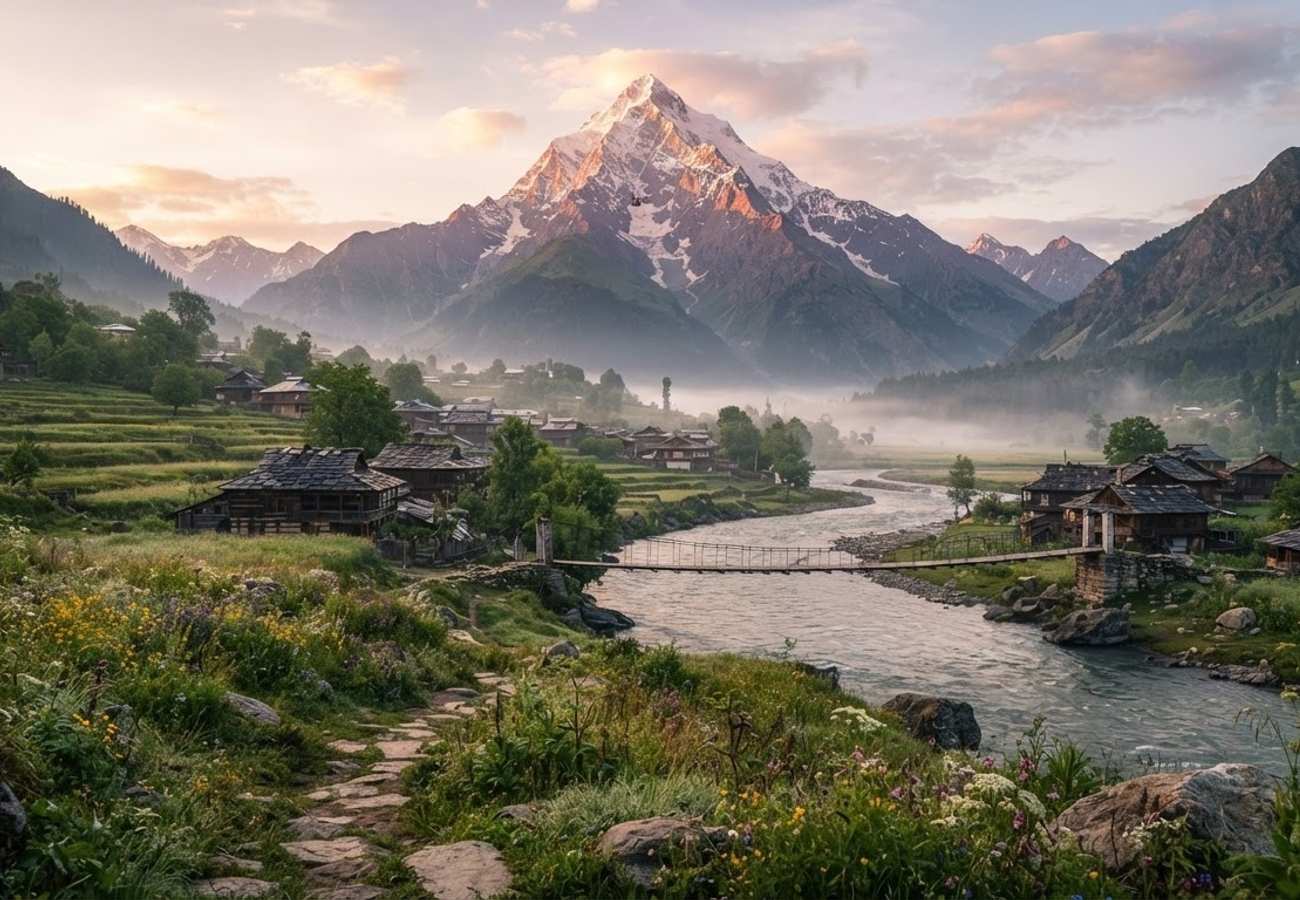
Image generated by AI
The frontiers of Kashmir are undergoing a radical identity shift, as former military strongholds along the Line of Control evolve into accessible destinations for global travelers.
For decades, the regions bordering the Line of Control (LoC) were defined by security checkpoints and geopolitical friction. Settlements like Keran, Tangdhar, Uri, and Gurez were largely omitted from travel maps, viewed primarily through the lens of military necessity.
A sustained ceasefire understanding and aggressive infrastructure investment have fundamentally altered this dynamic. These remote valleys are no longer just strategic buffers; they are becoming central to the resurgence of tourism across Jammu and Kashmir.
Navigating the Frontier: Key Destinations and Access
Traveling through the Himalayan frontiers requires a blend of logistical preparation and cultural sensitivity. The shift toward civilian access has opened several high-value sites for exploration.
- Tangdhar Valley: Access to this remote region involves traversing the Sadhna Pass. The route is noted for panoramic views of snow-capped peaks and alpine meadows, though travelers must account for security checkpoints and volatile mountain weather.
- Teetwal: Situated on the banks of the Kishanganga River, Teetwal has become a hub for cultural historians. The centerpiece of this area is the restored Sharada Temple, which now attracts a steady stream of pilgrims and scholars.
- Uri: Beyond its strategic military importance, Uri offers a window into regional diplomacy. The Aman Setu (Bridge) stands as a physical symbol of cross-border history and the potential for dialogue.
- Gurez Valley: Located in the far north, Gurez provides a rare opportunity to engage with the indigenous Dard-Shin community. The area is characterized by traditional wooden architecture and the dominant presence of Habba Khatoon Peak.
Economic Decentralization via Rural Tourism
The emergence of border tourism is doing more than just attracting visitors; it is redistributing wealth into previously neglected rural pockets. Tourism now represents a significant portion of the regional Gross State Domestic Product (GSDP).
The growth is being driven by a shift toward decentralized economic models. Rather than relying on large hotel chains, the region is leveraging government-sponsored homestay schemes. In villages like Keran, traditional homes are being repurposed into guest accommodations, allowing local families to benefit directly from the influx of tourists.
This transition is creating a sustainable employment pipeline for local youth, reducing the need for migration to urban centers and fostering a new generation of rural entrepreneurs.
From Military Necessity to Civilian Commerce
The evolution of the frontier can be measured by the change in infrastructure priorities. In previous decades, roads and facilities were built exclusively for troop movements and security logistics. Today, development is geared toward civilian commerce and hospitality.
| Feature | Previous Era (Conflict-Driven) | Modern Era (Tourism-Driven) |
|---|---|---|
| Infrastructure Focus | Military necessity and security | Civilian commerce and accessibility |
| Regional Perception | Zones of uncertainty and risk | Spaces of peace and exploration |
| Economic Driver | Government security spending | Decentralized rural entrepreneurship |
| Visitor Access | Strictly restricted/Military only | Organized civilian hospitality |
Sustainable Development and Human Resilience
Unlike traditional mass tourism, the trend toward the LoC is driven by "information gain"—a desire for travelers to witness history and engage with complex regional identities.
The movement emphasizes sustainable development. By visiting sites like the Kishanganga River, where water flows regardless of political boundaries, travelers are encouraged to reflect on human resilience. This niche sector prioritizes eco-friendly practices to ensure that the fragile Himalayan environment is preserved as these remote villages integrate into the national economic map.
The transition of Kashmir's borders proves that stability can turn landscapes of uncertainty into beacons of economic hope.
Related Travel Guides
Disclaimer
This article is for informational and educational purposes only. It does not constitute legal, financial, or professional advice. While we strive to provide accurate and up-to-date information, travel policies, regulations, and conditions change rapidly. Always verify information with official sources before making travel decisions. Nomad Lawyer makes no representations about the accuracy, reliability, completeness, or suitability of the information provided. Readers should consult qualified professionals for advice specific to their circumstances. The views expressed in this article are those of the author and do not necessarily reflect the views of Nomad Lawyer.
Preeti Gunjan
Contributor & Community Manager
A passionate traveller and community builder. Preeti helps grow the Nomad Lawyer community, fostering engagement and bringing the reader experience to life.
Learn more about our team →