
Border gridlock leaves passengers stranded as EU biometric rollout triggers airport chaos
Europe's new biometric Entry/Exit System is causing 2-3 hour passport queues in 2026, leaving passengers stranded and forcing airlines to depart with empty seats across major hubs.

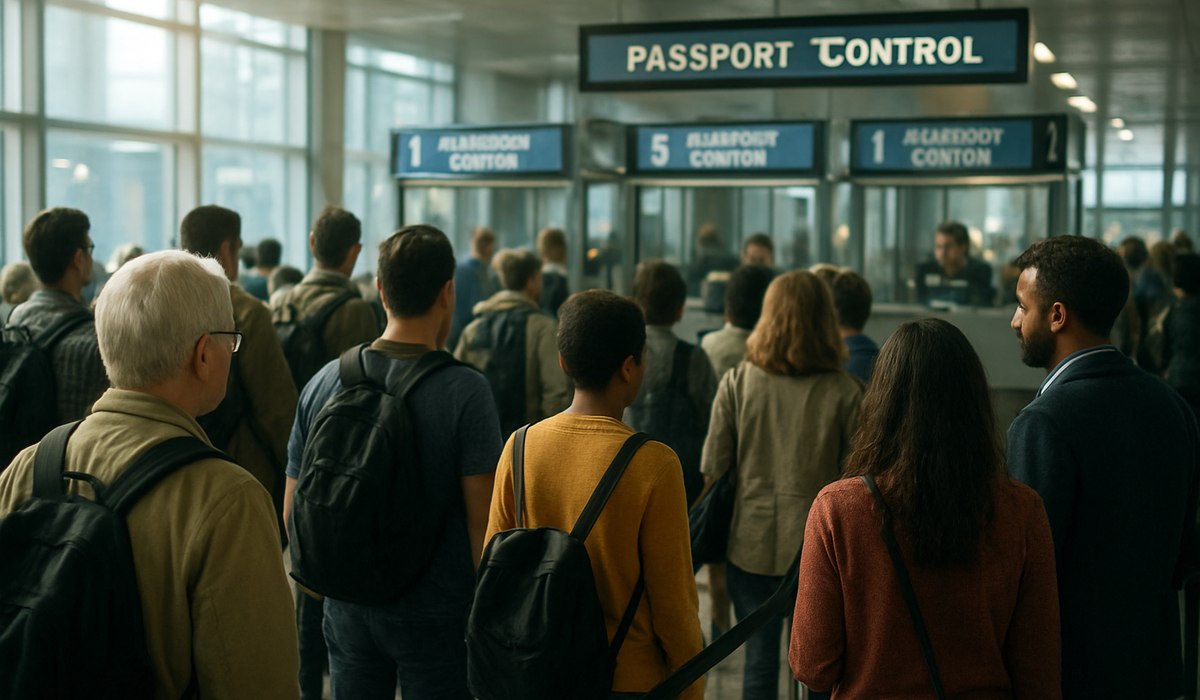
Image generated by AI
Europe's Biometric Border Rollout Creates Cascading Airport Delays
The European Union's full activation of its Entry/Exit System in April 2026 is creating unprecedented passport control bottlenecks, leaving thousands of non-EU travelers missing flights while airlines depart with dozens of empty seats. Major airports from Milan to Brussels report two-to-three-hour queues at external Schengen borders, far exceeding pre-rollout projections. The new biometric requirements—fingerprint scanning, facial photography, and passport digitization—were designed to enhance security but instead are overwhelming border infrastructure just as summer peak season approaches.
EU Entry/Exit System Causing Airport Chaos Across Europe
The European Union's Entry/Exit System mandates that all non-EU travelers undergo biometric processing when crossing external Schengen borders for the first time. Each passenger must complete facial recognition, fingerprint capture, and passport data entry—a process taking several minutes per person compared to seconds under traditional document checks.
At peak travel hours, these delays have multiplied dramatically. Major hubs including Paris Charles de Gaulle, Frankfurt, and Rome Fiumicino report processing queues exceeding two hours. Milan Linate Airport experienced the most severe disruption when an easyJet flight to Manchester departed with only 34 of 150+ booked passengers aboard in mid-April. Over 100 stranded travelers scrambled for hotel accommodations during school holidays, incurring costs reaching thousands of euros per person.
Passenger-rights organizations report that non-EU citizens bound for UK destinations face compounded delays, requiring both exit scans through the EU system and additional checks before boarding. This dual-layer processing has created perfect-storm conditions at congested terminals.
Staffing Shortages and Technical Failures Compound Processing Delays
Border post staffing levels have not kept pace with system complexity. When biometric kiosks malfunction—a recurring issue during the rollout phase—processing reverts to manual inspection, multiplying wait times exponentially. Industry reports indicate that several airports operated at only 60-70% staffing capacity during peak April periods.
Technical glitches have proven especially disruptive at Brussels Airport, where a system malfunction forced border agents to manually verify travelers for six hours. Spanish and Italian gateways reported similar incidents affecting afternoon and evening departure banks. Airlines operating from these hubs face impossible choices: depart on schedule with empty seats or delay departures and trigger crew duty-time violations.
The European Commission has acknowledged staffing gaps but indicated that member states bear responsibility for border resource allocation. This administrative disconnect has left airlines and airport operators without immediate solutions, even as passenger frustration mounts.
Airlines Warn of Summer Peak Season Disruption Risk
Industry associations predict that April's gridlock represents a preview of severe disruption ahead. Summer school holidays typically double passenger volumes at European hubs, yet border infrastructure remains unchanged. Airlines including Ryanair, easyJet, and Lufthansa have issued warnings that peak-season departures could routinely depart 30-50% empty unless border processing accelerates dramatically.
The economic impact on carriers is substantial. Each empty seat represents lost revenue, yet airlines cannot reduce scheduling without violating slot agreements. Many carriers are exploring operational workarounds, including scheduling flights during off-peak hours and rerouting non-EU passengers through less-congested secondary airports.
However, these solutions remain temporary. Widespread schedule changes would require coordination across the industry and approval from European slot coordinators—a process that typically requires months of planning. Passenger advocates warn that unless biometric processing improves, expect widespread cancellations or oversold flights as airlines attempt to manage passenger volumes against constrained border capacity.
Impact on Non-EU and UK-Bound Travelers Most Severe
Non-EU citizens are experiencing the harshest consequences of border gridlock. US, Canadian, Australian, and Asian passport holders report missing flights despite arriving 3-4 hours early. British travelers face compounded delays, as the UK's post-Brexit immigration arrangements now require separate processing from EU citizens.
Passengers on transatlantic and intercontinental services suffer most acutely. A 12-hour flight to New York might depart 45 minutes late due to border delays, cascading into missed connections on the US East Coast. Passengers rebooking through alternative routes often face additional costs and multi-day disruptions.
Travel advisories from passenger-rights groups recommend arriving at EU airports 4-5 hours early for international departures—nearly double traditional recommendations. However, many airlines maintain 3-hour check-in windows, creating false security for passengers unaware of new border processing realities.
Data on Border Processing Impact
| Metric | Pre-Rollout | April 2026 | Peak Season Projection |
|---|---|---|---|
| Average processing time per passenger | 15 seconds | 4-6 minutes | 8-10 minutes |
| Peak-hour queue length | 30-45 minutes | 120-180 minutes | 240-300 minutes |
| Flights departing under-capacity (Europe-wide) | 2-3% | 18-24% | 35-45% |
| Stranded passengers (mid-April estimate) | Baseline | 8,500+ | 50,000+ projected |
| Milan Linate empty seats (Manchester flight) | N/A | 116 passengers | Representative incident |
| Non-EU travelers missing connections | <1% | 7-12% | 20%+ at peak hubs |
What This Means for Travelers
Non-EU passengers navigating European airports in 2026 face significantly altered travel logistics. The border gridlock leaves travelers with critical decisions about timing and routing.
1. Extend arrival windows by 90-120 minutes minimum. Traditional recommendations to arrive 3 hours early no longer apply at biometric entry points. Plan for 4-5 hours before international departures.
2. Book flights during off-peak hours when feasible. Early morning and late-evening departures typically experience shorter border queues than midday rush periods.
3. Consider alternate routing through secondary airports. Smaller hubs like Venice, Nice, or Cologne may offer shorter queues, though this requires longer ground connections.
4. Research your specific flight's airport's current processing times using FlightAware. Many major airports now publish real-time border queue estimates.
5. Document evidence of delays for passenger compensation claims. While standard EU261 compensation may not apply to border-caused delays, airlines may provide care for documented stranded passengers.
6. Request airline confirmation that adequate time exists between connections. Some airlines still maintain pre-rollout connection time standards that no longer account for biometric processing.
7. Monitor EU border system updates before travel. European authorities may implement temporary processing exceptions or priority lanes that change week-to-week.
Frequently Asked Questions
Q: Will I receive compensation if I miss my flight due to border gridlock?
A: Standard EU261 regulations typically do not apply when government border agencies cause delays, as airlines cannot control state immigration procedures. However, airlines may still provide meals, accommodation, and rebooking as a goodwill gesture. Document all delays and request care anyway—policies vary by carrier.
Q: Which European airports currently have the longest border queues?
A: Milan Linate, Brussels, Madrid-Barajas, and Rome Fiumicino report the most severe gridlock. Check real-time data on airport websites or FlightAware before booking departures from these hubs during peak hours.
Q: Can I skip the biometric process if I'm just transiting Europe?
A: If you're connecting through Schengen airports without exiting the sterile zone, you may avoid full biometric processing. However, most international connections require exiting and re-entering
Disclaimer
This article is for informational and educational purposes only. It does not constitute legal, financial, or professional advice. While we strive to provide accurate and up-to-date information, travel policies, regulations, and conditions change rapidly. Always verify information with official sources before making travel decisions. Nomad Lawyer makes no representations about the accuracy, reliability, completeness, or suitability of the information provided. Readers should consult qualified professionals for advice specific to their circumstances. The views expressed in this article are those of the author and do not necessarily reflect the views of Nomad Lawyer.
Kunal K Choudhary
Co-Founder & Contributor
A passionate traveller and tech enthusiast. Kunal contributes to the vision and growth of Nomad Lawyer, bringing fresh perspectives and driving the community forward.
Learn more about our team →