
Southwest Airlines Bomb Threat at Houston Hobby Airport Triggers Multi-Hour Tarmac Delays in 2026
A reported bomb threat involving a Southwest Airlines flight at Houston's Hobby Airport caused extensive tarmac delays for multiple aircraft on August 17, 2026.

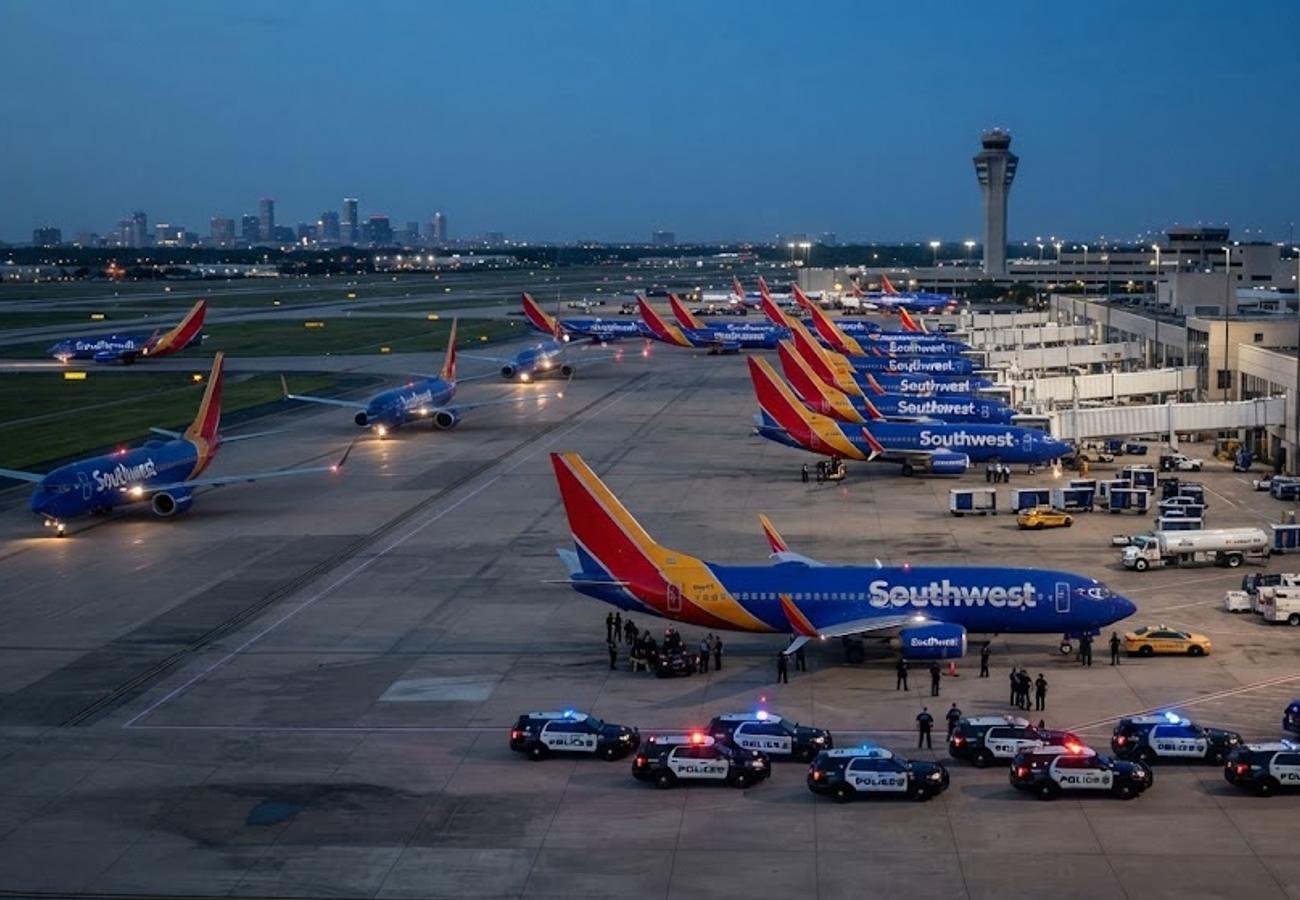
Image generated by AI
A reported bomb threat involving a Southwest Airlines aircraft at Houston’s William P. Hobby Airport resulted in passengers being confined to the tarmac for several hours on Saturday night, disrupting regional operations.
The security incident began around 7:30 p.m. on Saturday, August 17, 2026, when Houston police responded to a bomb threat linked to a specific Southwest Airlines flight. While the airport technically remained open, the security response created a bottleneck that brought gate operations to a near-standstill.
Incoming aircraft were held in designated airfield areas as law enforcement and airport personnel conducted a hazard assessment. This created a cascading effect; flights unrelated to the original threat were unable to access jet bridges, leaving hundreds of passengers stranded on the taxiways and ramp areas.
Operational Breakdown and Passenger Experience
Travelers reported being held on board for more than two hours after landing. While flight crews provided periodic updates citing air traffic control (ATC) and airport authority clearances, concrete timelines for disembarkation remained unavailable during the height of the crisis.
Despite the confinement, passengers confirmed that aircraft systems—including ventilation, lighting, and basic refreshments—remained operational. However, the staggered return to normal movement meant that for some, the total time from touchdown to terminal entry spanned multiple hours.
Key Incident Data:
- Date: Saturday, August 17, 2026
- Location: William P. Hobby Airport (HOU), Houston
- Initial Report Time: Approximately 7:30 p.m.
- Primary Carrier Affected: Southwest Airlines
- Average Delay Duration: Reported as exceeding two hours for multiple flights
Security Protocols vs. Federal Tarmac Rules
This incident highlights the tension between passenger rights and aviation security. Under U.S. Department of Transportation (DOT) regulations, domestic carriers are generally prohibited from keeping passengers on a tarmac for more than three hours without offering the opportunity to deplane.
However, the DOT provides critical exceptions for:
- Safety and Security: Directives from law enforcement or airport security.
- Air Traffic Control: Constraints mandated by ATC.
Because this event involved a reported bomb threat, the security exception took precedence. Carriers are permitted to keep passengers on board if moving them to the terminal or ramp would interfere with police procedures or compromise safety.
Network Ripple Effects
Southwest Airlines utilizes a point-to-point network that relies heavily on Houston. The Saturday night gridlock caused immediate disruptions to subsequent departures. Flight tracking data indicated a pattern of delayed arrivals and departures across multiple routes, leading to:
- Missed Connections: Passengers connecting through Hobby faced high rates of missed onward flights.
- Crew Displacement: Aircraft and crews fell out of position, forcing late-night cancellations.
- Logistical Strain: Travelers reported emergency rebookings for Sunday morning and unplanned overnight lodging expenses in Houston.
Why This Matters: Industry Analysis
From a logistical perspective, this incident demonstrates the "single point of failure" risk in high-density ramp operations. When a security threat targets one aircraft, the physical layout of the ramp often prevents other aircraft from bypassing the affected zone to reach available gates.
For travelers, the real impact is the communication gap. While crews cited ATC, the lack of specific timelines suggests a breakdown in the flow of information from the Airport Operations Center (AOC) to the cockpit. This uncertainty increases passenger anxiety and complicates the recovery process for the airline.
Our analysis of the route map suggests that because Southwest operates so many short-haul segments into Hobby, a three-hour delay on a Saturday night is not a localized event—it is a network disruption that impacts several other cities in the Southwest system.
Forward Outlook
Post-event reviews will likely focus on the sequence of decisions that led to the total gate gridlock. Aviation observers expect a push for better real-time communication protocols between law enforcement and flight crews to mitigate passenger distress during security-related holds.
Travelers are advised to maintain "tarmac readiness" by carrying essential medications, water, and power banks, as security-based delays are the only scenario where the standard three-hour DOT clock is effectively paused.
Security imperatives will always override convenience, but the efficiency of the recovery remains the true measure of airport resilience.
Related Travel Guides
Disclaimer
This article is for informational and educational purposes only. It does not constitute legal, financial, or professional advice. While we strive to provide accurate and up-to-date information, travel policies, regulations, and conditions change rapidly. Always verify information with official sources before making travel decisions. Nomad Lawyer makes no representations about the accuracy, reliability, completeness, or suitability of the information provided. Readers should consult qualified professionals for advice specific to their circumstances. The views expressed in this article are those of the author and do not necessarily reflect the views of Nomad Lawyer.
Raushan Kumar
Founder & Lead Developer
Full-stack developer with 11+ years of experience and a passionate traveller. Raushan built Nomad Lawyer from the ground up with a vision to create the best travel and law experience on the web.
Learn more about our team →