
Boeing Longest Dreamliner Routes Transform Global Travel in 2026
The Boeing 787 Dreamliner has revolutionized ultra-long-haul aviation by enabling seven previously impossible point-to-point routes. Remote workers and digital nomads now access direct flights connecting continents in 2026.

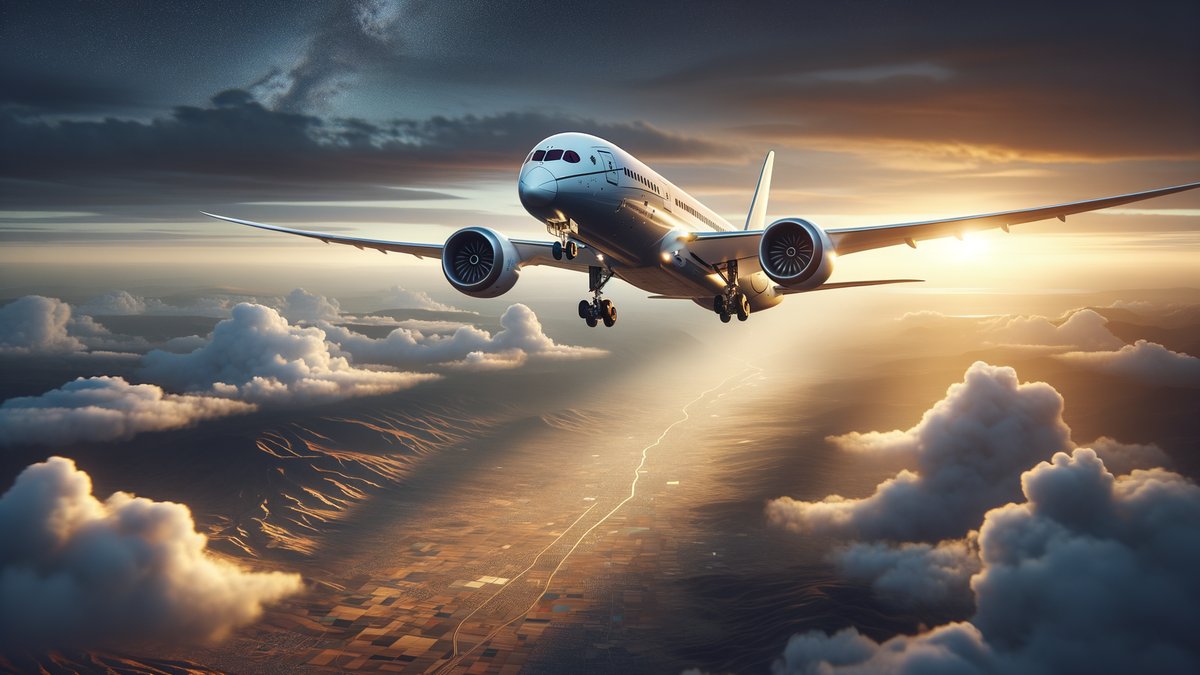
Image generated by AI
The Boeing Longest Dreamliner Routes Reshaping Global Aviation
The Boeing 787 Dreamliner has fundamentally transformed how the world connects. Since All Nippon Airways (ANA) first launched the program in 2004, this revolutionary widebody twin-engine aircraft has opened seven ultra-long-haul routes that previously required intermediate stops or significantly larger aircraft. Today, in 2026, the Dreamliner continues redefining point-to-point connectivity across six continents, enabling unprecedented freedom for business travelers, digital nomads, and leisure passengers seeking direct routes to remote destinations.
The aircraft's efficiency, advanced cabin technology, and fuel economy have made previously uneconomical routes suddenly viable. Airlines worldwide now operate the Boeing longest dreamliner configurations on corridors spanning 18+ hours, connecting major economic hubs with secondary cities in ways that reshape travel patterns for remote workers and location-independent professionals.
What Makes the Boeing 787 Dreamliner Revolutionary
The Boeing 787 Dreamliner represents a paradigm shift in aircraft design philosophy. Unlike its predecessors, the Dreamliner was engineered specifically for ultra-long-haul efficiency rather than payload capacity. Its composite fuselage reduces weight by 20% compared to traditional aluminum construction, while advanced engines deliver 20% better fuel efficiency.
This engineering excellence translates into operational advantages: airlines can profitably operate routes with 250-290 passengers instead of requiring 350+ seats on larger aircraft. The cabin pressurization maintains 6,000-foot equivalent altitude versus 8,000 feet on older models, reducing passenger fatigue on extended flights. Larger windows with electronic dimming, humidity control between 40-60%, and improved air circulation create measurably better passenger experiences on 15+ hour journeys.
For nomadic professionals, these improvements mean arriving at destinations less fatigued, maintaining better productivity across time zones. The improved cabin environment directly impacts work quality and adaptation speed in new locations—critical factors for remote workers balancing travel with professional obligations.
The 7 Longest Boeing 787 Routes Explained
The Boeing longest dreamliner routes represent the cutting edge of point-to-point aviation. These seven corridors showcase the aircraft's range capabilities while serving diverse markets from tourism to business travel.
Singapore to Newark tops the list at approximately 9,534 miles, operated primarily by Singapore Airlines and United Airlines. This route connects Southeast Asia's financial hub with the US East Coast, serving expatriate communities and corporate travelers. The 18+ hour flight eliminates the need for connections through Middle Eastern hubs.
Auckland to Dubai extends 8,823 miles, connecting New Zealand's major gateway with the Middle Eastern aviation center. Air New Zealand operates this route, serving both leisure travelers accessing European connections and business professionals serving the rapidly growing UAE market.
Los Angeles to Singapore spans 8,641 miles on multiple carriers including Singapore Airlines and United. This transpacific corridor exemplifies the Dreamliner's ability to connect secondary US markets directly to Asian financial centers without Hawaii or Guam stops.
Sydney to London reaches 10,562 miles, operated by Qantas and British Airways. This represents one of aviation's most ambitious routes, connecting Australia's largest city directly to Europe's primary hub—a journey that previously required at least one stop.
Hong Kong to Los Angeles traverses 7,488 miles, enabling carriers like Cathay Pacific to serve the Asia-US corridor efficiently. This route particularly benefits digital nomads traveling between tech hubs in both regions.
Boston to Athens covers 5,181 miles, a mid-range Dreamliner deployment that connects the US Northeast with Mediterranean tourism and business markets. Olympic Air and American Airlines operate this corridor.
San Francisco to Tokyo spans 5,130 miles, representing the Dreamliner's ability to serve secondary transpacific markets efficiently. Multiple carriers including ANA and United operate this route.
How These Routes Impact Remote Workers and Digital Nomads
The Boeing longest dreamliner routes fundamentally alter location independence calculations for remote professionals. Direct flights eliminate the 8-16 hour connection time that previously characterized ultra-long-haul travel, enabling arrival in destination cities while maintaining acceptable circadian rhythms.
For digital nomads operating across multiple continents, these routes solve a critical logistics challenge: shorter total travel time means less disruption to client schedules and project deadlines. The improved cabin environment reduces the three-to-five day productivity recovery period that characterized older widebody flights, enabling remote workers to maintain peak performance immediately upon arrival.
The economic implications matter equally. By removing connection requirements, nomadic professionals save on layover hotel costs, ground transportation, and meal expenses. Airlines' ability to profitably operate these routes at competitive fares means digital nomads access ultra-long-haul flights at prices formerly reserved for premium cabin bookings.
Additionally, the Dreamliner's schedule flexibility allows carriers to operate quieter nighttime departures from major hubs, accommodating travelers seeking to arrive refreshed in morning hours across distant destinations. This operational advantage particularly benefits remote workers managing overlapping time zones between home base and current locations.
Future of Ultra-Long-Haul Travel
The success of the Boeing longest dreamliner routes has catalyzed industry transformation. Airlines now operate or plan routes previously considered economically impossible: Perth to London, Johannesburg to New York, and Bangkok to Paris now exist or enter service in 2026-2027.
Boeing continues developing the 787 family with the 787-10 stretch variant, extending range capabilities further while maintaining efficiency advantages. This evolution enables smaller carriers serving secondary markets to access ultra-long-haul viability—a democratization effect that expands connection options for nomadic professionals worldwide.
The competitive response from Airbus, including A350 deployment on similar routes, drives continuous improvement in fuel efficiency, cabin technology, and passenger amenities. Remote workers benefit directly through expanded route networks, improved scheduling flexibility, and enhanced onboard connectivity supporting distributed work arrangements.
Emerging markets increasingly connect via Dreamliner routes, enabling digital nomads to access co-working infrastructure and expatriate communities in previously underserved cities. Routes like Singapore-Newark and Sydney-London make formerly difficult geographic arbitrage scenarios—combining low cost-of-living with first-world connectivity—suddenly accessible to location-independent professionals.
Traveler Action Checklist
If you're planning ultra-long-haul travel on Boeing longest dreamliner routes, follow these actionable steps:
-
Verify aircraft type before booking by checking flight specifications on airline websites or via FlightAware. Confirm 787 Dreamliner assignment ensures premium cabin environment benefits.
-
Book preferred seating early to secure seats offering optimal cabin positioning. Window seats near the center fuselage provide best cabin pressure and temperature stability on extended flights.
-
Prepare layover-free itineraries by selecting direct Dreamliner routes where available. Eliminate connection complexity that adds stress to remote work schedules.
-
Confirm onboard connectivity capacity before departure. Contact your airline's customer service to understand WiFi speed, plug availability, and work-friendly seating zones.
-
Review airline passenger rights on US DOT's consumer page to understand protections for extended flight delays or cancellations.
-
Check FAA airworthiness documents via FAA.gov for any active service bulletins affecting your specific aircraft registration.
-
Request accessible cabin amenities such as quiet work zones, noise-cancelling headphone options, or galley space access if working during flight.
-
Monitor route scheduling through airline apps to track seasonal variations in Dreamliner deployment patterns affecting your preferred corridors.
Key Data on Boeing 787 Routes
| Route | Distance (Miles) | Flight Time | Primary Carriers | Passenger
Disclaimer
This article is for informational and educational purposes only. It does not constitute legal, financial, or professional advice. While we strive to provide accurate and up-to-date information, travel policies, regulations, and conditions change rapidly. Always verify information with official sources before making travel decisions. Nomad Lawyer makes no representations about the accuracy, reliability, completeness, or suitability of the information provided. Readers should consult qualified professionals for advice specific to their circumstances. The views expressed in this article are those of the author and do not necessarily reflect the views of Nomad Lawyer.
Kunal K Choudhary
Co-Founder & Contributor
A passionate traveller and tech enthusiast. Kunal contributes to the vision and growth of Nomad Lawyer, bringing fresh perspectives and driving the community forward.
Learn more about our team →