
Boeing and Archer Aviation Ink Strategic Autonomy Deal to Accelerate Self-Flying eVTOL Air Taxis by 2026
Boeing and Archer Aviation have partnered to integrate autonomous flight systems into the Midnight eVTOL aircraft, aiming to reshape urban air mobility and defense logistics.

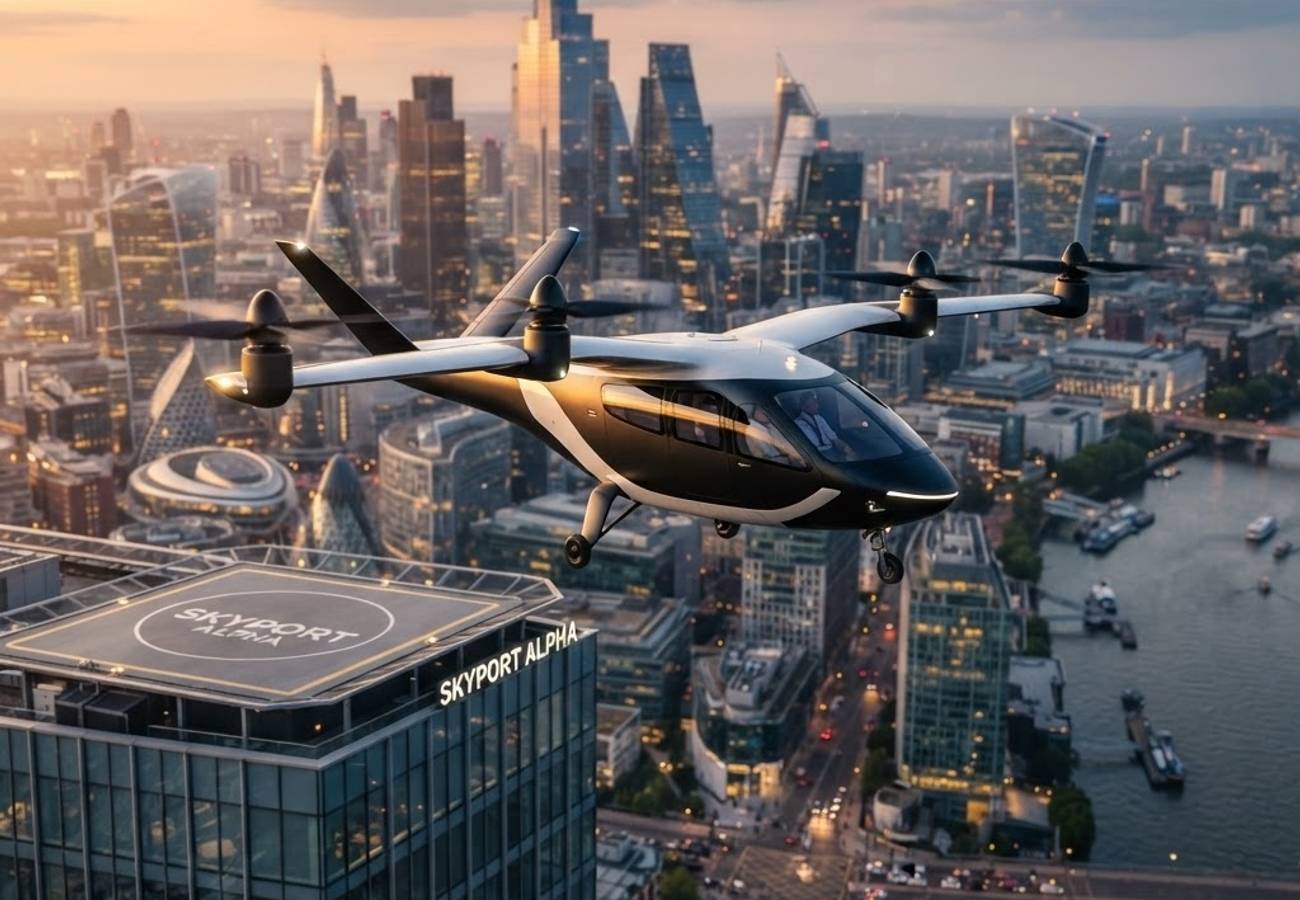
Image generated by AI
A landmark equity and technology agreement between Boeing and Archer Aviation is set to fast-track the transition from piloted electric air taxis to fully autonomous urban flight.
The aerospace industry is witnessing a pivotal shift as Boeing, a global aerospace giant, and Archer Aviation, a leader in electric vertical takeoff and landing (eVTOL) technology, merge their resources to conquer the challenges of self-flying aircraft. This partnership is not merely a financial investment but a strategic alignment of intellectual property and engineering talent designed to move the "Midnight" aircraft from piloted prototypes to autonomous fleets.
The Shift Toward Pilot-Optional Urban Mobility
The core of this collaboration centers on the Midnight eVTOL, an aircraft designed for short-range urban and regional missions. Currently, the Midnight is engineered for piloted operations, targeting trips between 20 to 50 miles—ideal for connecting major airports to city centers or business districts. However, the Boeing partnership introduces a roadmap for "pilot-optional" operations.
By leveraging Boeing’s decades of research into automated flight controls and unmanned rotorcraft—including contributions from its autonomous specialist subsidiary, Wisk Aero—Archer aims to reduce or entirely remove the onboard pilot. This evolution is driven by the economic reality of urban air mobility: pilot training pipelines and labor costs are significant bottlenecks that could hinder the scalability of air taxi networks.
The transition will occur in stages:
- Phase 1: Advanced pilot-assistance (automated takeoff, landing, and collision avoidance).
- Phase 2: High-level automation with ground-based oversight.
- Phase 3: Full gate-to-gate autonomous operations.
Environmental Value and Regional Heritage
For the visitor and the urban resident, the real impact of this technology lies in the reduction of ground-level congestion and the decarbonization of short-haul travel. Electric propulsion removes the carbon footprint associated with traditional combustion engines, while the shift to autonomous flight allows for higher-frequency, optimized routing that reduces noise pollution over residential neighborhoods.
This trend supports a broader movement toward "Smart Cities," where regional heritage sites and business hubs are connected via low-impact air corridors. By integrating with existing airport infrastructure and creating new "vertiports," the Boeing-Archer alliance is helping define a new layer of urban architecture that prioritizes efficiency and environmental sustainability.
Defense and Dual-Use Applications
Beyond the civilian "air taxi" dream, this deal has significant implications for global security and logistics. The autonomy stack being developed for passenger travel is inherently "dual-use." The same flight control systems that navigate a passenger from an airport to a hotel can be applied to:
- Logistics Resupply: Autonomous cargo drones for remote areas.
- Disaster Response: Rapid deployment of medical supplies or surveillance in crisis zones.
- Border Monitoring: Uncrewed platforms for persistent surveillance.
By aligning with Boeing, Archer gains a streamlined pathway into government and military procurement, providing the flight hours and data necessary to refine safety protocols for the civilian market.
Visitor Insider Tips: Preparing for the eVTOL Era
As these services begin to roll out in select global hubs, travelers should keep the following in mind:
- Vertiport Etiquette: Unlike traditional airports, vertiports will be integrated into hotels and parking garages. Expect "fast-track" boarding processes with minimal waiting areas.
- Noise Awareness: While eVTOLs are quieter than helicopters, they produce a distinct high-frequency hum. If you are staying in a "vertiport zone," look for hotels with sound-dampening certifications.
- Booking Integration: Look for "Intermodal" tickets. The most efficient way to use these services will be through bundles that combine a long-haul flight, an eVTOL shuttle, and a final-mile electric vehicle.
- Safety Trust: If you are hesitant about autonomous flight, start with "piloted" Midnight flights. The transition to autonomy will be gradual, with human supervisors remaining in the loop via ground control for years to come.
Tourism and Regulatory Outlook
The long-term success of this venture depends on the Federal Aviation Administration (FAA) and global counterparts updating communication, navigation, and surveillance (CNS) systems. The industry must prove that autonomous systems can handle "degraded conditions"—such as sudden weather shifts or cybersecurity threats—with the same reliability as a human pilot.
If these hurdles are cleared, the economics of regional travel will be rewritten. We can expect a surge in "micro-tourism," where high-frequency autonomous shuttles make previously inaccessible regional landmarks reachable within minutes, bypassing highway traffic and reducing the reliance on rental cars.
The sky is no longer the limit; it is the new highway.
Related Travel Guides
Disclaimer
This article is for informational and educational purposes only. It does not constitute legal, financial, or professional advice. While we strive to provide accurate and up-to-date information, travel policies, regulations, and conditions change rapidly. Always verify information with official sources before making travel decisions. Nomad Lawyer makes no representations about the accuracy, reliability, completeness, or suitability of the information provided. Readers should consult qualified professionals for advice specific to their circumstances. The views expressed in this article are those of the author and do not necessarily reflect the views of Nomad Lawyer.
Kunal K Choudhary
Co-Founder & Contributor
A passionate traveller and tech enthusiast. Kunal contributes to the vision and growth of Nomad Lawyer, bringing fresh perspectives and driving the community forward.
Learn more about our team →