
Boeing Aircraft Antonov: Engineering Giants with Record Wingspans
Boeing aircraft Antonov models dominate aviation with unprecedented wingspans. Discover how manufacturers engineer these colossal aircraft to meet 2026 cargo and passenger demands across global routes.

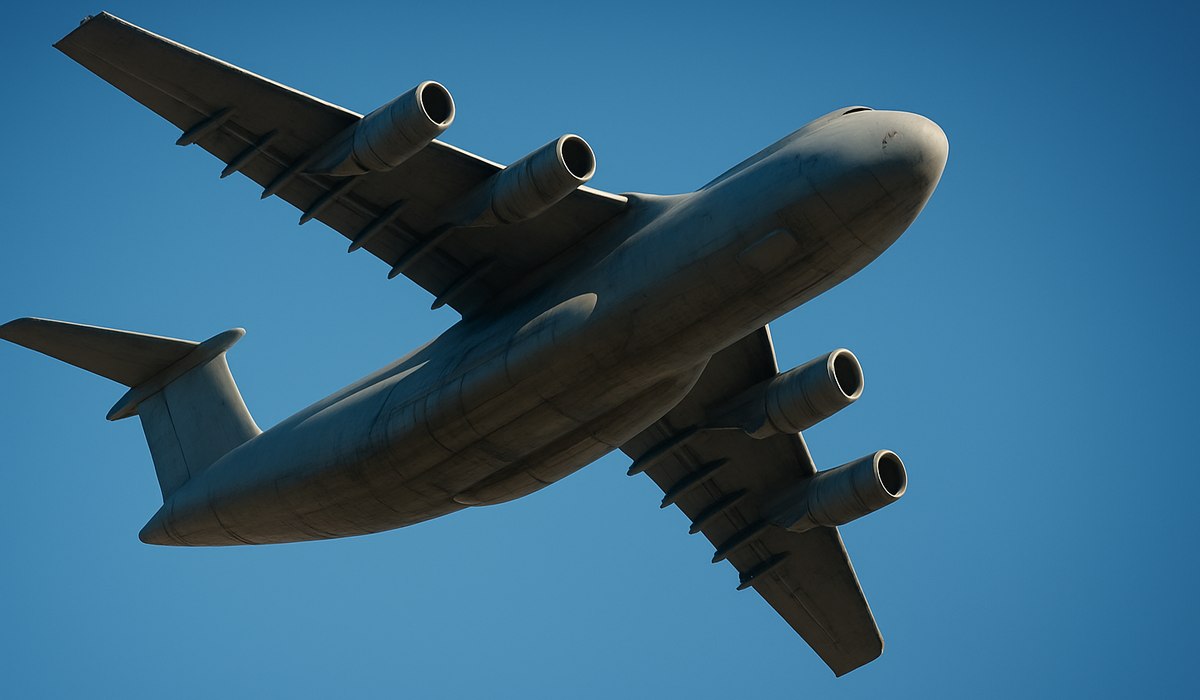
Image generated by AI
Engineering Marvels: How Manufacturers Push Wingspan Boundaries
Boeing aircraft Antonov models represent the pinnacle of modern aviation engineering, showcasing how manufacturers continuously expand aircraft dimensions to accommodate surging passenger volumes and cargo demands worldwide. As global air travel expands in 2026, the race for larger, more efficient aircraft intensifies among aviation giants. These engineering achievements reflect decades of innovation in materials science, aerodynamics, and manufacturing precision. Airlines operating these massive platforms can transport significantly more passengers per flight, reducing per-seat operational costs while maximizing route profitability. Understanding these mechanical marvels helps frequent travelers appreciate the sophisticated technology enabling modern intercontinental connectivity.
The Evolution of Aircraft Wingspan Technology
Wingspan development represents one of aviation's most critical engineering challenges. Historical aircraft from the 1950s pale in comparison to contemporary designs, which incorporate carbon composites, advanced aluminum alloys, and sophisticated stress-distribution systems. Boeing aircraft innovations have progressively increased wing surface areas to generate sufficient lift for heavier payloads without proportionally increasing fuel consumption.
Early jet airliners featured wingspans between 100-120 feet. Modern widebody transports now exceed 210 feet. This expansion enables manufacturers to optimize lift-to-weight ratios, crucial for fuel efficiency on long-haul routes. Engineers must balance wingspan extension against airport infrastructure constraints, including gate compatibility and taxiway clearances. Wind tunnel testing and computational fluid dynamics simulations inform every millimeter of wingspan design, ensuring aerodynamic efficiency across varied flight conditions.
The shift toward lightweight composite materials revolutionized wingspan engineering. Boeing's 787 Dreamliner pioneered composite wing construction, reducing structural weight while maintaining rigidity. This advancement inspired competitors to develop similar technologies, accelerating wingspan optimization industry-wide. Airlines operating these aircraft report 15-20% fuel savings compared to previous-generation widebodies.
The Antonov AN-225: Engineering's Ultimate Achievement
The Antonov AN-225 represents humanity's largest aircraft ever constructed, with a staggering 290-foot wingspan. This Ukrainian-engineered marvel was originally developed during the Soviet era to transport the Buran space shuttle across vast distances. Measuring 275 feet in length with a maximum takeoff weight exceeding 1.4 million pounds, this aircraft became the cargo industry's gold standard.
The AN-225's massive cargo hold accommodates oversized freight impossible for competing aircraft to transport. Mining equipment, industrial machinery, and disaster relief supplies regularly moved via Antonov services across continents. The aircraft's pressurized hold measures 4,400 cubic meters, with a maximum payload capacity of 330,000 pounds. Strategic military deployments worldwide relied on Antonov's unmatched capacity.
The aircraft's engineering incorporated redundant hydraulic systems, reinforced landing gear designed for unprepared airfields, and revolutionary fuel management systems distributing enormous quantities across distributed wing tanks. Maintenance protocols demanded specialized hangar facilities and skilled technician teams, limiting operational airports to major international hubs. Airlines worldwide recognized Antonov services as essential infrastructure for complex logistics operations.
Boeing and Airbus Giants: Competing for the Skies
Boeing's 777X series represents cutting-edge commercial aviation, featuring a 212-foot wingspan that folds at the wingtips for airport compatibility. This ingenious design solution allows larger aircraft to utilize existing gate infrastructure while maintaining the aerodynamic efficiency of extended wings during flight. The 777X family includes freighter variants optimized for cargo operations, directly competing with Antonov services.
The 777X incorporates advanced materials including titanium-aluminum matrix composites and third-generation carbon fiber laminates. Engines develop 110,000 pounds of thrust each, enabling efficient long-range operations on routes connecting Asia-Pacific hubs with European terminals. Airlines operating 777X aircraft report dramatic improvements in fuel economy compared to earlier widebody models.
Airbus counters with the A380 superjumbo jet, featuring an 262-foot wingspan and double-deck configuration accommodating up to 853 passengers in maximum-density arrangements. The A380's engineering showcased composite wing structures reinforced with titanium fasteners and advanced flight management systems. However, production ceased in 2021 due to declining demand, as airlines increasingly favored twin-engine efficiency over four-engine capacity.
The rivalry between Boeing and Airbus drove continuous innovation across multiple aircraft programs. Smaller models like the Boeing 757 and Airbus A220 feature considerably smaller wingspans (125 feet and 118 feet respectively), proving that wingspan doesn't solely determine commercial success. Route economics, fuel efficiency, and passenger demand drive procurement decisions.
Engineering Challenges and Future Development
Expanding aircraft wingspans introduces extraordinary structural and operational challenges. Weight distribution across extended wing structures requires sophisticated computer modeling and real-world testing through flutter analysis and stress measurement. Excessive wingspan increases wing bending moments, necessitating stronger materials and heavier reinforcement—potentially negating efficiency gains.
Airport infrastructure limitations constrain practical wingspan expansion. Standard taxiway widths accommodate aircraft up to approximately 230 feet wingspan. Gates designed for older narrowbody aircraft cannot accommodate newer widebodies, forcing airlines to utilize remote stands and ground transportation bridges. Future airport designs must incorporate wider taxiway systems and expanded gate infrastructure.
Aerodynamic efficiency gains plateau at certain wingspan measurements. Extended wings generate superior lift at cruise altitudes but increase parasitic drag during takeoff and landing phases. Engineers employ winglet technologies—vertical extensions at wing tips—to improve efficiency without expanding overall wingspan. Sharklet designs reduce vortex-induced drag, enhancing fuel economy on medium-range flights.
Manufacturing aircraft with 200+ foot wingspans demands precision tooling and quality assurance systems maintaining tolerances within fractions of inches across hundreds of feet. Production facilities require specialized jigs, robotic assembly systems, and environmental controls. Supply chain coordination across multiple continents—wing sections manufactured in different countries and assembled at central facilities—represents logistical complexity rivaling spacecraft production.
Environmental regulations increasingly influence wingspan development. Noise abatement drives engine placement and wing geometry optimization. Carbon neutrality targets motivate research into sustainable aviation fuels and electric propulsion systems, potentially altering traditional wingspan design approaches. Future aircraft may prioritize noise reduction over marginal payload increases.
Key Data: Record-Breaking Aircraft Specifications
| Aircraft Model | Wingspan (feet) | Length (feet) | Maximum Takeoff Weight (lbs) | Passenger Capacity | Primary Use |
|---|---|---|---|---|---|
| Antonov AN-225 | 290 | 275 | 1,410,000 | Cargo only | Heavy-lift logistics |
| Airbus A380 | 262 | 239 | 1,267,000 | 853 passengers | Long-range widebody |
| Boeing 777X | 212 | 252 | 987,000 | 414-426 passengers | Long-range widebody |
| Boeing 747-8 | 211 | 250 | 987,000 | 467 passengers | Long-range jumbo |
| Airbus A350 | 209 | 219 | 771,500 | 314-440 passengers | Widebody transatlantic |
| Airbus A340 | 208 | 209 | 865,000 | 380-475 passengers | Ultra-long-range |
| Boeing Dreamliner 787 | 197 | 242 | 573,500 | 296-330 passengers | Efficiency-focused widebody |
What This Means for Travelers
Larger aircraft wingspans directly impact your travel experience through improved flight schedules, competitive pricing, and environmental sustainability improvements. Understanding these developments helps you make informed airline selections aligned with personal priorities.
Expanded aircraft capacity enables airlines to deploy larger equipment on profitable routes, reducing ticket prices through increased seat availability. Popular business corridors—New York to London, Singapore to Sydney—increasingly
Disclaimer
This article is for informational and educational purposes only. It does not constitute legal, financial, or professional advice. While we strive to provide accurate and up-to-date information, travel policies, regulations, and conditions change rapidly. Always verify information with official sources before making travel decisions. Nomad Lawyer makes no representations about the accuracy, reliability, completeness, or suitability of the information provided. Readers should consult qualified professionals for advice specific to their circumstances. The views expressed in this article are those of the author and do not necessarily reflect the views of Nomad Lawyer.
Raushan Kumar
Founder & Lead Developer
Full-stack developer with 11+ years of experience and a passionate traveller. Raushan built Nomad Lawyer from the ground up with a vision to create the best travel and law experience on the web.
Learn more about our team →