
Boeing 787-10 wheels landing gear: Why fewer than A350-1000
Boeing 787-10 landing gear uses fewer wheels than Airbus A350-1000 despite comparable size. 2026 aviation engineering reveals how weight distribution and composite materials enable streamlined designs for long-haul operations.

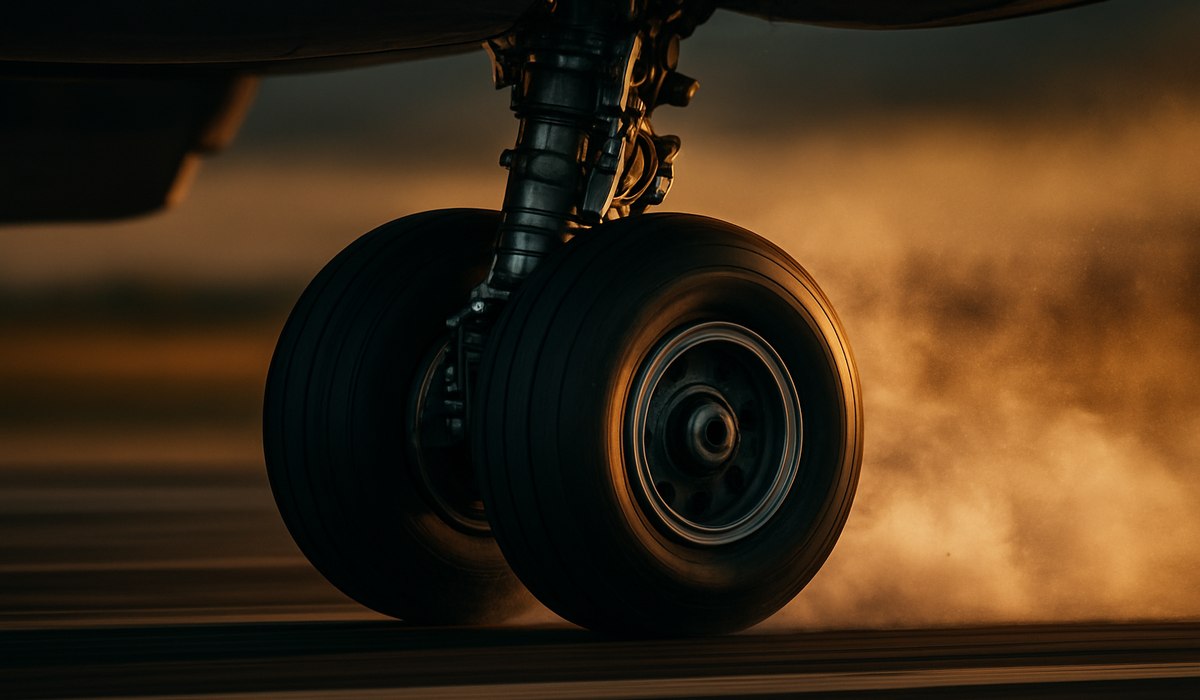
Image generated by AI
Engineering Innovation in Modern Aviation
The Boeing 787-10 Dreamliner operates with a notably different landing gear wheel configuration than its primary competitor, the Airbus A350-1000. Despite carrying similar passenger loads across comparable fuselage dimensions, Boeing's engineering approach utilizes fewer wheels in its main landing gear assembly. This fundamental difference reflects divergent design philosophies in how manufacturers distribute aircraft weight and optimize structural efficiency for long-haul international operations.
The distinction between these two wide-body jet families extends beyond simple wheel counts. It demonstrates how modern materials science, computational design, and regulatory frameworks shape contemporary aircraft development. Understanding these engineering choices helps travelers appreciate the sophistication embedded in the planes they fly on today.
Landing Gear Configuration: The Key Difference
The Boeing 787-10 implements a dual-wheel bogie arrangement in its main landing gear, featuring two wheels per side. The Airbus A350-1000, conversely, employs a four-wheel bogie design with two wheels positioned in tandem on each side of the aircraft. This configuration difference has significant implications for ground operations, runway performance, and maintenance protocols.
Boeing's dual-wheel approach concentrates load-bearing responsibility on fewer contact points with the runway surface. This engineering decision became possible through advances in composite materials and sophisticated weight-reduction strategies introduced during the 787 development program. The aircraft's aluminum-lithium fuselage and composite wing structures substantially reduce overall mass compared to conventional aluminum aircraft of equivalent capacity.
The four-wheel configuration favored by Airbus distributes aircraft weight across more ground contact points. While this increases component count, it also reduces concentrated pressure on individual tire patches. Both approaches meet or exceed current Federal Aviation Administration (FAA) certification standards. The engineering trade-offs represent legitimate competing methodologies within modern aviation design practices.
Weight Distribution and Load Management
Advanced materials engineering fundamentally enables Boeing's streamlined landing gear design. The 787-10 fuselage comprises approximately 50% composite materials by weight, substantially lighter than traditional aluminum structures. Composite construction reduces overall aircraft weight by approximately 20% compared to similarly-sized conventional airframes, directly permitting reduced landing gear complexity.
Weight savings cascade throughout aircraft systems. Lower overall mass means reduced landing forces upon touchdown, decreasing the structural demands on individual landing gear components. Fewer wheels distribute this comparatively reduced load effectively across available contact points. This represents circular engineering logic: lighter aircraft require less infrastructure, enabling simpler mechanical systems.
The Airbus A350-1000 also incorporates significant composite structures, roughly 53% of its airframe weight. However, Airbus engineers determined that four-wheel bogie configuration offered superior long-term durability and lower maintenance costs across extended service lives. Different manufacturers interpret identical performance requirements through distinct operational and economic lenses. Both platforms achieve comparable safety records and regulatory compliance across global aviation markets.
Design Philosophy: Boeing Versus Airbus
Boeing's 787 program prioritized innovation across every system, treating the landing gear as an integrated component within broader weight-reduction objectives. Engineers targeted dramatic fuel efficiency improvements and extended range capabilities as core design drivers. The dual-wheel landing gear represents one manifestation of this comprehensive lightweight philosophy. Fewer components mean reduced maintenance complexity, potentially lowering operating costs for airlines deploying these aircraft.
Airbus's A350 development emphasized proven technologies adapted to next-generation requirements. The company's four-wheel bogie configuration draws from decades of experience across the A330 and A340 families. This heritage-based approach prioritizes operational redundancy and widespread spare parts availability. Airlines appreciate established support ecosystems and predictable maintenance patterns across existing fleets.
These philosophical differences reflect corporate cultures and market strategies rather than technical superiority. Both manufacturers produce aircraft that meet identical safety, performance, and environmental standards. Pilot training, maintenance requirements, and passenger experience differ minimally between the two platforms. The landing gear configuration represents engineering preference rather than functional necessity.
Operational Implications for Airlines
Airlines operating Boeing 787-10 aircraft benefit from reduced maintenance intervals for landing gear systems. Fewer wheels translate to simplified inspection protocols and potentially lower component replacement costs across the aircraft's operational lifespan. United Airlines, British Airways, and ANA (All Nippon Airways) have accumulated substantial operational experience with 787-10 fleets since 2014, reporting favorable maintenance metrics.
Airbus A350-1000 operators including Emirates, Singapore Airlines, and Qatar Airways appreciate the design's alignment with existing fleet compatibility. Airlines already operating A330 wide-body aircraft find A350 ground handling and maintenance procedures familiar, reducing crew training requirements and technical support investments. This consistency provides measurable economic advantages for carriers with substantial Airbus fleets.
Runway selection and airport compatibility represent another operational dimension. Both aircraft meet international runway standards without specialized facility requirements. The 787-10's concentrated loading patterns perform equivalently to Airbus designs across standard commercial airport infrastructure. Modern runway engineering accommodates both landing gear approaches comfortably.
What This Means for Travelers
Passengers should understand that landing gear wheel configuration represents an engineering detail with minimal impact on travel experience or safety outcomes.
-
Safety is Identical: Both the 787-10 and A350-1000 achieve identical FAA and European Union Aviation Safety Agency (EASA) certification standards. Landing gear design differences reflect engineering choices, not safety compromises.
-
Maintenance Doesn't Affect Schedules: Despite different component counts, modern predictive maintenance systems ensure both aircraft types maintain excellent reliability records. Delays caused by landing gear issues remain exceptionally rare across both platforms.
-
Comfort and Experience Remain Consistent: Passenger cabins in both aircraft offer comparable cabin pressure, humidity management, and in-flight systems. Landing gear engineering is invisible during normal operations.
-
Book Based on Route and Schedule: Route network availability and flight scheduling should drive booking decisions, not aircraft type. Major airlines distribute both platforms across their international networks strategically.
-
Monitor Aircraft Type During Booking: If you prefer specific aircraft features like the 787's larger windows or the A350's lower cabin altitude, check booking confirmations. Most airlines display aircraft type information during reservation processes.
Technical Comparison Table
| Specification | Boeing 787-10 | Airbus A350-1000 |
|---|---|---|
| Passenger Capacity | 242-330 | 314-350 |
| Fuselage Length | 68.3 meters | 70.7 meters |
| Main Landing Gear Configuration | Dual-wheel bogie (2 wheels per side) | Four-wheel bogie (4 wheels per side) |
| Composite Content | ~50% by weight | ~53% by weight |
| Maximum Takeoff Weight | 560,000 kg | 575,000 kg |
| Range Capability | 14,685 km | 15,000 km |
| First Delivery Year | 2014 | 2015 |
| Primary Operators | United, British Airways, ANA | Emirates, Singapore Airlines, Qatar |
Frequently Asked Questions
Why doesn't every aircraft use the Boeing 787-10's simpler wheel design?
Aircraft design reflects manufacturer philosophies, existing fleet compatibility, and perceived operational advantages. Airbus determined that four-wheel configurations offered superior long-term durability. Different solutions work equally well within established regulatory frameworks. Manufacturers compete on total cost of ownership, not individual component counts.
Do fewer wheels mean the 787-10 is less safe?
No. The FAA certifies aircraft based on comprehensive safety analysis, not component simplicity. Both aircraft undergo identical testing and meet equivalent performance standards. Fewer wheels doesn't indicate reduced safety; it represents optimized engineering within established safety parameters.
Does landing gear configuration affect passenger comfort?
Landing gear operates independently from cabin systems. Passengers experience identical pressurization, temperature control, and noise levels regardless of landing gear wheel counts. The engineering sits entirely below the aircraft floor in equipment b
Disclaimer
This article is for informational and educational purposes only. It does not constitute legal, financial, or professional advice. While we strive to provide accurate and up-to-date information, travel policies, regulations, and conditions change rapidly. Always verify information with official sources before making travel decisions. Nomad Lawyer makes no representations about the accuracy, reliability, completeness, or suitability of the information provided. Readers should consult qualified professionals for advice specific to their circumstances. The views expressed in this article are those of the author and do not necessarily reflect the views of Nomad Lawyer.
Raushan Kumar
Founder & Lead Developer
Full-stack developer with 11+ years of experience and a passionate traveller. Raushan built Nomad Lawyer from the ground up with a vision to create the best travel and law experience on the web.
Learn more about our team →