
Boeing Airlines Largest Fleets: 5 Carriers Dominate 2026
Five major airlines command the Boeing 737 market in 2026, leveraging the aircraft to build competitive advantages. Southwest and Ryanair lead global dominance through strategic fleet deployment.

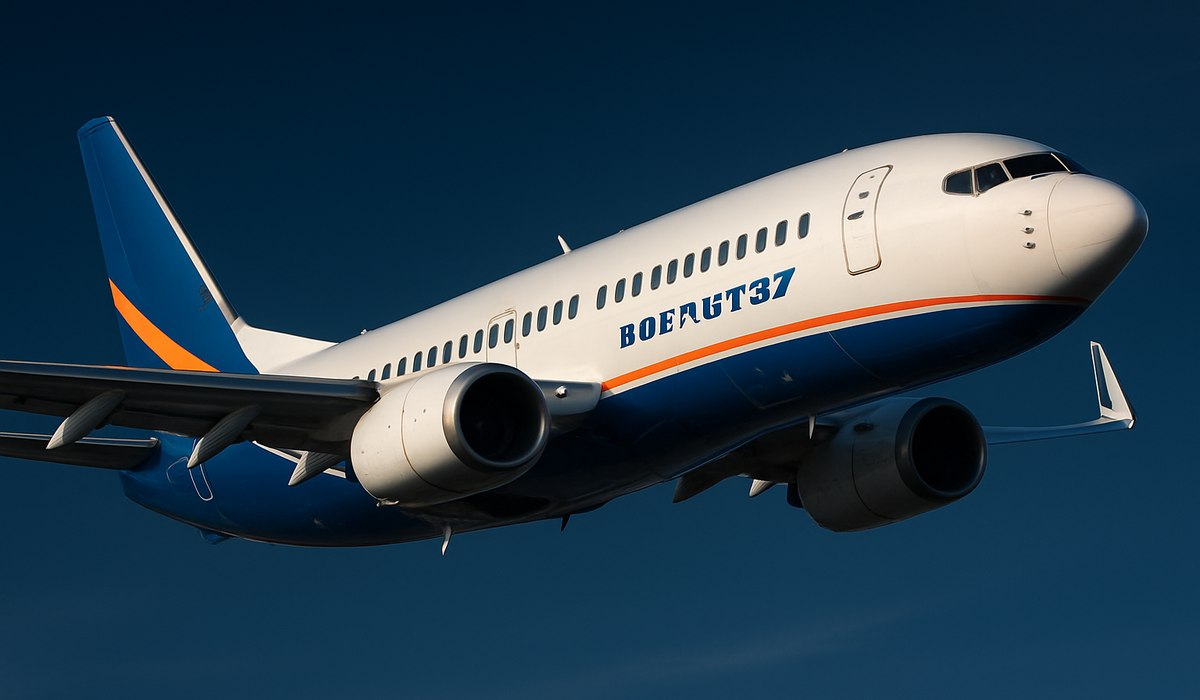
Image generated by AI
Which Boeing Airlines Largest Fleets Command Global Markets?
Five carriers have built operational empires on the Boeing 737, making it the aircraft of choice for both ultra-low-cost and full-service networks worldwide. The Boeing 737 remains a cornerstone aircraft for airlines pursuing regional expansion strategies. From North American carriers to European budget operators, these five airlines have leveraged the type to create sustainable competitive advantages. Their commitment to Boeing 737 standardization demonstrates how aircraft selection directly impacts profitability, crew training efficiency, and passenger capacity strategies.
The Boeing 737's Dominance in Short-Haul Markets
The Boeing 737 has defined short-haul aviation since the 1970s, but its relevance in 2026 hinges on operational flexibility and fuel efficiency. Airlines operating 737 fleets benefit from lower maintenance costs, simplified crew certifications, and higher seat density compared to competing aircraft types. The aircraft's 3,000-nautical-mile range suits regional networks across North America, Europe, and Asia-Pacific routes where demand concentrates on point-to-point connections.
Single-aircraft operations create significant economies of scale. Carriers reduce spare parts inventory, standardize training modules, and negotiate better manufacturer support. This operational model has become increasingly valuable as fuel prices fluctuate and labor costs rise. The 737's proven reliability record supports higher aircraft utilization rates, translating to lower per-seat costs for operators. FlightAware tracking data confirms these carriers maintain some of the industry's highest daily flight frequencies.
Southwest Airlines: The Single-Type Operating Master
Southwest Airlines operates the world's largest homogeneous 737 fleet, a strategic choice that defines its entire business model. By committing exclusively to Boeing 737 variants, Southwest eliminated aircraft-type diversity expenses that plague competitors. Mechanics develop specialized expertise. Pilots transition between variants with minimal additional certification. Gate agents optimize turnaround procedures knowing exact cabin layouts across the entire network.
This standardization delivers measurable advantages. Southwest maintains quick 25-minute turnaround times at major hubs, surpassing industry standards. The airline's rapid ground operations support frequent daily flights on core routes, driving revenue through increased aircraft rotations. Crew scheduling becomes more efficient when pilots and flight attendants work across identical aircraft types. This operational streamlining has allowed Southwest to maintain profitability even during industry downturns.
Southwest's commitment to 737 single-type operations extends to future aircraft replacements. The airline recently ordered 300 additional 737 MAX and 737-800 units, reinforcing its long-term strategic alignment with Boeing. This consistency provides planning certainty for investors and operational predictability for employees.
Ryanair's Ultra-Low-Cost European Expansion
Ryanair operates Europe's largest Boeing 737 fleet, using the aircraft type as the foundation for aggressive capacity expansion across secondary markets. The Irish carrier has standardized on 737-800 aircraft, enabling rapid aircraft rotation and minimal maintenance downtime. Ryanair's point-to-point network model relies on Boeing 737 fuel efficiency to serve smaller European airports profitably.
The airline's fleet strategy prioritizes high utilization rates. Aircraft spend approximately 9-10 hours daily in service, among the highest in global aviation. This intensive use maximizes revenue potential while minimizing fixed costs per flight hour. Ryanair's 737 ordering strategy has focused on variants delivering the lowest operating costs, demonstrating how aircraft selection directly supports ultra-low-cost positioning.
Ryanair's expansion into secondary European cities became possible through Boeing 737 economics. The aircraft operates profitably on routes where larger widebody aircraft cannot achieve breakeven load factors. This capability allowed Ryanair to establish bases in markets competitors ignored, building competitive moats through early market entry.
Full-Service Carriers Embracing the 737
Beyond low-cost operators, major full-service network carriers maintain substantial Boeing 737 fleets. United Airlines, American Airlines, and Delta Air Lines each operate hundreds of 737s for regional markets and short-haul transcontinental routes. These carriers recognize the 737's ability to balance operational efficiency with premium cabin configurations.
Full-service carriers have invested in enhanced 737 cabin experiences, including lie-flat business seating on select markets. This cabin versatility allows legacy carriers to compete on short-haul routes while maintaining premium positioning. The 737's interior dimensional compatibility supports various cabin layouts, enabling airlines to retrofit aircraft between premium and economy configurations as market demand shifts.
Network carriers benefit from 737 operational standardization alongside larger widebody fleet operations. Pilots typically hold type ratings across multiple aircraft, maintaining scheduling flexibility. Aircraft assignment algorithms can optimize deployment based on route profitability and connecting passenger requirements.
Key Data: Boeing Airlines Largest Fleets Breakdown
| Airline | Approximate 737 Fleet | Primary Markets | Average Aircraft Age |
|---|---|---|---|
| Southwest Airlines | 750+ | Domestic USA, Mexico | 12 years |
| Ryanair | 500+ | European secondary cities | 8 years |
| United Airlines | 350+ | USA transcontinental, regional | 14 years |
| American Airlines | 300+ | Domestic network, Caribbean | 13 years |
| Delta Air Lines | 250+ | Domestic network focus | 15 years |
What This Means for Travelers
The Boeing 737 prevalence among major carriers directly impacts your travel experience and options.
-
Expect faster flight frequencies on routes served by Southwest, Ryanair, and other 737-heavy operators—more daily departures mean better scheduling flexibility for business and leisure travelers.
-
Understand aircraft standardization benefits: Airlines operating unified 737 fleets typically deliver more reliable schedules and fewer cancellations due to maintenance standardization.
-
Recognize regional expansion opportunities: Ryanair's 737 focus has created affordable routes to secondary European cities. Similar patterns emerge globally where 737 economics enable competition.
-
Plan cabin amenities accordingly: Full-service carriers configure 737 cabins differently. Check specific aircraft equipment before booking premium cabin products.
-
Monitor manufacturer announcements: Boeing 737 MAX production rates and delivery timelines affect airline capacity planning, influencing route additions and frequency changes throughout 2026.
FAQ: Boeing Airlines Largest Questions
What makes the Boeing 737 attractive to low-cost carriers? The 737 delivers exceptional fuel efficiency on short routes where load factors remain high. Operating costs per available seat-mile consistently outperform competing aircraft, directly supporting ultra-low-cost business models. Standardized maintenance procedures further reduce operational complexity.
Can full-service airlines compete with low-cost operators on Boeing 737 routes? Yes, but through differentiated products rather than cost competition. Legacy carriers invest in premium cabins, enhanced services, and frequent-flyer loyalty programs. Higher yields on short-haul 737 flights offset lower per-seat revenue compared to long-haul widebody operations.
How does aircraft retirement affect airline strategy? Carriers must balance newer, efficient aircraft against existing fleet investments. Ryanair's 737-800 focus means fewer generation transitions. Southwest's diverse 737 order book (MAX and classic variants) extends operational consistency while gradually introducing advanced avionics.
Will Boeing 737 dominance continue through 2027? Production constraints and Airbus A220/A320 competition create headwinds. However, existing 737 fleet commitments and replacement ordering suggest continued dominance in short-haul markets globally through the decade.
Related Travel Guides
- Guatemala Travel Gets a Boost as Air Canada Adds Toronto Service and Extends Montréal Flights
- Cyprus Faces Devastating Travel Chaos and Massive Flight Cancellations as European Regional Airlines Warn of Imminent Financial Collapse: Latest Airline News
- Italy Secures €1.4 Billion Airbus Tanker Fleet Deal, Reshaping European Military Aviation Capabilities
Disclaimer
This article is for informational and educational purposes only. It does not constitute legal, financial, or professional advice. While we strive to provide accurate and up-to-date information, travel policies, regulations, and conditions change rapidly. Always verify information with official sources before making travel decisions. Nomad Lawyer makes no representations about the accuracy, reliability, completeness, or suitability of the information provided. Readers should consult qualified professionals for advice specific to their circumstances. The views expressed in this article are those of the author and do not necessarily reflect the views of Nomad Lawyer.
Preeti Gunjan
Contributor & Community Manager
A passionate traveller and community builder. Preeti helps grow the Nomad Lawyer community, fostering engagement and bringing the reader experience to life.
Learn more about our team →