
Boeing 787 Dreamliner Permanently Transformed Long-Haul Aviation Economics With 25% Fuel Savings
Over 1.2 billion passengers have flown the Boeing 787 Dreamliner, which revolutionized long-haul aviation by enabling 523 new nonstop routes and cutting fuel burn by 25% through composite materials and superior aerodynamics.

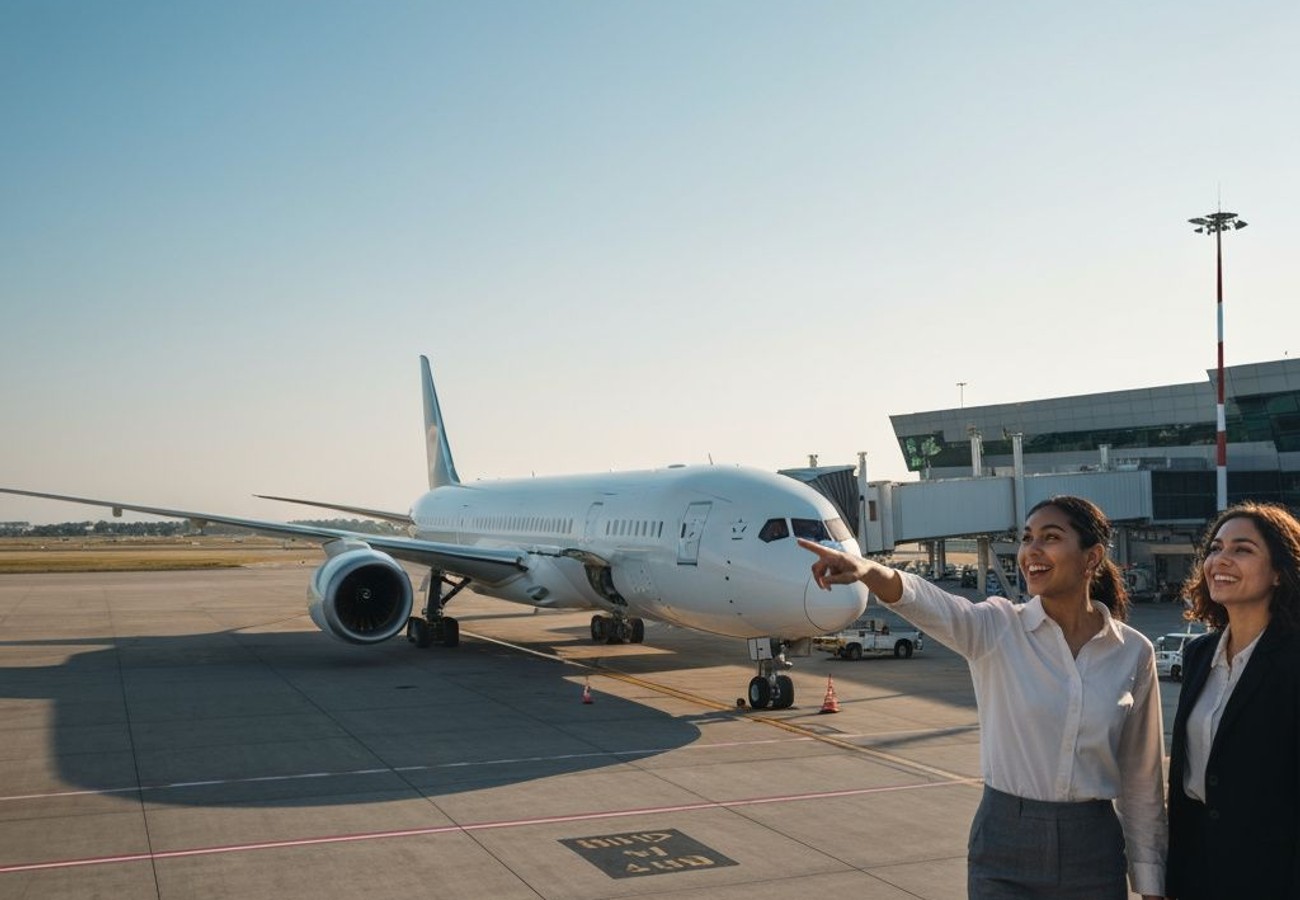
Image generated by AI
The Boeing 787 Dreamliner arrived at a pivotal moment in aviation history. Over a billion passengers have since flown aboard more than 1,200 aircraft across three variants—and for good reason. This jet didn't just improve long-haul travel; it fundamentally rewrote how airlines structure global networks, how much fuel they burn, and what passengers experience at 35,000 feet.
The transformation was so complete that we've largely abandoned the romantic age of the superjumbo. The Boeing 747 and Airbus A380 once ruled international aviation. Today, incredibly efficient twin-jets fly farther than ever before, serving routes that were once economically impossible.
The Death of the Hub-and-Spoke Model
Before the 787, airlines operated under crushing constraints. The massive jumbo jets could carry hundreds of passengers and fly intercontinental distances, but only the world's largest airports could handle them. London Heathrow, Singapore Changi, Tokyo Narita—these were the gatekeepers of long-haul aviation.
That meant millions of passengers faced an exhausting reality: fly to a hub, wait for a connection, then board another jet to reach their actual destination. Demand for direct service was fierce, but no aircraft existed to make it economically viable—until now.
The 787 changed the equation entirely. With a capacity of 240 to 330 passengers depending on configuration and a range of up to 7,565 nautical miles (14,010 kilometers), the Dreamliner was small enough to operate from regional airports yet powerful enough to cross oceans nonstop.
Reddit: "The 787 made it possible to fly direct from cities I never thought would get international service. Game changer for business travelers." — r/aviation
The impact cascaded across the industry. Since entering service, the 787 has enabled 523 new nonstop routes across 85 countries. It now serves 2,000 city pairs globally. Secondary and tertiary airports suddenly became international hubs. Passengers could fly direct from Dublin to San Francisco, from Manchester to Tokyo, from Brussels to Auckland—routes that would have required connections just years earlier.
This wasn't incremental change. It was a fundamental restructuring of how global aviation operates.
A 25% Fuel Burn Revolution
Efficiency was the engine driving this transformation—literally. The 787's fuel economics are what separate it from every predecessor.
Boeing achieved this breakthrough by abandoning aluminum. For decades, aircraft fuselages were built from the same material. The 787 introduced composite materials like carbon-fiber reinforced polymers, which are lighter, stronger, and resistant to fatigue and corrosion. According to Boeing's engineering specifications, this single innovation contributed to a 25% reduction in fuel burn compared to similarly sized aircraft.
That's not a rounding error. That's the difference between profitability and losses on thin long-haul routes.
The wing design amplified this advantage. The 787's wings are longer, more flexible, and feature a higher aspect ratio than anything in commercial aviation before it. The distinctive raked wingtips aren't just aesthetically striking—they're aerodynamic masterpieces that reduce drag and improve efficiency across every flight phase.
Then came the engines. Airlines could choose between General Electric's GEnx-1B or Rolls-Royce's Trent 1000. Both pushed the boundaries of turbofan engineering:
The GEnx-1B produces up to 76,100 pounds of thrust with an impressive 9.0:1 bypass ratio, while the Trent 1000 delivers up to 78,000 pounds with a greater than 10:1 bypass ratio. Both feature advanced compressors, composite fan blades, and thermal efficiency ratings that remain benchmarks in modern widebody engine design.
The mathematics compound over time. A 20% reduction in fuel burn on a 14-hour flight from London to Hong Kong translates to tens of thousands of dollars in annual savings per aircraft. Multiply that across a fleet of 100 or 200 aircraft, and the 787 becomes a profit machine for airlines operating on razor-thin margins.
The Cabin Pressure Revolution Nobody Expected
Long-haul travel has always been brutal on the human body. Crews and passengers endured pressurization equivalent to 8,000 feet above sea level—low enough to be safe, but high enough to trigger altitude sickness symptoms. The humidity dropped to uncomfortable levels. Older widebodies were noisy, with harsh artificial lighting that disrupted sleep and circadian rhythms.
The result: passengers arrived dehydrated, jet-lagged, and exhausted for days.
The 787's composite fuselage solved this. The material allows airlines to pressurize the cabin to an equivalent of just 6,000 feet above sea level. At that altitude, the air is noticeably denser and easier to breathe. Humidity climbs back to comfortable levels. Passengers arrive refreshed rather than wrecked.
Boeing layered additional comfort features on top of this foundation. Windows are 30% larger than traditional aircraft, flooding the cabin with natural light. These windows are electronically dimmable. LED systems automatically replicate day-night cycles. The elimination of harsh blue light minimizes circadian disruption.
These aren't luxuries. They're strategic advantages that airlines market aggressively. Passengers who arrive feeling human are more likely to book that airline again.
The 787-10: Solving the High-Demand Puzzle
Most people think of the 787 Dreamliner as an ultra-long-range, thin-route specialist. That's partially true—the smaller 787-8 and 787-9 dominate those applications.
But the 787-10, the largest variant, operates in an entirely different market. With capacity for 336 passengers compared to 248 on the 787-8, the 787-10 bridges the gap between mid-size demand and the operational expense of jumbo jets.
Consider the constraints at major airports. London Heathrow, for example, operates under strict slot limitations. Airlines can't simply add more flights; they need permission, and permission is currency. The solution: operate larger aircraft on existing slots.
The 787-10 delivers more capacity without requiring additional slots. Its 6,330 nautical mile range is shorter than smaller variants, but still sufficient for transatlantic service and most Asia-Pacific routes. Yet it weighs significantly less than a Boeing 777-300ER while carrying nearly as many passengers.
Singapore Airlines operates 26 of these aircraft—the largest fleet by far. United Airlines follows with 21, while British Airways, EVA Air, and KLM each operate 12. These airlines are betting that the 787-10 solves a problem that plagued aviation for decades: how to serve high-demand routes profitably when demand is too high for small widebodies but doesn't justify operating expensive jumbo aircraft.
Slot constraints mean we'll likely see the 787-10 proliferate on the world's busiest international routes. Airlines recognize that dozens of additional seats per flight translate to hundreds of thousands of additional yearly capacity without needing to acquire precious airport slots.
The Permanent Shift
The Boeing 787 Dreamliner didn't just improve aircraft. It rewrote the business model of long-haul aviation. The age of the superjumbo wasn't killed by regulation or fuel prices—it was made economically irrelevant by a more efficient twin-jet that could do more with less.
That shift is permanent. No airline will retire a 787 to fly a 747. The fuel economics don't work. The network flexibility doesn't exist. The cabin pressure advantage doesn't materialize.
What we have instead is a world where a student in Dublin can book a direct flight to San Francisco for less money than a connection used to cost. Where British Airways can fill a 787-10 between Heathrow and Newark without the operational nightmare of a jumbo jet. Where passengers arrive on long-haul flights feeling human again.
That's not just innovation. That's transformation.
The 787 didn't just change how we fly—it changed what's economically possible in aviation.
Related Travel Guides
Disclaimer
This article is for informational and educational purposes only. It does not constitute legal, financial, or professional advice. While we strive to provide accurate and up-to-date information, travel policies, regulations, and conditions change rapidly. Always verify information with official sources before making travel decisions. Nomad Lawyer makes no representations about the accuracy, reliability, completeness, or suitability of the information provided. Readers should consult qualified professionals for advice specific to their circumstances. The views expressed in this article are those of the author and do not necessarily reflect the views of Nomad Lawyer.
Preeti Gunjan
Contributor & Community Manager
A passionate traveller and community builder. Preeti helps grow the Nomad Lawyer community, fostering engagement and bringing the reader experience to life.
Learn more about our team →