
Boeing 787 Dreamliner Carbon Fiber Fuselage Cracks Challenge Durability in 2026
The Boeing 787 Dreamliner carbon fiber fuselage revolutionized aviation efficiency, yet structural cracking issues in 2026 raise durability concerns for over 1,200 aircraft worldwide.

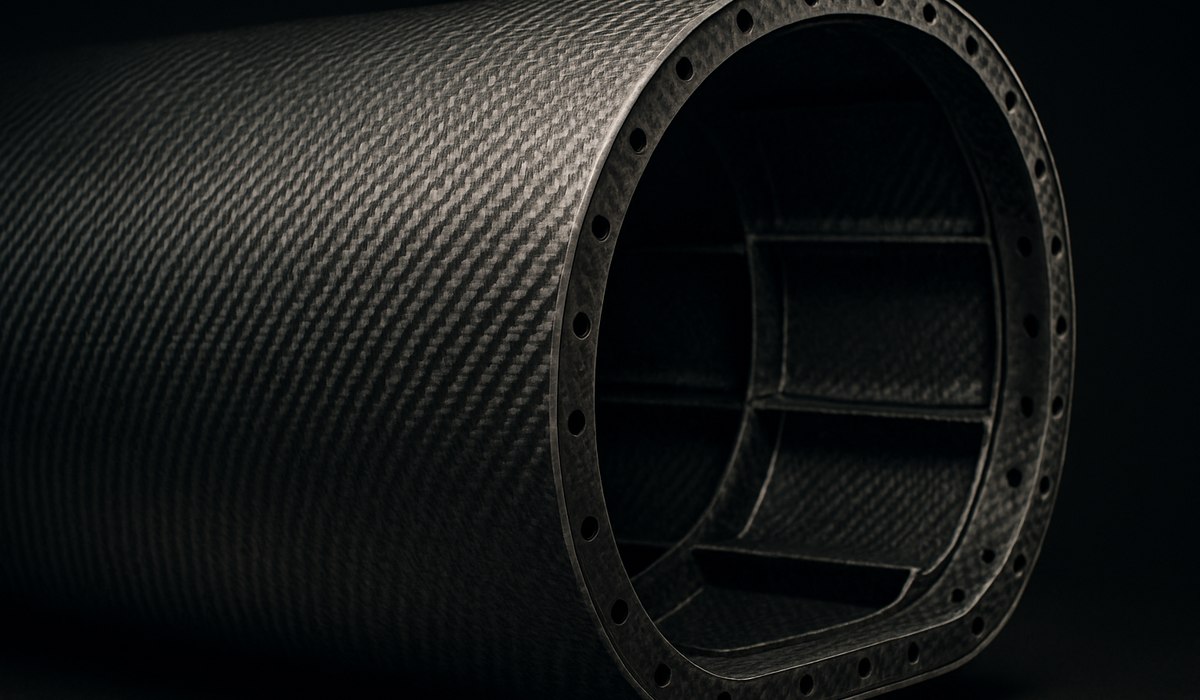
Image generated by AI
The Boeing 787 Dreamliner's Carbon Fiber Challenge Unfolds Globally
The Boeing 787 Dreamliner represents a watershed moment in commercial aviation history, becoming the first widebody jetliner constructed primarily from carbon fiber reinforced polymer (CFRP). Today, with over 1,200 aircraft operational across major international carriers including United Airlines, All Nippon Airways, Qatar Airways, and British Airways, the Dreamliner dominates long-haul routes spanning every continent. Yet persistent structural cracking in the carbon fiber fuselage throughout 2026 has sparked urgent investigations, raising critical questions about whether advanced composite materials truly deliver the durability promised by manufacturers. The discovery of microfractures in pressure bulkheads and fuselage lap joints challenges assumptions about carbon fiber's superiority over traditional aluminum construction.
Why Boeing Selected Carbon Fiber for the 787
Boeing's revolutionary decision to construct the 787 Dreamliner carbon fiber airframe stemmed from ambitious performance targets introduced in the early 2000s. Traditional aluminum fuselages proved inadequate for the 20 percent fuel-efficiency improvement Boeing promised operators. Carbon fiber composites offered 15-20 percent weight reduction compared to aluminum structures, translating directly into lower fuel consumption and extended range capabilities.
The material's advantages extended beyond raw performance metrics. The carbon fiber fuselage enabled higher cabin pressurization levels—up to 8,000 feet equivalent altitude versus 6,000 feet in conventional aircraft—improving passenger comfort on ultra-long-range flights. Manufacturing flexibility allowed Boeing engineers to design one-piece composite barrel sections, eliminating thousands of fasteners required in aluminum construction. These design innovations promised reduced maintenance intervals and lower overall lifecycle costs. Airlines embraced the 787 as a next-generation efficiency platform, with initial deliveries beginning in 2011. The structural integrity of composite materials seemed unquestionable at launch, setting expectations for decades of reliable service across global aviation networks.
The Efficiency Promise: Fuel Savings and Performance Reality
The Boeing 787 Dreamliner carbon fiber construction delivered measurable operational benefits that justified its complexity. Operators reported 20-25 percent fuel savings compared to legacy widebodies like the Boeing 777 and Airbus A330. Lower fuel consumption reduced carbon emissions per passenger-mile, aligning with aviation industry sustainability goals. Extended range—up to 7,650 nautical miles—enabled direct trans-Pacific and trans-Atlantic routing previously requiring stopover points.
Performance data from 2020-2026 confirmed these advantages. United Airlines' 787 fleet accumulated 18 million flight hours with average fuel burn reductions exceeding initial projections. All Nippon Airways, operating the world's largest Dreamliner fleet, demonstrated that composite airframes maintained structural efficiency throughout extended service cycles. Cabin environmental control systems leveraging composite insulation properties reduced pressurization power demands. Enhanced humidity retention—maintained between 40-60 percent versus 20 percent in pressurized cabins—improved passenger experience on long-haul routes. By 2026, the 787 established itself as the most economical widebody platform for ultra-long-haul operations, justifying the technological risk inherent in new composite construction methods.
Understanding the Structural Cracking Problem
Despite engineering excellence, carbon fiber fuselage components began exhibiting unexpected cracking patterns during 2024-2026 inspections. Initial findings centered on pressure bulkheads—the curved dome structures sealing each fuselage end—where microfractures propagated along composite ply boundaries. Lap joints connecting fuselage sections showed delamination, where individual carbon fiber layers separated under cyclic pressurization stress.
The Federal Aviation Administration (FAA) launched multiple Airworthiness Directives addressing these discoveries. Cracks appeared in older aircraft (those with 10,000-15,000 flight hours) subjected to thousands of pressurization cycles. Engineering analysis suggested the problem stemmed from manufacturing process variables rather than fundamental design flaws. Gaps in composite lay-up sequences, incomplete resin saturation, and fiber waviness in critical load paths created weakness zones invisible to standard inspection protocols. Environmental factors—temperature cycling at altitude, humidity absorption, and UV exposure at high altitudes—potentially accelerated microcrack initiation. The challenges contradicted assumptions that composite materials were inherently superior to aluminum in fatigue resistance, prompting comprehensive fleet reviews.
Maintenance and Long-Term Durability Concerns
Aircraft maintenance organizations worldwide grappled with unanticipated inspection and repair requirements for the Boeing 787 Dreamliner carbon fiber fleet. Traditional aluminum damage assessment methodologies proved inadequate for composite structures. Composite cracks often propagate invisibly, requiring advanced thermography, ultrasonic scanning, and computed tomography (CT) imaging to detect subsurface damage. Repair procedures demanded specialized training, exotic materials, and extended maintenance downtime.
Boeing implemented enhanced inspection protocols beginning June 2026, mandating visual inspections every 500 flight hours for vulnerable structural zones. Repairs demanded composite-certified technicians, specialized adhesives, and controlled environmental facilities. A single fuselage crack repair could require 40-60 labor hours and $50,000-150,000 in materials and labor. Airlines including Southwest Airlines, Japan Airlines, and Singapore Airlines reported increased maintenance reserves allocation. Depot-level inspections revealed that some aircraft required major composite section replacement, transforming the operating model that promised lower maintenance costs. The long-term durability picture evolved from theoretical superiority to pragmatic acceptance that advanced materials require proportionally advanced maintenance ecosystems. For travel planning, these realities translated into occasional schedule disruptions during inspections, though safety remained paramount.
Affected Airlines and Global Fleet Deployment
Major international carriers operated the most extensive 787 Dreamliner networks in June 2026. United Airlines maintained 70+ aircraft across transcontinental and Pacific routes from hubs in San Francisco, Newark, and Houston. All Nippon Airways deployed 80+ Dreamliners throughout Asia-Pacific, Europe, and North America from Tokyo Narita and Haneda hubs. Qatar Airways operated 80+ aircraft connecting Doha to 160+ destinations globally, leveraging 787 range for unique routing capabilities. British Airways maintained 30+ Dreamliners on London-based long-haul routes. American Airlines operated 50+ aircraft from Dallas and Charlotte hubs.
Secondary operators including Delta Air Lines, Turkish Airlines, Etihad Airways, China Southern Airlines, and Air China collectively operated 300+ additional aircraft. The global fleet distribution meant that cracking concerns affected virtually every intercontinental flight network. Inspection mandates implemented across June-August 2026 resulted in approximately 10-15 percent schedule reductions on affected carriers, primarily impacting trans-Pacific and Europe-Middle East routes. Airlines proactively notified passengers about potential schedule changes, offering rebooking flexibility and compensation options. The distributed nature of the 787 fleet meant that impact management required coordination across dozens of carriers and hundreds of airport pairs worldwide.
Structural Data and Technical Analysis
| Parameter | Specification | Current Finding | Impact |
|---|---|---|---|
| Primary Material | Carbon Fiber Composite | Manufacturing variability detected | Enhanced inspection required |
| Fuselage Diameter | 3.5 meters (11.5 feet) | Pressure bulkhead cracks identified | Safety protocols maintained |
| Pressurization Cycles | 40,000+ over 20 years | Microcracking at 10,000-15,000 cycles | Accelerated inspection schedule |
| Lap Joint Configuration | Adhesive-bonded composite | Delamination observed in service | Redesign under consideration |
| Inspection Technology | Ultrasonic/Thermography |
Disclaimer
This article is for informational and educational purposes only. It does not constitute legal, financial, or professional advice. While we strive to provide accurate and up-to-date information, travel policies, regulations, and conditions change rapidly. Always verify information with official sources before making travel decisions. Nomad Lawyer makes no representations about the accuracy, reliability, completeness, or suitability of the information provided. Readers should consult qualified professionals for advice specific to their circumstances. The views expressed in this article are those of the author and do not necessarily reflect the views of Nomad Lawyer.
Raushan Kumar
Founder & Lead Developer
Full-stack developer with 11+ years of experience and a passionate traveller. Raushan built Nomad Lawyer from the ground up with a vision to create the best travel and law experience on the web.
Learn more about our team →