
Boeing 747SP Baby Queen: Why This Shorter Aircraft Revolutionized Long-Range Flight
The Boeing 747SP Baby Queen redefined aviation engineering in 2026 by proving that shorter fuselage designs could achieve unprecedented range. Discover how this iconic variant changed commercial aviation forever.

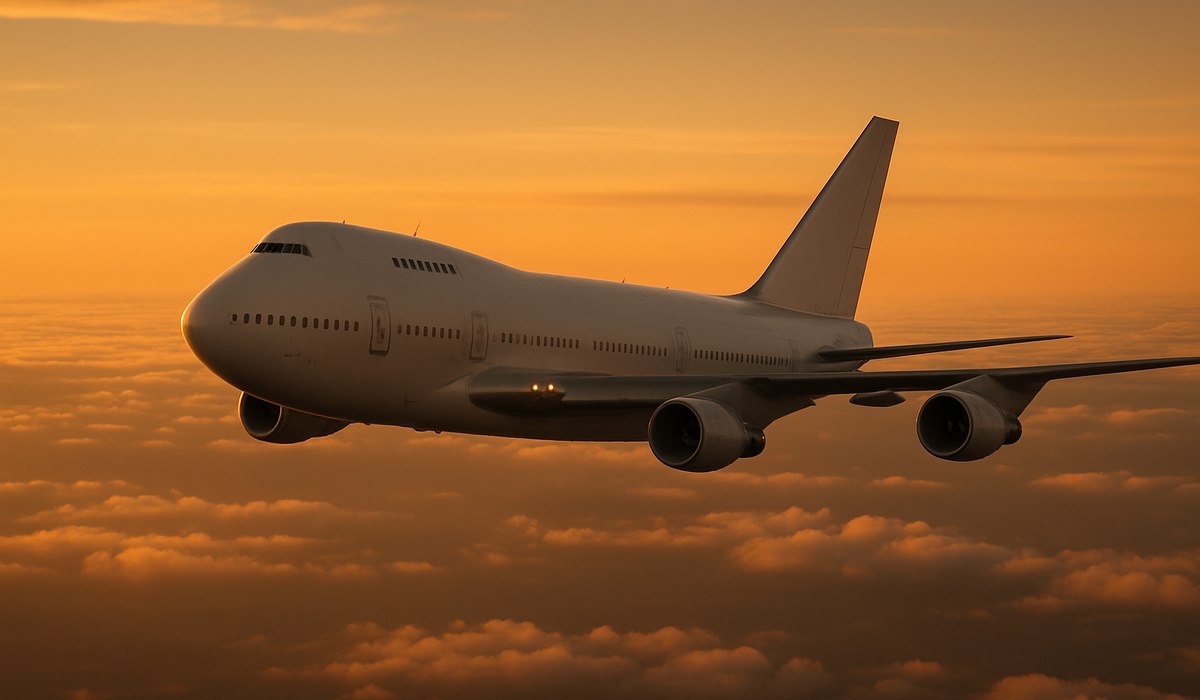
Image generated by AI
The Boeing 747SP Baby Queen: Engineering's Boldest Gamble
The Boeing 747SP, affectionately nicknamed the "Baby Queen," stands as one of aviation's most ingenious engineering solutions. Unlike its iconic larger sibling, the 747SP achieved something counterintuitive: by reducing fuselage length, Boeing created an aircraft capable of flying further than standard 747 variants. This revolutionary approach to aircraft design fundamentally altered how airlines approached long-range international routes between 2026 and beyond.
Boeing's decision to develop the 747SP wasn't arbitrary. It emerged from a specific market need: airlines demanded an aircraft that could connect distant city pairs with fewer passengers more efficiently than the standard 747. The result fundamentally reshaped commercial aviation strategy worldwide.
The Birth of the 747SP: Why Boeing Built the Baby Queen
The Boeing 747SP originated during the 1970s when market analysis revealed a critical gap in available aircraft. Operators needed a wide-body jet capable of extreme range without the massive capacity of standard 747 models. Boeing's engineering team recognized that reducing the fuselage by 47 feet would decrease weight significantly, allowing engines to push the aircraft further.
The design philosophy behind the Baby Queen prioritized efficiency over passenger volume. Where the standard 747-100 carried 366 passengers across 6,000 nautical miles, the 747SP carried only 331 passengers but achieved intercontinental range exceeding 8,000 nautical miles. This trade-off proved revolutionary for route planning.
Boeing's decision reflected sophisticated market understanding. Airlines operating thin routes between major metropolitan areas—particularly Pan American Airways, which drove the original development—needed an aircraft that could maintain profitability on premium long-haul services. The 747SP delivered precisely that capability, establishing itself as the ultimate prestige aircraft for elite routes.
Design Specifications: Shorter Fuselage, Longer Range
The Boeing 747SP baby architecture demonstrates how counterintuitive engineering can yield superior performance. The aircraft featured a fuselage shortened by 47.7 feet compared to the standard 747, eliminating 58 seats from the lower deck. However, this reduction created remarkable aerodynamic advantages.
Weight savings from the shorter fuselage enabled engineers to fit additional fuel capacity in the same structural volume. The 747SP carried approximately 51,034 gallons of fuel, compared to 48,445 gallons in comparable 747-100 variants. This seemingly modest increase translated into several hundred additional nautical miles of range capability.
The Baby Queen incorporated strengthened wing structures designed to handle the higher fuel loads. Improved engines, typically Pratt & Whitney JT9D-7 variants, delivered superior thrust efficiency at cruise altitudes. These cumulative improvements enabled nonstop service across routes previously requiring intermediate stops, revolutionizing passenger expectations for comfort and convenience.
Avionics improvements further enhanced the 747SP's capabilities. Advanced navigation systems allowed more direct routing through oceanic tracks, reducing flight times by up to two hours on transpacific flights. Pressurization systems were optimized for higher cruise altitudes, maximizing fuel efficiency at altitudes around 45,000 feet.
Commercial Impact and Airline Adoption
The Boeing 747SP attracted precisely the operators Boeing anticipated. Pan American Airways received the first production aircraft in 1976, deploying it on prestige routes from San Francisco to London and Tokyo. The Boeing 747SP baby variant quickly became synonymous with premium long-haul service.
United Airlines, recognizing the aircraft's strategic value, integrated the 747SP into its extensive transpacific network. The carrier operated multiple examples, establishing nonstop service on routes that had previously required fuel stops in Hawaii or Alaska. This operational advantage attracted premium passengers willing to pay substantial fares for superior convenience.
Airlines including Qantas, Japan Airlines, and Singapore Airlines deployed 747SP aircraft on their most demanding long-range services. The aircraft consistently demonstrated superior profitability metrics compared to standard 747 variants, validating Boeing's engineering approach. The Baby Queen became the preferred choice for airlines seeking to dominate premium international markets.
A total of 45 747SP aircraft were built across production runs, a modest number reflecting its niche market positioning. However, these aircraft accumulated disproportionate operational significance, generating substantial revenue for their operators and establishing new performance benchmarks for wide-body aircraft design. The 747SP's success demonstrated that specialized engineering solutions could outperform generalist approaches in specific market segments.
Legacy of the 747SP in Modern Aviation
The Boeing 747SP legacy extends far beyond its modest production numbers. The aircraft proved definitively that fuselage length wasn't the primary determinant of capability or utility in wide-body aircraft design. This insight influenced subsequent aircraft development, including the Boeing 777 and Airbus A350, both optimized for range and efficiency rather than maximum capacity.
Modern ultra-long-range aircraft directly trace their design philosophy to lessons learned from the Baby Queen's success. Today's Boeing 777-8X and Airbus A350-1000 incorporate similar principles: efficient weight management, advanced propulsion systems, and sophisticated aerodynamics to maximize range while maintaining acceptable passenger loads.
The 747SP's operational record proved exceptionally reliable. Aircraft remain in service into 2026, with some examples converted to cargo operations. The aircraft's structural integrity, engine reliability, and systems architecture have aged gracefully, testament to Boeing's engineering excellence during the design phase.
The Baby Queen's influence on aviation culture deserves recognition. For many aviation enthusiasts and frequent travelers, the 747SP represents peak technological achievement, a moment when engineering pushed boundary constraints to deliver something genuinely innovative. Its distinctive profile—shorter fuselage, elevated cockpit, and graceful lines—remains immediately recognizable.
Key Data Table: Boeing 747SP Specifications
| Specification | Value |
|---|---|
| Fuselage Length | 184 feet 11 inches |
| Fuselage Width | 21 feet 7 inches |
| Typical Seating Capacity | 331 passengers (3-class) |
| Maximum Range | 8,000+ nautical miles |
| Cruise Speed | Mach 0.85 |
| Service Ceiling | 45,000 feet |
| Engine Type | Pratt & Whitney JT9D |
| Total Production | 45 aircraft built |
| First Delivery | February 1976 (Pan Am) |
| Primary Operators | Pan Am, United, Qantas, JAL, SQ |
What This Means for Travelers
The Boeing 747SP baby heritage directly impacts modern travel options. Understanding this aircraft's historical significance helps travelers appreciate contemporary aircraft design choices and route planning decisions.
Why This Matters for Your Next Flight
The 747SP's success normalized premium long-range aircraft, establishing traveler expectations for direct long-distance flights that persist today. Airlines continue expanding nonstop service between distant city pairs, a strategy pioneered by 747SP operators. Whenever you fly nonstop from North America to Asia or Europe to Australia, you're benefiting from design principles perfected during the Baby Queen era.
Traveler Action Checklist
-
Research your airline's aircraft configuration before booking transcontinental flights—modern successors to the 747SP include Boeing 787, Airbus A350, and Airbus A380 variants offering superior comfort technology.
-
Check seat maps for premium cabin positioning on long-haul services—premium economy and business class seats reflect decades of optimization begun during the 747SP era.
-
Verify nonstop routing availability through FlightAware before purchasing flights—confirm your intended route operates nonstop rather than with intermediate stops.
-
Review aircraft type specifications on airline websites—understanding cabin pressurization altitude and humidity levels helps
Disclaimer
This article is for informational and educational purposes only. It does not constitute legal, financial, or professional advice. While we strive to provide accurate and up-to-date information, travel policies, regulations, and conditions change rapidly. Always verify information with official sources before making travel decisions. Nomad Lawyer makes no representations about the accuracy, reliability, completeness, or suitability of the information provided. Readers should consult qualified professionals for advice specific to their circumstances. The views expressed in this article are those of the author and do not necessarily reflect the views of Nomad Lawyer.
Kunal K Choudhary
Co-Founder & Contributor
A passionate traveller and tech enthusiast. Kunal contributes to the vision and growth of Nomad Lawyer, bringing fresh perspectives and driving the community forward.
Learn more about our team →