
Blackbird Secret Drone: The SR-71's Failed Sibling Program
The Lockheed D-21 blackbird secret drone, SR-71's lesser-known sibling, completed four reconnaissance missions in the 1960s but failed to deliver intelligence. Cold War aviation innovation met its match against Soviet air defense.

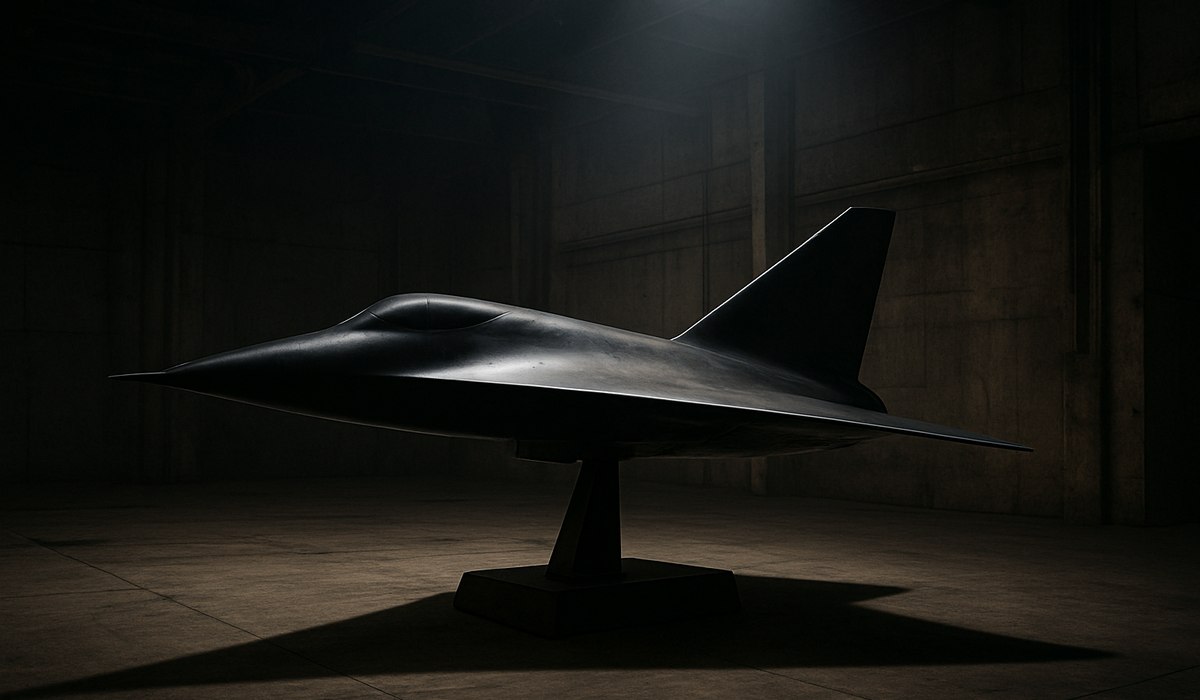
Image generated by AI
The Forgotten D-21: Aviation's Most Ambitious Failure
The Lockheed D-21 spy drone, conceived as the SR-71 Blackbird's unmanned successor, represented one of Cold War aviation's most innovative yet ultimately disappointing chapters. This experimental reconnaissance aircraft completed four operational missions between 1966 and 1971, yet failed to accomplish a single objective. Designed to penetrate heavily defended Soviet airspace where manned pilots faced lethal threats, the blackbird secret drone program ultimately demonstrated that technology alone cannot overcome systemic design flaws and unpredictable geopolitical realities.
The D-21 emerged from genuine strategic necessity. Soviet surface-to-air missile systems had grown increasingly sophisticated, making even the extraordinarily fast SR-71 vulnerable to interception. Military planners sought an unmanned alternative that could photograph sensitive installations without risking pilot lives. The resulting aircraft flew faster than Mach 3, operated at extreme altitudes, and incorporated cutting-edge materials and guidance systems that seemed revolutionary for its era.
The D-21: A Drone Ahead of Its Time
The blackbird secret drone represented technological ambition that exceeded contemporary capabilities. Engineers designed the aircraft to be carried aloft by a modified B-52 bomber, then released over designated target zones. Once separated, the D-21 would navigate autonomously using a combination of inertial guidance systems and preset coordinates—technologies that seem primitive by modern standards but constituted genuine breakthroughs in 1960s aerospace engineering.
The vehicle's dimensions reflected its specialized mission requirements. Approximately 42 feet long with a 17-foot wingspan, the D-21 weighed roughly 11,000 pounds fully equipped. Its single ramjet engine could propel the aircraft to altitudes exceeding 90,000 feet, theoretically placing it beyond the engagement envelope of contemporary Soviet air defense systems. The drone carried sophisticated camera systems capable of capturing detailed reconnaissance imagery at extreme range and altitude.
What distinguished the blackbird secret drone from contemporary unmanned aircraft was its genuine operational deployment. Unlike experimental platforms, the D-21 actually flew intelligence-gathering missions over denied territory, answering genuine military requirements. Visit the National Archives to access declassified documentation regarding Cold War reconnaissance programs and technical specifications. The program represented a transitional moment when military planners understood that unmanned systems represented the future, yet lacked the digital technologies that would eventually make such platforms practical and reliable.
Why The SR-71's Sibling Failed Four Consecutive Missions
The blackbird secret drone program's operational record tells a stark story of unmet objectives. All four missions flown by the D-21 encountered catastrophic failures that prevented successful intelligence collection. The first mission, conducted in March 1966, ended when the drone's guidance systems malfunctioned over China. Subsequent flights experienced similar navigation failures, sensor malfunctions, or recovery system inadequacies that prevented the aircraft from returning photographic evidence of intended targets.
These failures stemmed from multiple interconnected factors. The blackbird secret drone relied on autonomous navigation systems that proved unreliable across the vast distances separating launch points from Soviet territory. Inertial guidance platforms accumulated navigational errors throughout extended flights, causing the aircraft to deviate from intended flight paths. Additionally, the classified nature of the program prevented rigorous testing over actual target zones before operational deployment—a significant handicap when operating against sophisticated adversaries with advanced radar capabilities.
The recovery mechanism proved equally problematic. The D-21 incorporated a parachute system designed to deploy film canisters over friendly territory where recovery teams could retrieve photographic evidence. This system functioned as the program's critical vulnerability. Timing errors, mechanical failures, or navigation inaccuracies frequently prevented successful film capsule recovery, rendering even partially successful flights operationally worthless. When the blackbird secret drone did penetrate target areas, it often failed to return collected intelligence through the complex recovery procedures that characterized the program's operational methodology.
Cold War Technology: When High-Flying Wasn't High Enough
The fundamental assumption undergirding the D-21 program proved questionable: that extreme altitude and speed alone could guarantee mission success against advancing Soviet air defenses. Soviet military engineers continuously improved surface-to-air missile systems, deploying increasingly capable platforms that reduced the operational margins available to manned and unmanned reconnaissance aircraft. By the late 1960s, when the blackbird secret drone accumulated its disappointing operational record, Soviet air defense networks had evolved to challenge even the most advanced American aircraft.
This technological race between offensive reconnaissance platforms and defensive systems illustrated broader patterns in Cold War competition. Neither side could achieve decisive superiority; each advancement in reconnaissance technology prompted countervailing improvements in air defense capabilities. The SR-71 Blackbird, despite its legendary status, operated with constant awareness that Soviet systems might eventually penetrate its defensive envelope. The D-21 drone attempted to remove pilots from immediate danger but could not transcend the fundamental physics governing aircraft operations and sensor capabilities.
The program's cancellation in 1971 reflected broader strategic reassessment. Satellite reconnaissance technology was advancing rapidly, offering alternatives to high-risk manned and unmanned aircraft missions over hostile territory. By the early 1970s, photographic reconnaissance satellites provided reliable imagery collection without the operational risks inherent to aircraft operations. The blackbird secret drone, which had seemed promising when conceived in the early 1960s, became redundant within a decade. Check FAA historical records for additional information regarding Cold War-era aviation programs and their strategic contexts.
Legacy of Innovation: From Failed Drones to Modern Surveillance
The D-21 program's legacy extends far beyond its operational failures. The blackbird secret drone represented genuine innovation in autonomous flight, guidance systems, and high-altitude aerodynamics. Engineers who worked on this classified program later contributed to subsequent unmanned aircraft development, importing lessons learned from four decades-old operations into contemporary designs. The program demonstrated that unmanned reconnaissance was technically feasible, even when specific implementations proved operationally inadequate.
Modern unmanned aircraft systems—from military Reapers and Predators to civilian commercial drones—owe conceptual and technical debts to programs like the D-21. Developers understood that autonomous flight over extended distances required redundant navigation systems, reliable communication protocols, and sophisticated recovery mechanisms. The blackbird secret drone flew these lessons at tremendous cost in classified budgets and delayed intelligence collection. Subsequent generations of engineers applied these hard-won insights to designs that eventually achieved operational reliability.
The program also illustrated fundamental limitations of purely autonomous systems operating in contested environments. The D-21 could neither adapt to unexpected circumstances nor adjust flight paths based on detected threats. Modern unmanned systems incorporate real-time communication links allowing operators to modify missions dynamically. The blackbird secret drone represented aviation's pre-digital age, when autonomous operation meant literal autonomy—absence of human control rather than remote pilot direction. This distinction fundamentally shaped how subsequent unmanned aircraft programs were designed and deployed.
Key Data: D-21 Blackbird Secret Drone Program Timeline
| Attribute | Details |
|---|---|
| Program Designation | D-21 Unmanned Reconnaissance Aircraft |
| Parent Organization | Lockheed Aircraft Corporation's "Skunk Works" |
| Development Period | 1962-1966 |
| Operational Period | 1966-1971 |
| Number of Missions | 4 operational flights |
| Mission Success Rate | 0% (zero successful intelligence collection) |
| Altitude Capability | 90,000+ feet |
| Maximum Speed | Mach 3.5+ |
| Aircraft Length | 42 feet |
| Wingspan | 17 feet |
| Maximum Weight | 11,000 pounds |
| Guidance System | Inertial navigation (pre-digital) |
| Launch Method | Air-dropped from modified B-52 bomber |
| Recovery Method | Parachute-deployed film capsule |
Disclaimer
This article is for informational and educational purposes only. It does not constitute legal, financial, or professional advice. While we strive to provide accurate and up-to-date information, travel policies, regulations, and conditions change rapidly. Always verify information with official sources before making travel decisions. Nomad Lawyer makes no representations about the accuracy, reliability, completeness, or suitability of the information provided. Readers should consult qualified professionals for advice specific to their circumstances. The views expressed in this article are those of the author and do not necessarily reflect the views of Nomad Lawyer.
Raushan Kumar
Founder & Lead Developer
Full-stack developer with 11+ years of experience and a passionate traveller. Raushan built Nomad Lawyer from the ground up with a vision to create the best travel and law experience on the web.
Learn more about our team →