
Black Mountain, North Carolina: The Blue Ridge’s Quiet Mountain Retreat Rebounds With Downtown Revival and Year-Round Outdoor Access
Once dubbed the “front porch of Western North Carolina,” this Blue Ridge enclave is regaining its momentum with a restor

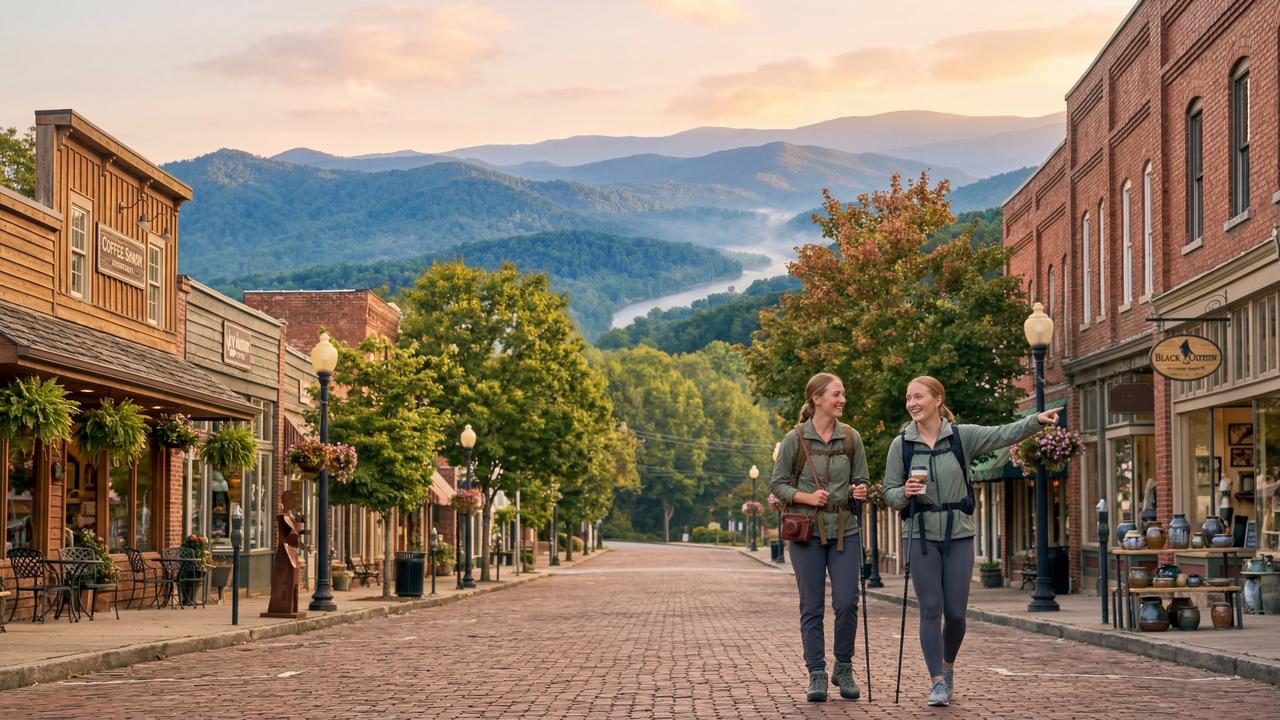
Image generated by AI
Just twenty minutes east of Asheville, Black Mountain, North Carolina, operates at a deliberately measured pace that contrasts sharply with larger regional urban centers. Known locally as the “front porch of Western North Carolina,” the town balances a compact, walkable commercial district with immediate access to waterfalls, high-elevation trails, and panoramic mountain vistas. Following the widespread infrastructure damage caused by Hurricane Helene in September 2024, the community has coordinated a steady recovery. Downtown corridors are fully operational, with independent retailers, restaurants, and cultural venues actively welcoming visitors.
Artistic Legacy and Commercial Corridor
The town’s cultural identity remains deeply tied to the former Black Mountain College, which closed in 1957 but fundamentally influenced American liberal arts and experimental design. While the original institution no longer operates, its archival footprint survives through the Black Mountain College Museum + Arts Center in Asheville, which curates rotating exhibitions, performances, and educational programs. Locally, Red House Gallery & Studios and Seven Sisters Gallery continue to showcase contemporary regional artists and handcrafted goods.
Retail activity centers on pedestrian-friendly blocks where local proprietors maintain direct interaction with shoppers. Town Hardware & General Store functions as a curated general merchandise outlet stocking vintage toys and household essentials. C.W. Moose Trading Company operates a closely adjacent storefront featuring locally manufactured gifts and apparel from brands such as Natural Life and Baggallini. For historical context, the Swannanoa Valley Museum & History Center occupies the town’s original 1912 firehouse. The facility maintains rotating exhibits on regional geography, indigenous history, and settlement patterns, while scheduling seasonal guided hikes and preservation workshops.
Trail Networks and Mountain Recreation
Outdoor activity is structured around both immediate town infrastructure and regional forest systems. Lake Tomahawk Park provides paved and gravel loop trails suitable for morning walks, cycling, and wildlife observation. Five minutes from the commercial district, the Montreat trail system offers higher-elevation routes, including the Lookout Trail, which ascends to exposed ridgeline overlooks.
Beyond municipal boundaries, Pisgah National Forest encompasses more than 500,000 acres of managed woodland. The forest supports regulated fly-fishing, mountain biking corridors, and backcountry hiking. A designated two-mile hike within the national forest leads to Catawba Falls, a multi-tiered cascade accessible via maintained forest service trails. Seasonal water levels and trail conditions typically dictate optimal visiting windows, with late spring through early fall providing the most consistent access.
Culinary Diversity and Beverage Production
Black Mountain maintains a disproportionately large and geographically varied restaurant sector relative to its population. Several establishments operate within a concentrated downtown footprint, offering international menus that extend beyond typical Appalachian fare. The Cheshire Arms serves British-style dishes, while La Guinguette specializes in French cooking. The Bush Farmhouse features South African-inspired preparations, including house-made sausages and bobotie. Berliner Kindl focuses on German cuisine with a notable schnitzel program, and Ole's Guacamoles provides Mexican regional dishes.
Casual dining options include Veranda, which operates a Bavarian-style pretzel club menu and serves she-crab soup on Friday evenings. Foothills Grange gained national visibility after a February 2026 appearance on Food Network’s Diners, Drive-Ins and Dives. Additional established venues include Hell or High Water and Trillium Table, the latter located inside a historic inn and known for seasonal cocktail programs and locally sourced ingredients.
Beverage production centers on three primary facilities: Oak and Grist Distilling Company, Pisgah Brewing Company, and Black Mountain Cider + Mead. Each operates tasting rooms that emphasize regional ingredients and traditional fermentation methods.
Historic Lodging and Community-Focused Stays
Accommodation inventory blends restored historic structures with modern boutique properties. Peri Social House operates a six-room property constructed in 1936. The Georgian Revival building sits two blocks from the main commercial district and features an on-site coffee and craft beverage service. Weekend programming typically includes live musical performances and community art events designed to integrate visitors with local residents.
The Red Rocker Inn Bed & Breakfast functions as a Victorian-era property positioned for immediate pedestrian access to downtown amenities. The inn features a broad front porch furnished with rocking chairs and houses Trillium Table, a restaurant emphasizing seasonal menus and locally procured provisions.
The Black Mountain Inn traces its origins to the 1830s as a stagecoach rest stop. The building later operated as a tuberculosis treatment facility before transitioning into a 1940s artists’ retreat that hosted literary and scientific figures including John Steinbeck, Ernest Hemingway, and Helen Keller. The property currently operates as a five-room inn, maintaining historic architectural details while providing modern lodging standards.
Post-Disaster Recovery and Visitor Access
The September 2024 impact of Hurricane Helene required extensive infrastructure repair across the surrounding counties. Black Mountain’s recovery strategy prioritized direct support for independent merchants and cultural institutions. Local chamber leadership notes that the town’s geographic setting and community cohesion have accelerated business reopening timelines. Operators report consistent visitor traffic, with downtown galleries, restaurants, and retail spaces operating at standard capacity. Travelers planning visits should verify seasonal trail conditions, restaurant reservation windows, and lodging availability, particularly during peak autumn foliage and summer holiday periods.
| Venue Type | Establishment | Location / Key Details |
|---|---|---|
| Lodging | Peri Social House | 6-room Georgian Revival property (1936), 2 blocks from downtown, on-site coffee/beverage bar, weekend live music & workshops |
| Lodging | Red Rocker Inn Bed & Breakfast | Victorian-style inn with front porch, houses on-site restaurant Trillium Table |
| Lodging | Black Mountain Inn | 1830s stagecoach stop, former TB sanatorium, 1940s artists’ retreat (hosted Steinbeck, Hemingway, Helen Keller), now 5-room inn |
| Dining | The Bush Farmhouse | South African-inspired menu, notable for sausages and bobotie |
| Dining | Berliner Kindl | German cuisine, known for schnitzel |
| Dining | Veranda | Casual spot, Bavarian Pretzel Club menu, Friday she-crab soup |
| Dining | Foothills Grange | Featured on Food Network’s Diners, Drive-Ins and Dives (Feb 2026) |
| Dining | Trillium Table | Located inside Red Rocker Inn, seasonal cocktails and locally sourced plates |
| Arts/Culture | Red House Gallery & Studios | Rotating exhibits for regional artists |
| Arts/Culture | Swannanoa Valley Museum & History Center | Housed in 1912 firehouse, offers exhibits and scheduled workshops |
Key Takeaways
- Black Mountain sits roughly 20 minutes east of Asheville and operates as a walkable, arts-focused mountain community.
- The town has fully reopened its downtown commercial corridor following Hurricane Helene damage in September 2024.
- Culinary offerings extend beyond regional Appalachian cuisine to include British, French, German, South African, and Mexican restaurants within a compact downtown footprint.
- Outdoor recreation spans immediate town trails at Lake Tomahawk and Montreat to expansive Pisgah National Forest terrain, including a two-mile route to Catawba Falls.
- Historic lodging inventory includes three primary properties: Peri Social House (1936), Red Rocker Inn (Victorian), and Black Mountain Inn (1830s stagecoach stop).
FAQ
How does Black Mountain compare to nearby Asheville for visitors?
Black Mountain maintains a slower pace and smaller commercial footprint while offering similar creative energy, mountain access, and a concentrated downtown walkable core.
Is the town fully accessible to tourists after Hurricane Helene?
Yes. Downtown shops, galleries, restaurants, and taprooms have reopened, and local tourism infrastructure operates at standard capacity.
What outdoor activities are available locally?
Visitors can access paved and gravel loops at Lake Tomahawk Park, higher-elevation routes in Montreat like the Lookout Trail, and extensive terrain in Pisgah National Forest, including a two-mile hike to Catawba Falls.
Which historic institutions shape the town’s arts culture?
The legacy of the former Black Mountain College (closed 1957) continues through the Black Mountain College Museum + Arts Center in Asheville. Locally, Red House Gallery & Studios and Seven Sisters Gallery maintain active exhibition calendars.
What dining styles can visitors expect downtown?
The culinary scene offers a concentrated range of international options, including British, French, South African, German, and Mexican restaurants, alongside casual spots like Veranda and Foothills Grange.
Related Travel Guides
Disclaimer
This article is for informational and educational purposes only. It does not constitute legal, financial, or professional advice. While we strive to provide accurate and up-to-date information, travel policies, regulations, and conditions change rapidly. Always verify information with official sources before making travel decisions. Nomad Lawyer makes no representations about the accuracy, reliability, completeness, or suitability of the information provided. Readers should consult qualified professionals for advice specific to their circumstances. The views expressed in this article are those of the author and do not necessarily reflect the views of Nomad Lawyer.
Preeti Gunjan
Contributor & Community Manager
A passionate traveller and community builder. Preeti helps grow the Nomad Lawyer community, fostering engagement and bringing the reader experience to life.
Learn more about our team →