
Benelux Extreme Heat 2026: Record Temperatures Trigger Rail Chaos and Public Safety Alerts
Record-breaking temperatures reaching 37°C across Belgium, the Netherlands, and Luxembourg have triggered urgent public safety warnings and widespread European rail disruptions.

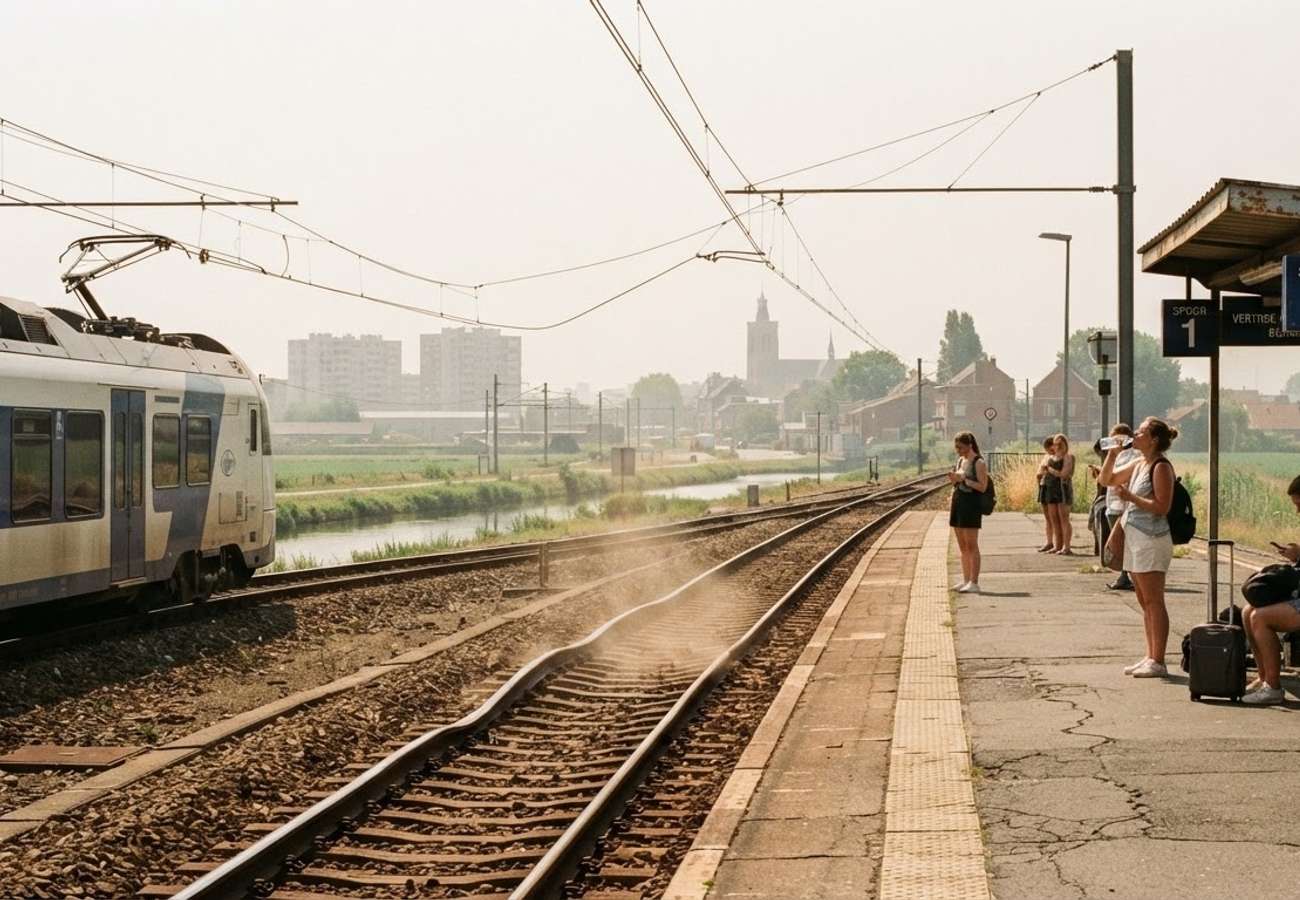
Image generated by AI
Record temperatures of 37°C have shattered August benchmarks across the Benelux region, forcing national governments to activate emergency heatwave plans and triggering severe operational failures across European rail networks.
Meteorological Data and Record Temperature Spikes
National weather agencies across Belgium, the Netherlands, and Luxembourg are reporting an unprecedented climatic anomaly for late summer. The Royal Meteorological Institute of Belgium (KMI/IRM), the Royal Netherlands Meteorological Institute (KNMI), and MeteoLux have coordinated to track a series of extraordinary temperature spikes that have pushed regional infrastructure to its limits.
Official monitoring stations have confirmed that several August temperature records have been officially broken. The intensity of the heat is not localized to a single city but is widespread across the three territories, with officials anticipating that temperatures may climb even higher in the coming 24 hours.
Confirmed Peak Temperature Readings
| Location | Country | Recorded Temperature | Monitoring Agency |
|---|---|---|---|
| Liège | Belgium | 36.8°C | KMI/IRM |
| Schaffen | Belgium | 36.3°C | KMI/IRM |
| Hoek van Holland | Netherlands | 35.2°C | KNMI |
Government Response and National Heatwave Plans
Health ministries and tourism boards have deployed emergency weather frameworks to mitigate the risk of mass heat exposure. In Belgium, the KMI/IRM has activated Orange and Yellow Heat Alerts, which are triggered when daily maximum temperatures and nighttime lows breach critical health thresholds.
Simultaneously, the Netherlands has implemented its National Heatwave Plan. This response is coordinated between the KNMI and the RIVM (National Institute for Public Health and the Environment), issuing Code Yellow and Code Orange warnings to combat severe public heat stress.
While the UK Foreign, Commonwealth & Development Office (FCDO) and the US Department of State continue to monitor the situation, no "Do Not Travel" bans have been issued. However, strict adherence to local public safety directives is now mandatory to avoid medical emergencies.
European Rail Disruptions and Infrastructure Risk
The extreme heat has created a critical failure point for regional transit. Both the NS (Netherlands) and SNCB/NMBS (Belgium) railway networks are reporting significant operational strain.
The primary technical cause is the physical reaction of rail infrastructure to extreme heat. High temperatures lead to "overhead wire sag," where electrical lines lose tension, and "track expansion," where steel rails expand and potentially warp. To prevent derailments and equipment failure, operators have mandated immediate speed restrictions on major intercity lines.
Transit Operational Directives
- Live Monitoring: Passengers must use the NS or SNCB/NMBS digital portals for real-time schedule updates.
- Speed Restrictions: Expect significant delays on major corridors due to safety-mandated speed reductions.
- Hydration Mandate: Travelers are urged to carry bottled water; dehydration on stalled trains is currently flagged as a significant public danger.
Traveler Logistics Guide: Navigating the Heatwave
From a ground-level perspective, navigating the Benelux region during a Code Orange event requires a total shift in itinerary planning. The standard "sightseeing" approach is dangerous during peak thermal windows.
Optimal Scheduling Avoid all outdoor exertion between 11:00 AM and 4:00 PM. The most effective way to manage a visit is to utilize "cool spaces"—public libraries, air-conditioned museums, and shaded parks—during these hours.
Transit Connections When booking connections between Brussels, Amsterdam, and Luxembourg, allow for a minimum of 90 to 120 minutes between transfers. Given the current track expansion risks and speed restrictions, the standard 30-minute connection is no longer viable.
Health & Safety Protocols
- Vulnerable Groups: Elderly travelers, young children, and those with cardiovascular or respiratory conditions should avoid outdoor activity entirely during peak hours.
- Vehicle Safety: Never leave children or pets in stationary vehicles. Local police are actively patrolling tourist zones and will prosecute negligence under local law.
- Fire Compliance: Temporary municipal bans on open campfires and disposable BBQs are in effect in all nature reserves and forest zones. Smoking is strictly forbidden in vulnerable rural areas.
Infrastructure Impact Assessment
This event highlights a growing vulnerability in European transit infrastructure. The reliance on overhead electrical lines and standard steel rails makes the Benelux corridor susceptible to "climate-induced paralysis." As August records continue to shatter, the frequency of speed restrictions and localized delays is expected to increase, potentially impacting regional tourism and logistics chains throughout the remainder of the summer.
Stay vigilant and prioritize hydration over itinerary.
Related Travel Guides
Disclaimer
This article is for informational and educational purposes only. It does not constitute legal, financial, or professional advice. While we strive to provide accurate and up-to-date information, travel policies, regulations, and conditions change rapidly. Always verify information with official sources before making travel decisions. Nomad Lawyer makes no representations about the accuracy, reliability, completeness, or suitability of the information provided. Readers should consult qualified professionals for advice specific to their circumstances. The views expressed in this article are those of the author and do not necessarily reflect the views of Nomad Lawyer.
Kunal K Choudhary
Co-Founder & Contributor
A passionate traveller and tech enthusiast. Kunal contributes to the vision and growth of Nomad Lawyer, bringing fresh perspectives and driving the community forward.
Learn more about our team →