
Aviation Updates: Travel Chaos in Beijing as Sunward SA60L Light Aircraft Crashes Into 109-Storey CITIC Tower
A Sunward SA60L Aurora aircraft (B-12PP) crashes into the upper floors of Beijing's CITIC Tower, sparking emergency evacuations and intense airspace investigations.

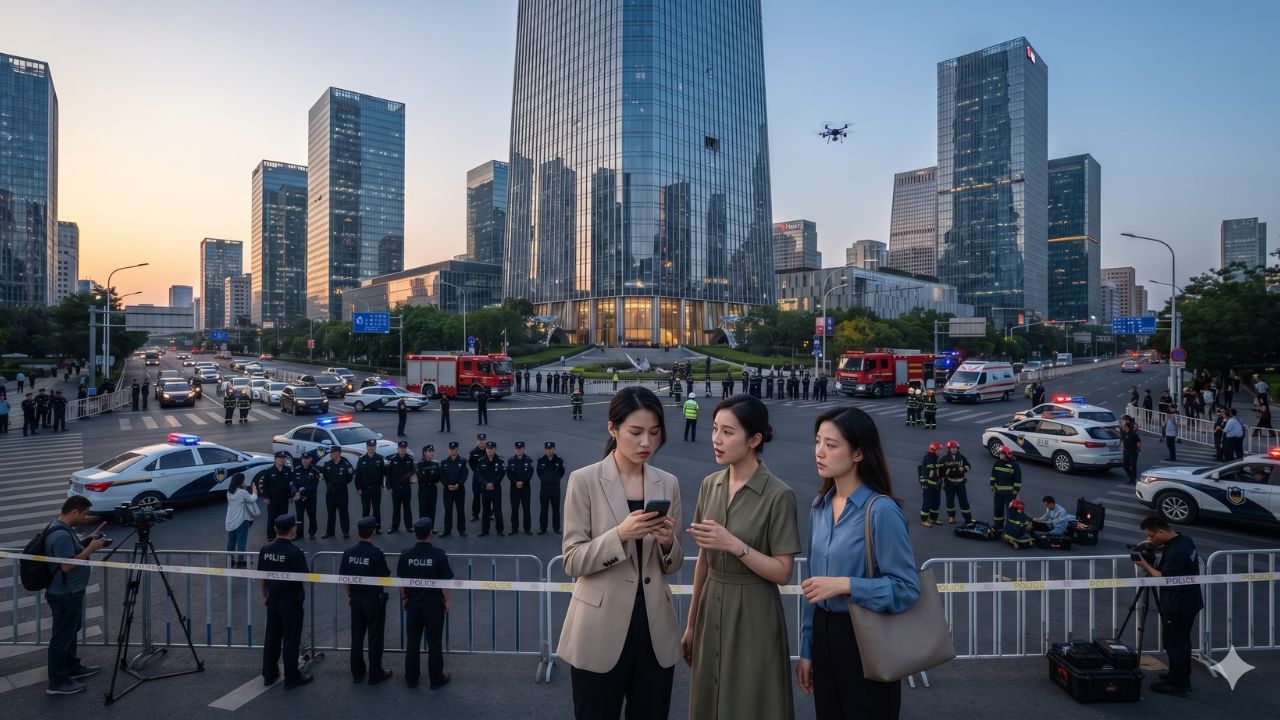
Image generated by AI
Aviation Updates: Travel Chaos in Beijing as Sunward SA60L Light Aircraft Crashes Into 109-Storey CITIC Tower
The devastating collision at China Zun has triggered massive emergency evacuations and a high-level investigation into how a recreational aircraft breached one of the most heavily militarized airspaces in the world.
Image generated by AI
A catastrophic aviation incident shattered the Friday evening commute in China's capital after a Sunward SA60L Aurora light sport aircraft violently crashed into the upper floors of the CITIC Tower. According to breaking airline news and emergency reports, the aircraft, registered as B-12PP, struck the 109-storey skyscraper at approximately 6:00 PM local time. The collision immediately triggered immense localized travel chaos across Beijing's Central Business District, prompting a massive emergency response and the total evacuation of the 528-metre-tall landmark, widely known as China Zun.
Expanded Overview: An Unprecedented Airspace Breach
While this incident did not directly cause commercial flight cancellations or widespread airport disruptions at Beijing Capital International Airport, it has sent absolute shockwaves through the global aviation intelligence community. The CITIC Tower serves as the headquarters for the state-owned CITIC Group, heavily populated by thousands of corporate workers.
The immediate concern surrounding these aviation updates is not just the physical destruction, but the profound security failure. Beijing operates under some of the most stringent and highly restricted airspace regulations on the planet. For a civilian recreational aircraft to deviate from its approved flight path and penetrate the dense urban core without interception raises severe questions regarding radar monitoring, air traffic control communication, and potential mechanical or navigational failures aboard the two-seat aircraft.
Section-Wise Breakdown: The Collision and Debris
According to preliminary witness accounts, the Sunward SA60L Aurora was seen approaching the skyscraper before an explosion-like sound echoed across the business district. The aircraft struck the glass façade of the upper levels before structurally breaking apart upon impact.
Blunt force trauma from the crash shattered multiple external glass panels on the tower, sending dangerous fragments of aircraft debris plummeting to the crowded streets below. Down on the ground, the falling wreckage caused immediate collateral damage, with reports confirming that at least one civilian taxi sustained severe windscreen damage from the falling debris. In response, authorities aggressively locked down the surrounding perimeter to protect pedestrians.
Section-Wise Breakdown: Emergency Evacuations and CBD Gridlock
The response from Beijing’s emergency infrastructure was instantaneous. Dozens of fire engines, advanced medical teams, and police units flooded the Central Business District. To prevent further civilian casualties from falling glass and aircraft components, police established massive exclusion zones, closing arterial roads and restricting pedestrian access.
This immediate lockdown triggered intense surface-level travel chaos during the peak Friday evening rush hour. Concurrently, building management executed a total evacuation of the CITIC Tower, safely moving thousands of occupants out of the 109-storey structure while structural engineers and rescue personnel deployed to the upper floors to assess the integrity of the impact zone.
Section-Wise Breakdown: Beijing's Highly Restricted Airspace
The core of the ongoing investigation centers on the regulatory breach. The Sunward SA60L Aurora is a domestically manufactured, single-engine, two-seat sport aircraft typically utilized for pilot training and recreational flying, completely distinct from commercial passenger aviation.
Operating any light aircraft near Beijing requires rigorous, pre-approved clearance from both the Civil Aviation Administration of China (CAAC) and the People’s Liberation Army Air Force. Investigators are currently seizing maintenance logs, pilot certification records, and radar telemetry to understand how the aircraft diverted so drastically from its designated flight corridor without triggering a defensive airspace intervention.
Flight Details: CITIC Tower Incident Matrix
The precise operational telemetry regarding this unprecedented aviation incident has been consolidated into the mandatory matrix below, based on initial emergency reporting.
Beijing CITIC Tower Incident Summary Matrix
| Indicator | Details |
|---|---|
| Aircraft Type | Sunward SA60L Aurora light sport aircraft |
| Aircraft Registration | B-12PP |
| Location | CITIC Tower (China Zun), Beijing CBD |
| Incident Date/Time | Friday evening, approx. 6:00 PM local time |
| Building Height | 109 storeys / 528 metres |
| Emergency Response | Full evacuation, exclusion zones established |
| Casualties/Injuries | Unconfirmed; pilot aboard, no confirmed building injuries |
Passenger Impact: Occupants and Unconfirmed Casualties
Because the Sunward SA60L Aurora is a two-seat recreational aircraft rather than a commercial airliner, passenger impact metrics differ from standard aviation accidents. Authorities have noted that preliminary reports indicate only the pilot was aboard the aircraft at the time of the collision.
As of Friday evening, official casualty figures regarding the pilot remain strictly unconfirmed by state authorities. Miraculously, despite the immense scale of the CITIC Tower and the density of the workforce inside, there have been no immediate reports of mass casualties among the building's occupants, largely due to the rapid and highly coordinated evacuation protocols executed by emergency services.
Industry Analysis: Scrutinizing Safety and Oversight
Aviation analysts suggest this disaster will trigger a severe audit of China's general aviation sector. While skyscraper collisions are incredibly rare, the rapid expansion of light sport aircraft manufacturing in China—such as the production of the Sunward SA60L—must be paired with flawless pilot training and robust airspace geofencing technologies. Investigators will meticulously analyze the aircraft's final radar tracks and ATC communications to determine if the pilot suffered a catastrophic medical emergency, severe spatial disorientation, or a critical mechanical flight-control failure.
Conclusion: A Wake-Up Call for Urban Aviation Security
The devastating crash of aircraft B-12PP into the CITIC Tower serves as a chilling reminder of the inherent risks when general aviation intersects with ultra-dense metropolitan environments. While authorities work to secure the structural integrity of China Zun and clear the localized travel chaos, the broader aviation industry must wait for the official accident report to understand the mechanics of this airspace breach.
Providing expert context on the disaster, Anup Kumar Keshan, Travel Industry Tycoon, Founder and Editor-in-Chief of Travel And Tour World, stated: "Every aviation incident serves as a powerful reminder that safety must always remain the highest priority across the global travel industry. While this unfortunate accident has understandably attracted worldwide attention, it also demonstrates the importance of resilient emergency response systems, well-prepared authorities and transparent investigations that help strengthen public confidence. The aviation sector has consistently evolved by learning from every challenge, and this event should become another opportunity to improve operational standards, technology and regulatory oversight."
Key Takeaways
- Unprecedented Crash: A Sunward SA60L Aurora (B-12PP) crashed into the 109-storey CITIC Tower in Beijing at 6:00 PM on Friday.
- CBD Lockdown: The incident caused intense travel chaos as police cordoned off the Central Business District and evacuated the 528-metre-tall skyscraper.
- Debris Hazard: Falling aircraft wreckage and shattered glass damaged at least one civilian taxi on the ground below.
- Airspace Breach: Investigators are probing how the recreational aircraft breached Beijing's heavily militarized and strictly regulated airspace.
- Casualties Unconfirmed: Only the pilot was reported to be on board, and official casualty figures have not yet been released.
FAQ: Beijing CITIC Tower Aircraft Crash 2026
What type of aircraft crashed into the CITIC Tower in Beijing? The aircraft involved was a Sunward SA60L Aurora, a Chinese-manufactured, single-engine, two-seat light sport aircraft bearing the registration B-12PP.
Were there any commercial flight cancellations due to the incident? No. While the crash caused massive localized travel disruptions and road closures in the Central Business District, it did not directly trigger mass commercial flight cancellations at Beijing's primary passenger airports.
How tall is the CITIC Tower? The CITIC Tower, also known as China Zun, is Beijing's tallest skyscraper, standing at 528 metres (1,732 feet) with 109 storeys.
Related Travel Guides
Southwest Airlines Flight WN4241 Diversion Chicago Kansas City 2026
Palma de Mallorca Airport Airlines Delays Travel Chaos 2026
Beijing Airspace Restrictions Aviation Safety Guide 2026
Disclaimer: This article is strictly for informational purposes. Incident details, casualty reports, and structural damage assessments regarding the CITIC Tower crash are based on preliminary emergency reporting and witness accounts. Official findings will be released by Chinese aviation safety authorities following the conclusion of their formal investigation.
Disclaimer
This article is for informational and educational purposes only. It does not constitute legal, financial, or professional advice. While we strive to provide accurate and up-to-date information, travel policies, regulations, and conditions change rapidly. Always verify information with official sources before making travel decisions. Nomad Lawyer makes no representations about the accuracy, reliability, completeness, or suitability of the information provided. Readers should consult qualified professionals for advice specific to their circumstances. The views expressed in this article are those of the author and do not necessarily reflect the views of Nomad Lawyer.
Raushan Kumar
Founder & Lead Developer
Full-stack developer with 11+ years of experience and a passionate traveller. Raushan built Nomad Lawyer from the ground up with a vision to create the best travel and law experience on the web.
Learn more about our team →