
Bali's Hidden Firefly Tours in Taro Village: How One Family Is Reviving Indonesia's Sacred Glowing Insects
Discover Bali's underground firefly conservation movement in Taro village. Learn how ecotourism and organic farming are bringing back Indonesia's endangered bioluminescent insects.

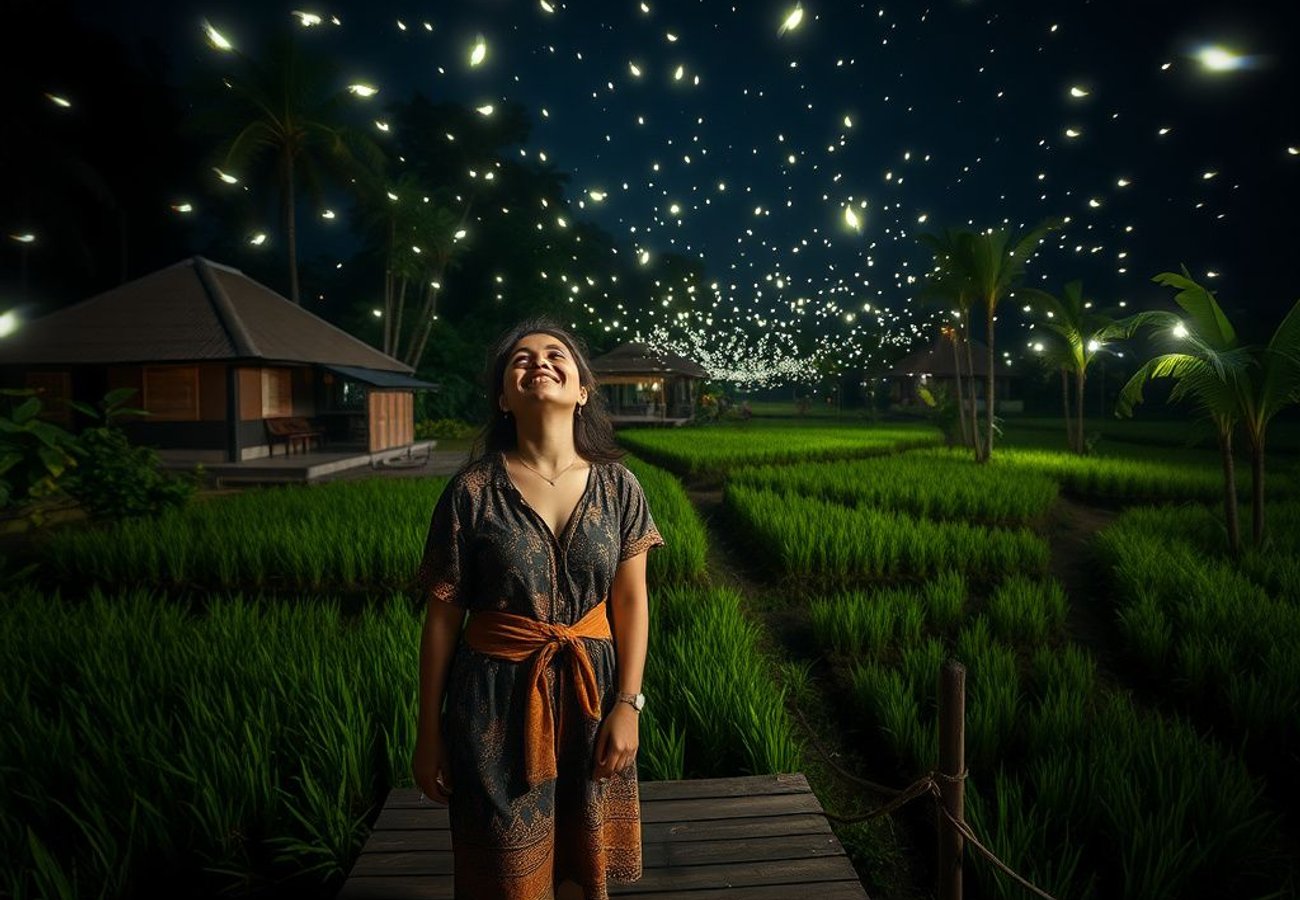
Image generated by AI
The Glowing Ghost of Bali's Past
Most travelers arrive in Bali hunting for rice terraces, temple ceremonies, and that Instagram-worthy beach sunset. But there's a quieter magic happening 45 minutes north of Ubud—one that only emerges after dark in the traditional village of Taro.
Fireflies. Not the swarms you've heard about. Something rarer. Something being painstakingly resurrected.
"Between now and 40 years ago, there's been a huge decline," says Wayan Wardika, founder of the conservation initiative Bring Back The Light. He's not exaggerating. What Wardika remembers from his childhood—clouds of bioluminescent insects lighting up the night sky like living constellations—has nearly vanished.
Why Bali's Fireflies Became Ghosts
The culprit isn't mysterious. It's the story of the modern developing world written in real time: urbanization, pesticides, and relentless light pollution.
Bali loses approximately 2,500 acres of agricultural land annually, according to research from the Transnational Institute. Rice paddies become hotels. Forests become subdivisions. And with every concrete building comes artificial light—the deadly enemy of creatures that navigate and mate using pure darkness.
The pesticide problem runs deeper. "We're now producing rice three times a year [with chemicals], where before, we produced just one time per year," Wardika explains. Triple the harvests. Triple the chemical load. Triple the pressure on both terrestrial and semi-aquatic firefly species that call these farms home.
Light pollution alone tells a damning story: according to a 2023 study published in Science, the night sky's brightness has increased approximately 10 percent annually between 2011 and 2022. For insects that communicate through flashing light signals, this isn't just an inconvenience. It's an extinction sentence.
Reddit: "Most people don't realize fireflies are already functionally extinct in many regions. Bali's conservation effort is genuinely important." — r/conservation
A Biologist Returns Home to Save the Light
Wardika didn't start out as a firefly rescuer. He spent years working in the cruise industry abroad, climbing the corporate ladder in tourism management. But when he returned to Taro in 2020, he barely recognized his childhood landscape.
The fireflies he grew up with had simply vanished.
Instead of ignoring it, he launched Bring Back The Light—establishing an on-site breeding lab and research facility on his family farm. The mission was pure conservation science. But Wardika understood something crucial: sustainable change requires sustainable funding. That's where ecotourism enters the story.
The Tour That Doubles as a Science Lesson
Visitors to Taro's firefly experience begin around 5 p.m. at the conservation lab itself—not at some artificial tourist attraction, but inside Wardika's actual research facility. Here, travelers witness the painstaking work: breeding firefly larvae across all life stages, monitoring population metrics, and planning release strategies for the semi-aquatic species that thrive in protected organic rice fields.
"We've already started releasing thousands of semiaquatic larvae into the protected rice fields," Wardika says. "We're confident that in a couple of years' time, we will see a strong improvement in the population."
The experience isn't spectacle-focused. It's education-focused. Visitors learn about Bali's two distinct firefly species, the ecological pressures they face, and the unglamorous work required to resurrect populations measured in years or decades—not months.
Then comes the cultural anchor: a traditional Balinese cooking class with Wardika's family. You're preparing local staples like moringa soup while learning that fireflies hold deep spiritual significance in Balinese culture. "In Bali, fireflies have a strong connection to spirituality—they're [looked to for] guidance, as the guru," Wardika notes. "They're symbols of light, knowledge, and wisdom."
Dusk brings the main event. From the farm's dedicated viewing area, you witness the insects' nightly emergence. Some nights, guests even participate in releasing bred fireflies back into the ecosystem.
The entire experience lasts approximately four hours. And unlike the Great Smoky Mountains National Park firefly lottery—where tens of thousands apply annually just for viewing access—Bring Back The Light deliberately limits tours to no more than 17 guests per night to protect the delicate population.
The Luxury Expansion: Dinner With the Fireflies
Wardika isn't stopping at conservation tours. Later in 2026, Bring Back The Light is launching Dinner with the Fireflies—a premium offering pairing locally sourced fine dining with firefly watching. The main tour welcomes families and children; this new iteration targets couples and adult travelers seeking a more curated experience.
The model is spreading beyond Taro. Eight teams across Bali now operate under the Bring Back The Light banner, expanding firefly revitalization efforts regionally.
How to Actually Get There
Booking is deliberately low-pressure and transparent. Travelers can sign up directly through Seek Sophie (the official booking platform) or arrange transport through hospitality partners like Buahan, a Banyan Tree Escape—a no-walls luxury resort literally adjacent to Taro—or Anantara Ubud Bali Resort, both of which offer direct tour booking and transportation packages.
This partnership model is smart: it keeps the conservation project financially viable while ensuring only genuinely committed visitors arrive.
The Reality Check: Patience Required
Here's where Wardika's honesty becomes refreshing in an industry often drunk on immediate gratification.
"They are in the early stages, so this won't look like the clouds of fireflies you see in the Smokies, for example—it's gradual, not to mention a different species," he says matter-of-factly. You won't witness biblical swarms. You'll witness hope in small, glowing increments.
The long-term vision? Eventually releasing fireflies throughout a one-mile radius of the farm, then beyond. But that's years away. Possibly decades.
"I'm not sure I'll be able to see the clouds of fireflies in my lifetime," Wardika admits. "But I know one day maybe my children, or my children's children, will be able to see that, and that makes me happy."
That's not pessimism. That's the language of someone who understands that some restorations require generational commitment.
Why This Matters Beyond Bali
Global firefly populations face unprecedented pressure from light pollution, habitat loss, and pesticide use worldwide. Research from Tufts University in 2021 estimated that approximately one million people travel annually specifically to witness firefly displays—creating both conservation opportunity and conservation risk.
Bring Back The Light represents a model: How can tourism funding directly fuel conservation? How can travelers become stakeholders rather than bystanders? How can a single family's recognition of loss transform into a regional ecosystem restoration project?
Bali's fireflies aren't saved yet. But in Taro village, the night sky is beginning to flicker again—and this time, humans are helping write the story.
Bali's glowing comeback reminds us that extinct doesn't always mean forever gone.
Related Travel Guides
Disclaimer
This article is for informational and educational purposes only. It does not constitute legal, financial, or professional advice. While we strive to provide accurate and up-to-date information, travel policies, regulations, and conditions change rapidly. Always verify information with official sources before making travel decisions. Nomad Lawyer makes no representations about the accuracy, reliability, completeness, or suitability of the information provided. Readers should consult qualified professionals for advice specific to their circumstances. The views expressed in this article are those of the author and do not necessarily reflect the views of Nomad Lawyer.
Kunal K Choudhary
Co-Founder & Contributor
A passionate traveller and tech enthusiast. Kunal contributes to the vision and growth of Nomad Lawyer, bringing fresh perspectives and driving the community forward.
Learn more about our team →