
Middle East Travel Chaos: Severe Geopolitical Escalation Triggers Massive Bahrain Airspace Closure, Forcing Widespread Gulf Flight Cancellations
As intense military operations and intercepted missile threats violently shut down critical Middle Eastern airspace, global airlines aggressively suspend flights, plunging millions of passengers into severe travel chaos.

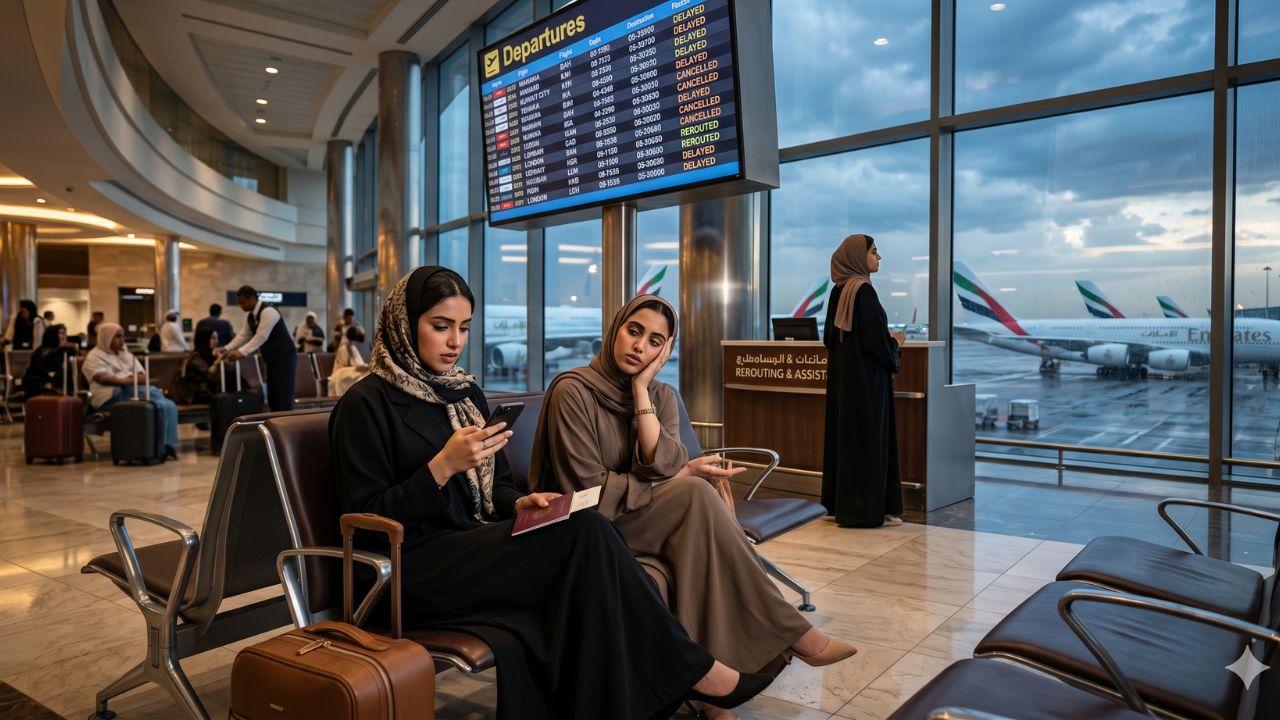
Image generated by AI
A Massive Geopolitical Meltdown Paralyzes Gulf Hubs
While massive sectors of the global passenger network frequently battle highly unpredictable extreme weather events, synchronized logistical bottlenecks, and horrific commercial fleet constraints, sudden, unmanageable military escalation remains the absolute most terrifying catalyst for cascading airport disruptions. Delivering highly urgent, breaking airline news, verified Middle Eastern aviation trackers confirm that a catastrophic geopolitical breakdown has actively generated severe travel chaos across the massive Gulf aviation network. Today, June 3, 2026, severe mid-air distress forcefully emerged following an unprecedented wave of military operations, violently forcing the immediate closure of Bahrain airspace and triggering severe flight restrictions across Kuwait, Iran, and the United Arab Emirates.
While desperate travelers usually attempt to navigate sudden, terrifying flight cancellations caused by technical runway failures, these exclusive aviation updates reveal a highly systemic, incredibly disruptive capacity crisis triggered by active missile threats. Verified defense data confirms that this massive operational lockdown is a direct result of Iranian missile launches and drone deployments directed toward Bahrain and Kuwait. While military defense systems reportedly intercepted and neutralized these terrifying threats before impact, the resulting operational shockwave instantly destroyed the schedules of the world's busiest aviation corridors. The situation rapidly escalated when subsequent military operations reportedly targeted an Iranian control facility on Qeshm Island near the Strait of Hormuz, forcing international legacy carriers to frantically execute emergency mid-air diversions and completely abandon their highly lucrative Gulf transit routes.
Expanded Overview: The Scale of the Transcontinental Crisis
The sudden, highly publicized execution of this massive regional operational lockdown serves as an undeniable example of how rapidly a heavily reliant global transit network can completely disintegrate under extreme military pressure. The massive disruption has explicitly drawn international attention to the incredibly complex, highly fragile operational ecosystem that links Asia with Europe, Africa, and North America. For a massive continental region heavily reliant on incredibly robust, high-frequency flight schedules through the Persian Gulf, even a temporary airspace restriction requires incredibly precise crisis management by the flight deck to prevent aircraft from entering active combat zones.
The terrifying reality of this crisis is found in the sheer volume of high-capacity aircraft abruptly forced into holding patterns or emergency diversions. Flight-tracking platforms violently flashed red as aircraft across the Gulf were forced to urgently adjust routes to avoid potentially sensitive airspace corridors. The Gulf region hosts several major international mega-hubs that collectively handle tens of millions of passengers annually. When airspace restrictions are violently introduced in this vital corridor, airlines are instantly forced to fly substantially longer, highly inefficient routes, consume massive amounts of additional fuel, severely restrict passenger weight, or execute mass flight cancellations, stranding millions of terrified tourists across the globe.
Section-Wise Breakdown of the Connectivity Crisis
The Geopolitical Airspace Lockdown
The immediate catalyst for this catastrophic travel chaos was the confirmation of Iranian military hardware tracking toward Bahrain and Kuwait amidst violently escalating tensions involving United States military assets. The rapid interception of these threats instantly triggered defensive airspace closures. Because Bahrain, Kuwait, and the United Arab Emirates serve as the absolute backbone of intercontinental travel, airlines operating through these specific corridors were paralyzed. Aircraft approaching the region were instantly forced to burn emergency fuel in extended holding patterns before being diverted to alternate, potentially unequipped airfields, plunging operations control centers into absolute chaos.
Airlines Prepare for Unprecedented Suspensions
Perhaps the most terrifying development for global tourists is the severe duration of the airline suspensions currently being announced. Instead of implementing short-term, 24-hour cancellations, massive international legacy carriers are aggressively extending service suspensions deep into the summer and autumn travel seasons. This massive strategic withdrawal proves that airlines are terrified that regional instability will persist. Air France-KLM, Lufthansa Group, and Air Canada have completely severed connectivity to major hubs like Dubai and Tel Aviv for months, explicitly refusing to risk multi-million-dollar airframes in a highly volatile military theatre.
The Nightmare for Indian Transit Passengers
This airspace closure represents an absolute logistical nightmare for the massive Indian travel market. For millions of travelers departing from Delhi, Mumbai, Bengaluru, Hyderabad, Chennai, and Kochi, the Gulf remains the absolute dominant transit corridor for long-haul travel to Europe, North America, and Africa. Even if departure airports in India and arrival airports in London or New York remain completely unaffected, the severed Gulf connection violently destroys the entire itinerary. Indian passengers are currently facing horrifyingly long journey durations, excruciating extended layovers, forced aircraft substitutions, and massive, last-minute schedule revisions that completely ruin carefully planned international vacations.
Verified Gulf Airspace Disruption Data
To fully comprehend the massive operational scale and severe capacity strain dictating this highly volatile geopolitical crisis, the following tables explicitly detail the exact airline suspensions and the vital Gulf transit markets currently paralyzed by military action:
Long-Term Airline Route Suspensions (Announced June 2026)
| Airline Group | Severely Affected Destinations | Suspension / Cancellation Period |
|---|---|---|
| Aegean Airlines | Dubai, Erbil, Baghdad | Suspended up to August 31 and July 2. |
| airBaltic | Tel Aviv, Dubai | Suspended deep into autumn (October 24). |
| Air Canada | Dubai, Tel Aviv | Massive North American suspension until Sept 7. |
| Air France-KLM | Beirut, Dubai | European connectivity severed until June 17. |
| IAG Group | Dubai, Doha, Tel Aviv | Resumption violently delayed until August 1. |
| Lufthansa Group | Dubai | Complete German/Swiss suspension until Sept 13. |
Key Gulf Transit Markets Paralyzed by Tensions
| Gulf Nation | Global Aviation Significance | Current Threat Profile |
|---|---|---|
| Bahrain | Regional transit and financial mega-hub. | Airspace restricted following intercepted threats. |
| Kuwait | Vital northern Gulf aviation gateway. | Targeted by intercepted drone/missile launches. |
| United Arab Emirates | Home to the world's largest transit hubs. | Severe ripple effects destroying flight schedules. |
| Iran | Controls massive northern transit corridors. | Airspace completely avoided by Western legacy carriers. |
Passenger Impact: Navigating the Military Meltdown
For the modern commuter attempting to navigate this highly volatile intercontinental network, the passenger impact of this massive airspace closure is completely exhausting. Reliable Gulf transit is the absolute backbone of multi-city itineraries frequently booked by international tourists.
- Anticipate Overwhelming Terminal Congestion: Because massive amounts of flights are being diverted or canceled, expect European and Asian departure halls to descend into complete travel chaos as millions of passengers demand rebooking on alternate routes that bypass the Middle East entirely.
- Prepare for Horrific Flight Times: Airlines still operating flights between Asia and Europe are being violently forced to route aircraft around the entire conflict zone, adding multiple hours to the flight time, burning massive amounts of fuel, and completely destroying connecting itineraries.
- Do Not Rely on Summer Schedules: Passengers booked on European or North American carriers transferring through Dubai, Doha, or Bahrain must aggressively verify their flight status immediately. As demonstrated by Lufthansa and Air Canada, legacy carriers are actively canceling summer schedules months in advance.
Conclusion: A Highly Volatile Transit Crisis
The massive, highly publicized airspace closures currently crushing the Middle East represent a severe, terrifying operational crisis for the global travel sector. By actively forcing millions of passengers to navigate around an active military threat, this extreme geopolitical escalation guarantees an incredibly stressful, highly exhausting travel experience. As operational teams frantically battle sudden airspace restrictions and severe aircraft diversions, international tourists are heavily urged to aggressively review their ticket refund conditions, secure robust travel insurance, and fully expect massive, cascading flight disruptions amidst unprecedented Gulf travel chaos.
Key Takeaways
- Massive Military Escalation: Iranian missile and drone launches targeting Bahrain and Kuwait have forced massive, immediate closures of vital Middle Eastern airspace.
- Gulf Transit Network Paralyzed: Operations across Bahrain, Kuwait, and the United Arab Emirates are severely disrupted, forcing aircraft into emergency holding patterns and mid-air diversions.
- Months of Flight Cancellations: Legacy carriers including Lufthansa, Air Canada, and Air France have violently suspended flights to major hubs like Dubai and Tel Aviv deep into the summer and autumn.
- Indian Market Devastated: Millions of Indian transit passengers rely entirely on Gulf hubs to reach Europe and North America; these passengers now face completely ruined itineraries and massive delays.
- Passenger Survival Tactics: Travelers are aggressively urged to immediately verify if their upcoming long-haul flight transits the Gulf, prepare for massive schedule revisions, and purchase travel insurance to protect against sudden geopolitical cancellations.
Disclaimer: The specific flight cancellation durations, airspace closure metrics, and military interception events presented in this report are based on verified aviation and defense data regarding the Gulf region in June 2026. Official airline routing, terminal congestion levels, and international airspace restrictions are highly volatile and subject to continuous, real-time update based on active military operations, fluctuating geopolitical tensions, and sudden civil aviation authority directives. Prospective passengers are urgently advised to fiercely monitor their specific booking status and verify active flight schedules directly via the airline's official portal prior to airport arrival.
Disclaimer
This article is for informational and educational purposes only. It does not constitute legal, financial, or professional advice. While we strive to provide accurate and up-to-date information, travel policies, regulations, and conditions change rapidly. Always verify information with official sources before making travel decisions. Nomad Lawyer makes no representations about the accuracy, reliability, completeness, or suitability of the information provided. Readers should consult qualified professionals for advice specific to their circumstances. The views expressed in this article are those of the author and do not necessarily reflect the views of Nomad Lawyer.
Kunal K Choudhary
Co-Founder & Contributor
A passionate traveller and tech enthusiast. Kunal contributes to the vision and growth of Nomad Lawyer, bringing fresh perspectives and driving the community forward.
Learn more about our team →