
B-52 United States Air Force Remains Backbone of Bomber Fleet in 2026
The B-52 United States Air Force bomber fleet continues serving as a critical military asset in 2026, with 70-year-old Stratofortress aircraft compensating for procurement shortfalls in modern stealth bomber development and affordability constraints.

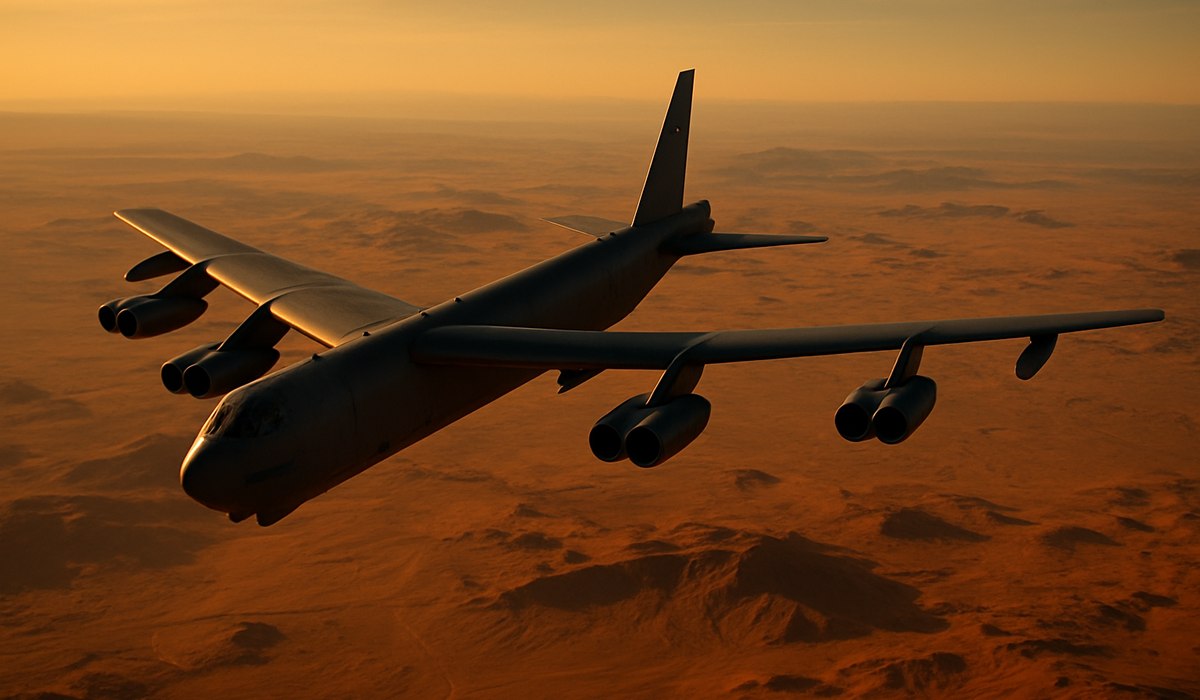
Image generated by AI
The B-52 Stratofortress: America's Aging Bomber Backbone
The B-52 United States Air Force fleet continues to serve as the strategic backbone of American long-range strike operations in 2026, nearly seven decades after the aircraft's initial deployment. The Boeing-manufactured Stratofortress remains operational across multiple Air Force bases, providing critical bombing and stand-off munitions delivery capabilities despite significant technological advancement in modern aircraft design. This continued reliance on aging bomber platforms reveals fundamental challenges within military aviation procurement, budget constraints, and the prolonged development timelines of next-generation stealth alternatives.
The persistent deployment of the B-52 United States Air Force bomber reflects a strategic compromise rather than an optimal choice. Air Force planners continue leveraging the aircraft's proven 70,000-pound payload capacity to transport massive ordnance loads into permissive operating environments where air defense systems remain minimal. Simultaneously, the platform functions as a sophisticated missile truck capable of launching long-range stand-off munitions in contested airspace, substituting quantity for technological superiority when stealth capabilities become unavailable.
The B-52's Enduring Role in Modern Warfare
The B-52 United States Air Force platform remains uniquely valuable across multiple operational scenarios. In environments with limited or no integrated air defense systems, the Stratofortress delivers conventional bombing payloads with unmatched volume and precision accuracy. The aircraft's operational flexibility allows crews to conduct missions ranging from strategic deterrence patrols to urgent close-air-support operations, adapting to emerging threats without requiring extensive platform redesign.
Beyond conventional bombing roles, the B-52 serves as America's primary delivery system for long-range cruise missiles and advanced stand-off munitions. This capability proves essential in non-permissive environments where adversarial air defense networks would threaten less-capable platforms. The aircraft can launch multiple munitions from stand-off distances, minimizing exposure to surface-to-air threats while maintaining mission effectiveness. The bomber's 8,000-nautical-mile range enables global power projection, allowing the Air Force to respond to crises across multiple theaters without requiring intermediate staging bases.
For detailed information about military aircraft operations, visit the U.S. Air Force official website.
Why Newer Stealth Bombers Aren't The Answer
The B-52 United States Air Force continues operating because next-generation alternatives haven't achieved sufficient production numbers or operational readiness levels. The B-21 Raider program, designed as the B-52's ultimate replacement, faces extended development timelines and procurement constraints that limit near-term availability. Unit costs for modern stealth bombers dramatically exceed B-52 operating expenses, forcing strategic choices between fleet size and individual platform capabilities.
Stealth technology provides significant advantages in highly contested airspace, yet acquisition costs limit purchasable quantities. The Air Force cannot afford to retire the B-52 fleet until sufficient B-21 platforms achieve operational status—a transition expected to span multiple years. This extended timeline reflects broader defense procurement realities, where technological superiority often conflicts with budgetary constraints and industrial production capacity.
The B-52's proven reliability and extensive operational history also contribute to institutional preference for maintaining existing fleets. Decades of combat experience, established maintenance networks, and aircrew familiarity with the platform create significant advantages over transitioning entirely to unproven next-generation systems.
Payload Capacity and Operational Flexibility
The B-52's legendary 70,000-pound payload capacity remains unmatched among conventional bombers in active service. This extraordinary ordnance-carrying capability enables single-sortie missions that would require multiple flights from alternative platforms. The aircraft's versatility extends beyond bombing roles, supporting electronic warfare, reconnaissance, and command-and-control functions through modular pod configurations.
The Stratofortress accommodates various munition types, including conventional gravity bombs, cluster munitions, precision-guided weapons, and air-launched cruise missiles. This adaptability allows mission planners to configure aircraft for specific operational requirements without extensive downtime or equipment modifications. The bomber can carry sufficient ordnance to sustain extended bombing campaigns, reducing required sortie rates and logistical support demands.
Operational flexibility extends to mission duration capabilities. The B-52's eight-engine design and 8,000-nautical-mile unrefueled range enable transcontinental operations. Aerial refueling capabilities extend this reach further, allowing indefinite range operations with proper support infrastructure. These characteristics combine to create an irreplaceable capability within current Air Force doctrine.
The Future of American Bomber Strategy
Strategic planning for the B-52 United States Air Force bomber fleet recognizes that these aircraft will remain operational well into the 2040s. Modernization programs address avionics systems, engine efficiency, and weapons integration rather than complete platform replacement. This approach maximizes the existing fleet's service life while deferring the full financial burden of complete generational transition.
The B-21 Raider program represents the eventual path forward, but realistic timelines suggest decades of parallel operations between old and new platforms. Air Force leadership has committed to maintaining bomber force structure through deliberate modernization and sustainment investments. Production rates for replacement aircraft remain constrained by industrial capacity, political considerations, and budget limitations.
Long-term strategy envisions a hybrid fleet combining B-21 stealth capability with B-52 payload capacity and range. This complementary approach leverages distinct strengths of each platform rather than assuming one system can address all operational requirements. The bomber force of 2035 will likely include both legacy and next-generation aircraft, distributed across multiple bases and operational commands.
Key Data on B-52 Operations and Capabilities
| Characteristic | Specification | Operational Impact |
|---|---|---|
| Service Entry Date | 1955 | 70+ years of operational history |
| Maximum Payload | 70,000 lbs | Unmatched conventional ordnance capacity |
| Unrefueled Range | 8,000 nautical miles | Intercontinental reach without staging |
| Engine Configuration | 8 turbofan engines | Dual-engine redundancy across 4 pylons |
| Current Fleet Size | 76 operational aircraft | Primary US Air Force long-range strike asset |
| Estimated Service Life Extension | Through 2050+ | Continued operations for 25+ years projected |
| Modernization Programs | Avionics, engines, weapons systems | Incremental upgrades extending utility |
| Crew Complement | 5 personnel | Pilot, copilot, navigator, bombardier, EWO |
What This Means for Travelers
Commercial aviation operations intersect with military aviation operations at shared infrastructure facilities and through airspace coordination protocols. Understanding military aircraft capabilities provides context for overall aviation system operations and resource allocation decisions.
Traveler Action Checklist:
-
Monitor airspace notices – Visit FlightAware to track military training routes and temporary flight restrictions affecting commercial operations.
-
Check airport status – Military bases with dual-use facilities may experience occasional congestion; verify departure/arrival airport conditions through your airline before travel.
-
Understand delays – Military operations occasionally impact shared airspace; allow additional buffer time when traveling near major military aviation bases.
-
Review TSA requirements – Enhanced security screening near military installations may affect check-in times; arrive earlier for flights departing these locations.
-
Contact your airline – If traveling during military exercise periods, confirm operational status with your carrier; US DOT provides additional passenger rights information.
FAQ: B-52 and Military Aviation Questions
**What is the B-52 Stra
Disclaimer
This article is for informational and educational purposes only. It does not constitute legal, financial, or professional advice. While we strive to provide accurate and up-to-date information, travel policies, regulations, and conditions change rapidly. Always verify information with official sources before making travel decisions. Nomad Lawyer makes no representations about the accuracy, reliability, completeness, or suitability of the information provided. Readers should consult qualified professionals for advice specific to their circumstances. The views expressed in this article are those of the author and do not necessarily reflect the views of Nomad Lawyer.
Kunal K Choudhary
Co-Founder & Contributor
A passionate traveller and tech enthusiast. Kunal contributes to the vision and growth of Nomad Lawyer, bringing fresh perspectives and driving the community forward.
Learn more about our team →