
B-52 Stratofortress Gets Rolls-Royce Engine Upgrade: 30% Fuel Savings, Combat Ready by 2033
The US Air Force's Commercial Engine Replacement Program will equip 70-year-old B-52 bombers with new Rolls-Royce F130 turbofans, cutting fuel consumption by 30% and extending operational life to 2050.

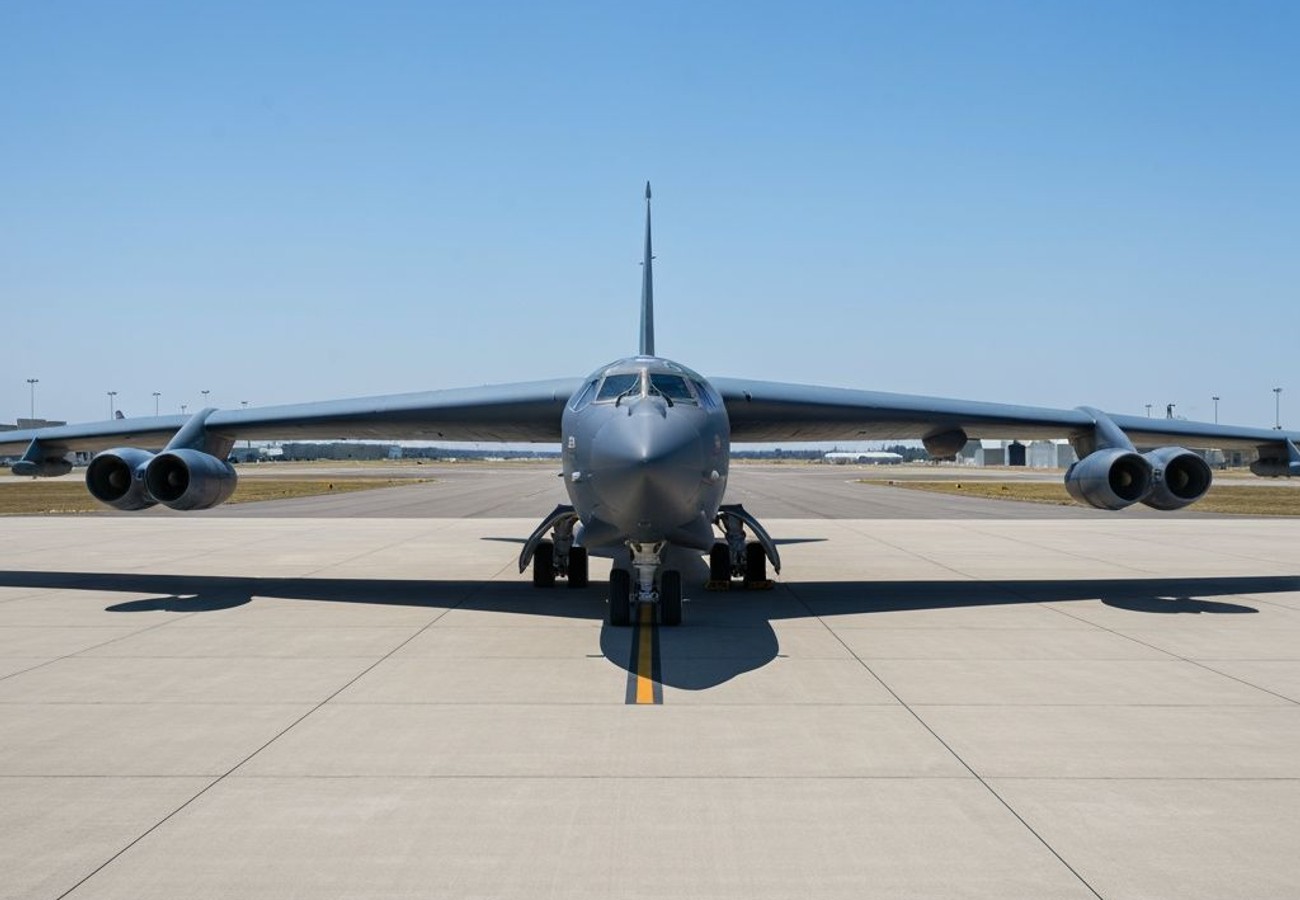
Image generated by AI
America's 74-Year-Old Bomber Gets A Second Life: The Rolls-Royce F130 Story
The Boeing B-52 Stratofortress refuses to retire. First taking flight in 1952, this legendary strategic strike platform has outlasted every prediction of obsolescence. Now, in one of aviation's most ambitious overhauls, the US Air Force is about to give the BUFF—as crews affectionately call it—a complete cardiovascular transplant that will keep it flying past 2050.
The engine swap is real. The timeline is aggressive. And the operational implications are staggering.
The Commercial Engine Replacement Program: A $10 Billion Gamble
The Air Force cannot simply buy new heavy bombers. They're too expensive. Too slow to develop. So instead, the service is conducting something far more radical: a wholesale retrofit of its entire B-52H fleet using Rolls-Royce F130 turbofans to replace the aging Pratt & Whitney TF33-P-103 engines that have powered these jets since the Kennedy administration.
This is the Commercial Engine Replacement Program (CERP), and it represents an unprecedented commitment to keeping legacy airframes alive through technological injection.
The numbers tell the story. The Air Force expects initial operating capability by 2033, according to Air & Space Forces Magazine. That means one active-duty squadron will achieve full combat deployment readiness with the new B-52J variant. Individual B-52 airframes will then achieve 90 to 100 years of continuous service—an unprecedented feat in aviation history.
Reddit: "They're literally keeping 70-year-old bombers flying while Congress debates whether to fund new fighter jets. That's military pragmatism." — r/aviation
How 30% Fuel Savings Changes Everything
Here's where the physics gets interesting. The F130 uses modern high-bypass turbofan architecture that pulls a substantially larger volume of air through its front fan while maintaining identical thrust output.
The result? A 30% reduction in fuel consumption, according to The Defense Watch.
Let me translate that for operational strategy: the B-52J burns nearly one-third less fuel than its predecessor. This extends unrefueled range dramatically—meaning fewer tanker sorties required. In an era where the US Air Force's KC-135 Stratotanker and KC-46 Pegasus fleets are stretched thin, this is not a minor upgrade.
It's a force multiplier.
Consider the vulnerability: the Air Force Global Strike Command operates from a limited number of airfields. The legacy B-52H required frequent aerial refueling and couldn't operate from austere locations without massive logistical footprints. The B-52J changes this calculus entirely.
"By freeing the BUFF from being tethered to large air bases, the entire force becomes less predictable—and therefore more lethal," as military analysts note. Less dependency on refueling tracks means fewer advertised flight paths. Fewer monitored runways. Greater operational flexibility in contested environments.
The Engine Specs: Thrust Unchanged, Everything Else Transformed
The technical comparison is striking:
| Specification | P&W TF33-P-103 | Rolls-Royce F130 | Change |
|---|---|---|---|
| Thrust (Per Engine) | 17,000 lb | 17,000 lb | 0% |
| Bypass Ratio | 1.4:1 | 4.2:1 | +200% More Air |
| Fuel Burn Rate (Per Engine) | 3,200 lb/hour | 2,225 lb/hour | -975 lb/hour saved |
| Engine Weight | 3,900 lb | 3,400 lb | -500 lb lighter |
| Overall Length | 142 inches | 103 inches | 39 inches shorter |
| Fan Diameter | 44 inches | 52 inches | 8 inches wider |
The F130 maintains identical thrust while fundamentally redesigning how that power is delivered. The higher bypass ratio means more cold air pushing around the engine core, generating efficiency gains that translate directly to extended range and reduced operating costs.
The Smoke Cloud Disappears: A Tactical Victory
One visible change will electrify observers: the B-52's iconic black smoke trails vanish.
The TF33 produces significant particulate emissions that create visible exhaust plumes trailing miles behind the aircraft. This is an environmental plus—carbon emissions drop sharply. But operationally? It's a survival advantage.
Aircraft that leave visible smoke trails in modern warfare are aircraft that can be targeted from greater distances. The F130's clean exhaust profile dramatically reduces this signature. In contested airspace, visibility is vulnerability.
From Pneumatic Carts to Digital Systems: The Logistics Revolution
This is where the upgrade transcends simple engine replacement and becomes strategic transformation.
The legacy TF33 requires pneumatic air carts and explosive starter cartridges just to ignite engines on the tarmac. These are massive, maintenance-heavy systems that must be transported to every forward operating location. The F130 uses modern electric starter motors—technology that allows crews to shut down and restart engines at austere runways using basic airfield power.
Translation: you no longer need to airlift tons of specialized equipment to austere locations.
The legacy B-52H demanded intensive depot-level overhauls every few thousand flight hours. The F130 is designed to remain integrated on the wing for its entire 30+ year lifecycle without scheduled midlife depot overhaul.
This reshapes the Agile Combat Employment doctrine the Air Force is pursuing—the strategic requirement to disperse bomber squadrons from large, vulnerable main bases to remote, forward-deployed airfields that can't be easily targeted by adversaries.
The Supply Chain Advantage: Commercial Heritage Matters
Here's an often-overlooked advantage: the F130 shares its architecture with the Rolls-Royce BR725, a commercially ubiquitous business jet engine.
This means the Air Force can tap into an active, high-volume global supply chain rather than depending solely on military logistics pipelines. If a component fails at an austere airfield halfway around the world, replacement parts can flow through commercial distribution networks instead of waiting weeks for military procurement channels.
Before the B-52J even touches down at a forward airfield, digital engine data can be transmitted via secure satellite networks to maintenance command centers. This eliminates the guesswork and allows pre-positioning of necessary components.
The Timeline: A 2033 Threshold
The Air Force expects initial operating capability in 2033, meaning one active-duty squadron will complete all certification, training, and trials for full combat deployment readiness.
This is not merely an engine swap. The B-52J is also receiving new radar, datalink systems, and electronic warfare capabilities derived from Navy fighter jets. The project represents a convergence of two multi-billion-dollar programs: the CERP (Commercial Engine Replacement Program) and the Radar Modernization Program (RMP).
The remaining B-52H fleet—roughly 76 operational aircraft—will transition to B-52J configuration over the following years.
Why This Matters: The Economics of Legacy Systems
The United States cannot afford to replace its strategic bomber fleet. A modern stealth bomber like the Northrop Grumman B-21 Raider costs billions per unit and takes decades to develop. The B-52, built in the 1960s, remains the most operationally proven strategic platform in military aviation.
So instead of replacement, the Air Force is executing transformation. By investing in the CERP and RMP, the service is essentially rebuilding 60-year-old airframes from the inside out.
The last B-52 rolled off Boeing's assembly line in 1962. With this upgrade, individual airframes will achieve 90 to 100 years of continuous active service. The grandchildren of original B-52 pilots could realistically fly the exact same aircraft into combat.
This is not sentiment. It's economics. It's strategy. It's the only viable path forward for maintaining strategic deterrence without astronomical costs.
Reddit: "The B-52 is proof that good engineering can outlast bad policy. Keep upgrading it until the B-21 fleet is ready." — r/militaryaviation
The BUFF will outlast us all—and that's exactly the point.
Related Travel Guides
Disclaimer
This article is for informational and educational purposes only. It does not constitute legal, financial, or professional advice. While we strive to provide accurate and up-to-date information, travel policies, regulations, and conditions change rapidly. Always verify information with official sources before making travel decisions. Nomad Lawyer makes no representations about the accuracy, reliability, completeness, or suitability of the information provided. Readers should consult qualified professionals for advice specific to their circumstances. The views expressed in this article are those of the author and do not necessarily reflect the views of Nomad Lawyer.
Kunal K Choudhary
Co-Founder & Contributor
A passionate traveller and tech enthusiast. Kunal contributes to the vision and growth of Nomad Lawyer, bringing fresh perspectives and driving the community forward.
Learn more about our team →