Boeing 777X Certification Delayed Again: 2027 Delivery Timeline Now at Risk

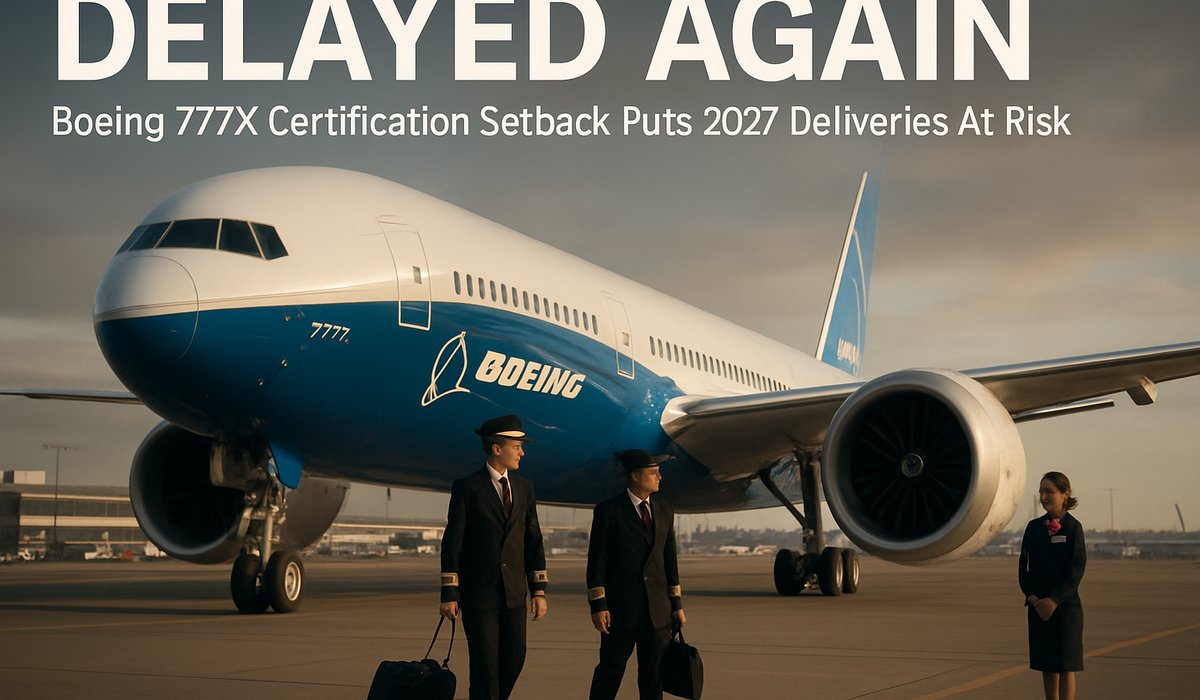
Image generated by AI
Federal Aviation Administration unlikely to greenlight aircraft this year, extending one of aviation's most troubled development programs
Regulatory Hurdles Threaten Already-Delayed Production Schedule
The Boeing 777X—one of the aviation industry's most closely watched aircraft programs—faces another significant setback after regulators signaled they will not issue airworthiness certification this year, according to disclosures made at the CAPA Airline Leaders Summit in Charleston, South Carolina.
The development marks a fresh blow to Boeing's long-troubled widebody program, which is already approaching seven years beyond its original launch timeline. With certification now pushed further into the future, airlines that have placed orders for the fuel-efficient aircraft are facing renewed uncertainty about delivery schedules previously targeted for 2027.
Years of Development Challenges Continue to Mount
The 777X program has become emblematic of the broader challenges facing Boeing's commercial aircraft division. Originally envisioned as a next-generation ultra-long-range widebody aircraft, the program has encountered repeated technical, manufacturing, and regulatory obstacles since its inception.
The Federal Aviation Administration's inability to certify the aircraft by year's end represents a critical juncture for both Boeing and the global aviation sector. Airlines worldwide have invested heavily in orders for the 777X, expecting the aircraft to deliver superior fuel efficiency and lower operating costs—advantages that have become increasingly valuable in an industry grappling with volatile jet fuel prices and rising operational expenses.
Implications for Global Fleet Expansion
The certification delay carries significant consequences across the aviation industry. Major carriers including Emirates, Japan Airlines, and All Nippon Airways have substantial order books for the aircraft and must now reassess their fleet modernization strategies and maintenance of aging wide-body aircraft.
The extended timeline also impacts aircraft leasing companies and manufacturers relying on 777X deliveries to meet customer demand. For an industry already constrained by supply chain disruptions and manufacturing capacity limitations, the delay compounds existing pressures on long-range international route expansion.
Boeing has not yet issued a formal statement responding to the regulatory development, though the company has consistently maintained that it is working collaboratively with the FAA to address all outstanding certification requirements.
Frequently Asked Questions
When will the Boeing 777X receive FAA certification? While the FAA will not certify the aircraft in 2024, no specific date has been announced. The certification process remains ongoing, with Boeing addressing regulatory concerns.
How does this delay affect airline passengers? Passengers may face continued reliance on older, less fuel-efficient aircraft on long-haul routes, potentially affecting ticket prices and flight frequencies as airlines defer fleet modernization.
What are the main certification issues holding up the 777X? Specific technical concerns have not been publicly detailed by the FAA, but Boeing has been working to resolve manufacturing standards and performance validation requirements.
Which airlines are most impacted by the 777X delay? Emirates, Japan Airlines, and ANA are among the largest order holders and face the most significant consequences for their planned fleet expansion strategies.
Could this delay affect airline ticket prices? Extended reliance on older aircraft may indirectly impact operational costs and fuel surcharges, potentially influencing pricing on international routes as airlines delay capacity upgrades.
Related Travel Guides
- Malaysia Airlines Extends Doha Flight Suspension Amid Safety Concerns, Disrupts Thousands of Passengers Across Asia-Europe Routes
- Breaking Airline News: Terrifying Athens Airport Flight Cancellations Trigger Massive Greek Paralyzation and Severe Travel Chaos
- What Happens to Aircraft Aluminum After a Crash? Inside the Complex Recovery and Recycling Process
This article is for informational purposes. Flight routes, passenger regulations, visa rules, and transit advisories are subject to change by airlines and aviation authorities. Readers are advised to verify schedules and travel documentation with relevant carriers and border agencies before departure.
Related Stories
Brazil Nears 100 Million Air Passengers in 2026 Amid Divergent Global Aviation Growth