
Aviation Security and Workforce Protections Become Major Voter Issues Ahead of 2026 US Elections
A new nationwide survey reveals that 75% of American voters are treating aviation security and air traffic control workforce stability as definitive electoral issues in the lead-up to the 2026 midterms, crossing all major partisan lines.

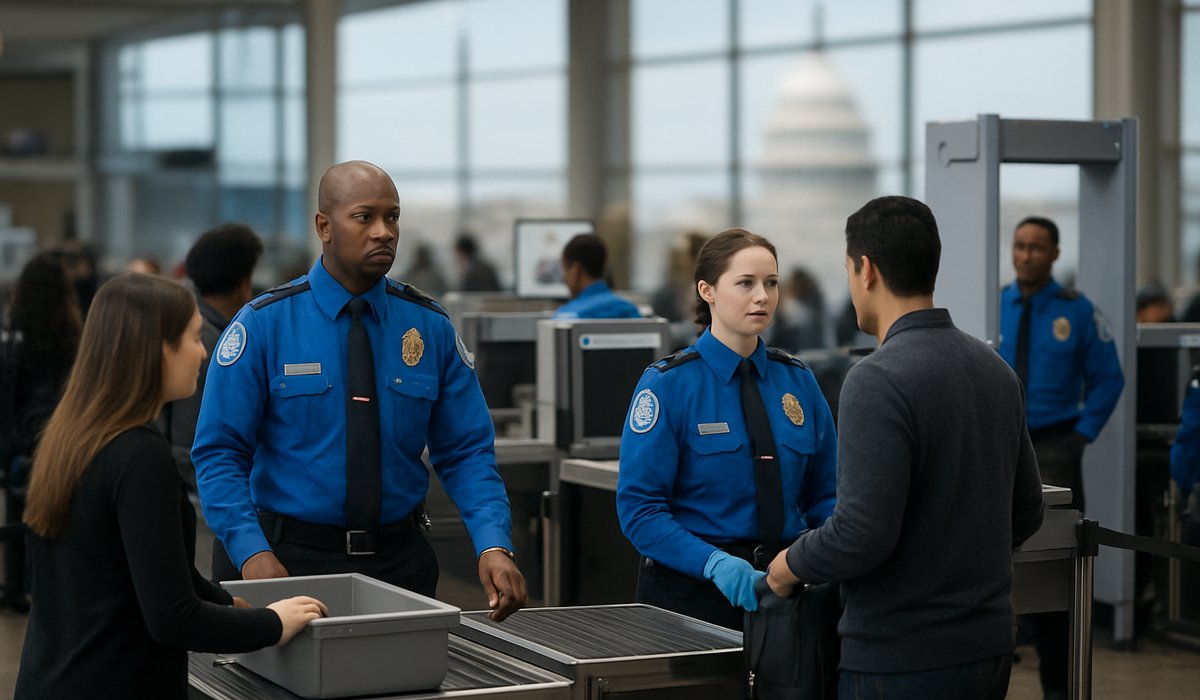
Image generated by AI
Voters Are Taking Airport Frustrations to the Ballot Box
As the United States rapidly accelerates toward the pivotal 2026 election cycle, a massive new national sentiment survey confirms that aviation functionality is no longer just a logistical issue—it has mutated into a fiercely critical political benchmark. The independent poll, conducted by Morning Consult on behalf of the U.S. Travel Association, definitively shows that millions of Americans are factoring the operational stability of aviation personnel, including Air Traffic Controllers (ATC) and Transportation Security Administration (TSA) agents, directly into their candidate evaluations.
The data is striking: an overwhelming 75% of respondents confirmed that a political candidate's specific approach and voting history regarding aviation security and infrastructure funding would outright influence their behavior at the ballot box. Crucially, this frustration completely ignores partisan divides, registering identical levels of intense scrutiny across registered Democrats, Republicans, and Independents.
The Tangible Cost of Political Gridlock
For decades, aviation infrastructure funding was treated as an invisible, bipartisan administrative duty. However, increasingly frequent federal budget disputes, looming government shutdowns, and massive staffing shortages have violently exposed the fragility of the system to the traveling public.
Air travel is arguably the most highly visible federal public service that an average citizen interacts with. When political stalemates threaten to halt pay for TSA agents, or when chronic underfunding leads to a depleted air traffic control workforce causing mass domestic flight cascading delays, voters assign the blame directly to government incompetence. Workforce stability is no longer an abstract bureaucratic theory; it is the difference between a family missing a massive holiday vacation or an executive missing a critical cross-country meeting.
Legislative Shields: Preventing Aviation Hostages
The survey also exposed massive public support (69% of participants) for strict protective legislation designed to insulate aviation operations from Washington's political theater.
Currently, proposals are being drafted to permanently exempt critical aviation personnel from furlough operations during government shutdowns. The goal is to ensure that ATC and TSA officers maintain guaranteed, continuous funding and pay stabilization regardless of whether Congress passes a broader federal budget. The voting public has signaled that using the nation's airspace security as leverage during partisan budgetary hostage negotiations is politically toxic and entirely unacceptable.
What Guests Get
- Potential stabilization — severe voter pressure may finally force Congress to pass permanent funding shields for the FAA and TSA, ending the cycle of shutdown-related travel anxiety.
- Workforce retention — uninterrupted pay protections drastically improve retention rates for exhausted Air Traffic Controllers, directly reducing flight delays triggered by ATC understaffing.
- Improved security wait times — stable funding allows the TSA to execute long-term hiring and retention programs, theoretically accelerating checkpoint processing in peak 2026 seasons.
- Bipartisan attention — travel infrastructure is experiencing a rare moment of unified public attention, ensuring it remains high on the legislative agenda.
What This Means for Travelers
If you are a frequent flyer traversing the U.S. domestic network in 2026, the political maneuvering directly impacts your itinerary reliability.
The Threat of Shutdowns: Historically, when a government shutdown hits, TSA agents and ATCs are forced to work without immediate pay. The inevitable surge in "sickouts" instantly paralyzes major hubs (like Atlanta, Newark, and Chicago O'Hare). Pay attention to upcoming federal budget deadlines; if Congress approaches a shutdown, you must anticipate catastrophic delays and actively maneuver your travel dates outside the threat window.
Take Action: The traveling elite and corporate entities now wield significant leverage. If you are continually frustrated by ATC holding patterns or two-hour TSA lines, the U.S. Travel Association suggests directing that anger at your specific congressional representatives. The polling data proves that holding them accountable for aviation infrastructure is a legitimate and effective electoral threat.
FAQ: U.S. Aviation Workforce and Security in 2026
Why are Air Traffic Controller shortages causing so many delays? The Federal Aviation Administration (FAA) requires years to fully train and certify an air traffic controller. A combination of pandemic-era training halts, mandatory retirement ages, and severe federal budget volatility has created a massive staffing deficit. When a control center lacks bodies, they mandate increased spacing between aircraft, causing immense ground delays at airports.
If the U.S. government shuts down, do airports close? No, the airports do not close, as aviation personnel are deemed "essential workers." However, they are forced to work without immediate pay. Historically, this leads to plunging morale and severe staffing drop-offs as workers call in sick, resulting in canceled flights and horrific security lines.
How accurate is the Morning Consult poll? The survey is highly robust. Conducted online between March 27 and March 29, 2026, it sampled 2,000 registered voters nationwide, dynamically weighted for demographics including age, gender, geographic region, and historic voting patterns.
Related Travel Guides
Disclaimer
This article is for informational and educational purposes only. It does not constitute legal, financial, or professional advice. While we strive to provide accurate and up-to-date information, travel policies, regulations, and conditions change rapidly. Always verify information with official sources before making travel decisions. Nomad Lawyer makes no representations about the accuracy, reliability, completeness, or suitability of the information provided. Readers should consult qualified professionals for advice specific to their circumstances. The views expressed in this article are those of the author and do not necessarily reflect the views of Nomad Lawyer.
Raushan Kumar
Founder & Lead Developer
Full-stack developer with 11+ years of experience and a passionate traveller. Raushan built Nomad Lawyer from the ground up with a vision to create the best travel and law experience on the web.
Learn more about our team →