
Aviation Updates: Avianca Shifts Venezuelan Hub to Valencia to Bypass Severe Caracas Airport Disruptions
Following severe operational constraints in Caracas, Avianca reroutes all Bogotá flights to Valencia, preventing massive flight cancellations across the Colombia-Venezuela border.

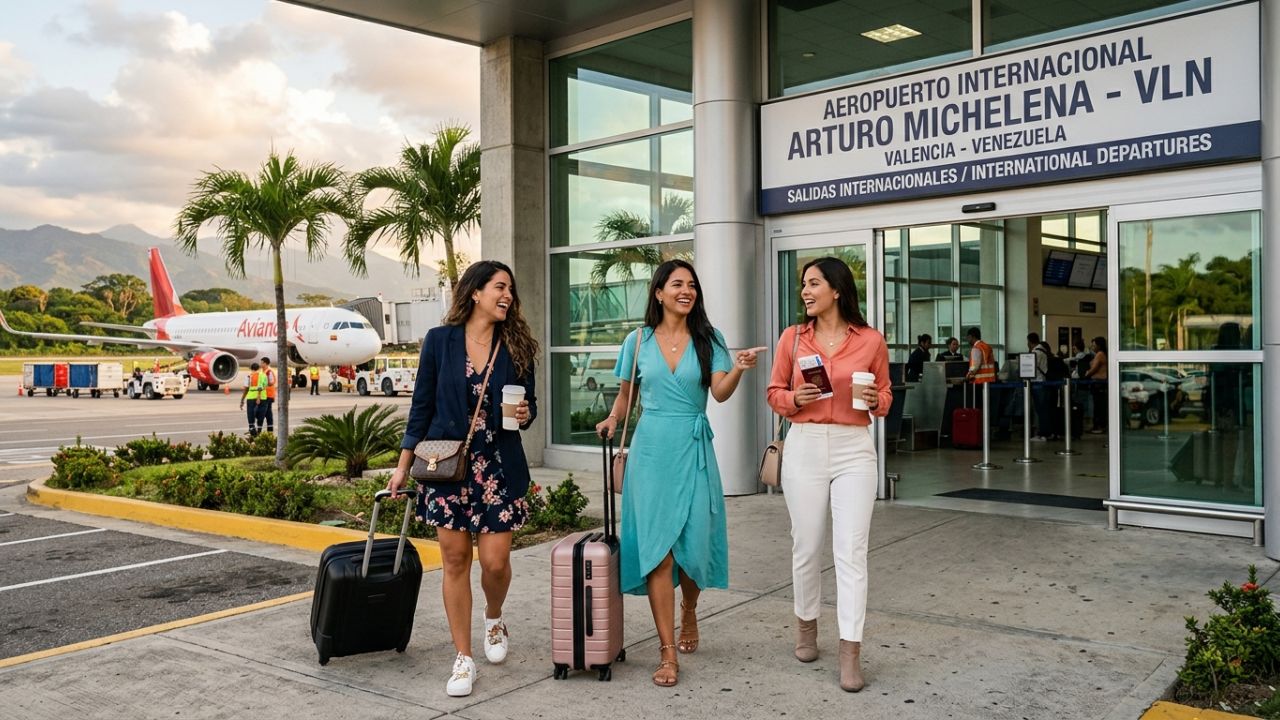
Image generated by AI
Aviation Updates: Avianca Shifts Venezuelan Hub to Valencia to Bypass Severe Caracas Airport Disruptions
As severe operational infrastructure constraints completely paralyze Venezuela's primary international gateway, Avianca has executed a massive tactical rerouting, shifting its entire Bogotá-to-Venezuela network directly into Valencia to permanently bypass the severe travel chaos paralyzing Caracas.
Image generated by AI
As urgent airline news platforms and highly critical aviation updates continuously document the extreme operational volatility plaguing South American airspace, a critical bilateral air corridor has just undergone a massive restructuring. In direct response to severe, ongoing airport disruptions at Caracas Simón Bolívar International Airport, Avianca has aggressively rerouted its international gateway, permanently shifting all passenger operations to Arturo Michelena International Airport in Valencia. Rather than succumbing to the failing infrastructure and issuing massive, systemic flight cancellations, Avianca has utilized Valencia as a highly functional substitute to maintain uninterrupted passenger movement between Colombia and Venezuela. This strategic aviation adjustment guarantees that vital cross-border mobility—including business, diaspora travel, and critical humanitarian logistics—remains heavily protected from the extreme travel chaos currently engulfing the nation's capital.
Expanded Overview: Preserving Bilateral Continuity
When analyzing the massive macroeconomic forces driving northern South American aviation, the Colombia-Venezuela air corridor is arguably the most sensitive and essential route in the region.
The decision to rapidly bypass Caracas and establish Valencia as the temporary international entry point is a masterclass in operational continuity. Typically, when a primary national gateway faces severe operational constraints, airlines are forced to suspend services entirely, stranding thousands of passengers and severing vital economic lifelines. By actively pivoting the Bogotá route away from the collapsing infrastructure in Caracas, Avianca has stabilized airline schedules across a highly volatile regional operating environment. This move ensures that the critical flow of passengers and urgent cargo between the two nations does not suffer a complete, catastrophic rupture.
Section-Wise Breakdown: The Caracas Gateway Collapse
The operational catalyst for this massive network shift stems directly from the rapid deterioration of capacity at Venezuela’s primary capital hub.
Caracas Simón Bolívar International Airport, traditionally the singular main international gateway for the country, has been hit with severe, temporary operational constraints. As airspace congestion and infrastructure limitations drastically reduced the airport's capacity to safely and efficiently turn around international aircraft, Avianca was faced with a critical choice: either ground the fleet or find an alternate runway. Recognizing that continuing to operate into Caracas would guarantee rolling delays and massive travel chaos, the airline aggressively executed the diversion strategy.
Section-Wise Breakdown: The Valencia Lifeline
To replace the paralyzed capital hub, Avianca immediately elevated Arturo Michelena International Airport in Valencia from a secondary regional facility into a core international gateway.
Valencia offers massive operational advantages that make it the perfect functional substitute. The airport features an established runway infrastructure highly capable of handling narrow-body international jets, specifically Avianca's Airbus fleet. Furthermore, Valencia suffers from vastly lower congestion compared to Caracas, allowing for incredibly rapid aircraft turnaround times. Because the airport already hosts existing regional aviation and domestic cargo activity, Avianca was able to seamlessly integrate its international services without requiring major, time-consuming infrastructural overhauls, ensuring the air bridge remained open.
Flight Details: Avianca Bogotá-Venezuela Network Shift Matrix
The exact operational telemetry outlining this highly critical network diversion, detailing the specific aircraft deployment, the abandoned gateway, and the new operational lifeline, has been consolidated into the mandatory matrix below.
Avianca Bogotá-Venezuela Network Shift Matrix (2026)
| Operational Element | Route Restructuring Data |
|---|---|
| Airline Operator | Avianca |
| Origin Airport | Bogotá (BOG) |
| Original Destination | Caracas Simón Bolívar International Airport |
| New Temporary Destination | Arturo Michelena International Airport (Valencia) |
| Aircraft Deployment | Airbus A320-family (Approx. 180 passenger capacity) |
| Operational Catalyst | Severe infrastructure constraints at Caracas gateway |
Passenger Impact: Flawless Rebooking Execution
For the thousands of international travelers caught in the middle of this massive network shift, Avianca has deployed a highly aggressive passenger handling system to minimize disruption.
Travelers originally booked on the disrupted Bogotá–Caracas flights are being automatically and seamlessly rebooked onto the new Bogotá–Valencia services. To completely eliminate any resulting travel chaos, the airline is offering free itinerary modifications, providing full refund options for unused tickets, and presenting alternative routing options depending on specific travel needs. Because Avianca is operating a mix of scheduled passenger services and additional charter operations during peak demand periods using roughly 180-seat Airbus A320-family aircraft, the airline is perfectly maintaining capacity levels close to its original Caracas service, ensuring no passenger is left stranded.
Industry Analysis: The Rise of Secondary Hubs
Aviation economists explicitly highlight that this temporary but highly strategic aviation realignment perfectly demonstrates a growing global industry trend.
Rather than withdrawing services during intense geopolitical or infrastructure crises, global carriers are increasingly deploying secondary airports as operational safeguards. By relying on alternate airports like Valencia to sustain critical routes, airlines can maintain their lucrative market presence in highly sensitive regions while vastly increasing their network resilience. Avianca’s ability to flawlessly execute this shift proves that network flexibility and adaptive routing are now just as vital to airline survival as aggressive route expansion.
Conclusion: Securing the South American Air Bridge
Ultimately, Avianca’s rapid and highly tactical decision to abandon the heavily constrained Caracas airport in favor of Valencia represents a monumental victory for South American aviation resilience. By decisively rerouting its Airbus A320 operations to Arturo Michelena International Airport, the airline has successfully maintained the absolutely vital Bogotá–Venezuela passenger flow. Beyond mere commercial viability, this route serves as an essential humanitarian lifeline, facilitating the rapid movement of medical personnel and relief logistics. While aviation analysts view this as a temporary stabilization strategy—with Caracas expected to eventually regain its primary role once operational conditions normalize—the immediate reality is that Avianca’s aggressive flexibility has single-handedly prevented catastrophic travel chaos from severing two highly interdependent nations.
Key Takeaways
- Massive Route Rerouting: Avianca has completely shifted its international passenger flights bound for Venezuela away from Caracas and into Valencia.
- The Operational Catalyst: Severe, ongoing operational constraints and infrastructure limitations at Caracas Simón Bolívar International Airport forced the airline to find a functional substitute.
- The Valencia Lifeline: Arturo Michelena International Airport in Valencia now serves as the temporary international entry point, offering lower congestion and existing runway infrastructure.
- Aircraft and Capacity: The Bogotá (BOG) to Valencia (VLN) corridor is operated using Airbus A320-family aircraft, carrying approximately 180 passengers on a mix of scheduled and charter flights.
- Passenger Protection: Travelers originally booked to Caracas are being automatically rebooked to Valencia, with free modifications and refund options available to prevent massive flight cancellations.
FAQ: Avianca Bogotá to Venezuela Route Shift 2026
Why did Avianca stop flying to Caracas? Avianca suspended flights to Caracas Simón Bolívar International Airport due to severe, temporary operational constraints and infrastructure issues that were causing massive delays and travel chaos.
Where is Avianca flying to in Venezuela now? The airline has strategically rerouted all its Bogotá–Venezuela passenger flow to Arturo Michelena International Airport in Valencia, which now serves as the temporary international gateway.
What happens to passengers who originally booked flights to Caracas? Avianca has implemented an automatic rebooking system, shifting affected passengers onto the new Bogotá–Valencia services. The airline is also offering free itinerary modifications and full refund options to ensure passenger flexibility.
Related Travel Guides
Eurowings Holidays Tenerife Germany Discount Travel Chaos 2026
Qantas Brisbane Wellington Auckland Diversion Travel Chaos 2026
South America Regional Flight Disruption Survival Guide 2026
Disclaimer: This article is strictly for informational and geopolitical aviation analysis purposes. The specific route restructuring data, airport gateway shifts (from Caracas Simón Bolívar International Airport to Valencia Arturo Michelena International Airport), and aircraft deployment strategies (Airbus A320-family) are based on official Avianca operational announcements available at the time of publication. Airline routing in politically and operationally sensitive regions, specific flight schedules, automatic passenger rebooking protocols, and full refund policies are highly dynamic and subject to immediate, unannounced modification by the carrier or national aviation authorities. Passengers must explicitly verify exact arrival airports, specific itinerary changes, and current cross-border entry requirements directly with Avianca prior to commencing international travel between Colombia and Venezuela.
Disclaimer
This article is for informational and educational purposes only. It does not constitute legal, financial, or professional advice. While we strive to provide accurate and up-to-date information, travel policies, regulations, and conditions change rapidly. Always verify information with official sources before making travel decisions. Nomad Lawyer makes no representations about the accuracy, reliability, completeness, or suitability of the information provided. Readers should consult qualified professionals for advice specific to their circumstances. The views expressed in this article are those of the author and do not necessarily reflect the views of Nomad Lawyer.
Kunal K Choudhary
Co-Founder & Contributor
A passionate traveller and tech enthusiast. Kunal contributes to the vision and growth of Nomad Lawyer, bringing fresh perspectives and driving the community forward.
Learn more about our team →