
Avanti West Coast Rail Transition to Public Ownership by March 2027: Impact on UK Intercity Travel
Avanti West Coast prepares for a transition to public ownership by March 2027, aiming to stabilize reliability across the West Coast Main Line connecting London, Manchester, and Liverpool.

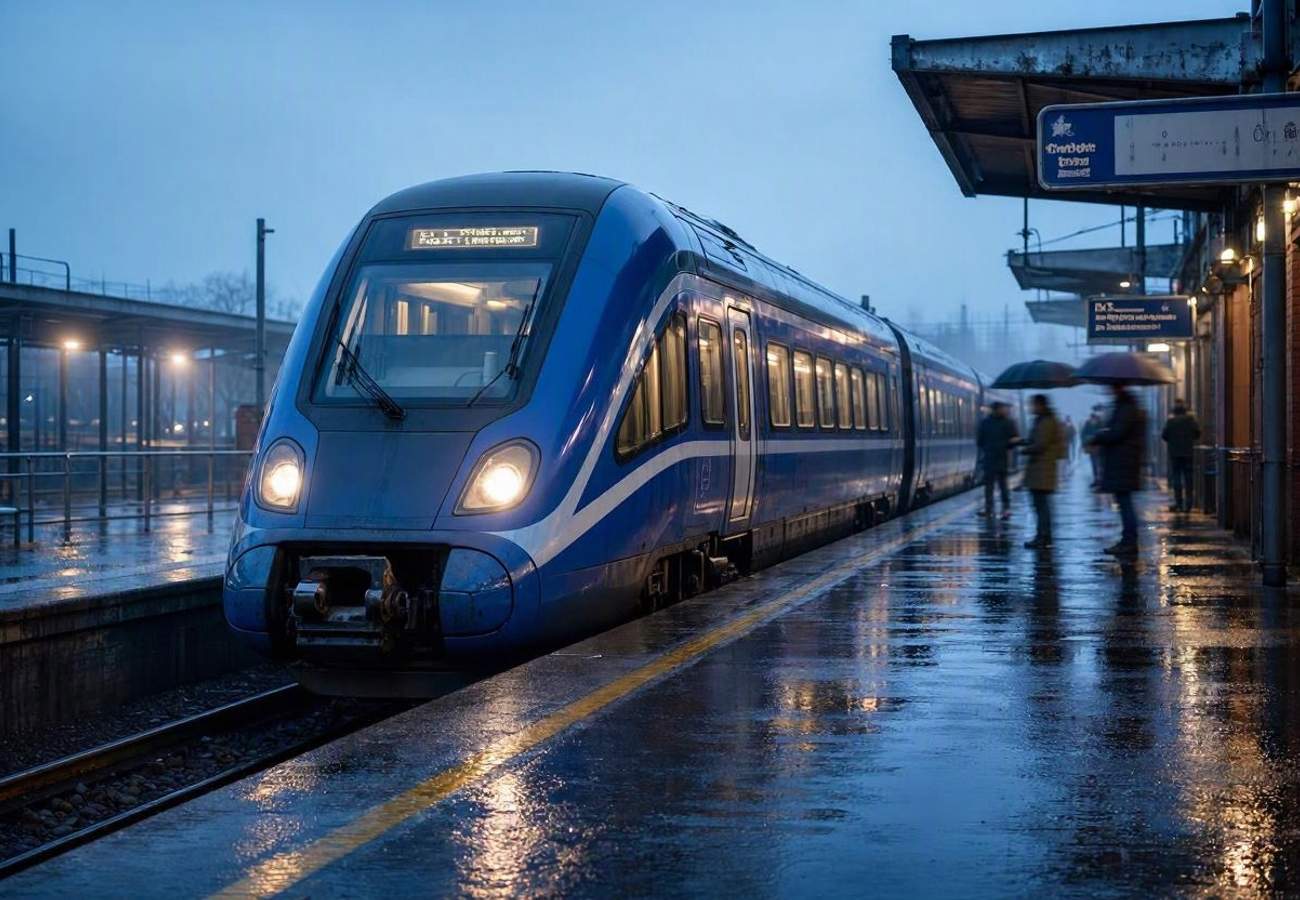
Image generated by AI
The UK rail sector is shifting from a fragmented franchise model toward a centralized state-run system, with Avanti West Coast scheduled to enter public ownership by March 2027. This move marks a systemic pivot for one of Britain's most critical transit arteries, which links London Euston to the industrial and economic hubs of the North and Scotland.
The Transition in Numbers: West Coast Main Line Scale
The Avanti West Coast network is not merely a regional service but a primary economic corridor. The transition affects the West Coast Main Line (WCML), which facilitates high-volume transit between London and key urban centers including Birmingham, Preston, Manchester, Liverpool, Glasgow, and Edinburgh.
The shift to public ownership is a strategic response to historical volatility in service reliability. By removing the profit-driven franchise layer, the UK government intends to prioritize operational performance over shareholder dividends. For the passenger, the primary metrics for success will be the reduction in cancellation rates and the synchronization of connecting services, particularly at hubs like Preston, which serves as the critical gateway between Lancashire and the broader North West.
According to data from the Office of Rail and Road (ORR), the stability of these corridors is essential for maintaining the UK's GDP, as these routes support a diverse demographic of users ranging from high-frequency business commuters to international tourists.
Comparative Context: Private vs. Public Operating Models
The move toward nationalization reflects a broader trend in European rail management, where integrated state-owned systems often outperform fragmented private concessions in terms of network coordination. The Avanti transition aims to solve the "silo effect," where different operators on the same line fail to communicate effectively during disruptions.
| Metric | Private Franchise Model (Pre-2027) | Public Ownership Model (Post-March 2027) |
|---|---|---|
| Primary Objective | Profitability & Dividend Yield | Service Reliability & Passenger Experience |
| Network Coordination | Fragmented across multiple operators | Integrated system management |
| Investment Focus | Short-term contractual obligations | Long-term infrastructure & performance |
| Information Flow | Operator-specific updates | Unified network-wide communication |
| Fare Structure | Market-driven/Franchise-led | Government policy-led |
Historically, the UK rail system has struggled with the "franchise failure" cycle. By transitioning Avanti West Coast to a public entity, the government is attempting to eliminate the risk of operator insolvency or contractual disputes that have previously led to sudden service drops. This mirrors strategies seen in other high-efficiency networks, such as those analyzed by International Union of Railways (UIC), where centralized control often leads to better rolling stock utilization and punctuality.
What This Means for Travelers
For the individual traveler, the transition to public ownership will not result in an overnight transformation of the rails. The shift is an administrative and structural change; the physical tracks and trains remain the same. However, the data suggests specific actionable shifts in how passengers should plan their travel.
Booking and Fare Strategy There is no empirical data to suggest that nationalization will automatically lower ticket prices. Fares are dictated by broader government fiscal policies and operational costs. To mitigate costs, travelers should maintain the following habits:
- Advance Purchase: Continue booking 8-12 weeks in advance to secure the lowest tiers of pricing.
- Peak Avoidance: Expect peak-time pricing to remain high regardless of ownership, as demand management is a core part of rail logistics.
Reliability Expectations If you are traveling through Preston or Manchester in late 2026 and early 2027, expect a period of "operational flux." As the management structure shifts, there may be temporary inconsistencies in staffing or scheduling. Passengers are advised to:
- Monitor real-time updates via the National Rail portal.
- Maintain detailed records of delays for compensation claims, as the process for "Delay Repay" may evolve under the new public entity.
Forward Projection: The 2027 Rail Trajectory
Based on current trajectory, the success of the Avanti West Coast transition will serve as a bellwether for the rest of the UK's rail reforms. If the March 2027 handover results in a measurable increase in punctuality and a decrease in "short-notice" cancellations, it will likely accelerate the move toward public ownership for other major corridors.
The long-term goal is a "joined-up" railway. This means a traveler arriving at London Euston from an international flight should experience a seamless transition to a train headed for Glasgow, with a single point of accountability for the entire journey. We project that by 2028, the integration of digital ticketing and unified scheduling will be the primary KPIs used to measure the success of this nationalization.
FAQ: Avanti West Coast Transition 2027
Will train tickets become cheaper after March 2027? Not necessarily. Public ownership focuses on operational reliability rather than fare reduction. Pricing will continue to depend on government policy and demand. Booking in advance remains the most effective way to save.
Which cities are most affected by this change? The primary impact will be felt in London, Birmingham, Preston, Manchester, Liverpool, Glasgow, and Edinburgh, as these are the core hubs of the West Coast Main Line.
Should I expect immediate improvements in service? No. The transition is a structural change. Improvements in punctuality and passenger experience will likely be gradual as new management protocols are implemented post-March 2027.
How does this affect international tourists? It aims to make exploring the North of England and Scotland more dependable. A more reliable rail link from London to cities like Manchester and Liverpool encourages longer, multi-city itineraries.
The shift to public ownership is a bet on stability over profit, aiming to turn the West Coast Main Line from a source of commuter frustration into a reliable engine of UK connectivity.
Related Travel Guides
Disclaimer
This article is for informational and educational purposes only. It does not constitute legal, financial, or professional advice. While we strive to provide accurate and up-to-date information, travel policies, regulations, and conditions change rapidly. Always verify information with official sources before making travel decisions. Nomad Lawyer makes no representations about the accuracy, reliability, completeness, or suitability of the information provided. Readers should consult qualified professionals for advice specific to their circumstances. The views expressed in this article are those of the author and do not necessarily reflect the views of Nomad Lawyer.
Naina Thakur
Contributor & Travel Specialist
Travel enthusiast and legal writer covering visa regulations, responsible tourism, and cultural journeys across global destinations.
Learn more about our team →