
Austrian Airlines Overhauls Premium Inflight Wine Program: 34 Wineries and 300 Cabin Sommeliers Curate High-Altitude Cellar Through 2027

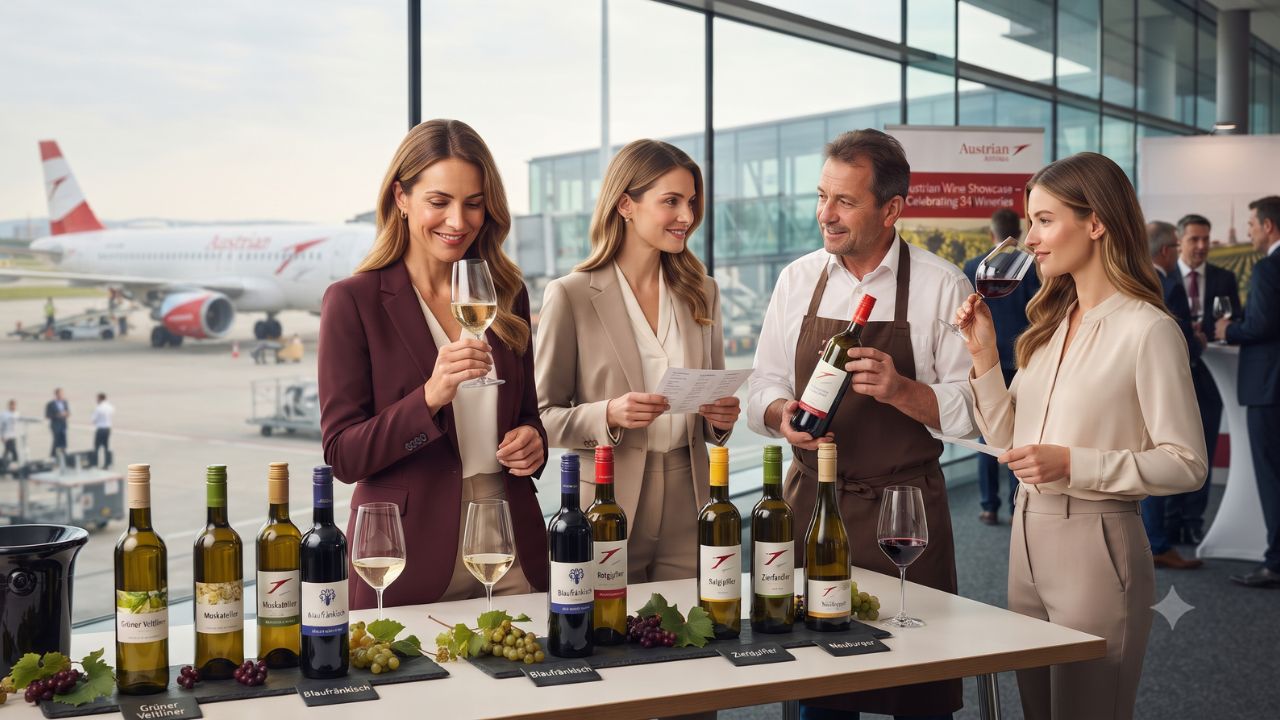
Selected from a rigorous blind evaluation of more than 600 candidate vintages, a newly curated roster of 34 Austrian wineries will take flight aboard Austrian Airlines through August 2027, supported by 300 certified cabin crew sommeliers. Formally introduced during the Austrian Airlines Wine Event 2026 staged at Vienna Airport (Flughafen Wien), the multi-regional cellar program transitions the flag carrier’s onboard hospitality away from static annual contracts into four dynamic seasonal menus. Operating under the theme "Meet the Winemakers – Taste What’s Flying", the initiative directly targets premium business class flyers by bridging Austrian cultural terroir with the complex sensory physics of pressurized aircraft cabins cruising at 10,000 metres.
The strategic overhaul, championed by Austrian Airlines Chief Executive Officer Annette Mann, positions regional authenticity at the core of the airline’s competitive identity within the Lufthansa Group network. By partnering with the Austrian Wine Marketing Board (ÖWM), legally designated as Österreich Wein Marketing GmbH, the carrier is investing in structured viticultural education for roughly 300 flight attendants and pursers. These crew members have undergone rigorous sensory calibration to understand how high-altitude cabin pressurization alters human olfactory and gustatory perception, ensuring passengers receive professional cellar guidance rather than routine drink service.
The Vienna Airport Showcase and Strategic Soft-Product Vision
The unveiling of the 2026–2027 cellar collection at Vienna Airport brought together participating estate winemakers, aviation journalists, commercial hospitality partners, and airline leadership. The event highlighted the airline’s broader commercial strategy: transforming routine long-haul transportation into an authentic showcase of Austrian culinary heritage.
Chief Executive Officer Annette Mann emphasized that wine and regional viticulture are inseparable from Austria’s national identity and tourism appeal. Within the highly consolidated European airline market, where lie-flat business class seats and digital entertainment hardware have reached functional parity, flag carriers must rely on soft-product distinction to justify premium fare yields. By dedicating cabin resources to 34 boutique and established estate wineries, Austrian Airlines differentiates itself from competitors that rely on bulk commercial contracts.
AUSTRIAN AIRLINES INFLIGHT WINE PROGRAM BENCHMARK MATRIX (2026–2027)
| Category / Entity | Details / Impact |
|---|---|
| Program Element | Operational Specification & Strategic Benchmark |
| Participating Est. | 34 accredited Austrian wineries across 8 distinct viticultural zones |
| Selection Scope | Rigorous sensory screening and blind tasting across 600+ submitted vintages |
| Service Duration | Active onboard deployment from October 2026 through August 2027 |
| Rotation Schedule | 4 quarterly seasonal menus (Autumn, Winter, Spring, Summer) |
| Trained Personnel | 300 certified "Austrian Wine Experts" (pursers and long-haul cabin crew members) |
| Institutional Part | Österreich Wein Marketing GmbH (Austrian Wine Marketing Board - ÖWM) |
| Core Terroirs | Wachau, Kamptal, Kremstal, Weinviertel, Thermenregion, Burgenland, Steiermark, Wien |
| Signature Grapes | Grüner Veltliner, Blaufränkisch, Rotgipfler, Zierfandler, Gelber Muskateller, Zweig |
The initiative is reinforced by the presence of 300 trained flight attendants and pursers certified as "Austrian Wine Experts." These crew members attended interactive workshops with the winemakers, examining soil compositions, maceration techniques, barrel-aging profiles, and specific food pairing mechanics. This training enables crew members to provide knowledgeable tableside recommendations, explaining the geological origin and production craftsmanship behind each poured vintage.
Cabin Barometry and the Biophysics of High-Altitude Sensory Perception
Serving fine wine at a cruising altitude of 10,000 metres (approximately 33,000 feet) involves addressing profound physiological challenges. The interior environment of a commercial aircraft cabin alters the human body's sensory receptors in ways that can render standard terrestrial wines unpalatable.
PHYSIOLOGICAL SENSORY DISTORTION AT 10,000 METRES CABIN CRUISE:
+---------------------------------------------------------------------------------------------------------+
| Cabin Atmosphere: Pressurized to 1,800m - 2,400m elevation | Relative Humidity drops below 12%          |
+---------------------------------------------------+-----------------------------------------------------+
|            GUSTATORY RECEPTOR IMPACTS             |             OLFACTORY EPITHELIUM IMPACTS            |
|  * Sweetness perception decreases by ~30%         |  * Desiccated nasal membranes blunt aroma detection |
|  * Saltiness perception decreases by ~30%         |  * Volatile organic compounds evaporate rapidly     |
|  * Perceived acidity and bitterness are magnified |  * Heavy oak and abrasive tannins taste metallic    |
+---------------------------------------------------+-----------------------------------------------------+
The Hypobaric Cabin Environment
Commercial widebody aircraft, such as the Boeing 777-200ER, Boeing 767-300ER, and newly inducted Boeing 787-9 Dreamliners in Austrian Airlines’ long-haul fleet, are pressurized to an equivalent altitude of 6,000 to 8,000 feet above sea level. In this hypobaric environment:
- Blood Oxygen Saturation: Blood oxygen levels decline slightly, reducing the sensitivity of olfactory and gustatory nerve endings.
- Extreme Atmospheric Dryness: Cabin air is continuously drawn from high altitudes, resulting in relative humidity levels dropping below 12 percent—drier than the Sahara Desert. This dry air rapidly dehydrates the thin mucus layer covering the olfactory epithelium, suppressing the sense of smell, which accounts for roughly 80 percent of what humans perceive as flavor.
- Taste Threshold Shifts: Scientific studies conducted by the Fraunhofer Institute demonstrate that human perception of sweetness and saltiness drops by roughly 30 percent in an aircraft cabin. Conversely, human sensitivity to sour acids, bitter compounds, and astringent tannins remains largely unchanged, making wines with harsh tannins or shrill acidity taste unpleasantly bitter and astringent.
Viticultural Selection Criteria for High-Altitude Balance
To succeed above the clouds, the selection committee evaluated all 600 submissions specifically against high-altitude performance criteria:
- Fruit Concentration and Extract: Wines must possess dense primary fruit extract and expressive aromatics (ripe stone fruits, dark berries, floral terpenes) that can pierce through the blunted olfactory environment.
- Refined Tannin Structure: Heavy, aggressive oak tannins turn astringent and metallic at altitude. The selection committee favored red wines with ripe, velvety, fine-grained tannins aged in neutral or gently toasted oak casks.
- Balanced Supple Acidity: Austrian whites are renowned for their crisp minerality. However, excessive raw acidity can taste overly sharp in dry cabin air. The chosen selections feature ripe, integrated acidity balanced by extract sweetness and mineral weight.
Four-Season Cellar Architecture and Seasonal Rotations
Austrian Airlines has organized its 34 estate partners into four distinct seasonal collections running from autumn 2026 through summer 2027. This rotating calendar mirrors regional culinary seasons, aligning wine offerings with seasonal menus developed by DO & CO catering.
AUSTRIAN AIRLINES FOUR-SEASON CELLAR SCHEDULE (2026–2027)
| Column 1 | Column 2 | Column 3 | Column 4 | Column 5 |
|---|---|---|---|---|
| Seasonal Window | Dominant Varietals | Sensory Characteristics | Key DAC Appellations | Terroir & Cabin Fit |
| Autumn 2026 | Rotgipfler, | Ripe stone fruit, | Thermenregion, | Dense extract |
| (Oct to Dec 2026) | Zierfandler, | peppery spice, dark | Mittelburgenland, | insulates palate |
| Blaufränkisch | forest berry depth | Eisenberg DAC | against dry air | |
| Winter 2026/2027 | Grüner Veltliner | Baked yellow apple, | Wachau DAC, | Full body offsets |
| (Jan to Mar 2027) | Reserve, Zweigelt | tobacco leaf, roasted | Kamptal DAC, | dulled tastebud |
| Reserve | spice, cocoa finish | Neusiedlersee DAC | perception | |
| Spring 2027 | Gelber | Elderflower, crushed | Südsteiermark DAC, | Expressive terpenes |
| (Apr to May 2027) | Muskateller, | nutmeg, white peach, | Leithaberg DAC | pierce low cabin |
| Neuburger, Rosé | nutty mineral tones | humidity levels | ||
| Summer 2027 | Classic Grüner | Citrus zest, green | Kremstal DAC, | Crisp acidity and |
| (Jun to Aug 2027) | Veltliner, | apple, white pepper, | Weinviertel DAC, | mineral tension for |
| Gemischter Satz | flinty mineral core | Wien DAC (Vienna) | summer refresh |
Autumn 2026: Rich Extracts and Indigenous Treasures
The autumn selection emphasizes warmth, texture, and rare regional specialties. Featuring indigenous white grapes from the Thermenregion alongside structured reds from Burgenland, these wines complement hearty autumn dishes such as roasted venison, braised beef cheek, and wild mushroom risotto.
Winter 2026/2027: Concentrated Body and Reserve Bottlings
During the mid-winter months, the palate demands comforting, full-bodied wines with textural richness. The cellar features reserve-level Grüner Veltliner bottlings from the Danube terraces alongside velvety Zweigelt reds from the sunny eastern shores of Lake Neusiedl, pairing seamlessly with traditional Austrian winter fare like Tafelspitz and roasted goose.
Spring 2027: Aromatic Florals and Nutty Elegance
As spring arrives, the wine menu transitions to vibrant aromatics and crisp, refreshing profiles. The spotlight turns to Gelber Muskateller from the steep slopes of southern Styria, characterized by notes of elderflower and nutmeg, alongside the creamy, nutty elegance of Neuburger from the limestone soils of the Leithaberg.
Summer 2027: Mineral Precision and Viennese Field Blends
The summer program delivers crisp mineral whites designed for warm-weather travel. Classic peppery Grüner Veltliner from the Kremstal is paired with the historic Wiener Gemischter Satz DAC, a field blend that reflects Vienna’s traditional heuriger wine tavern culture.
Spotlight on Rare and Indigenous Austrian Grape Varieties
A distinctive hallmark of the 2026–2027 collection is Austrian Airlines’ deliberate commitment to championing indigenous grape varieties that rarely gain exposure on international flight menus.
THE INDIGENOUS AUSTRIAN GRAPE SPECTRUM:
+---------------------------------------------------------------------------------------------------------+
|            WHITE INDIGENOUS VARIETIES             |             RED INDIGENOUS VARIETIES                |
+---------------------------------------------------+-----------------------------------------------------+
| * Grüner Veltliner (National Peppery Flagship)    | * Blaufränkisch (The Aristocratic Terroir Red)      |
| * Rotgipfler (Thermenregion Exotic Powerhouse)    | * Zweigelt (Plum Fruit, Cherry Velvet Cross)        |
| * Zierfandler / Spätrot (Nutty Mineral Acidity)   | * Sankt Laurent (Silky, Elegant Pinot Relative)     |
| * Neuburger (Creamy Hazelnut & Subtle Melon)      |                                                     |
| * Gemischter Satz (Traditional Viennese Blend)    |                                                     |
+---------------------------------------------------+-----------------------------------------------------+
1. Grüner Veltliner: The Benchmark of Austrian Terroir
Accounting for roughly one-third of Austria’s total vineyard area, Grüner Veltliner is the nation's premier white grape. Renowned for its signature "Pfefferl" (crushed white pepper spice), the grape expresses distinct characteristics across different soils:
- Primary Rock Terraces (Wachau & Kremstal): Grown on steep weathered gneiss and schist terraces, Grüner Veltliner yields flinty, mineral-driven wines with notes of green apple, white peach, and vibrant acidity.
- Deep Loess Soils (Kamptal & Wagram): Deep silt loess deposits produce richer, golden-hued wines with yellow plum, tobacco spice, and rich extract that perform exceptionally well in pressurized cabins.
2. Rotgipfler and Zierfandler: The Legendary Thermenregion Duo
Cultivated almost exclusively in the Thermenregion south of Vienna, Rotgipfler and Zierfandler (historically known as Spätrot) are among the rarest fine wine grapes in global commercial viticulture:
- Rotgipfler: A natural cross between Traminer and Roter Veltliner, Rotgipfler produces rich, full-bodied white wines with ripe tropical fruit aromas (mango, melon, candied pineapple), structured acidity, and an unctuous mouthfeel. Its high extract makes it naturally resilient to the dulling effects of low-humidity cabin air.
- Zierfandler: Distinctive for its late ripening and reddish berries, Zierfandler delivers delicate acidity paired with nutty aromatics, dried apricot notes, and subtle honey undertones. In historical cellars, the two grapes are frequently co-fermented to produce the traditional "Spätrot-Rotgipfler" blend.
3. Neuburger: Nutty Refinement from Limestone and Schist
Originating as an accidental cross between Roter Veltliner and Sylvaner discovered floating in the Danube River in the 1860s, Neuburger is cherished for its subtle elegance. It features gentle hazelnut, walnut, and fresh melon aromas with a rounded, creamy texture and mild acidity. In a dry cabin, its soft, supple profile provides a soothing alternative to high-acid whites.
4. Blaufränkisch: Central Europe’s Red Terroir Masterpiece
Blaufränkisch is recognized internationally as one of the great cool-climate red wine grapes of the world. Centered in Burgenland’s Mittelburgenland and Eisenberg appellations, the grape produces deep ruby-colored wines characterized by dark blackberry, wild blueberry, and crushed peppercorn aromas, backed by a mineral backbone and fine-grained, structured tannins. Aged in large neutral Austrian oak casks, Blaufränkisch delivers high-altitude elegance without astringency.
The Districtus Austriae Controllatus (DAC) Legal Appellation Framework
To provide passengers with verified regional authenticity, the selection aligns with the Districtus Austriae Controllatus (DAC) classification system, established by Austrian wine law in 2002 to codify regionally typical wines.
AUSTRIA’S CORE DAC REGIONS FEATURED ONBOARD AUSTRIAN AIRLINES
| Entity / Facility | Delays | Cancellations | Details |
|---|---|---|---|
| DAC Appellation | Federal State Origin | Dominant Geological Soils | Key Wine Styles Verified |
| Wachau DAC | Lower Austria (Danube) | Weathered gneiss, loess, amp | Grüner Veltliner, Riesling |
| hicolite terraces | Steinfeder, Federspiel, Sm | ||
| Kamptal DAC | Lower Austria (River Kamp) | Primary rock, Zöbing permian | Peppery Grüner Veltliner, |
| sandstone, loess | vibrant mineral Riesling | ||
| Mittelburgenland | Central Burgenland | Deep heavy clay, loam, with | Blaufränkisch (spicy, |
| DAC | (Blaufränkischland) | moisture retention capacity | dark berry, mineral) |
| Südsteiermark DAC | Southern Styria | Calcareous marl (Opok), | Gelber Muskateller, |
| sandstone, gravel | Sauvignon Blanc, Morillon | ||
| Wien DAC | Vienna Municipal Capital | Flysch sandstone, limestone, | Wiener Gemischter Satz |
| gravel terraces | (traditional field blend) |
Each DAC region enforces strict legal standards governing grape origin, alcohol levels, harvest yields, and flavor profiles. By presenting these appellations onboard, Austrian Airlines serves as an ambassador for Austrian viticulture, educating international travelers on how soil and microclimate define regional character.
Soft-Product Strategy and Airline Premium Cabin Yield Economics
In modern commercial aviation, passenger loyalty in high-yield business cabins is increasingly determined by soft-product excellence.
THE AUSTRIAN AIRLINES PREMIUM HOSPITALITY ECOSYSTEM:
[Lie-Flat Widebody Seat Hardware] (Baseline Industry Parity)
               +
[DO & CO Inflight Culinary Catering] (Gourmet Plated Course Menus)
               +
[34-Winery Curated Seasonal Cellar] (High-Altitude Sommelier Curation)
               +
[Viennese Coffee House Service] (10 Fresh Barista Specialty Coffees)
               +
[300 Certified Austrian Wine Experts] (Tableside Sommelier Guidance)
               =
[RESILIENT PREMIUM CABIN YIELDS & BRAND LOYALTY]
The DO & CO Culinary Partnership and "Flying Chefs"
Austrian Airlines’ wine collection operates in close harmony with its onboard catering partner, the luxury gourmet catering group DO & CO. On long-haul international flights, Austrian Airlines deploys dedicated Flying Chefs—professional culinary specialists onboard who oversee the precise plating, temperature management, and presentation of multi-course gourmet meals.
The integration of the 300 Austrian Wine Experts elevates this service:
- Tableside Sommelier Service: Rather than simply asking passengers for a generic beverage choice, trained flight attendants explain how the peppery minerality of a Kamptal Grüner Veltliner complements Austrian charcuterie, or how the structured acidity of an Eisenberg Blaufränkisch balances a braised beef tenderloin.
- Viennese Coffee House Tradition: Following the dessert and wine service, Austrian Airlines continues its culinary service with its signature "Kaffeehaus Service über den Wolken" (Coffee House Above the Clouds), serving ten classic Viennese coffee specialties, including the traditional Wiener Melange, Einspänner, and Fiaker.
Economic Benefits of Regional Soft-Product Differentiation
By investing in specialized enological curation and crew training, Austrian Airlines secures tangible commercial benefits:
- Defending Premium Yields: Business class passengers frequently choose carriers based on dining and beverage standards. Superior soft-product reputation allows Austrian Airlines to protect average ticket yields against low-cost and hybrid long-haul competition.
- Promoting Austrian Enotourism: The inflight wine program acts as a direct marketing platform for Austria's rural wine regions. Business executives and leisure travelers exposed to boutique estate wines are encouraged to visit wine regions in Lower Austria, Burgenland, and Styria, supporting regional hotels, restaurants, and winery tasting rooms.
- Star Alliance Brand Elevation: Within the wider Lufthansa Group, Austrian Airlines maintains a distinct brand reputation as the boutique culinary specialist, providing a warm, refined counterpoint to the corporate efficiency of sister airlines Lufthansa and Swiss.
Traveler Practical Playbook: Experiencing the Cellar Above the Clouds
For wine lovers and international travelers planning upcoming flights on Austrian Airlines, taking full advantage of the onboard wine cellar requires a few practical considerations:
TRAVELER PLAYBOOK: EXPERIENCING AUSTRIAN WINE IN FLIGHT
| Entity / Route | Metrics | Operational Status |
|---|---|---|
| Service Element | Operational Availability | Practical Advice for Travelers |
| Business Class | Full 34-Winery Program | Request tableside tastings to sample paired white and |
| (Long-Haul) | (Seasonal 4-Course Pairing) | red options before confirming your main meal pairing |
| Premium Economy | Curated Reserve Selections | Enjoy Austrian estate whites and reds selected to match |
| (Long-Haul) | served in glassware | upgraded premium economy multi-course dining menus |
| European Flights | Business Class Cabin | Sample seasonal DAC wines on short-haul European hops |
| (Short/Med-Haul) | + Buy-on-Board Economy | or purchase regional bottles from the Austrian Café menu |
| Pre-Flight Lounge | Vienna Airport Non-Schengen | Sample rotating Austrian wines at the Senator and |
| Experience | & Schengen Lounges | Business Class lounges in Vienna Terminal 3 |
Navigating the Inflight Tasting Experience
- Engage the Cabin Experts: Look for flight attendants wearing the distinctive Austrian Wine Expert insignia. Do not hesitate to ask for detailed tasting notes or request small sample pours of two competing whites before deciding on your meal accompaniment.
- Hydration Balance: Because dry cabin air dulls taste perception, drink a glass of still mineral water alongside every glass of wine. Staying hydrated preserves olfactory moisture and enhances subtle fruit flavors.
- Explore the Digital Knowledge Hub: Passengers can access detailed estate profiles, winemaker interviews, and regional wine tourism guides via the airline’s complimentary inflight Wi-Fi portal and entertainment screens.
Frequently Asked Questions
What is the new Austrian Airlines onboard wine program for 2026–2027?
Austrian Airlines has introduced an annual wine collection featuring wines from 34 Austrian wineries, rotating across four seasonal menus from October 2026 through August 2027.
Why does wine taste different when flying at 10,000 metres?
Dry cabin humidity below 12 percent and low atmospheric pressure dull olfactory senses and reduce sweet and salty taste bud perception by 30 percent, requiring wines with concentrated fruit and supple tannins.
What rare grape varieties are featured in the collection?
Alongside classic Grüner Veltliner and Blaufränkisch, the program highlights rare indigenous Austrian grapes including Rotgipfler, Zierfandler, and Neuburger, sourced from appellations like the Thermenregion.
How are Austrian Airlines flight attendants trained in wine service?
In partnership with the Austrian Wine Marketing Board, roughly 300 crew members completed sensory training and viticultural coursework to become certified "Austrian Wine Experts" capable of providing professional tableside recommendations.
Related Travel Guides
- Portugal Selects Lufthansa for €1.2 Billion TAP Air Portugal Stake: South Atlantic Hub Dynamics and European Consolidation Explored
- Frontier Airlines Enters South America With Orlando-Colombia Expansion: Daily Bogotá Flights and Post-Spirit Network Realignment
- Aeroméxico and European Carriers Launch Transatlantic Routes for 2027: Milan, Paris, and the 75% Domestic Consolidation of Grupo Más Vuelos
Disclaimer
This article is for informational and educational purposes only. It does not constitute legal, financial, or professional advice. While we strive to provide accurate and up-to-date information, travel policies, regulations, and conditions change rapidly. Always verify information with official sources before making travel decisions. Nomad Lawyer makes no representations about the accuracy, reliability, completeness, or suitability of the information provided. Readers should consult qualified professionals for advice specific to their circumstances. The views expressed in this article are those of the author and do not necessarily reflect the views of Nomad Lawyer.
Raushan Kumar
Founder & Lead Developer
Full-stack developer with 11+ years of experience and a passionate traveller. Raushan built Nomad Lawyer from the ground up with a vision to create the best travel and law experience on the web.
Learn more about our team →