
Australian Travel Crisis 2026: Qantas and Virgin Australia Brace for $800M Fuel Shock as Jet Fuel Shortages and Soaring Airfares Trigger Global Flight Cancellations and Massive Tourism Turmoil
Australia's aviation industry is reeling as Qantas faces an $800 million fuel bill surge and regional carriers slash capacity amidst the worsening global jet fuel crisis.

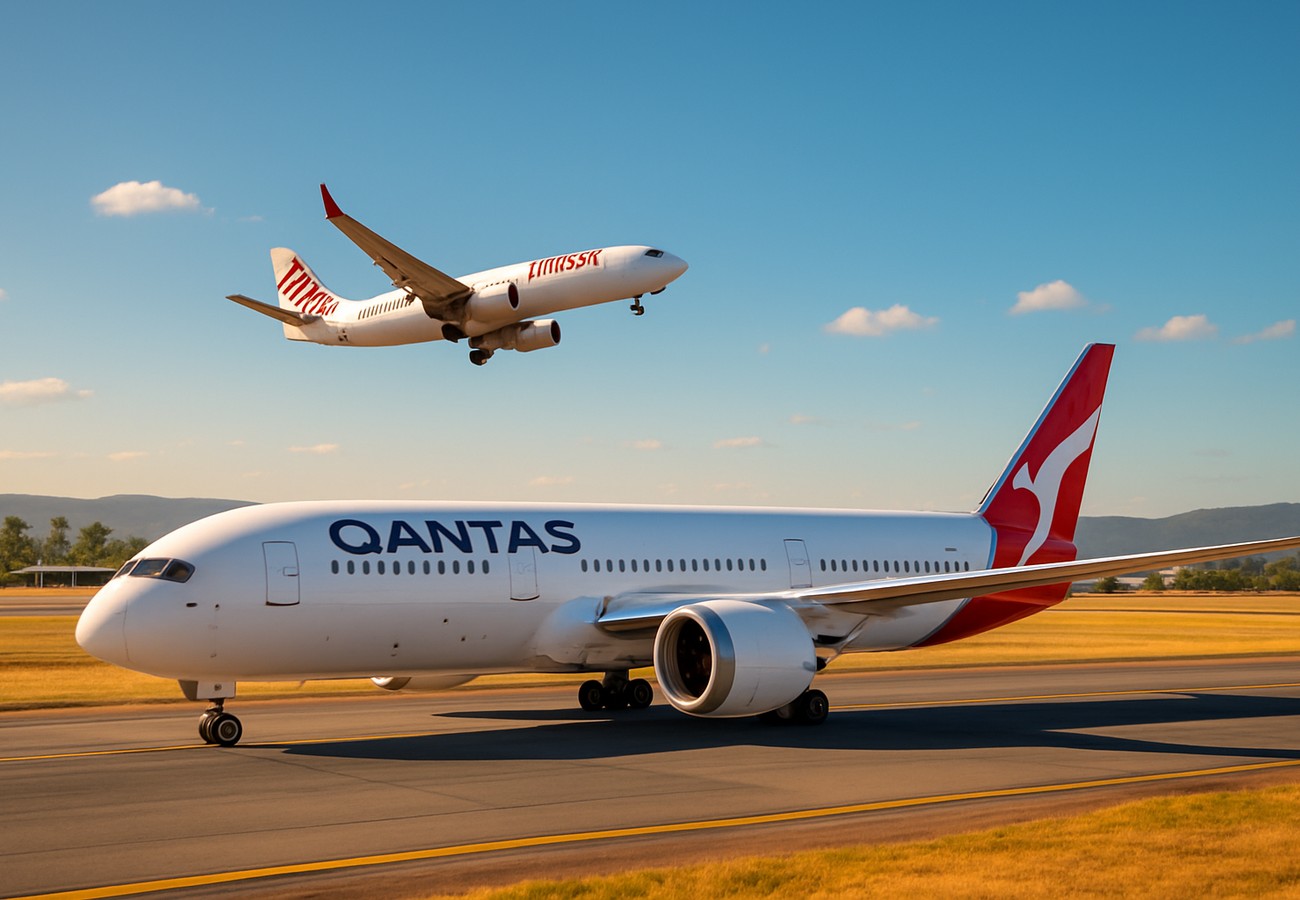
Image generated by AI
Australian Travel Crisis 2026: Qantas and Virgin Australia Brace for $800M Fuel Shock as Jet Fuel Shortages and Soaring Airfares Trigger Global Flight Cancellations and Massive Tourism Turmoil
Melbourne and Sydney Hubs Face Capacity Cuts; Families Reeling from Quadrupled Ticket Prices as the Strait of Hormuz Energy Crisis Reaches the Southern Hemisphere
SYDNEY, Australia — The Australian travel and tourism sector is descending into a state of "unprecedented turmoil" as a perfect storm of soaring fuel prices and systemic supply chain failures shatters the plans of thousands of holidaymakers. In a dramatic series of aviation updates on April 20, 2026, the nation’s leading carriers—Qantas and Virgin Australia—have warned that the era of affordable international travel is rapidly closing. With Qantas projecting a staggering $800 million increase in baseline fuel costs and Virgin Australia already initiating 1% capacity reductions, the "Air connectivity backbone" connecting Australia to Europe and Asia is under its most severe strain in a decade.
EXPANDED OVERVIEW: The Global Fuel Vacuum Reaches Australia
The current travel chaos is not an isolated event but the direct consequence of a tightening global energy girdle. The International Energy Agency (IEA) has issued a "Red Alert" regarding an impending jet fuel crisis in Europe, a development that has triggered a "vacuum effect" on global refined product inventories. As European refiners struggle to secure crude oil amidst the ongoing Strait of Hormuz blockade, the ripple effects are being felt in the Southern Hemisphere.
For Australian travelers, the impact is measurable in both dollars and disruptions. Major international players, including China Southern Airlines and Emirates, have begun increasing fuel surcharges and consolidating flight schedules, leading to a wave of last-minute flight cancellations that have left passengers stranded in transit hubs from Singapore to Dubai.
THE $800M BILL: QANTAS AND VIRGIN IN THE CROSSHAIRS
Qantas: The National Carrier’s Strategic Pivot
Qantas, the Flying Kangaroo, is currently navigating a fiscal minefield. The airline’s internal projections for the 2026 fiscal year include a $800 million fuel surcharge liability, a cost that is inevitably being passed down to the consumer. Industry insiders suggest that Qantas is currently reviewing its ultra-long-haul "Project Sunrise" routes, as the fuel-intensive nature of 18-hour nonstop flights becomes increasingly difficult to justify in a high-cost environment.
Virgin Australia: Capacity Cuts and Strategic Retreat
While Qantas manages its long-haul exposure, Virgin Australia has adopted a strategy of immediate capacity management. The airline has officially confirmed a 1% reduction in total flight capacity leading up to June 2026. While 1% may sound marginal, in the context of the Australian domestic and regional market, it represents the removal of thousands of seats, driving up prices on critical "Golden Triangle" routes (Sydney-Melbourne-Brisbane).
PASSENGER IMPACT: THE HUMAN COST OF FOUR-FOLD HIKES
The statistics of the global energy crisis are best understood through the stories of individual travelers. Take the case of Rose, a mother from Melbourne, whose experience has become a viral symbol of the current airport disruptions.
When Rose attempted to reschedule a family trip to China due to an unexpected and necessary surgery, she was met with a financial wall: her airfare had quadrupled in the span of a few weeks. What was once a manageable family vacation has transformed into a $15,000 logistical nightmare. Rose’s story is not unique; families across Australia are finding that the "middle-class dream" of an annual overseas holiday is being priced out of existence by the shifting sands of Mideast geopolitics.
INDUSTRY ANALYSIS: THE HORMUZ NEXUS AND SURCHARGE STRATEGIES
Aviation analysts point squarely at the Strait of Hormuz as the "Ground Zero" for this crisis. The continued blockade and high-volatility status of the Gulf’s shipping lanes have caused a permanent spike in brent crude, which translates directly to the specialized refining required for jet-grade kerosene.
- Surcharge Explosions: Carriers like China Southern and Emirates are no longer able to absorb the operational volatility. Fuel surcharges on the "Kangaroo Route" (Australia to London) have risen by an average of 22% in the last month alone.
- Tactical Cancellations: Airlines are increasingly engaging in "capacity thinning"—cancelling flights with lower load factors (under 75%) to save fuel for fully booked high-profit segments. This has turned the 2026 travel season into a "lottery of connectivity" for many passengers.
WHAT HAPPENS NEXT: A SEASON OF ADAPTATION
As the Australian winter approaches (leading into the European summer season), the travel industry is urging passengers to adopt a "War-Room Mentality" toward their plans.
- Strict Insurance Compliance: Travelers are being told that standard travel insurance may no longer be enough. "Fuel-Related Disruption" clauses are becoming a mandatory addition to high-value policies.
- The Shift to Non-Air Travel: In Europe, Australian tourists are being advised to utilize the extensive rail networks as an alternative to regional flights (intra-EU), preserving their "Aviation Capital" for the essential long-haul legs home.
- Booking Deadlines: Industry logic has shifted; the "last-minute deal" is dead. In a fuel-short environment, seats only get more expensive as the flight date approaches.
CONCLUSION: THE END OF THE "CHEAP SKY" ERA?
The events of April 2026 mark a decisive turning point for Australian aviation. As Qantas and Virgin Australia struggle to maintain their connectivity backbone amidst an $800 million cost surge, the Australian public is facing a hard truth: the world is getting larger again. International travel, once a commodity, is returning to its status as a premium luxury—all because of the fragile global energy supply chain.
KEY TAKEAWAYS
- Economic Shock: Qantas faces $800 million in additional fuel costs for 2026.
- Operational Shifts: Virgin Australia initiates a 1% capacity cut to manage fuel reserves.
- Human Impact: Families are seeing ticket prices quadruple, as seen in the "Rose" case study.
- The Cause: The Strait of Hormuz blockade continues to starve the global jet fuel market.
- The Strategy: Travelers must book early, buy specialty insurance, and remain flexible amidst constant flight cancellations.
Related Travel Guides
Disclaimer
This article is for informational and educational purposes only. It does not constitute legal, financial, or professional advice. While we strive to provide accurate and up-to-date information, travel policies, regulations, and conditions change rapidly. Always verify information with official sources before making travel decisions. Nomad Lawyer makes no representations about the accuracy, reliability, completeness, or suitability of the information provided. Readers should consult qualified professionals for advice specific to their circumstances. The views expressed in this article are those of the author and do not necessarily reflect the views of Nomad Lawyer.
Raushan Kumar
Founder & Lead Developer
Full-stack developer with 11+ years of experience and a passionate traveller. Raushan built Nomad Lawyer from the ground up with a vision to create the best travel and law experience on the web.
Learn more about our team →