
Oceania Flight Disruption: 303 Delays and 6 Cancellations Hit Sydney and Auckland Hubs
Widespread air traffic delays hit Oceania's aviation network as 303 delays and 6 cancellations disrupted flight schedules across Australia and New Zealand.

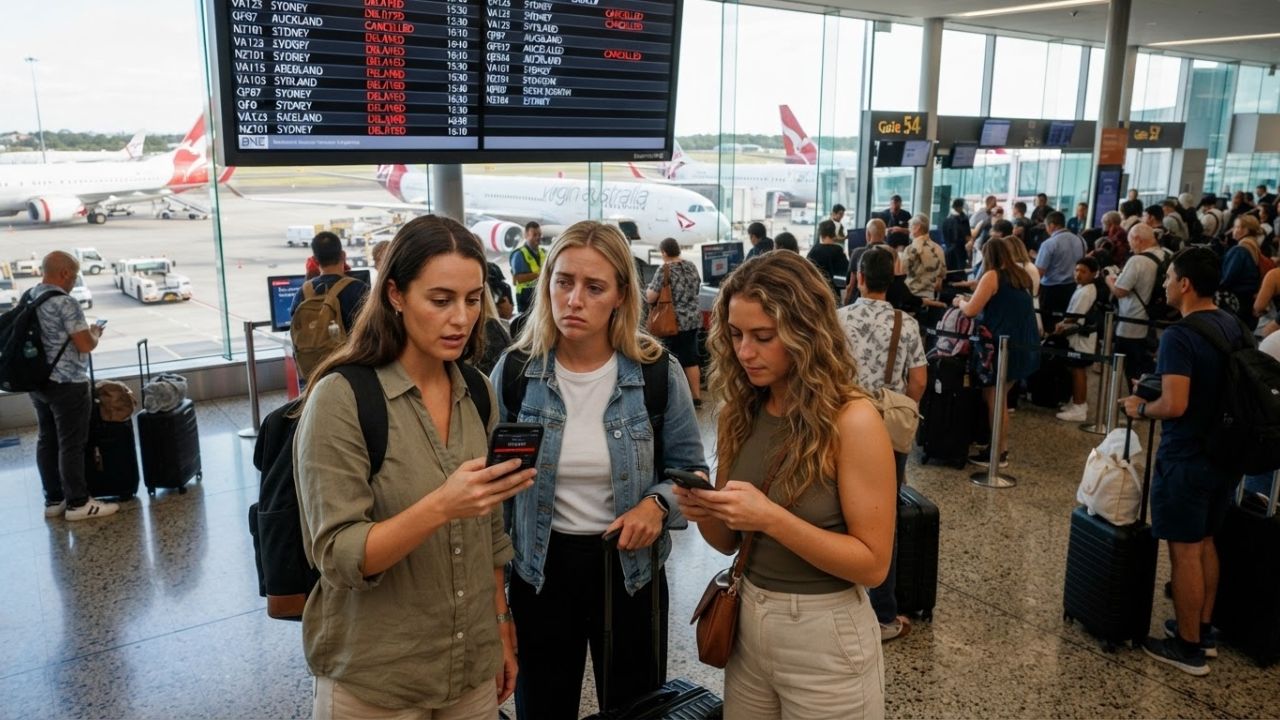
Image generated by AI
Widespread air traffic delays have struck Oceania's aviation network as 303 delays and 6 cancellations disrupted flight schedules across Australia and New Zealand. The schedule volatility, recorded on August 25, 2026, has left thousands of passengers stranded in departure lounges in Sydney, Brisbane, and Auckland.
Operational Bottlenecks and Crew Constraints Snarl Trans-Tasman Networks
Unexpected crew constraints and air traffic control queues have created major ripple effects throughout the Trans-Tasman flight corridors. Carriers struggled to align their aircraft rotations, causing departure queues to cascade throughout the afternoon.
Australian gateways absorbed the primary operational delays, while New Zealand terminals managed cascading schedule changes. According to guidelines monitored by the Civil Aviation Safety Authority (CASA) of Australia, these operational backlogs occur when aircraft re-positioning compromises turnaround times at major eastern seaboard terminals.
Regional Hub Breakdown: Delays and Cancellations
Data compiled on August 25, 2026, at 4:42 pm ET USA (August 26, 2026, 8:42 am Wellington time) using FlightAware live traffic data outlines the airport impacts across the region:
- Sydney Airport (Australia): Bore the primary burden of the aviation bottleneck, registering 200 delays and 2 cancellations. As Australia's busiest transit center, schedule delays here caused immediate friction across domestic and international routes.
- Brisbane Airport (Australia): Experienced significant schedule departures, tracking 81 delays alongside 1 cancellation. The delay counts reflect substantial rotational bottlenecks across Queensland's primary aviation hub.
- Auckland Airport (New Zealand): Across the Tasman Sea, New Zealand's major international gateway recorded 22 delays and 3 cancellations, marking the highest cancellation count among the regional gateways.
Carrier Performance and Scheduling Reliability
Disruptions varied substantially depending on the airline, reflecting differences in fleet utilization, network structures, and operational buffers:
- Jetstar (Australia): Suffered the highest delay rate, logging 86 delays affecting 26 percent of its overall schedule, alongside 1 cancellation (0 percent cancellation rate).
- Virgin Australia (Australia): Recorded 68 delays, impacting 15 percent of its scheduled flights, paired with 1 cancellation (0 percent cancellation rate).
- Air New Zealand (New Zealand): Maintained a relatively low delay rate with 27 delays (6 percent), but logged 4 cancellations (1 percent cancellation rate), accounting for two-thirds of all grounding decisions reported across the region.
The high volume of delays through the eastern seaboard of Australia accounted for over 92 percent of the region's total delays. Sydney functioned as the core epicenter, with knock-on effects spreading to northbound routes heading toward Queensland. Concurrently, the Civil Aviation Authority of New Zealand (CAA) monitored localized constraints affecting regional and Trans-Tasman legs.
Local Community Support and Environmental Travel Alternatives
Travelers affected by regional airport congestion can choose sustainable land transport options to lower their travel emissions. On shorter domestic routes, such as the corridor between Sydney and Canberra, opting for regional rail networks or coach services instead of short-haul flights significantly reduces your carbon footprint.
Stranded passengers can support the local economy by dining at independent cafes inside terminal buildings rather than global franchise chains. Purchasing local goods from independent Australian and New Zealand retailers helps support regional businesses during scheduling delays.
Insider Destination Advice for Sydney and Auckland Travelers
Local destination specialists suggest the following strategies for navigating travel disruptions:
- Manage Sydney's Curfew Deadlines: Sydney Airport operates under a strict night curfew from 11:00 pm to 6:00 am. Flight delays late in the evening can result in flights being diverted or cancelled if they cannot land before the curfew, so prioritize early-day bookings.
- Bypass Airport Train Access Fees: At Sydney Airport, the Airport Link train is fast but carries a high station access fee. If traveling with light luggage, you can walk to nearby Mascot Station to board the train and avoid the airport surcharge. Alternatively, for groups of three or more, a rideshare service is often cheaper than multiple train tickets.
- Observe Off-Peak Travel Windows: The best time to visit Sydney and Auckland is during the mid-autumn window of April to May or the spring window of September to October. These periods offer comfortable temperatures, pleasant weather, and lower accommodation rates.
- Respect Local Etiquette: In Australia and New Zealand, tipping is not customary. Service workers are paid living wages, and tipping is not expected, although a round-up is appreciated for exceptional service.
- Sample Local Culinary Specialties: If stranded in Sydney, try a classic Australian meat pie or fresh Barramundi at a local pub. In Auckland, seek out local artisan sourdough breads or seafood specialties at the waterfront dining precincts.
- Explore Under-the-Radar Spots: If you face a long delay in Sydney, take a walk along the Hermitage Foreshore Walk for secluded views of the Sydney Harbour Bridge. In Auckland, visit the quiet coastal reserves just outside the city center to escape airport crowds.
FAQ: Australia and New Zealand Flight Disruption
Which airport has the most delays in Australia and New Zealand? Sydney Airport recorded the highest delay count in the region, registering 200 delays on August 25, 2026.
Which carrier recorded the highest cancellation rate today? Air New Zealand recorded the highest number of cancellations, with 4 flights cancelled, representing a 1 percent cancellation rate.
What rights do I have if my flights are cancelled by Jetstar or Virgin Australia? Passengers on cancelled services are generally entitled to be rebooked on the next available service or to receive a full refund, depending on fare rules and consumer protection guidelines monitored by the Australian Department of Infrastructure, Transport, Regional Development, Communications and the Arts.
How can I save money on airport train transport in Sydney? You can walk to Mascot Station, located just outside the airport boundary, to board the train network without paying the airport station access fee.
Disclaimer
This article is for informational and educational purposes only. It does not constitute legal, financial, or professional advice. While we strive to provide accurate and up-to-date information, travel policies, regulations, and conditions change rapidly. Always verify information with official sources before making travel decisions. Nomad Lawyer makes no representations about the accuracy, reliability, completeness, or suitability of the information provided. Readers should consult qualified professionals for advice specific to their circumstances. The views expressed in this article are those of the author and do not necessarily reflect the views of Nomad Lawyer.
Kunal K Choudhary
Co-Founder & Contributor
A passionate traveller and tech enthusiast. Kunal contributes to the vision and growth of Nomad Lawyer, bringing fresh perspectives and driving the community forward.
Learn more about our team →