
Australia Downgrades Middle East Travel Warnings Following US-Iran Deal, Reopening the Disruption-Proof Gulf Aviation Bypass to Eradicate Severe Transit Travel Chaos: Latest Airline News
As diplomatic tensions ease, Australia downgrades travel warnings for Qatar, UAE, and Israel, restoring travel insurance and allowing passengers to bypass massive Asian transit hub travel chaos.

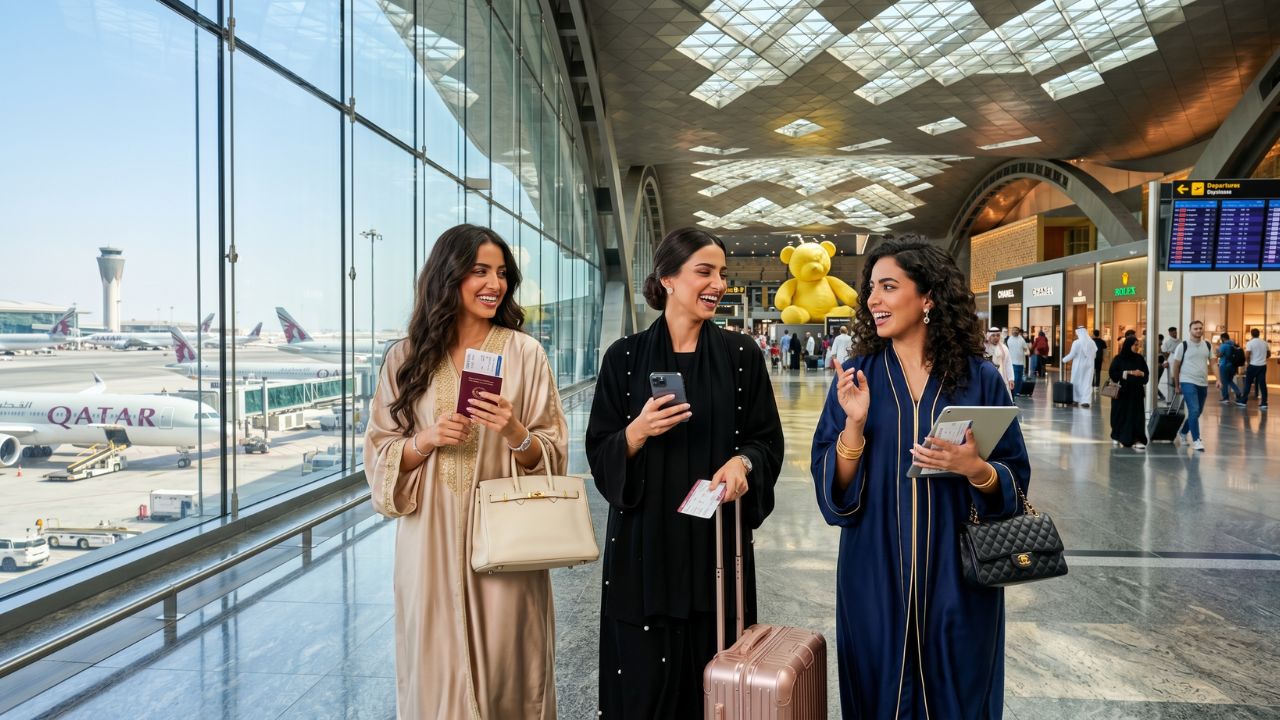
Image generated by AI
In a massive geopolitical pivot guaranteed to eradicate the systemic travel chaos and rolling flight cancellations that recently paralyzed the Europe-to-Oceania transit corridor, Australia has officially downgraded its stringent travel warnings across the Middle East. Announced on June 18, 2026, the Australian government confirmed it is lifting the devastating "do not travel" restriction for the United Arab Emirates (UAE), Qatar, Bahrain, Israel, and Kuwait following a critical diplomatic breakthrough between the US and Iran. During the height of regional tensions, the outright ban invalidated travel insurance, forcing millions of Australians to completely abandon highly efficient Gulf carriers and instead suffer agonizing airport disruptions while rerouting through heavily congested Asian mega-hubs. By downgrading the advisory to a manageable "reconsider your need to travel," authorities have instantly restored insurance coverage, unlocking the disruption-proof Gulf aviation bypass and driving today's most optimistic headline in breaking airline news and essential global aviation updates.
By introducing direct passenger coordination and dynamic scheduling backups, the regional aviation hubs target growing passenger demand across vital commerce sectors. The choice to coordinate flight departures in phases helps to manage gate capacity, supporting the country's broader regional transportation network.
Context: Escaping the Rerouting Gridlock
For the hundreds of thousands of international tourists and corporate executives who frequently commute between London, Sydney, and Melbourne, the recent Middle Eastern conflict triggered a catastrophic wave of localized travel chaos.
Historically, massive Gulf carriers like Emirates, Qatar Airways, and Etihad Airways controlled over 50 percent of the passenger traffic moving between Europe and Australia. Their colossal transit hubs in Dubai, Doha, and Abu Dhabi offered seamless, single-stop connectivity. However, when the US-Iran conflict escalated, the Australian government issued a blanket "do not travel" warning for the region. This legal designation instantly voided passenger travel insurance. Without insurance to protect against sudden flight cancellations or lost baggage, corporate travel managers and leisure tourists aggressively abandoned the Middle East. To get to Europe, passengers were forced to fly through saturated Asian hubs like Singapore and Hong Kong. This sudden influx of rerouted traffic pushed Asian airports past maximum capacity, resulting in severe airport disruptions, massive delays, and agonizingly long multi-stop itineraries. The recent diplomatic breakthrough and subsequent advisory downgrade fundamentally reverses this nightmare. With insurance policies reactivated, travelers can immediately abandon the congested Asian corridors and return to the hyper-efficient, highly insulated Gulf aviation network, fundamentally bypassing the travel chaos of the past year.
To view live flight schedules, verify the active delay status of your specific itinerary, or to track active regional airspace restrictions, travelers must consult official aviation directories. For direct updates regarding how this newly reopened Gulf bypass affects your specific European connections, travelers should aggressively utilize the official portals of their operating carriers. To explore live flight tracking and monitor the exact severity of the cascading bottlenecks causing the flight cancellations at competitor Asian hubs, passengers can consult the official FlightAware tracking service.
Section-Wise Breakdown of the Aviation Recovery
Restoring the Insurance Safety Net
The absolute most critical aspect of the advisory downgrade (from "do not travel" to "reconsider your need to travel") is the restoration of financial security. During the peak of the travel chaos, passengers caught in flight cancellations in Dubai had zero recourse because their travel insurance was voided by the government warning. The downgrade legally reinstates standard insurance coverage. Passengers can now book transit flights through Doha or Abu Dhabi knowing that if a delay occurs, they are financially protected, triggering an immediate surge in consumer confidence.
The Return of the Gulf Titans
With the legal and financial barriers removed, Emirates, Qatar Airways, and Etihad Airways are aggressively reclaiming their lost market share. These carriers are specifically engineered to process massive volumes of ultra-long-haul traffic without triggering airport disruptions. By pulling Australian traffic back into the Middle East, these airlines are actively decompressing the strained Asian transit networks, stabilizing the entire global aviation system and drastically reducing the mathematical probability of cascading flight cancellations worldwide.
The Collapse of Jet Fuel Pricing
The diplomatic de-escalation has also triggered a massive stabilization in the global energy markets, directly benefiting passenger ticket prices. During the conflict, Singapore jet fuel prices peaked at a devastating $242 USD per barrel, forcing airlines to slash capacity and hike fares. Following the US-Iran deal, jet fuel has plummeted to approximately $116 USD per barrel. While not at pre-crisis levels, this massive reduction removes the financial pressure on airlines, allowing them to restore flight frequencies and permanently eradicate the capacity-driven travel chaos that plagued the past year.
Technical Roster: Middle East Aviation Recovery Data
To ensure absolute factual accuracy regarding the exact parameters of this massive geopolitical stabilization and the specific regulatory shifts utilized to bypass regional congestion, the following matrix details the verified diplomatic data:
Gulf Aviation Market Recovery Matrix
| Strategic Diplomatic Metric | Operational Verification |
|---|---|
| Advisory Issuing Authority | Australian Government |
| Downgraded Destinations | UAE, Qatar, Bahrain, Israel, and Kuwait |
| Previous Warning Level | "Do not travel" (Invalidated standard travel insurance coverage) |
| Revised Warning Level | "Reconsider your need to travel" (Restored comprehensive insurance) |
| Primary Catalyst | US-Iran diplomatic de-escalation and interim understanding |
| Key Transit Hubs Reopened | Dubai, Doha, Abu Dhabi, Manama, and Tel Aviv |
| Jet Fuel Pricing Shift | Singapore jet fuel fell from peak $242 to approximately $116 USD per barrel |
| Benefiting Legacy Carriers | Emirates, Qatar Airways, and Etihad Airways |
Passenger Impact: The Eradication of 30-Hour Itineraries
For the thousands of international commuters exhausted by the grueling logistics of avoiding the Middle East, the downgrade of the travel advisory is the ultimate quality-of-life upgrade.
The immediate passenger impact is the absolute restoration of efficient routing. When the Gulf was blocked, passengers flying from Sydney to London were subjected to brutal, multi-stop itineraries through Southeast Asia, frequently enduring 30-hour transit times defined by severe terminal exhaustion and the constant threat of missed connections. By reopening the UAE and Qatar, travelers can instantly return to the heavily optimized, 22-hour one-stop itineraries championed by Gulf carriers. Passengers are no longer treated as collateral damage in complex geopolitical disputes; they are provided a heavily armored, hyper-efficient express tunnel directly into Europe, physically immunizing their expensive vacations from the regional travel chaos that plagued the alternative Asian routes.
Industry Analysis: The Economics of Geopolitical De-escalation
Aviation industry analysts view the Australian advisory downgrade as definitive proof that the massive Gulf mega-hubs remain the absolute center of gravity for global long-haul aviation, and that any disruption to these hubs guarantees worldwide travel chaos.
Analysts note that the forced rerouting of Australian traffic through Asia was a failed experiment; the Asian hubs simply lacked the widebody capacity to handle the sudden influx, leading to massive airport disruptions. Industry experts warn that the rapid return of passengers to Emirates and Qatar Airways proves that travelers are fundamentally loyal to convenience. With travel insurance reinstated and jet fuel prices crashing from $242 to $116 per barrel, the Gulf carriers possess an insurmountable operational advantage. They can now aggressively undercut the pricing of their Asian competitors while offering significantly faster total travel times, executing a massive commercial rebound that will entirely reshape the Europe-Oceania market by the end of the summer season.
Actionable Advice for Surviving Long-Haul Transit
While the Middle East has reopened, you must execute this strategic planning checklist to fully leverage the Gulf bypass and completely insulate your itinerary from sudden travel chaos:
- Verify Your Insurance Policy Explicitly: Although the Australian government downgraded the warning, individual insurance providers update their internal risk algorithms at different speeds. Before booking a flight through Dubai or Doha, explicitly call your travel insurance provider and confirm in writing that transit through the UAE or Qatar is now 100% covered against flight cancellations.
- Aggressively Re-Route Through the Gulf: If you currently hold a ticket from Australia to Europe that connects through a heavily congested Asian hub (like Singapore or Bangkok), contact your airline immediately. See if you can rebook onto a code-share partner routing through the Middle East to shave hours off your transit time and bypass Asian airport disruptions.
- Monitor the Fuel Surcharges: Because jet fuel prices have collapsed from $242 to $116 a barrel, airlines are operating with vastly lower overhead. Do not accept exorbitant "conflict-era" fuel surcharges on new ticket purchases. Wait for the airlines to adjust their pricing algorithms downward before booking expensive premium cabins.
- Utilize Stopover Programs: To combat any lingering passenger hesitation, Gulf carriers like Qatar Airways and Emirates are expected to aggressively promote subsidized stopover programs (offering nearly free luxury hotels). Exploit these programs to break up the grueling ultra-long-haul journey without spending your own money.
FAQ: Australia Travel Advisory & Gulf Aviation
Why did Australia downgrade its travel warnings for the Middle East?
The Australian government lowered the advisory from "do not travel" to "reconsider your need to travel" due to a major diplomatic breakthrough between the US and Iran, significantly reducing the immediate threat of sudden airspace disruptions.
How does this advisory change affect travel insurance?
The downgrade is crucial because a "do not travel" warning legally invalidates standard travel insurance. By lowering the risk category, passengers can once again purchase insurance that protects against flight cancellations and lost baggage when transiting the Gulf.
Which airlines and airports benefit the most?
The massive mega-hubs in Dubai, Doha, and Abu Dhabi will see a massive influx of returning traffic, directly benefiting mega-carriers like Emirates, Qatar Airways, and Etihad Airways as they reclaim the Europe-Australia transit market.
The Reality of Geopolitical Aviation Recovery
The decisive downgrading of travel advisories by the Australian government proves definitively that diplomatic stabilization is the ultimate physical defense against systemic global travel chaos. By legally reopening the Middle Eastern transit corridors and restoring vital passenger insurance, authorities have provided ultra-long-haul travelers with a heavily armored bypass to the terminal gridlock that recently paralyzed alternative Asian hubs. As traditional legacy airlines desperately struggle to reposition their networks in the wake of plummeting jet fuel prices—frequently triggering massive connecting queues, rolling schedule adjustments, and sudden airport disruptions—travelers must accept a critical new reality: avoiding brutal travel anxiety requires actively abandoning inefficient reroutes and immediately returning to the highly optimized, disruption-proof Gulf aviation mega-hubs.
Key Takeaways
- Massive Geopolitical De-escalation: Australia has officially downgraded its travel advisories for the UAE, Qatar, Bahrain, Israel, and Kuwait from "do not travel" to "reconsider your need to travel."
- Insurance Reinstated: The downgrade legally reactivates standard travel insurance coverage, allowing passengers to safely transit the Middle East without catastrophic financial risk.
- Gulf Carriers Rebound: Emirates, Qatar Airways, and Etihad Airways will rapidly reclaim the massive Europe-Australia market share they lost during the conflict.
- Jet Fuel Prices Collapse: The US-Iran diplomatic breakthrough caused Singapore jet fuel prices to plummet from a peak of $242 to $116 USD per barrel, significantly reducing airline operating costs.
- Passenger Survival: Travelers must aggressively pivot their bookings back to Gulf transit routes to bypass the severe travel chaos and multi-stop exhaustion that currently plagues Asian mega-hubs.
Related Travel Guides
Massive Travel Chaos Paralyzes Chicago O'Hare with 1,425 Disruptions
Disclaimer
This article is for informational and educational purposes only. It does not constitute legal, financial, or professional advice. While we strive to provide accurate and up-to-date information, travel policies, regulations, and conditions change rapidly. Always verify information with official sources before making travel decisions. Nomad Lawyer makes no representations about the accuracy, reliability, completeness, or suitability of the information provided. Readers should consult qualified professionals for advice specific to their circumstances. The views expressed in this article are those of the author and do not necessarily reflect the views of Nomad Lawyer.
Kunal K Choudhary
Co-Founder & Contributor
A passionate traveller and tech enthusiast. Kunal contributes to the vision and growth of Nomad Lawyer, bringing fresh perspectives and driving the community forward.
Learn more about our team →