
Australia's Cruise Boom: Brisbane, Townsville, Cairns Lead AUD 8.4 Billion Tourism Surge in 2026
Australia's cruise sector has exploded into an AUD 8.4 billion economic powerhouse, with Townsville, Brisbane, and five major ports driving unprecedented regional growth and employment across coastal Australia.

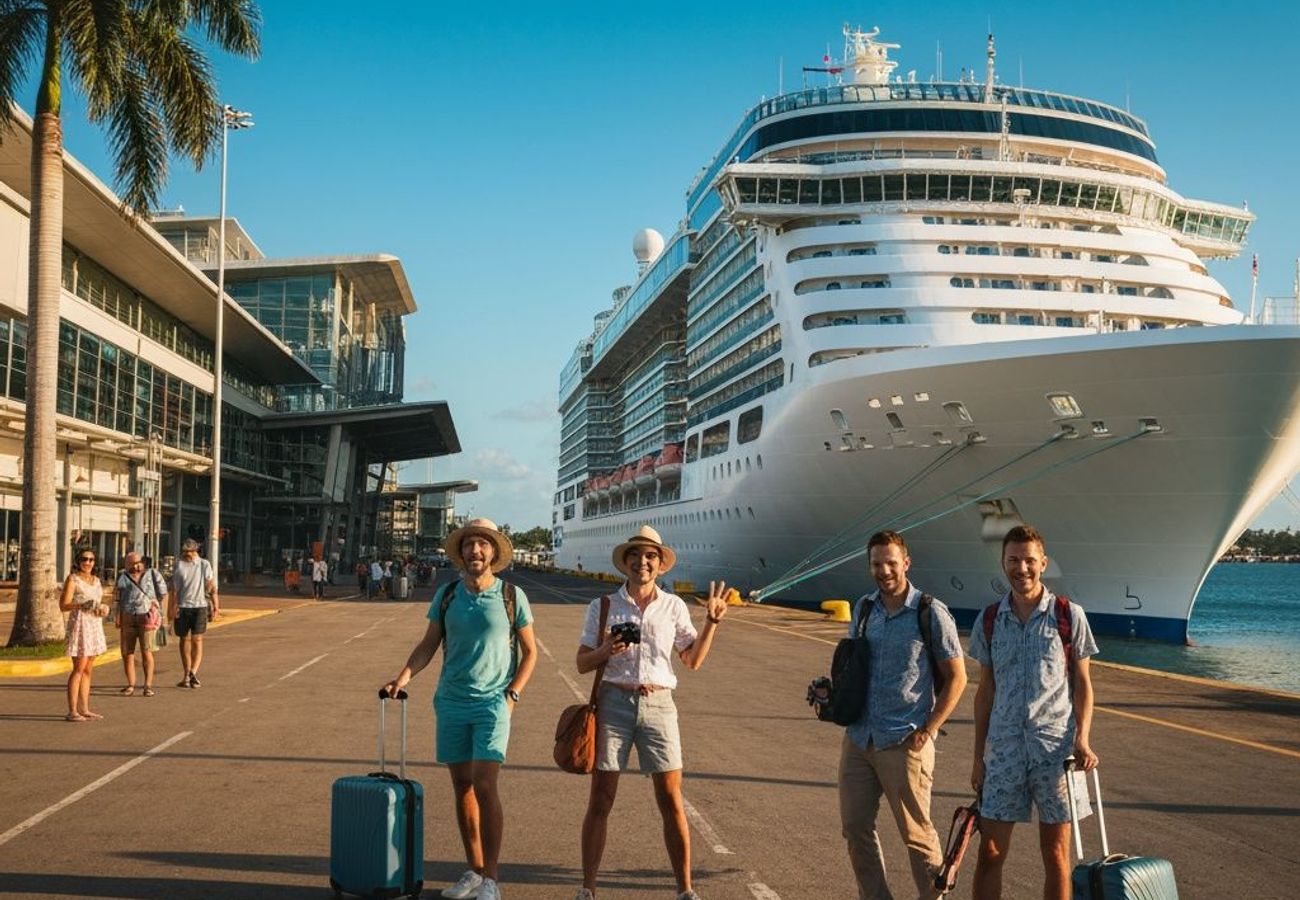
Image generated by AI
Australia's Maritime Economic Revolution
Australia's cruise tourism sector has undergone a seismic transformation. What was once a seasonal leisure afterthought has become a multi-billion-dollar economic engine reshaping how entire regions develop, employ workers, and compete globally.
The numbers tell an undeniable story. According to Tourism Research Australia (TRA) and Austrade, cruise tourism now contributes over AUD 8.4 billion annually to the national economy—a figure that positions the sector as one of Australia's fastest-growing visitor economy pillars.
But here's what most travellers don't realise: this boom is fundamentally redistributing wealth away from capital cities toward regional coastal communities that were once tourism afterthoughts.
The Six Port Network Reshaping Australia's Coast
Townsville, Brisbane, Cairns, Darwin, Sydney, and Melbourne are no longer passive port stops. They've become strategic economic anchors, each playing a distinct role in Australia's cruise tourism growth strategy.
These six hubs now function as:
- Entry points for international cruise lines seeking Asia-Pacific expansion
- Domestic holiday departure gateways for "seacation" demand
- Regional development catalysts attracting permanent settlement and investment
- Employment engines supporting 26,000+ jobs across ports, logistics, hospitality, and tourism
Reddit: "I took a cruise out of Brisbane last year and was shocked by how modern the terminal was. Never expected that level of infrastructure in Australia." — r/cruisetravel
Brisbane Cruise Terminal: The East Coast Powerhouse
Brisbane's cruise terminal at Luggage Point represents the architectural and logistical heart of Australia's cruise expansion.
The facility accommodates mega cruise ships exceeding 270 metres in length—vessels that previous Australian infrastructure simply couldn't handle. This single upgrade has created a domino effect:
- Larger international cruise lines now include Brisbane as a primary port of call
- Cruise itineraries have diversified beyond traditional Caribbean-style loops
- Passenger throughput has increased exponentially, driving up regional spending
The terminal's strategic location provides direct connections to Brisbane Airport and major transport networks, enabling seamless passenger flows that generate spillover tourism benefits across Queensland. Passengers arriving via cruise now extend stays, visiting inland regions and driving secondary tourism spending.
Townsville's Meteoric Rise: Northern Australia's Tourism Breakthrough
What's happening in Townsville is extraordinary—and it's rewriting the rulebook for regional tourism development in Australia.
In a single recent season, Townsville recorded:
- 27,000+ cruise passengers and 13,000 crew arrivals
- AUD 7 million+ injected directly into the local economy
- Infrastructure upgrades enabling vessels up to 300 metres to dock
These aren't incremental gains. They represent a fundamental shift in Northern Australia's economic positioning. The port expansion, channel widening, and cruise terminal redevelopment have unlocked access to the Great Barrier Reef tourism circuit—a geographic advantage no other Australian port can replicate.
Perhaps most compelling: a Tourism Queensland study revealed that 75% of new permanent residents first visited Townsville as cruise tourists. The cruise sector isn't just generating temporary economic activity—it's reshaping settlement patterns and attracting long-term population growth to regional Australia.
Reddit: "Took my family on a cruise to Townsville and we fell in love with it. Moved there six months later. The cruise industry literally changed our lives." — r/AustralianTravel
The Economic Multiplier Effect: How Cruise Tourism Reshapes Regional Economies
Cruise tourism's impact extends far beyond passenger spending at duty-free shops. The sector functions as a sophisticated economic multiplier across three distinct channels:
GDP Contribution and Supply Chain Integration
Cruise tourism contributes between AUD 7–8+ billion annually through:
- High-value passenger spending in regional ports (restaurants, excursions, retail)
- Cruise line operational expenditure (fuel, supplies, labour, port fees)
- Supply chain benefits across food production, logistics, transport, and retail sectors
A single mega-ship visit generates measurable economic activity across dozens of regional suppliers—from fresh produce vendors to fuel companies to tour operators.
Employment: 26,000+ Jobs Across the Cruise Ecosystem
The sector directly and indirectly supports more than 26,000 jobs nationwide, including:
- Port workers, customs officials, and logistics coordinators
- Tourism operators and excursion providers (reef tours, wildlife experiences, regional guides)
- Hospitality workers, retail staff, and transport professionals
- Supply chain workers across manufacturing, food production, and distribution
These aren't seasonal gig positions. Many are permanent, skilled roles offering genuine career pathways for regional workers.
Geographic Redistribution: Tourism Beyond Capital Cities
Cruise itineraries are deliberately designed to distribute tourism pressure away from Sydney and Melbourne, funnelling passengers into:
- Northern Queensland (Townsville, Cairns, Whitsundays)
- Tropical island destinations
- Regional coastal communities
- Remote expedition cruise routes in Northern Australia
This redistribution is central to Australia's national tourism strategy, reducing overtourism pressure on major cities while stimulating economic growth in underperforming regions.
Queensland's Cruise Dominance: The Second Boom Market
Queensland now ranks as Australia's second-largest cruise market—a position earned through strategic infrastructure investment and geographic advantages.
The state benefits from:
- High cruise ship visit frequency across Brisbane, Cairns, and Townsville
- Multi-port itineraries that keep passengers in Queensland longer
- Exclusive access to the Great Barrier Reef tourism circuit
- Strong domestic cruise demand driven by short-haul appeal
Rising cruise passenger traffic reflects post-pandemic recovery accelerating beyond pre-2020 levels. Families increasingly favour regional cruises departing from Queensland ports over international flights—a shift driven by cost advantages and travel convenience.
The Frontier: Expedition Cruising and Northern Australia
Northern Australia is emerging as the premium expedition cruising destination within the Asia-Pacific region.
The shift toward deep-water port upgrades, expanded waterfront precincts, and integrated Indigenous and eco-tourism experiences reflects a strategic pivot toward high-value, low-volume cruise experiences.
Expedition cruises accessing the Great Barrier Reef, Kimberley coast, and remote tropical regions command premium pricing and attract affluent, environmentally-conscious travellers willing to spend significantly per voyage.
This positioning creates a dual-market strategy: mass-market cruise tourism in Brisbane and Cairns, paired with luxury expedition experiences in remote Northern Australia.
2026 and Beyond: The Multi-Hub Cruise Network Model
Australia cruise ports driving domestic tourism growth in 2026 reflects a deliberate shift toward distributed infrastructure.
Rather than concentrating cruise traffic in Sydney and Melbourne, Australia's tourism strategy now prioritises a six-hub network model:
- Brisbane (international gateway, mega-ship capacity)
- Sydney (heritage positioning, iconic arrivals)
- Melbourne (cultural tourism, premium markets)
- Cairns (reef access, tropical positioning)
- Townsville (regional growth engine, emerging hub)
- Darwin (Northern Australia expansion, expedition positioning)
Each port serves a distinct market segment and geographic function. This distributed model enables:
- Reduced congestion at individual ports
- Enhanced regional economic benefits
- Geographic diversification of cruise experiences
- Resilience against single-port capacity constraints
Industry Outlook: Structural Growth, Not Cyclical Recovery
Australia cruise tourism growth is projected to continue rising due to:
- Expanding Asia-Pacific cruise circuits: Cruise lines are increasingly designing itineraries connecting Australia with Asian, Pacific, and New Zealand markets
- Domestic cruise demand surge: Short regional cruises appeal to Australian families avoiding international travel costs
- Port infrastructure scaling: Continued investment in terminal capacity, deepwater access, and passenger facilities
- Rising global cruise capacity: New cruise ship construction is prioritising Asia-Pacific routes
Industry forecasts indicate long-term expansion sustained by sustainability upgrades, tourism diversification policies, and regional development integration.
The New Maritime Economy
Australia's cruise sector has crossed a fundamental threshold. It's no longer supplementary tourism infrastructure—it's core economic policy.
From the Brisbane cruise terminal accommodating 270-metre mega-ships to Townsville's transformation into a 27,000+ passenger regional hub, the maritime economy is reshaping how coastal Australia functions.
The six-port network model, supported by AUD 8.4 billion in annual economic output and 26,000+ jobs, represents a conscious national strategy to redistribute growth, employment, and tourism value beyond traditional capital city concentrations.
The next phase of expansion depends on infrastructure scaling, sustainability planning, and continued integration of Indigenous and regional economies into global cruise circuits. But the trajectory is clear: Australia's future is maritime, distributed, and oriented toward regional transformation.
Australia's cruise economy isn't just growing—it's fundamentally rewriting the rules of regional tourism development across the Asia-Pacific.
Related Travel Guides
Disclaimer
This article is for informational and educational purposes only. It does not constitute legal, financial, or professional advice. While we strive to provide accurate and up-to-date information, travel policies, regulations, and conditions change rapidly. Always verify information with official sources before making travel decisions. Nomad Lawyer makes no representations about the accuracy, reliability, completeness, or suitability of the information provided. Readers should consult qualified professionals for advice specific to their circumstances. The views expressed in this article are those of the author and do not necessarily reflect the views of Nomad Lawyer.
Preeti Gunjan
Contributor & Community Manager
A passionate traveller and community builder. Preeti helps grow the Nomad Lawyer community, fostering engagement and bringing the reader experience to life.
Learn more about our team →