
2027 Aurora Expeditions Launches Arctic Photography Voyage
Aurora Expeditions launches dedicated photography expedition to Iceland and East Greenland in 2027, signaling shift toward expert-led niche cruising. Booking opens April 2026.

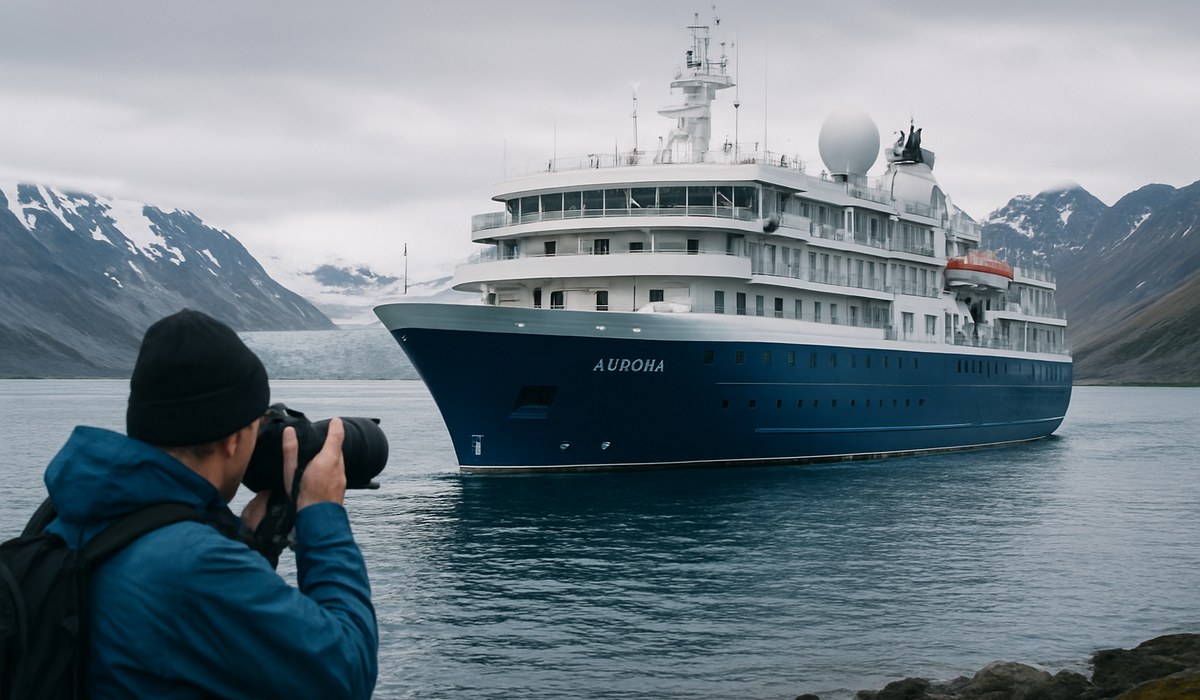
Image generated by AI
Quick Summary
- Aurora Expeditions has unveiled a 10-day photography-focused expedition to Iceland and East Greenland launching in July 2027
- The voyage integrates onboard photography mentorship from professional instructors alongside naturalist commentary and polar historians
- Expedition cruising operators are repositioning around specialized expertise rather than ship size, reflecting evolving luxury travel preferences
- Arctic seasonality and geopolitical factors increasingly shape cruise scheduling and operational viability in polar regions
Aurora's Photography-First Expedition Model: A New Luxury Cruise Paradigm
Aurora Expeditions is staking its competitive future on a premise that reshapes Arctic expedition cruising entirely: travelers want professional guidance with their cameras more than they want towering atriums and midnight buffets.
The Sydney-based operator announced a dedicated photography expedition departing in summer 2027 that positions image-making not as a passenger hobby but as the voyage's foundational pillar. This repositioning reflects a broader market pivot where small-ship operators within the Cruise Lines International Association membership are competing on specialized onboard knowledge—photography mentorship, glaciology expertise, indigenous cultural historians—rather than expanding vessel capacity.
The 10-day itinerary combines Iceland's geothermal landscapes with East Greenland's fjord systems and calving glaciers, creating what Aurora frames as a "dual-canvas" photography environment. Professional photography instructors sail alongside ship naturalists, offering real-time feedback during landings and zodiac excursions. Passengers receive curated shot lists before each site visit, access to raw image editing workshops, and gallery-exhibition opportunities for portfolio work during the voyage.
Aurora's investment in this model directly addresses a demographic shift: high-net-worth travelers increasingly seek immersive learning experiences over passive sightseeing. The expedition caps passenger numbers at 95—significantly below mainstream Arctic cruise offerings—ensuring instructor-to-guest ratios never exceed 1:12. This constraint is deliberate; it reflects a philosophy where exclusivity and expertise command premium pricing rather than onboard density.
The announcement marks Aurora's most substantial 2027 product launch, signaling confidence in Arctic accessibility despite mounting operational challenges across polar regions.
Iceland and East Greenland 2027: Why These Routes Matter for Expedition Operators
Iceland and East Greenland represent contrasting photographic narratives that justify Aurora's route selection. Iceland's accessible infrastructure—airports, harbors, resupply logistics—anchors the voyage's operational stability. East Greenland's remoteness, conversely, creates the authenticity that expedition cruise passengers actively seek: genuine isolation, minimal tourist infrastructure, and raw polar environments.
The itinerary begins in Reykjavik, where passengers spend two days acclimating to Arctic light conditions while photographing geothermal fields, basalt formations, and micro-climate transitions between geothermal zones and glacial valleys. This opening phase functions as technical calibration; instructors assess participant skill levels and tailor subsequent on-water mentorship accordingly.
Days four through nine focus on East Greenland crossings. The voyage transits Scoresby Sound—one of the planet's largest fjord systems—where tidewater glaciers, ice-choked waters, and wildlife encounters create repeating opportunities for composition refinement. Aurora's naturalists provide real-time species identification (musk oxen, Arctic foxes, seal colonies) while photographers frame wide-angle landscape sequences.
Timing matters operationally. July 2027 optimizes daylight duration—nearly 24-hour twilight—while statistically minimizing pack ice interference. Climate volatility remains a factor; Aurora's itinerary includes contingency routing protocols developed in consultation with Greenlandic maritime authorities and real-time ice monitoring from Danish Meteorological Institute datasets.
The route selection also acknowledges Arctic shipping disruptions from geopolitical tensions, which indirectly affect expedition cruise scheduling by creating unpredictable supply-chain dependencies for fuel, provisioning, and emergency resupply in Greenlandic ports.
East Greenland specifically offers what Caribbean or Mediterranean routes cannot: pristine polar light, rapidly evolving ice formations, and genuine expedition uncertainty. These conditions demand photographer flexibility—compositional adaptation, technical troubleshooting, and creative responsiveness—all elements that justify the expedition premium over standard Arctic cruises.
The Rise of Expert-Led Niche Cruising Over Mass-Market Arctic Tourism
Aurora's photography-focused model exemplifies a structural industry shift occurring across small-ship operations. Seatrade Cruise industry data projects 38% growth in expedition vessel capacity through 2027, but disaggregates this expansion: mega-ship Arctic deployments remain flat while niche-focused vessels (under 150 passengers) expand 67%. The distinction matters: growth concentration moves toward operators like Aurora, Quark Expeditions, and Lindblad Expeditions, not toward mass-market players.
This fragmentation reflects passenger preference evolution. Luxury travelers increasingly value experiential depth over amenity breadth. A traveler booking Aurora's photography expedition prioritizes professional instruction and curated expertise over onboard spa facilities or evening production shows. This philosophy mirrors emerging Asia Slow Travel trends reshaping regional circuits, where immersive, locally-guided, expert-led experiences outcompete traditional resort-based tourism.
Aurora differentiates through staff composition. The 2027 photography expedition carries three professional photographers rotating mentorship responsibility, two glacier specialists, one ornithologist, and one Inuit cultural historian. This staff-to-passenger ratio (1:11) generates operational costs exceeding standard expedition cruises by approximately 22%, justified through premium pricing ($12,500–$18,900 per passenger depending on cabin selection) and marketing emphasis on "professional portfolio development" outcomes.
The competitive advantage extends beyond onboard instruction. Aurora markets photography outputs: expedition participants receive digital archives of professional instructor demonstrations, workshop recordings, and curated environmental photography from previous voyages. Some participants publish resulting work in specialized photography publications or portfolio platforms, creating organic marketing channels as travelers become brand ambassadors.
Rival operators recognize this positioning. Quark Expeditions has launched competing photography itineraries to Antarctica and the Arctic. Lindblad Expeditions emphasizes naturalist expertise and documentary filmmaker partnerships. Niche specialization increasingly defines competitive boundaries in expedition cruising, where vessel age, size, and basic comfort standards homogenize across the market, leaving expertise as the primary differentiation vector.
Climate Change, Geopolitics, and Arctic Cruise Seasonality in 2027
Aurora's July 2027 departure timing reflects compounding environmental pressures reshaping Arctic accessibility. Climate modeling from the National Center for Atmospheric Research indicates Greenlandic fjord ice extent fluctuates unpredictably year-to-year, collapsing traditional seasonal predictability that expedition operators relied upon historically.
The 2027 season specifically faces operational unknowns: will summer pack ice concentrate earlier than historical averages? Will glacial discharge volumes surge, creating hazardous zodiac-launch conditions? Aurora mitigates through dynamic routing protocols, satellite ice monitoring, and maintained relationships with Greenlandic port authorities enabling rapid course modifications if conditions deteriorate.
Geopolitical factors layer additional complexity. Arctic territorial claims, Canadian Arctic sovereignty assertions, and Danish Greenlandic jurisdiction
Disclaimer
This article is for informational and educational purposes only. It does not constitute legal, financial, or professional advice. While we strive to provide accurate and up-to-date information, travel policies, regulations, and conditions change rapidly. Always verify information with official sources before making travel decisions. Nomad Lawyer makes no representations about the accuracy, reliability, completeness, or suitability of the information provided. Readers should consult qualified professionals for advice specific to their circumstances. The views expressed in this article are those of the author and do not necessarily reflect the views of Nomad Lawyer.
Preeti Gunjan
Contributor & Community Manager
A passionate traveller and community builder. Preeti helps grow the Nomad Lawyer community, fostering engagement and bringing the reader experience to life.
Learn more about our team →