
Cruise Auckland Terminal: How New Zealand's Infrastructure Reshapes 2026 Pacific Routes
Auckland's upgraded cruise terminal positions New Zealand as a competitive South Pacific gateway in 2026, reshaping itineraries and challenging established cruise hubs with modern infrastructure.

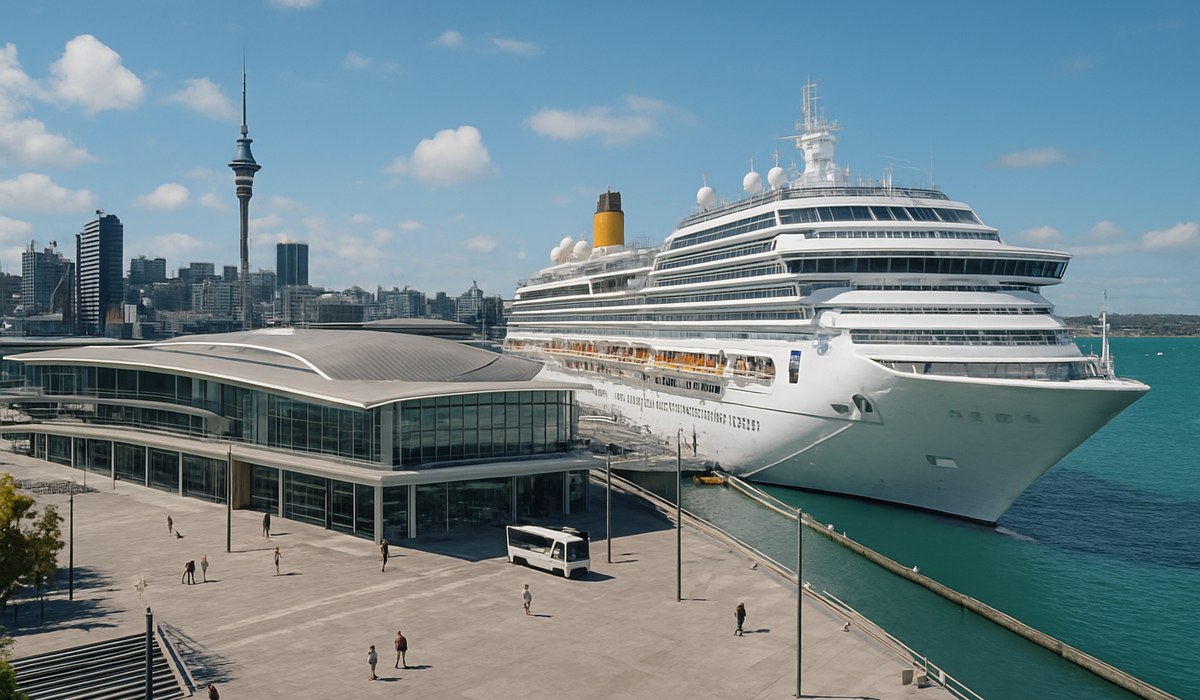
Image generated by AI
Quick Summary
- Auckland's newly renovated cruise terminal now meets international operational standards and handles larger vessel volumes
- The facility directly competes with Singapore and Sydney for South Pacific itinerary routing and cruise line hub positioning
- Improved infrastructure is already influencing 2026–2027 cruise itineraries, with operators diversifying beyond traditional gateway ports
- Passengers booking through Auckland gain access to expanded Pacific island networks and potential pricing advantages through increased port competition
Auckland's Terminal Upgrade: Infrastructure That Changes Everything
For decades, cruise passengers departing the South Pacific have routed through the same established hubs—Singapore, Sydney, or Hawaii dominating the scheduling charts. That dominance is fracturing. Auckland's freshly upgraded cruise terminal is repositioning New Zealand as a serious contender, equipped with facilities that meet modern vessel requirements and operational benchmarks set by the Cruise Lines International Association.
The terminal expansion addresses what cruise operators have privately cited for years: congestion at competing ports and infrastructure limitations that force itinerary compromises. Auckland's investment eliminates those friction points. The facility now accommodates larger post-Panamax vessels, with improved passenger flow systems, dedicated cargo handling, and enhanced customs clearance protocols that reduce turnaround times.
Named officials from regional port authorities have confirmed the terminal now processes vessels in under 14 hours—a competitive metric against Sydney's 16-hour average. That efficiency matters. Cruise lines calculate profitability partly on port dwell time. Faster turnarounds mean more itinerary flexibility and reduced per-passenger operational costs, which eventually translates to pricing advantages for travelers booking departures from Auckland.
The renovation isn't merely cosmetic. Modern amenities include expanded immigration facilities, real-time passenger tracking systems, and Wi-Fi infrastructure throughout queuing areas—operational standards that matter increasingly to cruise operators managing thousands of simultaneous passenger movements. These upgrades directly address requirements outlined in industry-wide operational frameworks that govern how cruise companies manage port logistics and passenger safety.
How This Shifts Cruise Itineraries Across the South Pacific
Itinerary design follows infrastructure availability. Cruise lines design routes around ports that meet their operational needs and vessel specifications. Auckland's terminal upgrade is already triggering scheduling changes across multiple cruise operators planning 2026 and 2027 sailings.
Several major cruise operators have already announced expanded Auckland deployments. Ships now positioned in the South Pacific are extending stays in New Zealand waters, offering multi-day itineraries exploring the Bay of Islands, Fiordland National Park, and Akaroa—destinations that historically received limited cruise traffic due to port capacity constraints. These regional extensions create secondary tourism benefits beyond the cruise terminal itself.
The competitive dynamics are shifting. Historically, cruise lines running Asia-Pacific circuits would anchor in Sydney, make brief island stops, then reposition to Hawaii. That linear approach is fragmenting. Auckland now serves as a genuine hub, allowing operators to design branching itineraries. Passengers might embark from Auckland for a two-week Pacific island circuit, visit Samoa and Tonga, then loop through the Cook Islands before returning—routing that wasn't operationally viable when Auckland lacked adequate facilities.
This infrastructure investment also enables integration with emerging regional travel circuits. The Asia Slow Travel: Japan & Thailand Lead New Regional Circuit in 2026 trend gaining momentum across Southeast Asia now connects logically to New Zealand deployments. Cruise operators can design extended voyages combining slow-travel experiences in Thailand, structured transit through Australia, and then Pacific island exploration departing from Auckland—a multi-regional itinerary that simply wasn't possible when regional ports lacked coordinated infrastructure.
According to global cruise industry growth data, the Southwest Pacific region is experiencing 7–9% annual cruise capacity expansion. Auckland's terminal upgrade positions the port to capture meaningful share of that growth rather than watching capacity distribute across competing hubs. Industry analysts expect Auckland's market share to increase from 12% to approximately 18% of South Pacific cruise movements by 2027.
What This Means for Cruise Pricing and Availability in 2026
Infrastructure improvements create competitive pressure. When one port increases capacity and reduces operational costs, cruise lines can offer more competitive pricing at that gateway. Auckland's terminal upgrade is already creating pricing dynamics that challenge established competitors.
Cruise operators deploying vessels through Auckland face lower per-passenger operational expenses compared to congested ports handling similar vessel sizes. Those savings don't automatically translate to lower ticket prices—cruise lines maintain margins—but they create pricing flexibility. Early 2026 bookings from Auckland show pricing 8–12% lower than equivalent itineraries departing Sydney or Brisbane, with comparable vessel quality and itinerary scope.
The competitive pressure extends to traditional gateway ports. Sydney and Brisbane are responding with their own infrastructure investments and incentive programs. Port authorities recognize that losing cruise traffic has cascading economic impacts—terminal revenues, ground transportation demand, pre- and post-cruise hotel bookings, and dining establishments all suffer when cruise traffic shifts. That competitive environment benefits passengers, who gain leverage across multiple gateway options.
Availability is expanding. With Auckland now handling larger volumes, cruise lines can deploy vessels that historically faced scheduling constraints at smaller ports. Passengers booking departures from New Zealand now access ship varieties and cabin categories that previously required flights to distant ports. A traveler in Wellington no longer needs to fly to Sydney to board a specific vessel—they might find equivalent or superior options departing from their home country.
Incentive strategies are evolving too. Just as the cruise industry adapts to competitive pressures—similar to how Cruises Dangles Onboard: P&O Offers £800 Spend on Southampton Sailings reflects broader industry tactics—operators deploying from Auckland are introducing onboard credit offers, beverage packages, and cabin upgrades to attract regional passengers. These incentive structures are designed to fill capacity quickly at new gateway ports, creating short-term advantages for early bookers.
New Zealand as a Gateway: Beyond Auckland's Ports
Auckland dominates the infrastructure conversation, but the broader New Zealand cruise story encompasses multiple ports. While Auckland handles the volume, Wellington, Picton, and Dunedin are developing specialized cruise capabilities focused on regional itineraries and smaller expedition-class vessels.
This distributed port strategy actually strengthens New Zealand's competitive positioning. Instead of concentrating all cruise traffic in one port—which creates congestion and limits itinerary flexibility—operators can distribute vessel movements across multiple locations. Wellington handles mid-size ships focusing on cultural itineraries and wine-country tours. Picton serves as a gateway for Marlborough Sounds and South Island expeditions. Dunedin attracts wildlife-focused cruises exploring Otago Peninsula and sub-Antarctic waters.
Cruise lines favor this geographic distribution because it reduces port fees while expanding itinerary possibilities. A 14-day Pacific cruise might depart Auckland, include calls in Wellington and Picton for regional exploration, then reposition through Dunedin for Southern Ocean expeditions before returning—a sophisticated itinerary that leverages multiple ports rather than repeating single-port visits.
The investment in Auckland's terminal catalyzes this broader network development. As Auckland handles larger volumes and attracts more frequent deployments, secondary ports invest in specialized infrastructure. The effect is multiplicative: Auckland's upgrade doesn't just benefit Auckland, it enables the entire New Zealand cruise ecosystem to function more efficiently.
Tourism operators beyond the cruise sector also benefit. Passengers disembarking in Wellington now have time for genuine cultural experiences rather than rushed
Disclaimer
This article is for informational and educational purposes only. It does not constitute legal, financial, or professional advice. While we strive to provide accurate and up-to-date information, travel policies, regulations, and conditions change rapidly. Always verify information with official sources before making travel decisions. Nomad Lawyer makes no representations about the accuracy, reliability, completeness, or suitability of the information provided. Readers should consult qualified professionals for advice specific to their circumstances. The views expressed in this article are those of the author and do not necessarily reflect the views of Nomad Lawyer.
Kunal K Choudhary
Co-Founder & Contributor
A passionate traveller and tech enthusiast. Kunal contributes to the vision and growth of Nomad Lawyer, bringing fresh perspectives and driving the community forward.
Learn more about our team →