
Assam Pushes Aviation Expansion: CM Sarma Seeks Faster Approval
Assam Chief Minister Himanta Biswa Sarma accelerates approval for six greenfield airports and a heliport in 2026, positioning the Northeast as a major aviation hub with Silchar airport nearing completion.

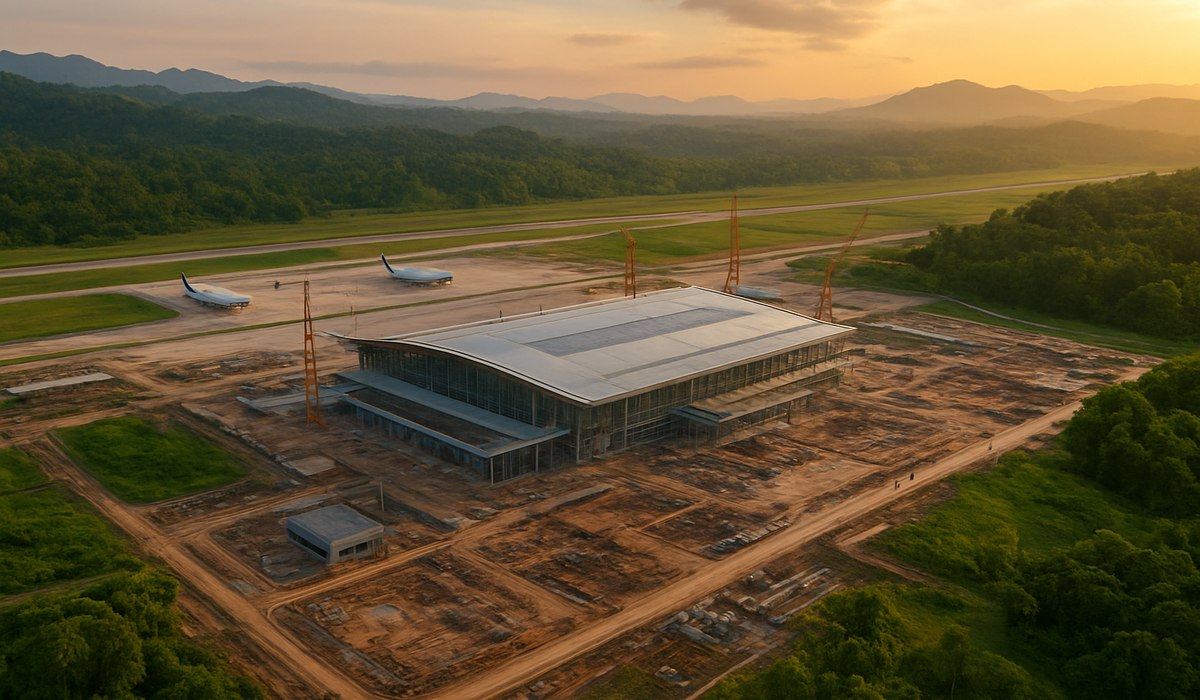
Image generated by AI
Northeast India Positioned for Major Aviation Transformation
Assam is launching an aggressive infrastructure campaign to establish itself as a premier aviation gateway for India's Northeast region. Chief Minister Himanta Biswa Sarma met with Union Civil Aviation Minister Ram Mohan Naidu Kinjarapu to accelerate approval timelines for six new greenfield airports and one dedicated heliport. This strategic expansion aims to transform regional connectivity and unlock significant economic opportunities across Assam and neighboring states throughout 2026 and beyond.
Assam's Ambitious Aviation Expansion Plan
The state government's initiative represents one of India's most comprehensive regional aviation development strategies. Assam pushes aviation infrastructure to unprecedented levels with simultaneous planning for multiple airport facilities. Beyond conventional runway development, the initiative encompasses advanced ground handling facilities, modern terminal infrastructure, and integrated transportation networks.
The greenfield airport projects target underserved regions where existing air connectivity remains limited or nonexistent. Each facility is designed to accommodate both domestic and potentially international operations. State officials estimate that these airports will reduce travel times significantly for residents across Assam and the broader Northeast. The expansion strategy directly addresses infrastructure bottlenecks that have historically limited the region's tourism and business development potential.
Regional aviation experts suggest that this coordinated approach differs markedly from ad-hoc infrastructure projects. Planning committees have completed preliminary site assessments and environmental impact evaluations for most proposed locations. Investment commitments from both state and central government bodies have moved beyond initial discussion phases.
Silchar Airport: The Priority Project
Silchar airport represents the flagship component of Assam's aviation expansion agenda. Located in southern Assam, this facility nearing completion will serve the Barak Valley region and provide critical connectivity for previously underserved communities. Construction milestones achieved throughout 2026 indicate that operational status may be achieved within the stated timeline.
The airport's strategic location positions it as a gateway connecting Assam to major metropolitan centers including Kolkata, Delhi, and Bangalore. Initial flight schedules are expected to feature regional carriers operating narrow-body aircraft on domestic routes. The terminal building incorporates modern passenger processing technologies and climate-appropriate architectural design suited to Assam's tropical environment.
Economic impact projections suggest that Silchar airport will generate employment across multiple sectors including aviation, hospitality, ground services, and logistics. Local stakeholders anticipate increased business travel and leisure tourism once the facility achieves full operational capacity. Tourism board estimates project doubling of visitor arrivals within three years of commencement.
Visit FlightAware to track potential future flight operations once Silchar airport becomes operational.
Northeast Hub Strategy and Regional Impact
Assam's broader strategy positions the state as a unified aviation network rather than isolated airport facilities. Assam pushes aviation development across multiple nodes simultaneously, creating network effects that enhance regional competitiveness. This hub-and-spoke concept mirrors successful models implemented in Southeast Asia and South Asia.
The six additional greenfield airports will serve tier-two and tier-three cities throughout Assam and neighboring states. Combined capacity across all facilities will exceed fifteen million annual passenger movements upon full buildout. This represents substantial growth compared to current Northeast aviation capacity, which remains constrained by limited runway infrastructure.
State planners anticipate that enhanced connectivity will accelerate economic activity in sectors including tea processing, tourism, technology services, and manufacturing. Regional universities have increased aviation management curriculum offerings to develop local workforce talent. Private sector interest from both domestic and international aviation operators has intensified significantly.
Airlines currently serving Northeast India—including IndiGo, Air India, Alliance Air, and SpiceJet—are expected to expand route networks and aircraft allocations as new airports become operational. Regional carrier development initiatives are simultaneously underway to nurture indigenous Northeast aviation enterprises.
Timeline and Next Steps for Development
Pre-feasibility studies for the five secondary greenfield airports are slated to conclude by Q4 2026. Environmental clearance processes, historically the longest regulatory bottleneck, are being coordinated across state and federal agencies simultaneously. This parallel processing approach substantially compresses traditional project timelines.
Himanta administration officials target groundbreaking ceremonies for at least two additional airport sites within the next eighteen months. Design-build contracting methodologies will replace traditional sequential construction approaches, accelerating physical development. International construction firms with Southeast Asian airport experience have already submitted preliminary technical proposals.
Funding mechanisms combine central government allocations, state budget contributions, and potential public-private partnership arrangements. The state's financial commitment extends across land acquisition, infrastructure development, and operational startup capital. International development finance institutions are evaluating debt financing proposals for select projects.
Commercial service launch dates depend upon construction progression and regulatory clearance completion. Initial operations will likely feature limited flight frequencies focused on connecting major city pairs within South Asia. Gradual frequency increases and new route launches will follow as facilities mature operationally.
Traveler Action Checklist
Travelers planning to use these emerging Northeast aviation facilities should take the following actions:
-
Monitor airport opening announcements through official Assam tourism and civil aviation ministry websites throughout 2026 and 2027.
-
Register with airline notification services for route launch announcements affecting the Northeast region on FlightAware.
-
Review current flight options through existing Northeast airports while new facilities achieve operational status.
-
Contact airlines directly regarding future route availability before booking long-distance Northeast itineraries.
-
Understand passenger rights and protections by reviewing guidelines on the US DOT website and Indian aviation authority directives.
-
Check the FAA for international safety standards that Indian airports must meet before accepting international operations.
-
Allow additional travel time when using regional airports initially, as operational procedures may be less established than major metropolitan hubs.
Key Development Data
| Project Component | Location | Status (2026) | Estimated Capacity | Timeline | Regional Impact |
|---|---|---|---|---|---|
| Silchar Greenfield Airport | South Assam | Near completion | 5-7M passengers/year | Operational by end-2026 | Barak Valley connectivity |
| Secondary Greenfield Airports (5) | Throughout Assam | Pre-feasibility phase | 15M passengers combined | 2027-2030 | Regional network development |
| Dedicated Heliport | TBD | Planning stage | 50-100 daily operations | 2027 | Emergency medical/tourism services |
| Terminal Infrastructure | All sites | Design phase | Modern international standards | Concurrent | Passenger experience enhancement |
| Ground Services Capacity | Regional network | Development phase | Multi-airport coordination | 2026-2028 | Operational sustainability |
| Workforce Development | State-wide | Training programs active | 5,000+ aviation professionals | Ongoing | Employment generation |
What This Means for Travelers
Assam pushes aviation capacity forward, creating unprecedented connectivity options for Northeast travelers. Reduced travel times between regional cities and metropolitan centers like Delhi, Mumbai, and Bangalore will significantly improve business travel efficiency. Leisure travelers gain improved accessibility to Assam's tourism attractions, including wildlife sanctuaries, tea plantations, and cultural heritage sites.
Flight options will transition from existing capacity-constrained scenarios to abundant choices across multiple carriers and airports. Competitive pricing should emerge as multiple airlines establish operations across newly developed facilities. Enhanced frequency options allow greater flexibility in scheduling business and leisure trips.
International travelers should expect gradual expansion of international service offerings as facilities mature. Presently, overseas access to Northeast India remains concentrated at limited international airports. This expansion represents a meaningful step toward increased global connectivity for the region.
Ground transportation coordination between airports and city centers requires attention from passengers. State authorities are simultaneously developing road, rail, and potentially air shuttle connections between aviation facilities and commercial centers.
Frequently Asked Questions
When will Silchar airport become operational for commercial flights?
Disclaimer
This article is for informational and educational purposes only. It does not constitute legal, financial, or professional advice. While we strive to provide accurate and up-to-date information, travel policies, regulations, and conditions change rapidly. Always verify information with official sources before making travel decisions. Nomad Lawyer makes no representations about the accuracy, reliability, completeness, or suitability of the information provided. Readers should consult qualified professionals for advice specific to their circumstances. The views expressed in this article are those of the author and do not necessarily reflect the views of Nomad Lawyer.
Raushan Kumar
Founder & Lead Developer
Full-stack developer with 11+ years of experience and a passionate traveller. Raushan built Nomad Lawyer from the ground up with a vision to create the best travel and law experience on the web.
Learn more about our team →