
Asian Gen Z Travelers Shift to Prague and Warsaw with Record Airbnb Bookings in 2026
Gen Z travelers from East and Southeast Asia are bypassing expensive Western European hubs for budget-friendly, authentic Airbnb stays in Prague and Warsaw, driving a massive demographic pivot in Central European tourism.

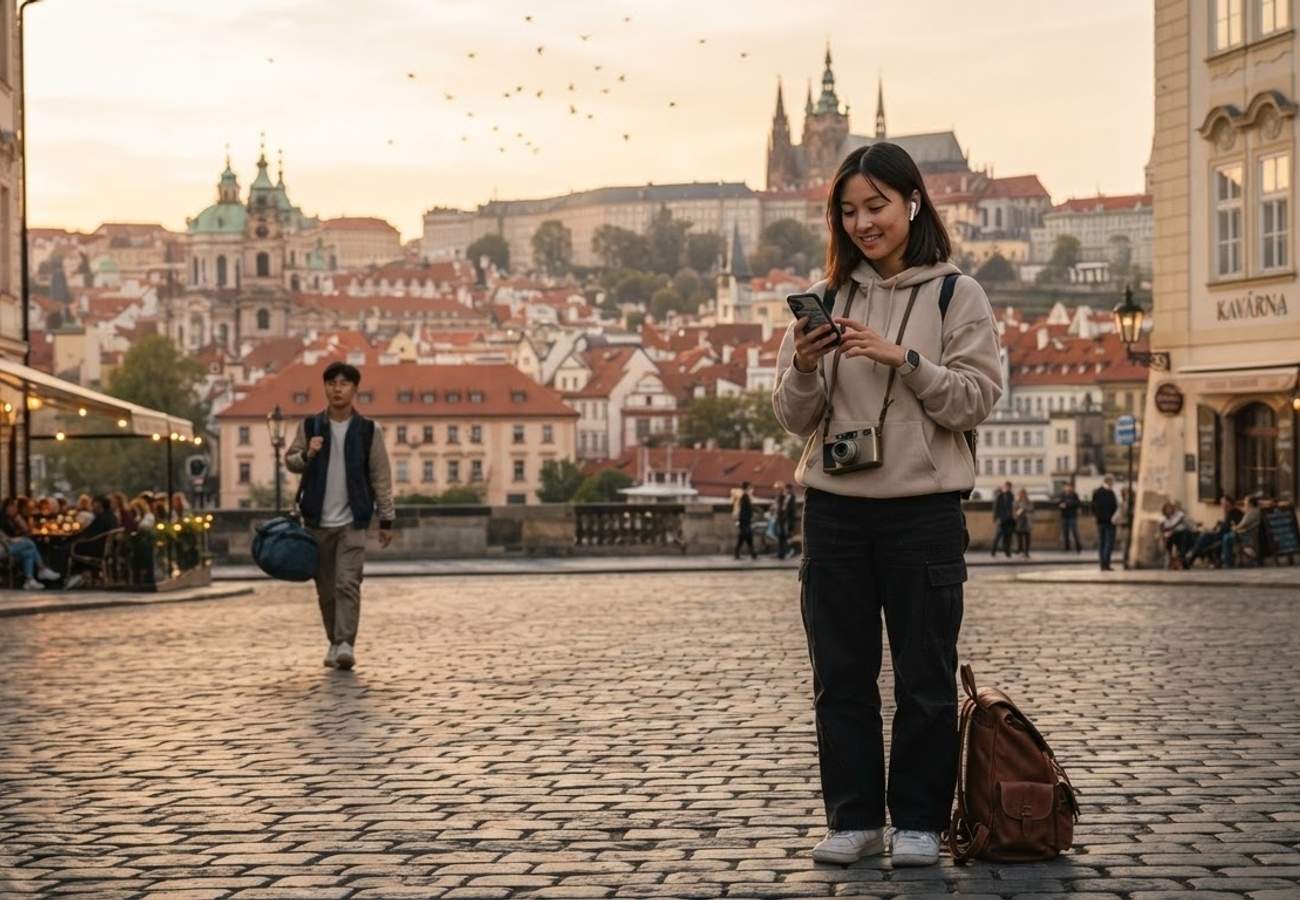
Image generated by AI
Asian youth are abandoning the traditional "Golden Triangle" of London, Paris, and Rome in favor of Central Europe's cultural hubs. This shift is fueling a record-breaking surge in Airbnb bookings across Prague and Warsaw as Gen Z prioritizes authenticity over luxury.
The landscape of European tourism is undergoing a fundamental transformation. Travelers born between 1997 and 2012 from East and Southeast Asia—specifically Japan, Taiwan, South Korea, and India—are increasingly bypassing the high costs of Western Europe. Instead, they are flocking to the Czech Republic and Poland, seeking a blend of medieval history, digital connectivity, and financial accessibility.
This demographic pivot is not merely about cost; it is a rejection of the rigid, guided group tours that defined previous generations of Asian travel. Today's young adventurers are utilizing platforms like TikTok, Instagram, and Xiaohongshu (Little Red Book) to discover "aesthetic" urban quarters and independent experiences.
The Decline of the Traditional Hotel Model
The most significant disruption is the move away from corporate hotel chains. Gen Z visitors are opting for short-term residential rentals to achieve a deeper sense of local immersion. This trend is reshaping the urban geography of these cities, as tourists move away from primary landmarks toward residential neighborhoods.
In Prague, the surge in demand is most visible in the districts of Vinohrady, Karlín, and Žižkov. Similarly, Warsaw is seeing record occupancy in quarters such as Powiśle, Praga-Północ, and Mokotów. By staying in these areas, travelers avoid the inflated prices of the Old Town Square or the Royal Route, opting instead for a lifestyle that mirrors that of a local resident.
Comparative Shift in Tourism Dynamics
The transition from the pre-2020 travel model to the 2026 reality is stark, reflecting a broader change in global spending mindsets.
| Traditional Model (Pre-2020) | Modern Gen Z Shift (2026) |
|---|---|
| Western Europe focus | Central/Eastern Europe focus |
| Rigid guided group tours | Independent flexible itineraries |
| Traditional city-centre hotels | Residential Airbnb & local stays |
| High financial expenditure | Budget-conscious, value-driven |
National Strategies to Capture Youth Markets
Governments in Czechia and Poland have recognized this shift and are actively tailoring their infrastructure and marketing to attract independent travelers.
Czechia Tourism (VisitCzechia) The Czech Ministry of Regional Development has launched digital campaigns targeting major Asian metropolitan hubs. These initiatives emphasize the country's safety, café culture, and regional heritage to attract solo and small-group travelers.
Polish Tourism Organisation (Polska Organizacja Turystyczna) The Polish Ministry of Sport and Tourism is positioning Poland as a high-tech, culturally vibrant destination. Their current policy focuses on sustainable tourism distribution, pushing visitors toward culinary markets and art districts to prevent the overcrowding of traditional tourist paths.
Strategic Policy Objectives
To manage this influx, regional authorities are focusing on three primary pillars:
- Geographic Dispersion: Moving visitor density from heritage centers into residential neighborhoods.
- Digital Infrastructure: Expanding 5G networks and integrating e-visas and contactless payment systems.
- Regulatory Oversight: Ensuring short-term rental platforms comply with municipal tax laws and local housing regulations.
Empirical Data: The Economic Impact
Official statistics confirm that this is more than a social media trend; it is a significant economic driver.
Prague Arrival Analytics
Data from the Czech Statistical Office (Český statistický úřad) indicates that Prague has surpassed 8.27 million annual visitors. Growth from long-haul Asian markets has been particularly aggressive.
| Origin Country/Territory | Arrival Volume (Q1) | Year-on-Year Growth Rate |
|---|---|---|
| South Korea | 33,038 visitors | +13.0% |
| Taiwan | 18,475 visitors | +22.0% |
| Japan | 15,732 visitors | +34.0% |
Notably, overnight stays in non-hotel accommodations among travelers under 30 have expanded at twice the rate of conventional hotel bookings.
Poland's Record-Breaking Growth
Statistics Poland (Główny Urząd Statystyczny) reports that the country welcomed 20.2 million international visitors annually, with future projections estimating between 22 and 23 million arrivals.
The economic contribution is substantial:
- Total Overnight Stays: Over 20.2 million nights.
- Economic Contribution: Approximately 165 billion złoty (€39.2 billion).
- GDP Impact: Tourism now accounts for nearly 5% of Poland’s total Gross Domestic Product.
Central Europe's rise as a youth travel magnet signals a permanent shift toward independent, value-driven exploration.
Related Travel Guides
Disclaimer
This article is for informational and educational purposes only. It does not constitute legal, financial, or professional advice. While we strive to provide accurate and up-to-date information, travel policies, regulations, and conditions change rapidly. Always verify information with official sources before making travel decisions. Nomad Lawyer makes no representations about the accuracy, reliability, completeness, or suitability of the information provided. Readers should consult qualified professionals for advice specific to their circumstances. The views expressed in this article are those of the author and do not necessarily reflect the views of Nomad Lawyer.
Raushan Kumar
Founder & Lead Developer
Full-stack developer with 11+ years of experience and a passionate traveller. Raushan built Nomad Lawyer from the ground up with a vision to create the best travel and law experience on the web.
Learn more about our team →