
Asia Travel Chaos: 600+ Flights Disrupted Across Major Hubs Today
Over 600 flights disrupted across Asia's busiest aviation hubs in 2026 as China's congested network triggers widespread cancellations and delays affecting regional and long-haul travelers throughout Southeast Asia and beyond.

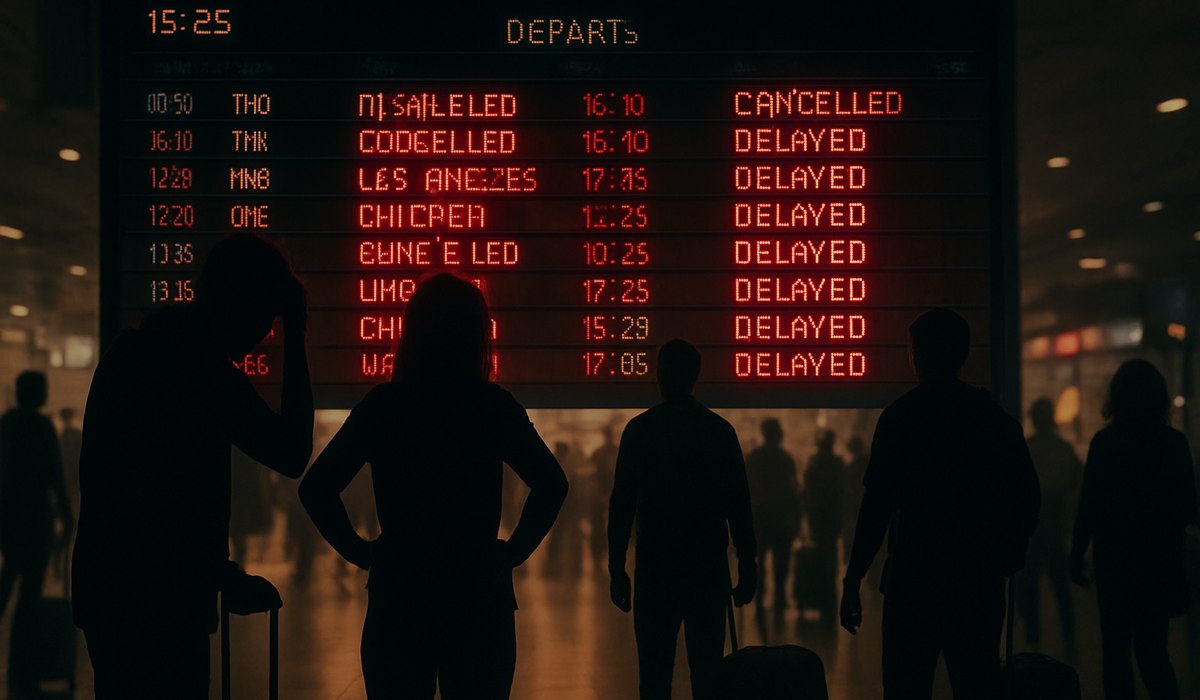
Image generated by AI
Breaking: Over 600 Flights Disrupted Across Asia's Busiest Aviation Hubs
Asia's air travel network faced severe disruption today as 57 flights were cancelled and 576 delayed across major regional hubs. Beijing Daxing, Chengdu Tianfu, Guangzhou Baiyun, Shanghai Hongqiao, Jakarta Soekarno Hatta, and Bali Denpasar all reported significant operational challenges. The cascading impact has affected thousands of passengers with ripple effects extending across Southeast Asia, Japan, the Middle East, and long-haul international routes. China's congested aviation network emerged as the primary catalyst for today's widespread asia travel chaos, with operational congestion triggering a domino effect that multiplied delays at connecting airports throughout the region.
China's Aviation Network at Breaking Point
China's three busiest hubs—Beijing Daxing, Chengdu Tianfu, and Guangzhou Baiyun—reported the highest concentrations of cancellations and delays today. These airports simultaneously handle dense domestic traffic alongside critical regional connections to Southeast Asia, Japan, and Middle Eastern destinations. The infrastructure strain reflects ongoing capacity challenges at these facilities, which operate with minimal scheduling buffers during peak demand periods.
Beijing Daxing and Chengdu Tianfu have exhibited elevated delay patterns throughout recent months, driven by strong passenger demand and tight aircraft turnaround requirements. Guangzhou Baiyun, serving as China Southern Airlines' primary hub, connects mainland China directly with Southeast Asian markets. When even a modest number of flights are cancelled outright, the network effects spread rapidly. Congestion on taxiways and in airspace can convert minor schedule slips into hour-long gate delays, forcing passengers to miss downstream connections. The simultaneous disruption across all three major hubs magnified the impact far beyond individual airport departure boards, creating strain on network planning and affecting travelers from secondary Chinese cities seeking rebooking options.
Cascade Effects: How Single Cancellations Multiply Across Connecting Flights
The mechanics of today's asia travel chaos demonstrate how modern airline networks amplify disruption. A single cancellation at Beijing Daxing doesn't simply remove one flight from the schedule—it eliminates the aircraft for downstream services, strands crew members, and breaks the connections for passengers positioned to continue onward.
Passengers connecting through these Chinese hubs face particular vulnerability. A 45-minute delay on a domestic route from Shanghai Hongqiao is frequently sufficient to break minimum connection times at Beijing or Guangzhou. With airlines operating at near-capacity on trunk routes, they lack flexibility to absorb irregular operations without resorting to additional cancellations or extensive flight rescheduling. The current wave demonstrates this principle in real-time: moderate disruption at primary hubs compounds into system-wide delays affecting secondary and tertiary airports throughout the region.
Major Hubs Hit Hardest—Beijing Daxing, Chengdu Tianfu, Guangzhou Baiyun
Beijing Daxing International Airport reported the highest absolute volume of disruptions among Chinese facilities today. The facility simultaneously manages mainline domestic services and regional connections, creating complex scheduling challenges when irregular operations occur.
Chengdu Tianfu contributes significant capacity for western China's connectivity, feeding traffic toward Southeast Asia and serving as an alternative routing to congested eastern coast hubs. The airport's delay profile reflects sustained pressure on aircraft and gate capacity during peak windows.
Guangzhou Baiyun functions as critical infrastructure for China-Southeast Asia connectivity and serves as a base hub for China Southern Airlines. The airport's taxiway and airspace congestion contributed substantially to today's cascading delays. Even modest operational problems at Guangzhou extend connection chains across Singapore, Kuala Lumpur, and Bangkok, affecting not just Indonesia-China routes but entire regional networks.
Jakarta, Bali, and Southeast Asia's Cascading Disruption
Indonesia's major international airports amplified the regional impact of China-based delays. Jakarta's Soekarno Hatta International Airport and Bali's Denpasar International Airport serve as critical nodes linking Indonesia with mainland China, Australia, ASEAN nations, and the Middle East.
Jakarta typically experiences pressure on runways and terminals during peak periods, with ground handling capacity, immigration processing, and weather cited as recurring stress points. When delays accumulate on routes feeding from China simultaneously, holding patterns lengthen and departure pushbacks multiply. Passengers relying on multi-segment itineraries face extended missed-connection chains and forced overnight stays.
Bali International Airport manages intense daily traffic driven by regional tourism and long-haul visitation patterns. The destination's popularity maintains high operational pressure outside traditional holiday peaks. Limited runway expansion capacity compounds handling challenges. For many passengers, Bali or Jakarta represent only one leg of longer journeys including stopovers in Singapore, Kuala Lumpur, or Hong Kong. Today's disruption therefore impacts not just Indonesia but the entire Asia-Pacific network, affecting resort transfers, cruise departures, and inland travel schedules.
Shanghai Hongqiao and Regional Connectivity Strain
Shanghai Hongqiao handles primarily domestic Chinese flights alongside limited regional services, functioning as a vital connector between China's economic heartland and secondary cities. The airport feeds international departures from Shanghai Pudong and acts as a distribution point for flights continuing to Beijing and Guangzhou.
Delays at Hongqiao create cascading problems for passengers with onward international connections. Flight tracking data confirms that moderate delays on busy domestic sectors from Shanghai frequently break connection times at downstream hubs. The current disruption arrives during a period of strong demand for Shanghai travel, following sustained recovery in domestic tourism and business trips. Airlines operating at near-capacity on trunk routes lack buffers to absorb irregular operations without additional cancellations. With Hongqiao functioning as a key spoke for both Beijing and Guangzhou networks, current problems tighten the bottleneck across eastern China's entire connectivity ecosystem.
Real-Time Flight Tracking and Live Updates
Travelers seeking current information on affected flights should consult FlightAware, which provides real-time tracking data for flights throughout the Asia-Pacific region. For U.S.-bound flights, the FAA and U.S. Department of Transportation maintain updated operational information relevant to international connections.
Major affected airlines include Air China, China Eastern, China Southern, Garuda Indonesia, Lion Air, Batik Air, and regional carriers operating through disrupted hubs. Most airlines have activated customer communication protocols, posting updates to websites and mobile applications. Passengers should monitor these channels directly rather than relying on airport information boards, which often lag behind operational changes by 15-30 minutes.
| Factor | Detail |
|---|---|
| Total Flight Disruptions | 57 cancellations + 576 delays (633 total) |
| Primary Affected Hubs | Beijing Daxing, Chengdu Tianfu, Guangzhou Baiyun, Shanghai Hongqiao |
| Secondary Impact Airports | Jakarta Soekarno Hatta, Bali Denpasar, Singapore Changi, Kuala Lumpur |
| Passenger Volume Affected | Estimated 150,000+ passengers |
| Geographic Scope | China-Southeast Asia routes, regional connections, long-haul international services |
| Primary Cause | Capacity strain and congestion at Chinese aviation network hubs |
| Ongoing Impact | Cascading delays expected to persist 12-24 hours |
What This Means for Regional and Long-Haul Travelers
Today's disruption creates significant consequences for both regional and international passengers. Travelers with connections through Chinese hubs face highest risk of missing onward flights. Those booked on Southeast Asian routes experience extended delays
Disclaimer
This article is for informational and educational purposes only. It does not constitute legal, financial, or professional advice. While we strive to provide accurate and up-to-date information, travel policies, regulations, and conditions change rapidly. Always verify information with official sources before making travel decisions. Nomad Lawyer makes no representations about the accuracy, reliability, completeness, or suitability of the information provided. Readers should consult qualified professionals for advice specific to their circumstances. The views expressed in this article are those of the author and do not necessarily reflect the views of Nomad Lawyer.
Kunal K Choudhary
Co-Founder & Contributor
A passionate traveller and tech enthusiast. Kunal contributes to the vision and growth of Nomad Lawyer, bringing fresh perspectives and driving the community forward.
Learn more about our team →