
Asia's Jet Fuel Crisis Is Cancelling Flights and Pushing Up Airfares — What Travelers Must Know Now
A global jet fuel supply crisis tied to Gulf conflict is cancelling flights across Asia, spiking fares, and threatening airport operations. Here's what travelers need to know.

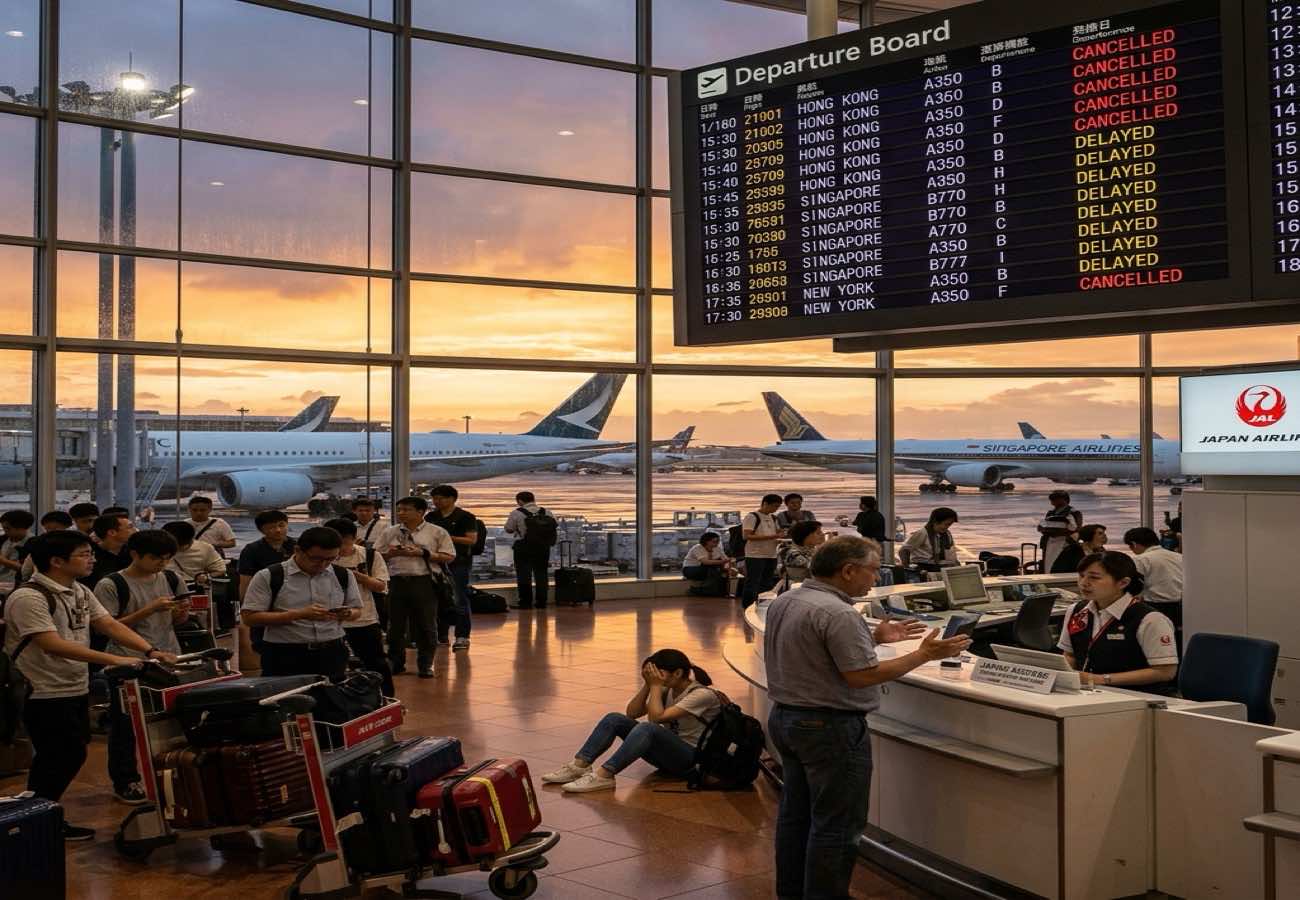
Image generated by AI
Quick Summary • A worsening global jet fuel supply crisis — triggered by conflict in Iran — is cancelling flights and raising airfares across Asia and beyond • Airlines including Air New Zealand, Vietnam Airlines, VietJet, and Philippine Airlines are scaling back or suspending routes • European jet fuel prices have hit approximately $1,713.50 per ton ($215 per barrel), with some airline fuel costs doubling since the start of 2026 • Governments across South Korea, the Philippines, and Vietnam are scrambling to secure alternative fuel supplies
A global aviation fuel shortage is hitting Asia's airlines hard and fast. Driven by the ongoing conflict in Iran and the effective blockage of the Persian Gulf shipping route, the jet fuel supply crisis is cancelling flights, straining airport operations, and threatening to drive airfares to new highs — with no quick resolution in sight.
Why Asia Is Bearing the Brunt of the Jet Fuel Crisis
Asia's aviation sector is disproportionately exposed to this crisis because of its heavy reliance on crude oil transported through the Strait of Hormuz. When that critical shipping lane closes or is restricted, the consequences for Asian refiners and airlines are immediate and severe.
Refiners across the region have already started cutting output as crude shipments fail to arrive on schedule. China, one of the region's largest fuel producers, has moved to curtail its own jet fuel exports to prioritize domestic demand — squeezing neighboring countries that relied on those supplies.
The compounding effect is stark: even if the Strait of Hormuz reopens in the near term, aviation industry analysts warn that restoring normal fuel supply chain operations could take weeks or even months.
Flights Being Cancelled Across the Region
The fuel squeeze is already translating into real-world disruptions for travelers:
- Air New Zealand has cancelled approximately 1,100 domestic flights to manage its available fuel supply
- VietJet Aviation has scaled back international routes, while Vietnam Airlines has paused select domestic services
- Philippine Airlines has confirmed fuel supplies secured only through the end of June 2026 — leaving significant uncertainty for July onwards
- Civil aviation authorities in Vietnam are proactively adjusting flight schedules and issuing formal advisories to airlines about potential shortages
These are not minor schedule tweaks. For travelers with bookings on any of these carriers, rebooking flexibility and travel insurance have never been more important.
Jet Fuel Prices Are Surging to Record Levels
The financial pressure on airlines is intensifying rapidly. In Europe, jet fuel prices have climbed to around $1,713.50 per ton — equivalent to roughly $215 per barrel — a level that is already forcing airlines to raise fares.
Some carriers have reported fuel costs that have doubled since the beginning of 2026, outpacing even the sharp rises in crude oil prices during the same period. Airlines that use fuel hedging strategies have some protection, but even hedged carriers face serious exposure if the supply disruption deepens or extends.
For passengers, the direct impact is higher ticket prices on both domestic and international routes. Industry forecasts suggest transatlantic flight costs have risen by around $300 per passenger on affected routes, and the trend is expected to continue as long as supply constraints persist.
Governments Race to Stabilize Supply
Recognizing the threat to national aviation networks and wider economies, governments across the region are implementing emergency energy response measures:
- South Korea is actively evaluating plans to redirect fuel earmarked for export back into its domestic market
- The Philippines is in active negotiations with China and Russia to secure emergency jet fuel deliveries
- Vietnam's civil aviation authority is working directly with airlines to manage schedules around constrained fuel availability
- Multiple governments are monitoring or beginning to tap strategic petroleum reserves as a buffer against sudden supply shocks
Airport operations are a central concern in these discussions. Authorities are prioritizing essential commercial routes to keep passengers and cargo moving while managing limited fuel stocks efficiently.
The Global Ripple Effect: Europe and the U.S. Are Not Immune
While Asia faces the sharpest immediate impact, this crisis has a truly global reach.
In Europe, approximately half of EU and UK jet fuel imports originate from the Persian Gulf region — meaning European carriers are already absorbing higher costs and watching supply lines carefully. Airlines operating transatlantic flights have reported the approximately $300-per-passenger cost increase in fuel spend on long-haul routes.
The United States is also exposed. The West Coast, Hawaii, and Alaska collectively import more than 18% of their total jet fuel consumption, predominantly from South Korea. Any further tightening of South Korean fuel exports — particularly if Seoul redirects supply domestically — would directly affect flight operations in these regions.
What This Jet Fuel Shortage Means for Travelers
If you have upcoming flights in or out of Asia, Europe, or any trans-Pacific route, here is the practical reality right now:
- Expect fare increases. Airlines are passing fuel surcharges onto passengers. Book early and lock in current prices where possible.
- Check your airline's flight status frequently. Routes are being cut with limited notice. Don't assume your booking is safe without verification.
- Consider travel insurance. A policy that covers trip disruption and cancellation is essential during a period of sector-wide instability.
- Build flexibility into your itinerary. If you're connecting through a hub airline affected by cuts — particularly in Vietnam, New Zealand, or the Philippines — allow longer layovers and have backup options ready.
- Watch for route suspensions. Some airlines may suspend entire routes rather than reduce frequency. Check your carrier's announcements regularly.
Looking Ahead: How Long Will the Crisis Last?
Aviation authorities and government energy agencies are working to prevent this from becoming a long-term structural collapse. Coordinated measures — transparent fuel stock reporting, emergency allocation protocols, and international cooperation on refinery output — are all being pursued simultaneously.
But the honest assessment from industry analysts is sobering: supply chains cannot recover overnight. Even with the best government response, restoring normal jet fuel availability across Asia's aviation network will take sustained effort over weeks and potentially months.
The crisis is also accelerating longer-term conversations in the aviation sector about fuel source diversification, sustainable aviation fuels (SAF), and the risks of geographic concentration in global energy supply chains.
FAQ: Asia Jet Fuel Crisis and Flight Disruptions
Which airlines are most affected by the jet fuel supply crisis in Asia? Air New Zealand, Vietnam Airlines, VietJet Aviation, and Philippine Airlines have all confirmed operational impacts. Air New Zealand has cancelled around 1,100 domestic flights; Philippine Airlines has fuel secured only through June 2026.
Will jet fuel prices go back down soon? Not quickly. Even if the Strait of Hormuz reopens, supply chain recovery will take weeks to months. Jet fuel prices in Europe are already around $1,713.50 per ton, and analysts expect elevated levels to persist through at least mid-2026.
How much more expensive will flights get because of this crisis? Some transatlantic routes have already seen fuel costs rise by approximately $300 per passenger. Domestic and regional Asian routes are also seeing higher surcharges passed on to travelers.
What should I do if my flight is affected by the fuel shortage? Contact your airline immediately to understand your rebooking options. Many carriers are offering flexibility on date changes. Travel insurance covering trip disruption is strongly recommended for any upcoming bookings.
Is the U.S. affected by the Asia jet fuel crisis? Yes. The U.S. West Coast, Hawaii, and Alaska import over 18% of their jet fuel from South Korea. Any reduction in South Korean exports would directly impact flight operations in these regions.
The global jet fuel supply crisis is still unfolding. As airlines, governments, and aviation authorities scramble to stabilize the situation, the best protection for travelers is staying informed, booking flexibly, and monitoring your carrier's official communications closely.
Related Travel Guides
IndiGo, Air India & AirAsia Issue Urgent Safety Advisories for Dubai Flights Amid Gulf Conflict
UAE Airlines Resume Operations as Dubai Airspace Reopens After Gulf Tensions
Asia Travel Fuel Crisis: Which Airlines Are Still Flying and What Passengers Need to Know
Disclaimer
This article is for informational and educational purposes only. It does not constitute legal, financial, or professional advice. While we strive to provide accurate and up-to-date information, travel policies, regulations, and conditions change rapidly. Always verify information with official sources before making travel decisions. Nomad Lawyer makes no representations about the accuracy, reliability, completeness, or suitability of the information provided. Readers should consult qualified professionals for advice specific to their circumstances. The views expressed in this article are those of the author and do not necessarily reflect the views of Nomad Lawyer.
Raushan Kumar
Founder & Lead Developer
Full-stack developer with 11+ years of experience and a passionate traveller. Raushan built Nomad Lawyer from the ground up with a vision to create the best travel and law experience on the web.
Learn more about our team →