
Travel Asia Continues as Jet Fuel Crisis Hits Airlines
Asia's jet fuel shortage in March 2026 is forcing carriers to implement fuel surcharges, cancel routes, and raise ticket prices 15-25%. What travelers need to know.

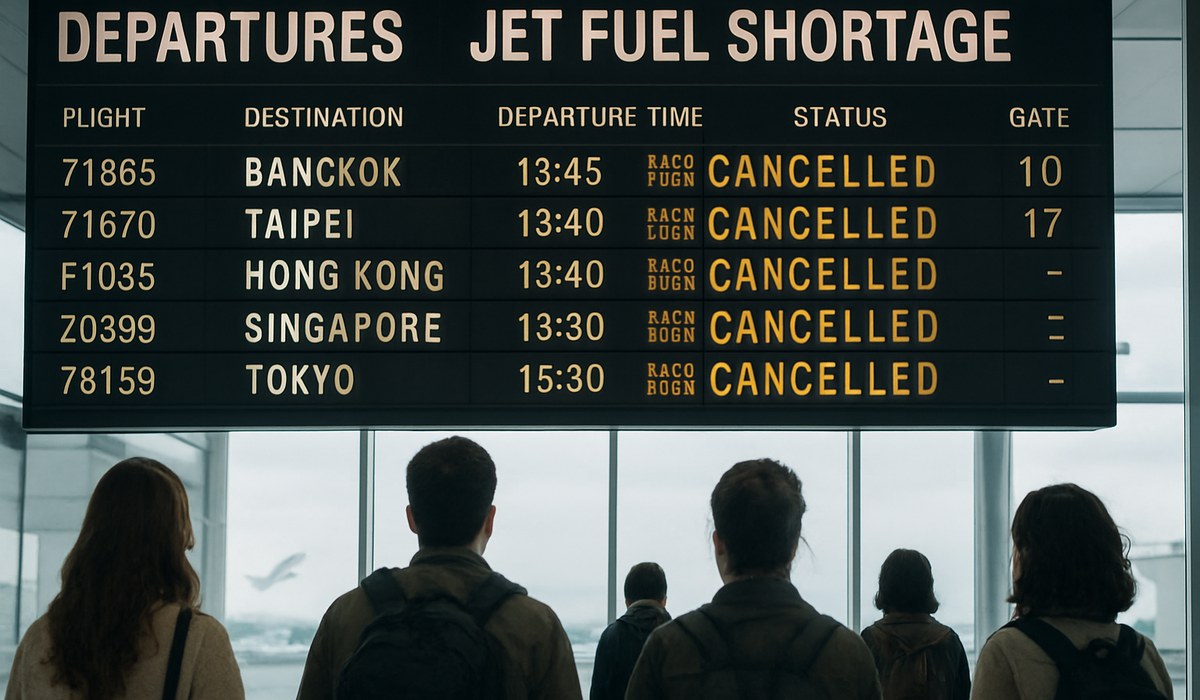
Image generated by AI
Quick Summary
- Regional jet fuel shortages are pushing airlines to add mandatory surcharges of $40–$180 per ticket
- Ticket prices across Asia-Pacific routes have climbed 15–25% since February 2026
- Major carriers are suspending regional routes and consolidating flights into fewer daily departures
- Passengers on affected flights retain rights to rebooking and compensation under IATA standards
Asia's aviation sector is navigating a perfect storm. Regional airlines are grappling with severe jet fuel supply constraints that show no sign of easing before mid-2026. The supply crunch—rooted in production cutbacks and refinery disruptions—is rippling through every aspect of passenger travel, from booking prices to airport gate delays.
Travelers heading to or within Asia should expect steeper fares, hidden surcharges, and possible flight cancellations. The crisis is now forcing both legacy carriers and budget airlines to make painful operational choices.
What's Causing Asia's Jet Fuel Crisis Right Now
The root cause sits upstream in the global energy supply chain. China halts fuel exports deepening jet fuel crisis announced in early March 2026 has left Asian refineries scrambling for alternative feedstock. Simultaneously, Kuwait Airport shutdown from drone strikes disrupted critical logistics hubs that funnel fuel to the region, compounding supply bottlenecks.
Refinery utilization across Singapore, South Korea, and Japan has dropped below 75% as crude inventories tighten. Jet A-1 fuel spot prices in the Singapore physical market—the region's pricing benchmark—have surged to $1.89 per gallon, up 31% from December 2025 levels. That translates directly to airline operating costs.
The shortage isn't temporary disruption. Regional aviation experts expect constrained supply to persist through at least June 2026, meaning summer travel season will arrive during a period of elevated fuel expenses and reduced aircraft availability.
How Much Will Your Ticket Cost? Regional Price Breakdown
The financial pain for passengers is immediate and measurable. Carriers operating Asia-Pacific routes have implemented fuel surcharges ranging from $40 on short-haul flights (under 3 hours) to $180 on long-haul international routes.
A baseline economy fare from Bangkok (BKK) to Singapore (SIN)—typically $120–$160—now regularly exceeds $190 when fuel surcharges are included. Flights from Manila (MNL) to Hong Kong (HKG) have jumped from an average of $185 to $225 per ticket. Longer routes show sharper increases: Seoul (ICN) to Jakarta (CGK) base fares have climbed from $280 to $350.
Business and premium cabin fares have experienced even steeper jumps, with some carriers charging 20–30% premiums above 2025 rates. Budget carriers, who operate on thinner margins, are raising base prices faster than legacy airlines can sustain.
Early-March booking data from major online travel agencies (OTAs) shows travelers booking 3–4 weeks in advance to secure lower fares before further price hikes. Last-minute bookings within 7 days of departure now command 35–40% premiums compared to advance purchases.
Which Airlines Are Cutting Routes and Adding Surcharges
Capacity reductions are visible across the region's airport schedules. Singapore Airlines (SQ) has suspended its three-weekly service from Singapore to Colombo through April 30, citing "fuel cost volatility and demand weakness on secondary routes." Thai Airways International (TG) cut morning departure frequencies from Bangkok to Phuket and Chiang Mai, consolidating operations into fewer daily flights.
Budget carriers face even sharper choices. AirAsia (Z2) reduced regional frequencies by 12% across Southeast Asia in late March, pulling aircraft from Kuala Lumpur (KUL) and reallocating them to higher-yield Australia routes. Cebu Pacific (5J) similarly reduced Manila-based operations, affecting 8 routes serving the provincial Philippines network.
Not all carriers are contracting. Air Premia's Americas-Southeast Asia expansion continues despite broader market headwinds, with the Korean budget carrier adding Seoul-Los Angeles service. The strategic move reflects carrier confidence in US-Asia demand while avoiding fuel-intensive Southeast Asia networks during the shortage.
According to the latest IATA airline industry updates{:target="_blank" rel="noopener noreferrer"}, Asian carriers collectively reduced regional capacity by 8.3% in March 2026 compared to March 2025. International capacity held steadier at a 2.1% reduction, as carriers protect higher-revenue long-haul routes.
Flight Delays and Real-Time Disruption Data
Current operational data from FlightAware live delay tracking{:target="_blank" rel="noopener noreferrer"} shows elevated delays across major Asian hubs. Singapore Changi (SIN) averaged 23-minute delays in the week of March 24–30. Bangkok Suvarnabhumi (BKK) reported 31-minute average delays, while Hong Kong (HKG) experienced 18-minute delays during peak hours.
Regional carrying restrictions are contributing to delays. Some carriers are loading planes to lighter-than-optimal weights to reduce fuel consumption, requiring more frequent turnarounds and extending gate times. A Bangkok-Singapore sector that normally accommodates 190 passengers now operates at 165–170 seats to stay within weight-and-balance limits.
Cancellation rates have risen to 3.2% of scheduled regional flights through March, compared to 1.8% during March 2025. Mechanical cancellations are up 34%, as carriers defer non-critical maintenance to preserve flying hours during peak demand periods.
Your Traveler Rights & Compensation Options
Passengers on cancelled or significantly delayed flights retain enforceable rights across the Asia-Pacific region, though compensation frameworks vary by jurisdiction and airline home country.
For flights operated by EU-registered carriers or departing EU airports, EU261/2004 compensation rules apply—up to €600 per passenger for delays exceeding three hours. For US-registered carriers or flights touching US soil, the US DOT passenger compensation rules{:target="_blank" rel="noopener noreferrer"} entitle passengers to rebooking on alternative carriers and meal/hotel vouchers for delays exceeding six hours.
Most Asian carriers follow IATA standards, offering:
- Rebooking on the next available flight at no additional cost
- Meal and accommodation vouchers for overnight delays
- Communication access (phone calls, emails, WiFi access during delays)
Fuel surcharges themselves are generally not refundable under airline terms, but cancelled flights triggered by supply disruptions may entitle passengers to full refunds instead of forced rebooking.
Documentation is critical. Collect your boarding pass, delay notification emails, and any receipts for out-of-pocket expenses. File claims with the airline within 30 days of travel, and escalate to regional aviation authorities (Civil Aviation Authority of Singapore, Directorate General of Civil Aviation—Indonesia, etc.) if the airline denies your claim.
What Affected Passengers Should Do Now
- Lock in fares immediately if you have flexibility in travel dates.
Disclaimer
This article is for informational and educational purposes only. It does not constitute legal, financial, or professional advice. While we strive to provide accurate and up-to-date information, travel policies, regulations, and conditions change rapidly. Always verify information with official sources before making travel decisions. Nomad Lawyer makes no representations about the accuracy, reliability, completeness, or suitability of the information provided. Readers should consult qualified professionals for advice specific to their circumstances. The views expressed in this article are those of the author and do not necessarily reflect the views of Nomad Lawyer.
Kunal K Choudhary
Co-Founder & Contributor
A passionate traveller and tech enthusiast. Kunal contributes to the vision and growth of Nomad Lawyer, bringing fresh perspectives and driving the community forward.
Learn more about our team →