
Asia Aviation Disruption: 4,749 Delays and 782 Cancellations Hit Riyadh, Delhi, and Regional Hubs in October 2026
A cascading wave of 4,749 flight delays and 782 cancellations disrupted air transit across Asia and the Middle East, fueled by Middle Eastern security reroutings, Southeast Asian monsoon squalls, and heavy airport congestion in India and China.

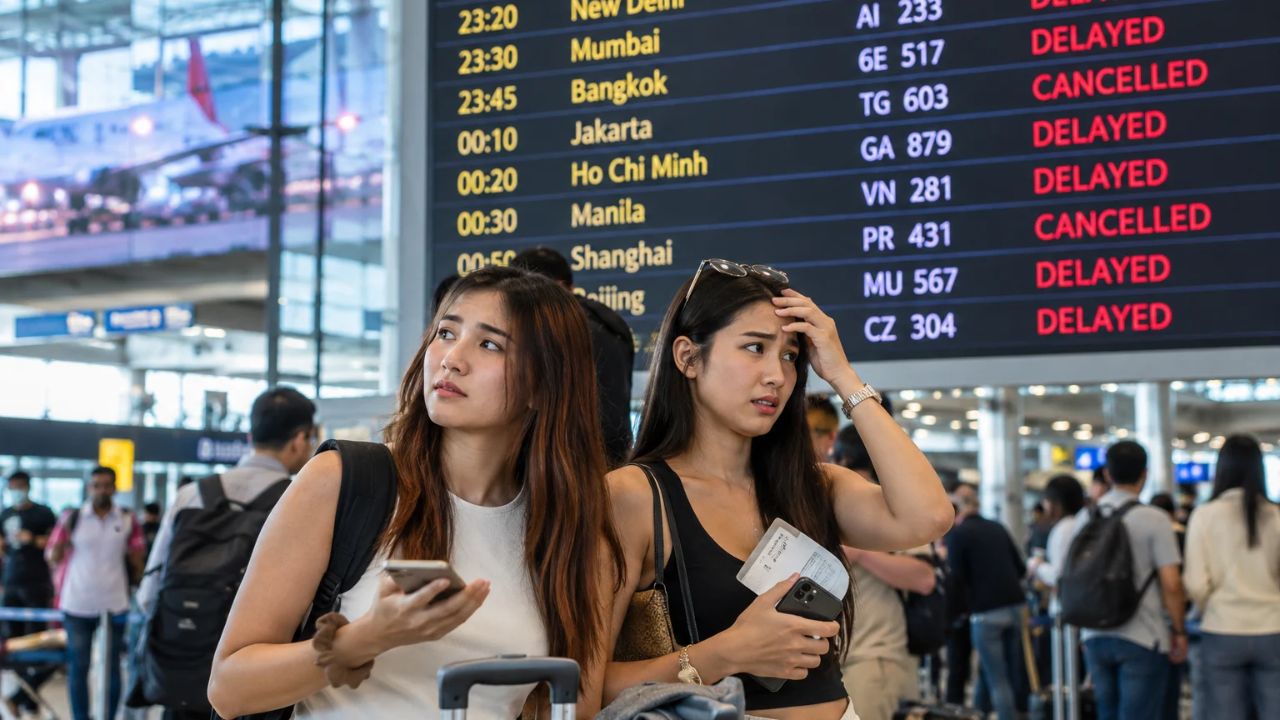
Over 4,700 flights delayed and nearly 800 cancelled across key Asian and Middle Eastern aviation corridors.
More than 5,500 commercial flights experienced operational failure across Asia and the Middle East in a single 24-hour window as regional airspace closures and severe tropical weather collided. A massive wave of 4,749 flight delays and 782 outright cancellations threw departure schedules into disarray from the Arabian Peninsula to East Asia. While travelers navigating Indira Gandhi International Airport in New Delhi absorbed 491 schedule delays, passengers transiting Saudi Arabia's King Khalid International Airport in Riyadh faced 278 cancellations, turning major intercontinental transfer terminals into crowded holding zones.
The compounding disruptions highlight how fragile long-haul transit corridors become when geopolitical volatility and localized monsoon fronts strike simultaneously. While Saudi Arabian carriers halted domestic and international sectors following security alerts and Houthi military strikes along southern airspace boundaries, Southeast Asian carriers wrestled with torrential tropical rain, thunderstorm cells, and high crosswinds that choked throughput across Thailand, Vietnam, and Indonesia.
Cascading Flight Disruptions Across Major Asian Transit Hubs
Aviation networks in South Asia, the Middle East, China, and Southeast Asia recorded widespread schedule fracturing across both primary flag carriers and low-cost operators. The operational breakdown was documented by tracking records verified through FlightAware flight monitoring streams on October 8, 2026 (4:04 pm Eastern Time / October 9 at 4:04 am China Standard Time).
India emerged as the primary hotspot for flight delays. Indira Gandhi International Airport (DEL) in New Delhi topped all tracked Asian airports with 491 delayed flights alongside 18 cancellations, representing a 1% origin and 1% destination cancellation rate. In Mumbai, Chhatrapati Shivaji Maharaj International Airport (BOM) logged 188 delays and 11 cancellations (1% origin and destination cancellation rate). Southern Indian transit gateways mirrored the strain: Bengaluru International Airport (BLR) registered 109 delays and 5 cancellations, Hyderabad’s Rajiv Gandhi International Airport (HYD) recorded 95 delays and 2 cancellations, and Cochin International Airport (COK) registered 23 delays and 4 cancellations with a 2% destination cancellation rate. Disruption also reached regional extremities, with Srinagar Airport (SXR) recording 17 delays, 7 cancellations, a 12% origin cancellation rate, and a 9% destination cancellation rate, while the newly commissioned Navi Mumbai International Airport (NMI) logged 16 delays and 10 cancellations (5% origin, 7% destination cancellation rate).
In Saudi Arabia, scheduled operations saw deep structural cancellations. Under advisories coordinated with the General Authority of Civil Aviation, King Khalid International Airport (RUH) in Riyadh logged 278 cancellations and 162 delays, pushing its origin cancellation rate to 29% and destination cancellation rate to 40%. Jeddah’s King Abdulaziz International Airport (JED) recorded 78 cancellations, 180 delays, a 10% origin cancellation rate, and a 9% destination cancellation rate. Regional Saudi airfields absorbed acute impacts: Abha Regional Airport (AHB) posted 25 cancellations and 29 delays (32% origin and 18% destination cancellation rate), King Fahd International Airport (DMM) in Dammam reported 20 cancellations and 65 delays (8% origin, 5% destination cancellation rate), and Prince Mohammad Bin Abdulaziz International Airport (MED) in Madinah registered 10 cancellations and 38 delays (6% origin, 4% destination cancellation rate). Extreme domestic disruption hit northern and western outposts: Tabuk Regional Airport (TUU) recorded 7 cancellations and 8 delays (16% origin, 10% destination cancellation rate), Yanbu Domestic Airport (YNB) saw 6 cancellations with a staggering 75% origin and destination cancellation rate, Gurayat Domestic Airport (URY) logged 6 cancellations and 2 delays (60% origin and destination cancellation rate), Bisha Domestic Airport (BHH) recorded a 60% origin cancellation rate, Arar (RAE) registered 5 cancellations and 2 delays (60% origin cancellation rate), Ha'il (HAS) logged 5 cancellations and 3 delays (21% origin cancellation rate), and Al-Jouf (AJF) reported 5 cancellations and 6 delays (30% origin cancellation rate).
China's dense civil aviation network experienced severe air traffic management backlogs. Shanghai Pudong International Airport (PVG) logged 281 delays and 3 cancellations, while Shanghai Hongqiao (SHA) registered 55 delays and 4 cancellations. Shenzhen Bao’an International Airport (SZX) posted 82 delays and 18 cancellations (1% origin and destination cancellation rate). In Sichuan, Chengdu Tianfu International Airport (TFU) reported 72 delays and 21 cancellations (2% origin, 1% destination cancellation rate), and Chengdu Shuangliu (CTU) logged 44 delays and 9 cancellations (1% origin and destination cancellation rate). In the capital, Beijing Capital International Airport (PEK) recorded 59 delays and 19 cancellations (1% origin and destination cancellation rate), while Beijing Daxing International Airport (PKX) registered 77 delays and 3 cancellations. Other major Chinese hubs recorded heavy delay tallies: Guangzhou Baiyun (CAN) posted 107 delays and 12 cancellations, Kunming Changshui (KMG) recorded 80 delays and 5 cancellations, Hangzhou Xiaoshan (HGH) logged 62 delays and 8 cancellations, Xi’an Xianyang (XIY) recorded 40 delays and 7 cancellations, Urumqi Diwopu (URC) logged 38 delays and 7 cancellations (1% destination cancellation rate), Zhengzhou Xinzheng (CGO) registered 43 delays and 6 cancellations (1% origin and destination cancellation rate), Hohhot Baita (HET) logged 16 delays and 6 cancellations (1% origin and destination cancellation rate), Wuxi (WUX) reported 9 delays and 5 cancellations (2% origin cancellation rate), and Wenzhou (WNZ) registered 8 delays and 5 cancellations (2% destination cancellation rate).
Across Southeast Asia and neighboring international crossroads, weather fronts and rotational delays compounded travel times. In Vietnam, Ho Chi Minh City’s Tan Son Nhat International Airport (SGN) suffered 345 delays and 8 cancellations (1% origin and destination cancellation rate), while Da Nang International Airport (DAD) registered 107 delays and 4 cancellations (1% origin and destination cancellation rate). Bangkok’s Suvarnabhumi Airport (BKK) recorded 306 delays and 5 cancellations. In Indonesia, Jakarta Soekarno-Hatta International Airport (CGK) logged 304 delays and 19 cancellations (2% origin cancellation rate), Makassar’s Sultan Hasanuddin International Airport (UPG) registered 94 delays and 5 cancellations (1% destination cancellation rate), Medan’s Kuala Namu International Airport (KNO) recorded 48 delays and 2 cancellations (2% destination cancellation rate), and Palembang’s Sultan Mahmud Badaruddin II Airport (PLM) posted 27 delays and 3 cancellations (6% destination cancellation rate). Manila International Airport (MNL) in the Philippines reported 100 delays and 4 cancellations. Hong Kong International Airport (HKG) registered 147 delays and 3 cancellations. Hamad International Airport (DOH) in Doha recorded 127 delays and 4 cancellations, Sharjah International Airport (SHJ) logged 76 delays and 4 cancellations (1% origin cancellation rate), Amman’s Queen Alia International Airport (AMM) registered 44 delays and 11 cancellations (6% origin, 2% destination cancellation rate), Lahore’s Allama Iqbal International Airport (LHE) reported 25 delays and 4 cancellations (5% origin cancellation rate), Istanbul Airport (IST) logged 185 delays and 18 cancellations (1% origin and destination cancellation rate), and Sharm El Sheikh International Airport (SSH) in Egypt registered 42 delays and 3 cancellations (3% origin cancellation rate).
Airport Disruption Statistics Across Asia and the Middle East
| Airport Name & IATA Code | Scheduled Delays | Cancellations | Origin Cancellation Rate | Destination Cancellation Rate |
|---|---|---|---|---|
| New Delhi Indira Gandhi (DEL) | 491 | 18 | 1% | 1% |
| Ho Chi Minh City Tan Son Nhat (SGN) | 345 | 8 | 1% | 1% |
| Bangkok Suvarnabhumi (BKK) | 306 | 5 | 0% | 0% |
| Jakarta Soekarno-Hatta (CGK) | 304 | 19 | 2% | 0% |
| Shanghai Pudong (PVG) | 281 | 3 | — | 0% |
| Riyadh King Khalid (RUH) | 162 | 278 | 29% | 40% |
| Mumbai Chhatrapati Shivaji (BOM) | 188 | 11 | 1% | 1% |
| Istanbul Airport (IST) | 185 | 18 | 1% | 1% |
| Jeddah King Abdulaziz (JED) | 180 | 78 | 10% | 9% |
| Hong Kong International (HKG) | 147 | 3 | — | 0% |
| Doha Hamad International (DOH) | 127 | 4 | — | 0% |
| Bengaluru Kempegowda (BLR) | 109 | 5 | 0% | 0% |
| Guangzhou Baiyun (CAN) | 107 | 12 | 0% | 0% |
| Da Nang International (DAD) | 107 | 4 | 1% | 1% |
| Manila Ninoy Aquino (MNL) | 100 | 4 | — | 0% |
| Hyderabad Rajiv Gandhi (HYD) | 95 | 2 | — | 0% |
| Makassar Sultan Hasanuddin (UPG) | 94 | 5 | 0% | 1% |
| Shenzhen Bao’an (SZX) | 82 | 18 | 1% | 1% |
| Kunming Changshui (KMG) | 80 | 5 | 0% | 0% |
| Beijing Daxing (PKX) | 77 | 3 | 0% | — |
| Sharjah International (SHJ) | 76 | 4 | 1% | 1% |
| Chengdu Tianfu (TFU) | 72 | 21 | 2% | 1% |
| Hangzhou Xiaoshan (HGH) | 62 | 8 | 0% | 0% |
| Beijing Capital (PEK) | 59 | 19 | 1% | 1% |
| Shanghai Hongqiao (SHA) | 55 | 4 | 0% | — |
| Medan Kuala Namu (KNO) | 48 | 2 | — | 2% |
| Amman Queen Alia (AMM) | 44 | 11 | 6% | 2% |
| Chengdu Shuangliu (CTU) | 44 | 9 | 1% | 1% |
| Zhengzhou Xinzheng (CGO) | 43 | 6 | 1% | 1% |
| Sharm El Sheikh (SSH) | 42 | 3 | 3% | — |
| Xi’an Xianyang (XIY) | 40 | 7 | 0% | 0% |
| Urumqi Diwopu (URC) | 38 | 7 | 0% | 1% |
| Palembang Sultan Mahmud (PLM) | 27 | 3 | — | 6% |
| Abha Regional (AHB) | 29 | 25 | 32% | 18% |
| Lahore Allama Iqbal (LHE) | 25 | 4 | 5% | — |
| Cochin International (COK) | 23 | 4 | — | 2% |
| Dammam King Fahd (DMM) | 65 | 20 | 8% | 5% |
| Srinagar Airport (SXR) | 17 | 7 | 12% | 9% |
| Navi Mumbai (NMI) | 16 | 10 | 5% | 7% |
| Hohhot Baita (HET) | 16 | 6 | 1% | 1% |
| Madinah Prince Mohammad (MED) | 38 | 10 | 6% | 4% |
| Wuxi Airport (WUX) | 9 | 5 | 2% | — |
| Wenzhou Longwan (WNZ) | 8 | 5 | — | 2% |
| Tabuk Regional (TUU) | 8 | 7 | 16% | 10% |
| Yanbu Domestic (YNB) | 0 | 6 | 75% | 75% |
| Gurayat Domestic (URY) | 2 | 6 | 60% | 60% |
| Arar Domestic (RAE) | 2 | 5 | 60% | — |
| Ha’il Regional (HAS) | 3 | 5 | 21% | — |
| Al-Jouf Domestic (AJF) | 6 | 5 | 30% | — |
Airline Performance Breakdown: Delays Versus Direct Cancellations
A detailed examination of carrier metrics published through the International Air Transport Association network monitors illustrates a sharp divide between airline operating models. While Indian domestic low-cost carriers maintained scheduled departures despite severe ground congestion, Saudi Arabian carriers cancelled substantial portions of their rotations to avoid security threats.
Saudi Arabian airlines logged the highest cancellation percentages across the continent:
- Saudia: 159 cancellations (28% of tracked flights) and 107 delays (19%).
- Flynas: 40 cancellations (14%) and 82 delays (29%).
- Flyadeal: 39 cancellations (20%) and 51 delays (27%).
- Riyadh Air: 11 cancellations (39%) and 6 delays (21%).
In India, high passenger volume created cascading tarmac congestion governed by Directorate General of Civil Aviation slot allocations:
- IndiGo: 561 delays (25% of tracked operations) and 11 cancellations (0% rounded).
- Air India: 125 delays (21%) and 3 cancellations (0% rounded).
- Air India Express: 111 delays (23%) and 5 cancellations (1%).
- Akasa Air: 32 delays (12%) and 15 cancellations (6%).
- SpiceJet: 24 delays (31%) and 10 cancellations (12%).
Chinese airlines absorbed widespread regional holding patterns:
- China Eastern: 214 delays (8%) and 5 cancellations (0% rounded).
- Air China: 58 delays (3%) and 46 cancellations (2%).
- Shenzhen Airlines: 40 delays (5%) and 40 cancellations (5%).
- Tianjin Airlines: 19 delays (4%) and 19 cancellations (4%).
Southeast Asian carriers saw significant weather-related delays:
- Vietnam Airlines: 162 delays (40%) and 10 cancellations (2%).
- Batik Air (Indonesia): 92 delays (30%) and 15 cancellations (4%).
- Garuda Indonesia: 68 delays (26%) and 3 cancellations (1%).
- PAL Express (Philippines): 51 delays (31%) and 2 cancellations (1%).
- Pelita Air Service: 11 delays (17%) and 3 cancellations (4%).
Middle Eastern and international network carriers recorded standard hub delays:
- Turkish Airlines: 151 delays (9%) and 9 cancellations (0% rounded).
- Qatar Airways: 109 delays (17%) and 2 cancellations (0% rounded).
- Emirates: 91 delays (17%) and 6 cancellations (1%).
- Air Arabia: 72 delays (30%) and 4 cancellations (1%).
- Flydubai: 64 delays (20%) and 12 cancellations (3%).
- Royal Jordanian: 25 delays (16%) and 3 cancellations (2%).
- Oman Air: 15 delays (13%) and 1 cancellation (0% rounded).
- Jordan Aviation: 2 delays (15%) and 2 cancellations (15%).
Visitor Insider Tips for Managing Transit Disruptions
Long-distance travelers crossing Asian air transit corridors can protect their itineraries against unexpected rolling delays by using specific routing and rebooking protocols:
- Buffer Minimum Connection Times (MCT): Standard 60-minute connections at mega-hubs like New Delhi (DEL), Bangkok (BKK), and Tan Son Nhat (SGN) are failing under current delay rates. Book itineraries with a minimum 3.5-hour transit buffer, particularly when transferring between domestic and international terminals that require re-clearing immigration or collecting baggage.
- Flight Rerouting and Alternative Gateways: If your Saudi domestic connection through Riyadh (RUH) or Jeddah (JED) is cancelled, evaluate high-speed ground rail. The Haramain High-Speed Railway connects Jeddah, Mecca, and Medina in under two hours, bypassing regional airspace suspensions entirely.
- Airline Digital Rebooking Portals: When flights are cancelled due to operational disruption, airline customer service desks at terminal gates quickly accumulate multi-hour queues. Use the airline's mobile app or international WhatsApp support desks (often serviced via European or North American servers) to self-select next-available seat inventory before airport queues reach the ticket counter.
- Expense Documentation and Receipts: Keep digital snapshots of boarding passes, SMS cancellation alerts, food receipts, and hotel booking vouchers. Indian DGCA CAR Section 3 and international carriage conventions entitle passengers to airline-provided refreshments or accommodation during extended carrier-controllable delays.
Cultural and Geopolitical Context of Asian Airspace
Aviation routes connecting the Middle East, South Asia, and the Far East serve as economic lifelines for trade, religious pilgrimage, and international tourism. Millions of migrant workers, business executives, and leisure voyagers depend on these aerial pathways daily.
When airspace restrictions emerge over the Red Sea or Arabian Gulf due to military tensions, long-haul aircraft are forced to detour north through Central Asian corridors or south around the Arabian Sea. These extended flight paths consume additional fuel, exceed crew duty limits, and cause aircraft to arrive late at turnaround hubs. Combined with Southeast Asia's unpredictable autumn monsoon storm tracks, a single cancelled flight in Riyadh or delayed turnaround in Delhi creates rolling schedule disruptions that reverberate across three continents.
FAQ: Asia and Middle East Flight Disruptions 2026
Why are so many flights delayed across Asia and the Middle East right now? A confluence of heightened security alerts and Houthi military strikes in Saudi airspace, seasonal monsoon thunderstorm cells in Southeast Asia, and heavy airport runway congestion in Delhi and Shanghai caused widespread schedule breakdowns.
What should I do if my connecting flight in Delhi or Riyadh is cancelled? Open your airline’s mobile application immediately to rebook alternative routing before airport gate queues build up. Request meal vouchers and hotel accommodation from airline transfer desks if delays exceed six hours.
Are Saudi domestic trains operating during flight cancellations? Yes. The Haramain High-Speed Railway remains fully operational, providing frequent high-speed rail connections between Jeddah, King Abdulaziz International Airport, Mecca, and Medina.
Will travel insurance cover expenses caused by regional airspace delays? Most comprehensive travel insurance policies reimburse hotel lodging, meals, and rebooking costs when delays exceed six to twelve hours, provided you retain written delay verification from the operating carrier.
Navigating modern international travel demands agility, contingency planning, and real-time awareness when regional airspace dynamics shift without warning.
Related Travel Guides
Wizz Air Delays Six Abu Dhabi Routes to January 2027 Due to EASA Airspace Advisory
Air Cambodia Launches Direct Delhi to Phnom Penh Flights in December 2026
The 10 Best Airlines for Flight Delay Compensation and Support, According To Reddit
Disclaimer
This article is for informational and educational purposes only. It does not constitute legal, financial, or professional advice. While we strive to provide accurate and up-to-date information, travel policies, regulations, and conditions change rapidly. Always verify information with official sources before making travel decisions. Nomad Lawyer makes no representations about the accuracy, reliability, completeness, or suitability of the information provided. Readers should consult qualified professionals for advice specific to their circumstances. The views expressed in this article are those of the author and do not necessarily reflect the views of Nomad Lawyer.
Raushan Kumar
Founder & Lead Developer
Full-stack developer with 11+ years of experience and a passionate traveller. Raushan built Nomad Lawyer from the ground up with a vision to create the best travel and law experience on the web.
Learn more about our team →