
Asia Flight Chaos: Typhoon Saudel Triggers 743 Cancellations and 4,668 Delays
Typhoon Saudel and operational pressures cause massive travel disruptions across Japan, China, India, and Saudi Arabia, grounding 743 flights.

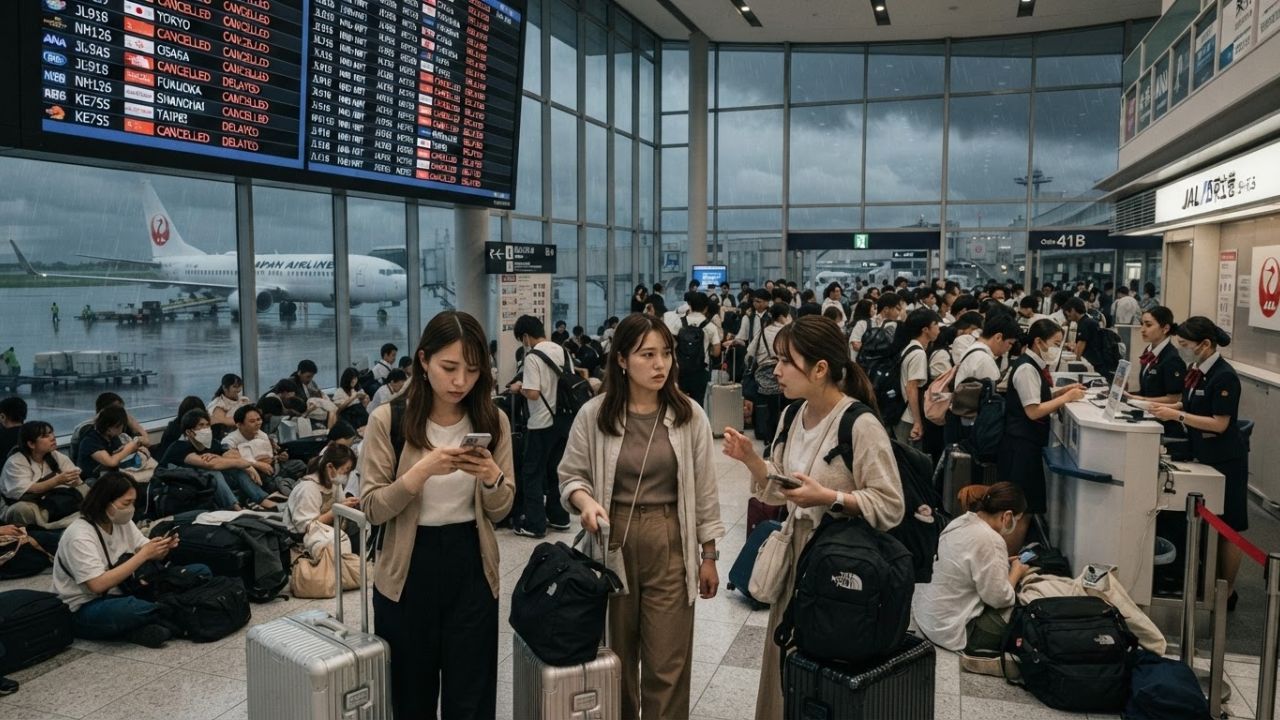
Image generated by AI
Widespread flight cancellations have swept across Asia as Typhoon Saudel and operational pressures triggered 743 cancellations and 4,668 delays at major regional hubs. The severe disruptions, recorded on August 25, 2026, have forced carriers to ground flights across Japan, China, India, and Saudi Arabia, leaving thousands of passengers stranded in transit.
Typhoon Saudel Threatens Okinawa and Ryukyu Airspaces
The primary driver of the cancellations in Japan is Typhoon Saudel, which is forecast by the Japan Meteorological Agency (JMA) to pass just north of Okinawa and the wider Ryukyu Islands. The storm is projected to maintain its current intensity for 18 to 24 hours before gradually weakening. After moving past Okinawa, Saudel is expected to turn southwestward toward eastern China, making landfall near Zhejiang or northern Fujian.
Aviation and shipping channels throughout the East China Sea are facing major restrictions. According to directives from the Civil Aviation Bureau of Japan (JCAB), these severe weather adjustments have forced carriers to adjust flight schedules and ground regional aircraft rotations.
Regional Hub Breakdown: Delays and Cancellations
Data compiled on August 25, 2026, at 3:10 pm ET USA (August 26, 12:40 am IST) using FlightAware live traffic registry records shows the following airport performance breakdown:
- Naha Airport (Okinawa, Japan): Recorded 63 delays and 228 cancellations, the highest cancellation total in Asia. ANA Wings accounted for 52 cancellations, Japan Transocean Air Co. logged 50, and Skymark recorded 32.
- Beijing Capital International Airport (China): Logged 674 delays and 32 cancellations. Air China was heavily impacted, accounting for 383 delays and 26 cancellations.
- Beijing Daxing International Airport (China): Registered 597 delays and 62 cancellations. China Southern Airlines reported 197 delays and 22 cancellations, while China Eastern Airlines recorded 139 delays and 34 cancellations.
- Guangzhou Baiyun International Airport (China): Recorded 500 delays and 17 cancellations, with China Southern accounting for 205 delays and 11 cancellations.
- Tokyo Haneda International Airport (Japan): Registered 472 delays and 49 cancellations. Japan Airlines recorded 168 delays and 21 cancellations, while All Nippon Airways logged 142 delays and 15 cancellations.
- Indira Gandhi International Airport (Delhi, India): Recorded 253 delays and 11 cancellations, with IndiGo accounting for 102 delays and SpiceJet registering 23 delays and 9 cancellations.
Airline Operational Performance and Network Stress
Aviation networks are showing major vulnerability across the continent as scheduling delays ripple through subsequent routes:
- Japanese Carriers: Japan Airlines and All Nippon Airways are experiencing disruptions across Haneda, Naha, Fukuoka, Kagoshima, Osaka, Kansai, Kobe, Amami, Miyako, Ishigaki, and Tokunoshima.
- Chinese Carriers: Air China, China Eastern, and China Southern are experiencing significant delays and cancellations across major hubs in Beijing, Guangzhou, Shanghai, Shenzhen, Xi’an, Chengdu, Zhengzhou, and Hangzhou, as monitored by the Civil Aviation Administration of China (CAAC).
- Indian Carriers: IndiGo, Air India, SpiceJet, Air India Express, and Akasa Air are experiencing delays and cancellations concentrated in Delhi and Mumbai.
- Saudi Arabian Carriers: Saudia, Flynas, and flyadeal are recording flight disruptions across Jeddah and Riyadh hubs.
Local Community Support and Environmental Travel Alternatives
Travelers stranded by weather events can reduce their environmental impact by choosing low-carbon travel alternatives. On domestic routes within mainland Japan, utilizing the Shinkansen high-speed rail network instead of regional flights dramatically reduces greenhouse gas emissions.
To support the local economy in affected storm zones like Okinawa, stranded visitors can choose family-run guest houses (minshuku) and support local neighborhood diners (shokudo) rather than global hotel and restaurant chains. Purchasing traditional Okinawan crafts, such as Ryukyu glass, directly from local artisan workshops helps sustain independent families during operational downturns.
Insider Destination Advice for Stranded Passengers
Local destination specialists suggest the following strategies for travelers facing flight disruptions:
- Explore Traditional Areas Inside Haneda: If stranded at Tokyo Haneda Airport, visit the Edo Koji shopping area on the 4th floor of Terminal 3. It features a replica of a traditional Edo-era street where you can enjoy fresh soba or purchase traditional prints.
- Observe Off-Peak Travel Windows: The best time to visit Okinawa is from late October to November. This off-peak window offers warm, comfortable temperatures and avoids the peak typhoon season.
- Sample Okinawan Cuisine: If stuck in Okinawa, try local comfort foods like Okinawa Soba (thick wheat noodles with pork belly) or Goya Chanpuru (a bitter melon stir-fry) at airport diners.
- Respect Local Etiquette: When visiting Ryukyuan sacred sites (utaki) in Okinawa, respect local spiritual traditions by not entering fenced enclosures or touching historical stones.
- Prepare for Shabbat and Transit Rules: If connecting through hubs in Saudi Arabia or other Middle Eastern destinations, be aware of regional schedules and prayer times, which can affect airport services.
FAQ: Asia Flight Cancellations
Why are there so many flight cancellations in Japan right now? Typhoon Saudel is passing north of Okinawa, forcing airlines to suspend operations to ensure passenger safety.
Which airport in Asia has recorded the most cancellations today? Naha Airport in Okinawa, Japan, recorded the highest number of cancellations, with 228 flights cancelled.
What should I do if my flight from Tokyo or Beijing is delayed? Check your flight status before leaving for the airport, contact your carrier immediately to discuss rebooking options, and keep essential items in your carry-on luggage.
How does choosing rail transit over domestic flights help the environment? High-speed rail networks, such as the Shinkansen in Japan, consume significantly less energy per passenger-kilometer than commercial aircraft, lowering your carbon footprint.
Related Travel Guides
Disclaimer
This article is for informational and educational purposes only. It does not constitute legal, financial, or professional advice. While we strive to provide accurate and up-to-date information, travel policies, regulations, and conditions change rapidly. Always verify information with official sources before making travel decisions. Nomad Lawyer makes no representations about the accuracy, reliability, completeness, or suitability of the information provided. Readers should consult qualified professionals for advice specific to their circumstances. The views expressed in this article are those of the author and do not necessarily reflect the views of Nomad Lawyer.
Preeti Gunjan
Contributor & Community Manager
A passionate traveller and community builder. Preeti helps grow the Nomad Lawyer community, fostering engagement and bringing the reader experience to life.
Learn more about our team →