
Asia Aviation Crisis 2026: 2,316 Flight Delays and 143 Cancellations Hit Major Hubs
Massive flight disruptions sweep across Asia, with Guangzhou, Beijing, and Delhi recording thousands of delays and Saudia leading cancellation figures.

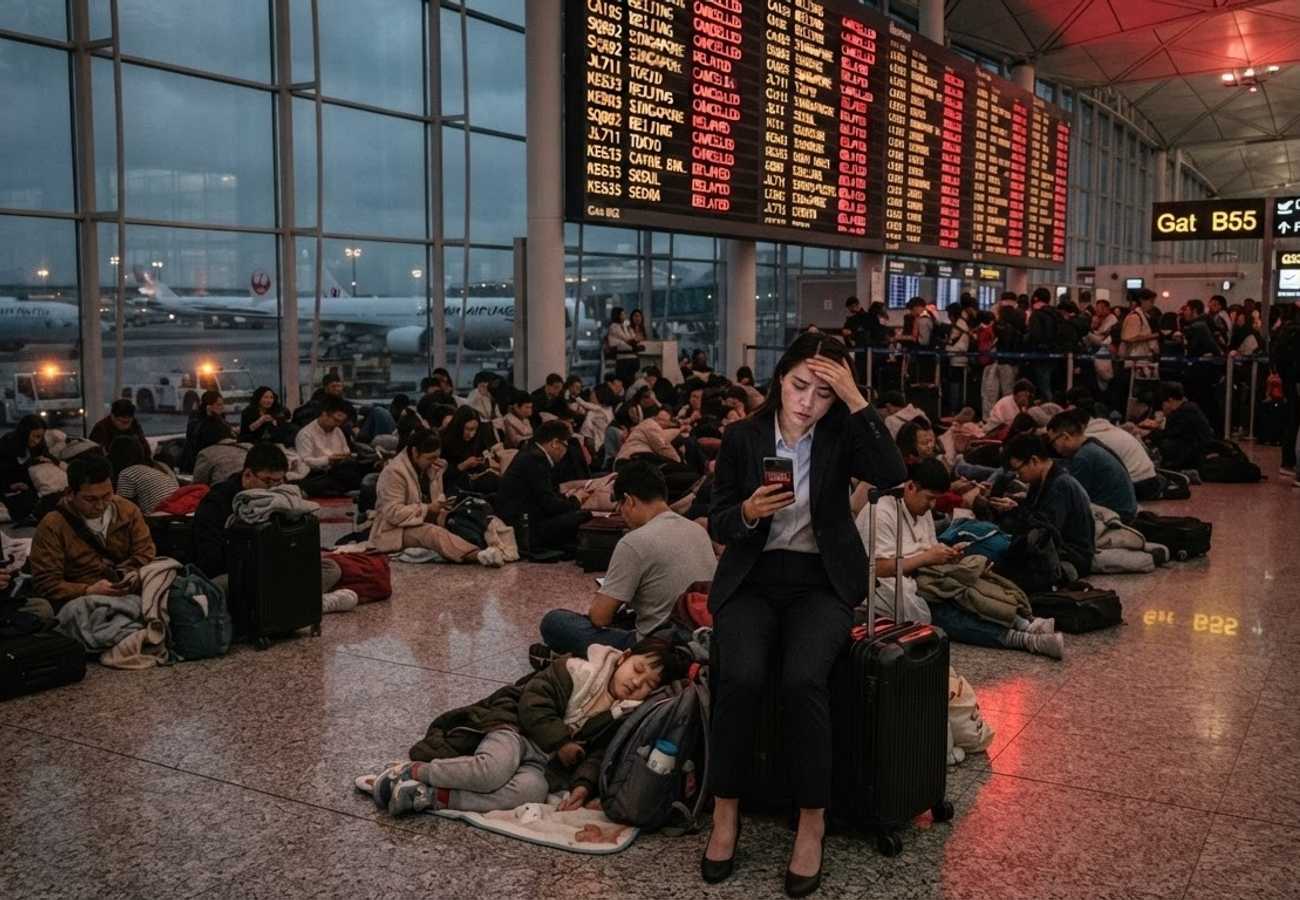
Image generated by AI
Air travel across Asia is currently facing severe operational instability, with a staggering 2,316 delays and 143 cancellations reported across eight major nations. The disruption is concentrated in key hubs including Thailand, the UAE, Hong Kong, Saudi Arabia, India, China, Indonesia, and the Philippines.
The scale of these disruptions suggests a systemic ripple effect across the continent's aviation network. While some airports are struggling with sheer volume and delays, others are seeing a higher rate of outright cancellations, significantly impacting both business and leisure corridors.
Hub-Specific Disruption Analysis
The impact is not evenly distributed. Certain "super-hubs" are bearing the brunt of the operational failures, particularly in China and India.
Guangzhou Baiyun International Airport has emerged as the most disrupted site in Asia, recording 454 delays and 22 cancellations. The majority of this instability is linked to China Southern Airlines, which accounted for 167 delays and 20 cancellations at this location.
Beijing Capital International Airport also faced significant pressure with 253 delays and 12 cancellations. Air China was the primary driver here, responsible for 158 delays and all 12 cancellations.
In South Asia, Indira Gandhi International Airport in Delhi recorded 204 delays and 14 cancellations, with IndiGo (73 delays) and Air India (60 delays) being the most affected carriers.
Regional Breakdown of Airport Performance
The following data outlines the operational status of the most impacted airports across the region:
| Airport Name | Total Delays | Total Cancellations | Primary Affected Airline(s) |
|---|---|---|---|
| Guangzhou Baiyun (China) | 454 | 22 | China Southern, Air China |
| Beijing Capital (China) | 253 | 12 | Air China, Hainan Airlines |
| Jakarta-Soekarno-Hatta (Indonesia) | 221 | 11 | Batik Air, Garuda Indonesia |
| Indira Gandhi (India) | 204 | 14 | IndiGo, Air India |
| Hong Kong International (HK) | 200 | 8 | Cathay Pacific, Greater Bay Airlines |
| Dubai International (UAE) | 199 | 2 | Flydubai, Emirates, SpiceJet |
| Suvarnabhumi Bangkok (Thailand) | 185 | 3 | Bangkok Airways, Thai Airways |
| Manila International (Philippines) | 123 | 5 | PAL Express, Phil. Airlines, Cebu Pacific |
| King Khalid (Saudi Arabia) | 96 | 15 | Saudia |
Airline Performance and Failure Rates
When analyzing the data by carrier, a clear distinction emerges between those suffering from scheduling delays and those forced to cancel flights entirely.
Air China currently holds the highest delay volume among all tracked airlines, with 205 delays and 16 cancellations spread across Beijing Capital, Guangzhou Baiyun, and Xi’an Xianyang. China Southern Airlines follows closely with 180 delays and 22 cancellations.
Conversely, Saudia is the worst performer regarding cancellations. The airline recorded 50 cancellations—the highest in the region—across a network including Abha, King Abdulaziz, King Khalid, Manila, Najran, and Gizan, alongside 65 delays.
Other carriers experiencing significant instability include:
- IndiGo: 101 delays and 3 cancellations (primarily in Dubai, Mumbai, and Delhi).
- Emirates: 75 delays and 1 cancellation (concentrated in Dubai, Hong Kong, and Mumbai).
- Cathay Pacific: 72 delays and 7 cancellations (centered in Hong Kong and Manila).
Operational Drivers of the Disruption
These widespread failures are rarely the result of a single event but are typically a combination of operational stressors. Factors contributing to the current Asian aviation instability include:
- Resource Constraints: Shortages in aircraft availability and crew scheduling conflicts.
- Technical Requirements: Unscheduled maintenance and airport capacity limits.
- Traffic Management: Air traffic control adjustments and rigid airline scheduling.
- The Domino Effect: Late-arriving aircraft disrupt subsequent "rotations," meaning a delay in one city can trigger a cancellation in another, even if local weather and airport conditions are perfect.
Passenger Recovery Guide
For travelers currently caught in these disruptions, immediate action is required to minimize transit time and financial loss.
- Verify Status First: Do not head to the airport without checking the real-time flight status via the airline's app or website.
- Secure Rebooking: Contact the carrier immediately to explore alternative routes or flights on the same path.
- Documentation: Maintain digital and physical copies of all booking confirmations and travel documents to expedite claims.
- Financial Recourse: Formally inquire about refund options or travel credits if a flight is cancelled.
- Buffer Time: Allow significantly more time for airport transit if your itinerary has been revised.
Travelers are urged to maintain direct communication with their airlines as schedules remain volatile.
Key Takeaways
- Worst Hub: Guangzhou Baiyun International Airport (454 delays).
- Worst for Delays: Air China (205 delays).
- Worst for Cancellations: Saudia (50 cancellations).
- Regional Scope: Disruptions span 8 countries, including China, India, and the UAE.
- Primary Cause: A mix of aircraft rotations, crew scheduling, and airport capacity.
FAQ
Which airline has the most cancellations in Asia right now? Saudia has the highest number of cancellations, with 50 flights cancelled across multiple locations.
Which airport is experiencing the most delays? Guangzhou Baiyun International Airport is the most affected, with 454 recorded delays.
What should I do if my flight from Bangkok or Delhi is delayed? Check your flight status before leaving for the airport and contact your airline immediately to discuss rebooking or refund options.
Related Travel Guides
Disclaimer
This article is for informational and educational purposes only. It does not constitute legal, financial, or professional advice. While we strive to provide accurate and up-to-date information, travel policies, regulations, and conditions change rapidly. Always verify information with official sources before making travel decisions. Nomad Lawyer makes no representations about the accuracy, reliability, completeness, or suitability of the information provided. Readers should consult qualified professionals for advice specific to their circumstances. The views expressed in this article are those of the author and do not necessarily reflect the views of Nomad Lawyer.
Preeti Gunjan
Contributor & Community Manager
A passionate traveller and community builder. Preeti helps grow the Nomad Lawyer community, fostering engagement and bringing the reader experience to life.
Learn more about our team →