
Asia Aviation Crisis 2026: 432 Flights Cancelled and 8,754 Delayed Across Major Hubs
Widespread operational failures across Asia have led to 432 flight cancellations and 8,754 delays, severely impacting China Southern, Air China, and IndiGo across hubs in Bangkok, Manila, and Istanbul.

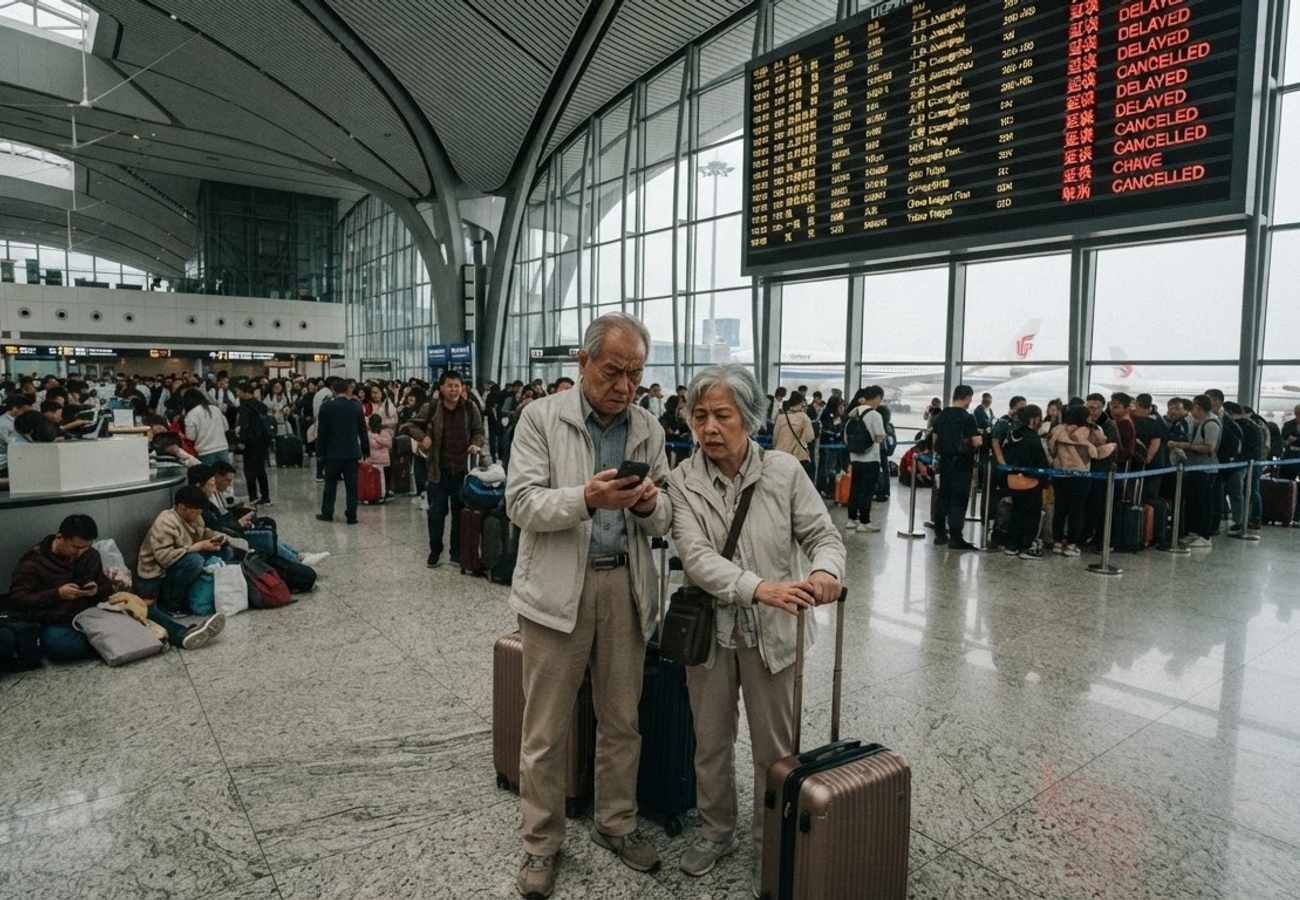
Image generated by AI
Severe operational pressure across Asia has triggered a systemic failure in flight scheduling, resulting in 432 cancellations and 8,754 delays. The crisis is centered in China but has cascaded through India, Southeast Asia, and Middle Eastern transit hubs.
The current instability affects a broad spectrum of carriers, most notably China Southern Airlines, Saudia, Air China, and IndiGo. Disruption is concentrated at critical gateways including Bangkok, Manila, Istanbul, and Amman. Industry data indicates that while weather-related interruptions and storm-related suspensions in China acted as catalysts, the scale of the delays suggests deeper airport operational constraints.
The ripple effect is most acute in China’s primary aviation corridors. Major hubs in Guangzhou, Shenzhen, Beijing, and Shanghai have reported the highest volatility. This has created a domino effect for international routes, particularly those connecting East Asia to India and the Middle East.
Regional Disruption Breakdown
The impact is unevenly distributed, with Chinese infrastructure bearing the brunt of the operational collapse.
- China: Guangzhou Baiyun International (CAN) is the epicenter, recording 91 cancellations and 974 delays. Shenzhen Bao’an (SZX) and Shanghai Pudong (PVG) follow with significant delay volumes.
- India: Mumbai’s Chhatrapati Shivaji Maharaj International is the most affected non-Chinese hub with 17 cancellations and 422 delays.
- Southeast Asia: Jakarta Soekarno-Hatta reported 20 cancellations, while Bangkok’s Suvarnabhumi and Manila International continue to see mounting delays.
- Middle East: Connectivity issues have reached Dubai International (5 cancellations, 127 delays) and Saudi Arabia's King Abdulaziz International (3 cancellations, 70 delays).
Airline Impact Statistics
Carrier performance has varied, but the high-volume operators in China have seen the most significant schedule degradation.
| Airline | Cancellations | Delays |
|---|---|---|
| China Southern Airlines | 74 | 1,161 |
| China Eastern | 49 | 1,045 |
| Air China | 37 | 608 |
| IndiGo | 14 | 498 |
| Hainan Airlines | 17 | 368 |
| Akasa Air | 33 | 42 |
| Batik Air | 29 | 54 |
| Shenzhen Airlines | 6 | 465 |
| Spring Airlines | 15 | 206 |
Airport Performance Data
The following data highlights the specific pressure points across the regional network.
| Airport | Cancellations | Delays |
|---|---|---|
| Guangzhou Baiyun (CAN) | 91 | 974 |
| Shenzhen Bao’an (SZX) | 13 | 816 |
| Shanghai Pudong (PVG) | 16 | 510 |
| Beijing Capital (PEK) | 27 | 493 |
| Beijing Daxing (PKX) | 14 | 435 |
| Hangzhou Xiaoshan (HGH) | 8 | 443 |
| Xi’an Xianyang (XIY) | 15 | 368 |
| Mumbai (BOM) | 17 | 422 |
| Delhi (DEL) | 12 | 262 |
| Jakarta Soekarno-Hatta | 20 | 237 |
| Suvarnabhumi (BKK) | 3 | 205 |
Why This Matters: Industry Implication
This level of synchronized disruption across multiple jurisdictions suggests a fragility in the "hub-and-spoke" model currently employed by Asian carriers. When primary nodes like Guangzhou or Mumbai experience operational failure, the lack of viable alternative routing leads to a rapid accumulation of delays across the entire network.
Market trends suggest that the reliance on a few mega-hubs creates a single point of failure. For the aviation industry, this highlights a critical need for better contingency routing and increased flexibility in aircraft rotation. The fact that 8,754 delays occurred alongside relatively few cancellations (432) indicates that airlines are attempting to maintain schedules rather than scrubbing flights, which inadvertently prolongs the chaos for passengers and crews.
Forward Outlook
Expect continued volatility for passengers transiting through East Asia and the Middle East over the coming weeks. The industry will likely focus on "recovery flights" to reposition aircraft, which may lead to further short-term scheduling shifts. Travelers are advised to maintain a minimum of four hours for international connections at the listed hubs to mitigate the risk of missed departures.
Aviation networks in Asia remain under extreme operational stress.
Related Travel Guides
Disclaimer
This article is for informational and educational purposes only. It does not constitute legal, financial, or professional advice. While we strive to provide accurate and up-to-date information, travel policies, regulations, and conditions change rapidly. Always verify information with official sources before making travel decisions. Nomad Lawyer makes no representations about the accuracy, reliability, completeness, or suitability of the information provided. Readers should consult qualified professionals for advice specific to their circumstances. The views expressed in this article are those of the author and do not necessarily reflect the views of Nomad Lawyer.
Raushan Kumar
Founder & Lead Developer
Full-stack developer with 11+ years of experience and a passionate traveller. Raushan built Nomad Lawyer from the ground up with a vision to create the best travel and law experience on the web.
Learn more about our team →