
April Travel Quiz: Spot the Next Disruption Across U.S. Networks
An interactive april travel quiz teaches nomads to predict spring disruptions. Learn how storms and strikes reshape U.S. air, rail and bus networks in 2026.

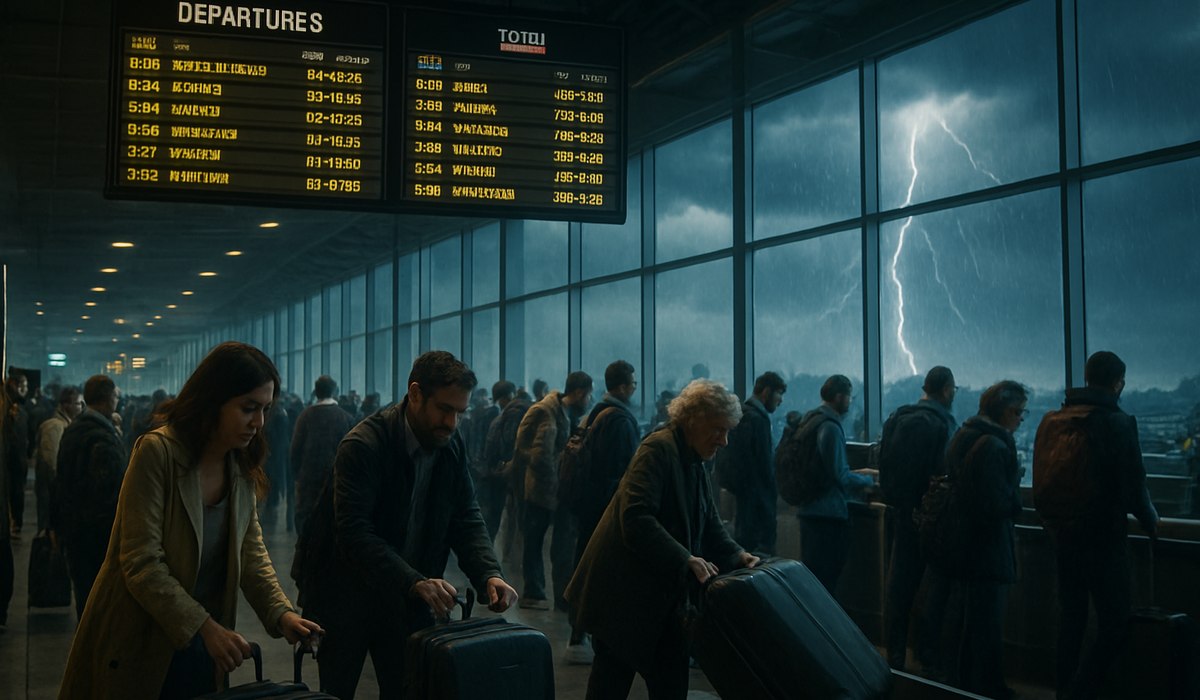
Image generated by AI
April Brings Storm Systems and Strike Warnings to U.S. and European Transport
As spring storms collide with labor action, the april travel quiz emerges as an essential tool for remote workers and frequent travelers navigating April 2026's transportation chaos. Early April data reveals over 3,500 flight cancellations and delays across 27 major U.S. airports on April 8 alone, with thunderstorms cascading through high-volume hubs like Atlanta, Miami and New York. Simultaneously, European rail networks face coordinated strikes in Belgium and France, while bus services experience localized bottlenecks. This month's interactive quiz teaches mobile professionals to recognize disruption patterns before they spiral into multi-day travel nightmares.
Storm Systems Cascade Through Dense Flight Networks
Spring thunderstorms remain aviation's most predictable crisis trigger, and April 2026 exemplifies how rapidly localized weather becomes nationwide chaos. According to flight tracking data from FlightRadar24, severe convection across the Southeast and Mid-Atlantic corridors created bottlenecks at connection hubs handling 85,000+ daily passengers each.
The april travel quiz's core insight centers on network topology: when storms hit Atlanta's Hartsfield-Jackson or New York's JFK, delays don't remain regional. Airlines operate hub-and-spoke models where 60-70% of passengers connect rather than originate. A three-hour weather hold at one airport triggers cascading delays across 400+ downstream routes within six hours. The interconnectedness means a localized storm becomes a nationwide disruption affecting both passengers and crew positioning.
Record spring passenger volumes amplify this risk. U.S. carriers projected handling over 170 million passengers during March-April 2026, exceeding prior-year peaks. When aircraft sit idle due to weather, spare planes deplete within hours. Airlines lack buffers to reposition equipment or crews, forcing cancellations rather than delays. This mathematical reality—high demand plus tight schedules equals rapid failure propagation—forms the quiz's strategic foundation.
How Localized Weather Becomes Nationwide Disruption
Understanding disruption mathematics separates prepared travelers from reactive ones. The april travel quiz teaches participants to map weather risk three steps ahead. When the National Weather Service issues severe thunderstorm watches affecting major airports, savvy nomads immediately identify their next connection hub and assess cascading risk.
The Easter 2026 period illustrated this perfectly. Powerful storm systems produced tens of thousands of delays over 72 hours, not because individual storms were unprecedented, but because they overlapped peak leisure travel windows and exhausted airline recovery capacity. School breaks, religious holidays and long weekends concentrate 40-50% of annual traffic into narrow windows, eliminating slack in the system.
Interactive quizzes help travelers develop pattern recognition. When you see storm watches for Atlanta's region, you've got a 4-6 hour window to rebook connections through non-affected hubs like Dallas, Denver or Charlotte. Major carriers like Delta, American and Southwest publish real-time slot availability information on their websites. The april travel quiz's value lies in teaching this foresight rather than reactive scrambling.
Timing compounds the problem. Airlines schedule heaviest loads during peak school breaks and holiday periods when storms are statistically likely. April weather patterns across the Southeast and Midwest are not random—climate data shows this as severe season. Understanding this seasonal risk lets digital nomads and business travelers shift schedules proactively rather than facing last-minute rebooking queues.
Labor Strikes and Rail Infrastructure Challenges
European April disruptions stem from labor action rather than weather. Belgium's rail network experienced nationwide strikes in early April 2026, with replacement bus services and reduced frequencies persisting through mid-month according to SNCB official notices. Union actions around wage disputes have become predictable April fixtures across Northern Europe.
France's long-distance rail ecosystem faces different pressures. Night train services from Paris to Berlin and Vienna operate under subsidy pressure, creating uncertainty about whether routes continue existing. While these policy decisions unfold over months, they translate to concrete disruptions: withdrawn departures, sold-out alternatives, and passengers crowded onto expensive daytime high-speed connections. The april travel quiz includes questions distinguishing between permanent service withdrawals and temporary strike-related closures.
Understanding passenger rights during disruptions matters equally. European Union Regulation 1371/2007 requires rail operators to offer compensation when delays exceed 60 minutes due to operator responsibility, but external factors like weather or sabotage trigger only rerouting options. The quiz teaches this distinction because it shapes your financial recovery and alternative transportation choices during strikes. When strikes hit, contact rail operators within 48 hours to claim compensation eligibility.
Infrastructure modernization projects also create quiet disruptions. The Brussels-based European Railway Agency has advanced proposals for improved cross-border traffic management, but current implementations create temporary route changes and schedule adjustments. Reading official rail operator announcements 2-3 weeks before travel catches these changes before they cascade through booking sites.
Disruption Awareness Skills for Mobile Professionals
The april travel quiz ultimately teaches disruption prediction as a professional skill. Remote workers and digital nomads operate with flexibility advantages over traditional business travelers—you can shift departure dates, work from alternate cities, or pause travel for 24-48 hours when disruption peaks. Exercising this flexibility requires real-time awareness rather than hope.
Effective disruption awareness follows a three-step framework. First, subscribe to weather alerts and carrier operational updates for your planned routes 10 days before departure. Second, identify alternative routings through non-affected hubs and book backup flexibility into fares (premium economy fares include free rebooking, saving $200-400 on emergency changes). Third, establish 48-hour trigger points: if major disruption forecasts intensify, activate your backup plans before systems collapse.
Interactive quizzes serve professionals by compressing months of disruption experience into pattern recognition exercises. When the quiz asks "which April storm system would most disrupt your Miami to Boston routing," participants develop mental maps of vulnerability. This mental preparation—understanding disruption chains and response options—converts reactive scrambling into proactive risk management.
Key Disruption Data Reference Table
| Factor | April 2026 Impact | Traveler Risk Level | Response Time |
|---|---|---|---|
| Spring thunderstorms (Southeast/Midwest) | 3,500+ flights daily (peak days) | High | 4-6 hours advance warning |
| Hub connection delays | 200-400 downstream routes per weather event | Critical | 2-3 hours propagation |
| U.S. passenger volume (Mar-Apr) | 170+ million passengers | High (capacity strained) | 2 weeks pre-travel planning |
| Belgium rail strikes | Nationwide service reductions | Moderate-High | 1-2 weeks advance notice |
| France night train uncertainty | Potential service cuts | Moderate | 3-4 weeks advance warning |
| Easter 2026 holiday concentration | 40-50% annual traffic in 72 hours | Critical | 6-8 weeks pre-travel strategy |
| Aircraft fleet constraints | Limited spare capacity when weather hits | High | Immediate booking flexibility |
| European cross-border delays | Infrastructure modernization impacts | Low-Moderate | 2-3 weeks advance checking |
What This Means for Travelers in April 2026
The april travel quiz translates into concrete advantages when you book, monitor and execute spring travel. Here's how to apply disruption awareness to your itineraries:
-
Build buffer time into connections. If you connect through major U.S. hubs in April, allow 3+ hours between arrivals and departures. Weather delays typically resolve within this window; tighter connections guarantee missed flights during storm events.
-
Purchase flexible fares explicitly. Standard economy fares charge $75-200 for rebooking after weather disruptions. Premium economy (typically $40-80 extra) includes free rebooking, paying divid
Disclaimer
This article is for informational and educational purposes only. It does not constitute legal, financial, or professional advice. While we strive to provide accurate and up-to-date information, travel policies, regulations, and conditions change rapidly. Always verify information with official sources before making travel decisions. Nomad Lawyer makes no representations about the accuracy, reliability, completeness, or suitability of the information provided. Readers should consult qualified professionals for advice specific to their circumstances. The views expressed in this article are those of the author and do not necessarily reflect the views of Nomad Lawyer.
Preeti Gunjan
Contributor & Community Manager
A passionate traveller and community builder. Preeti helps grow the Nomad Lawyer community, fostering engagement and bringing the reader experience to life.
Learn more about our team →