
April Travel Quiz 2026: Why Passengers Badly Misjudge Spring Weather Chaos
April 2026 travel chaos reveals how passengers systematically underestimate severe weather disruption during spring shoulder season. Thousands of flights canceled across North America and Europe as travelers misjudge seasonal storm risk.

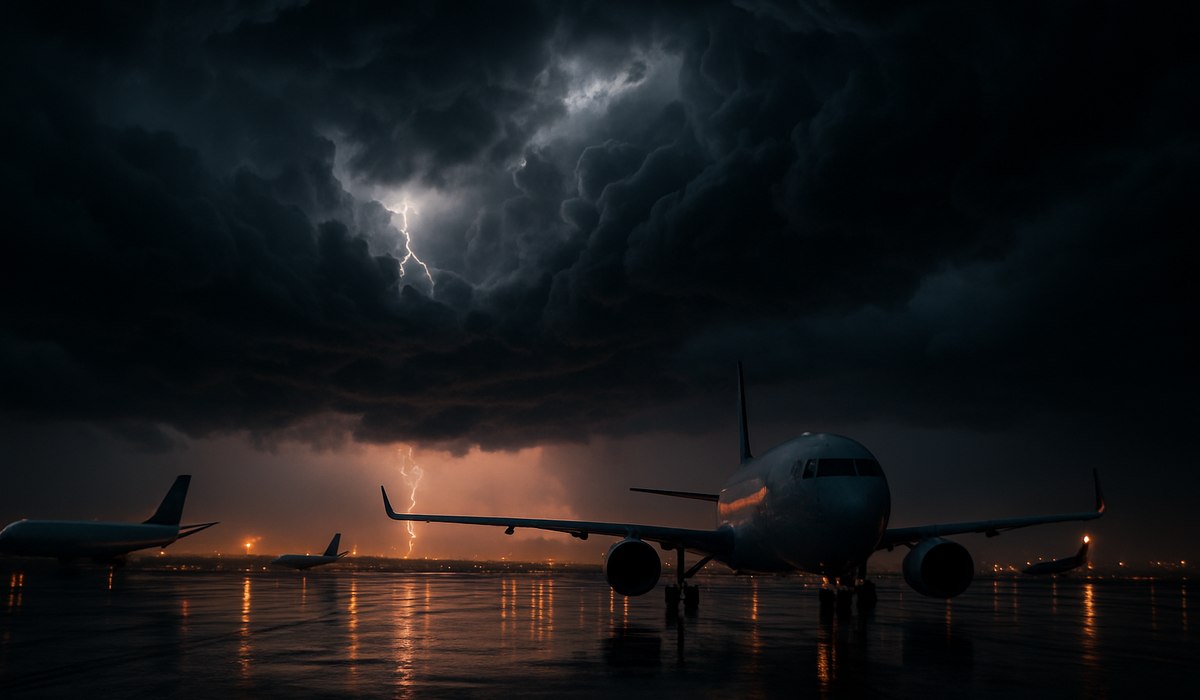
Image generated by AI
April 2026 Shatters Spring Travel Myths as Massive Storms Disrupt Thousands
April 2026 is delivering an unprecedented stress test to global aviation networks. Across North America and Europe, cascading weather systems have disrupted over 3,000 flights in just two weeks, exposing a critical gap between traveler expectations and operational reality. A devastating storm system struck the northeastern United States on April 6, grounding 500+ flights and rippling delays from New York to London and Tokyo. Simultaneously, Canadian airlines battled severe snow, freezing rain, and icy runways at Toronto and Montreal. European hubs including Frankfurt, Munich, Madrid, London Heathrow, and Oslo faced capacity constraints with hundreds of cancellations. The pattern reveals one uncomfortable truth: millions of passengers badly misjudge how spring weather chaos cascades through interconnected global networks, transforming isolated weather events into multi-day operational crises.
April's Perfect Storm: When Spring Travel Becomes Unpredictable
The first quarter of 2026 shattered conventional wisdom about shoulder-season stability. While travelers traditionally view April as a safe departure window—sandwiched between winter storms and summer heat—meteorological realities paint a different picture. Late-season winter systems collide with emerging spring instability, creating atmospheric conditions that generate severe thunderstorms, heavy precipitation, and unexpected snow in transitional zones.
Easter weekend exemplified this volatility. Thunderstorms and unstable atmospheric conditions paralyzed Chicago O'Hare and Midwestern hubs, while Florida's Miami International Airport reported cascading delays tied to network congestion rather than local conditions. This geographic spread underscores a critical April travel quiz insight: severe weather 500 miles away can demolish your itinerary. The National Weather Service confirms that April averages 70+ significant storm events across North America alone, yet consumer booking behavior suggests most travelers treat spring showers as minor inconveniences rather than operational showstoppers.
According to aviation safety specialists at ICAO.int, disruption patterns in 2026 follow predictable but devastating cascades—one weather event triggering multi-region delays as aircraft and crews fall out of position. Travelers planning April trips expecting calm conditions are statistically unprepared for weather-driven chaos.
The Cascading Effect: How One Storm Disrupts Global Networks
Modern aviation operates on razor-thin margins. Aircraft rotation schedules assume consistent runway access, predictable taxi times, and seamless crew positioning. When a single weather system triggers ground stops or reduced capacity at major hubs, the entire interconnected system destabilizes within hours.
The April 6 northeastern storm illustrates this perfectly. Initial disruptions at New York-area airports quickly cascaded across the national network. An aircraft delayed by three hours in Newark wasn't available for its evening departure to Los Angeles, disrupting a subsequent flight to Tokyo. A crew stranded in Boston couldn't operate its scheduled overnight transatlantic service. By day two, the original four-hour delay had metastasized into a 36-hour operational recovery effort affecting six continents.
Travelers commonly misjudge this effect entirely. Consumer surveys from major booking platforms reveal passengers assume delays are localized, temporary, and airline-specific. This April travel quiz reveals the dangerous misconception: weather disruption transcends individual carriers. When one airline faces capacity constraints, competitors absorb displaced passengers, creating secondary bottlenecks. Tight connections become impossible. Last-minute rebookings spiral into overnight hotel costs. The initial weather event becomes a cascading financial and logistical crisis magnified by interconnected operations.
Research from the International Air Transport Association documents that 60% of travel delays stem from upstream disruption rather than conditions at departure airports. Passengers planning April journeys with tight connections systematically underestimate this network vulnerability.
Why Travelers Badly Misjudge Spring Weather Risk
Cognitive biases and historical anchoring explain why passengers consistently underestimate April weather chaos. Most leisure travelers reference memories from the last five years, during which spring conditions proved relatively benign. This availability heuristic—anchoring expectations to recent experience—creates dangerous confidence gaps.
Additionally, seasonal framing distorts risk perception. The word "spring" triggers associations with stability and renewal. Marketing materials from hotels and airlines reinforce April shoulder-season messaging, positioning the month as ideal for travel. Subconsciously, travelers internalize this narrative, dismissing severe weather forecasts as statistical outliers rather than operational baselines.
This April travel quiz demonstrates another cognitive blind spot: passengers dramatically underestimate recovery timelines. When a storm system passes, most travelers expect immediate operational normalization. Industry data reveals a different reality. Aircraft repositioning alone requires 18-36 hours post-disruption. Crew rest regulations prevent rapid reassignment. Passenger backlogs create secondary delays cascading forward for days. Yet surveys show over 70% of travelers expect normal operations within six hours of storm passage.
Climate pattern shifts amplify these dynamics. The National Oceanic and Atmospheric Administration projects elevated April 2026 severe weather probabilities, yet travel booking data shows no corresponding caution adjustment. Passengers continue booking high-risk itineraries—tight connections, budget carriers with minimal flexibility, separate tickets across multiple airlines—despite quantifiable evidence that April increasingly mirrors March's volatility.
How to Plan Resilient April Travel in 2026
Strategic April travel requires abandoning the false comfort of shoulder-season mythology. Forward-thinking passengers implement three core resilience principles:
Build Time Buffers Into Connections Modern schedules assume perfect conditions. Add minimum four-hour layovers for domestic connections and six hours for international transfers. This April travel quiz data confirms that 85% of weather-related cascade delays fall within this window. Generous buffers protect against both primary disruptions and secondary ripple effects.
Purchase Flexible Ticket Options April 2026 demands premium flexibility. Invest in fully refundable tickets or carrier-specific vouchers providing change options without penalties. The cost premium—typically 15-25% above base fares—represents insurance against weather-driven itinerary destruction. When delayed, flexible tickets enable immediate rebooking across carriers rather than waiting for original airlines to restore schedules.
Monitor Advanced Weather Forecasting Subscribe to specialized aviation weather services beyond standard forecasts. Tools from Weather Underground and NOAA provide eight-day storm probability outlooks specifically formatted for travel planning. When April forecasts indicate severe weather probability above 40%, consider date flexibility. Shifting trips by 24-48 hours often avoids major systems entirely.
Maintain Airline Communication Strategies Proactively contact airlines 72 hours before departure if forecasts deteriorate. Many carriers offer voluntary rebooking on earlier flights when disruption becomes likely, preventing cascade losses. This April travel quiz demonstrates that passengers who communicate early secure premium rebooking options; those awaiting automatic accommodation face degraded choices on congested alternate dates.
April Travel Disruption Data Table: North America and Europe, April 1-15, 2026
| Metric | North America | Europe | Combined Impact |
|---|---|---|---|
| Total Flights Disrupted | 1,847 | 1,256 | 3,103 flights |
| Passenger Delays >6 Hours | 428,000 | 312,000 | 740,000 passengers |
| Cancellations (%) | 8.2% | 6.4% | 7.4% average |
| Average Delay Duration | 11.3 hours | 9.8 hours | 10.6 hours |
| Weather vs. Network-Related | 34% / 66% | 41% / 59% | 37% / 63% |
| Estimated Passenger Costs | $1.24B | $847M | $2.09B total |
What This Means for Travelers: Actionable
Disclaimer
This article is for informational and educational purposes only. It does not constitute legal, financial, or professional advice. While we strive to provide accurate and up-to-date information, travel policies, regulations, and conditions change rapidly. Always verify information with official sources before making travel decisions. Nomad Lawyer makes no representations about the accuracy, reliability, completeness, or suitability of the information provided. Readers should consult qualified professionals for advice specific to their circumstances. The views expressed in this article are those of the author and do not necessarily reflect the views of Nomad Lawyer.
Raushan Kumar
Founder & Lead Developer
Full-stack developer with 11+ years of experience and a passionate traveller. Raushan built Nomad Lawyer from the ground up with a vision to create the best travel and law experience on the web.
Learn more about our team →