
April Flight Chaos Strands Hundreds Across UAE, Egypt, Afghanistan
Hundreds of travelers face stranded status as April flight chaos grips the Middle East. Regional conflict-triggered airspace closures force widespread cancellations across UAE, Egypt, and Afghanistan hubs in 2026.

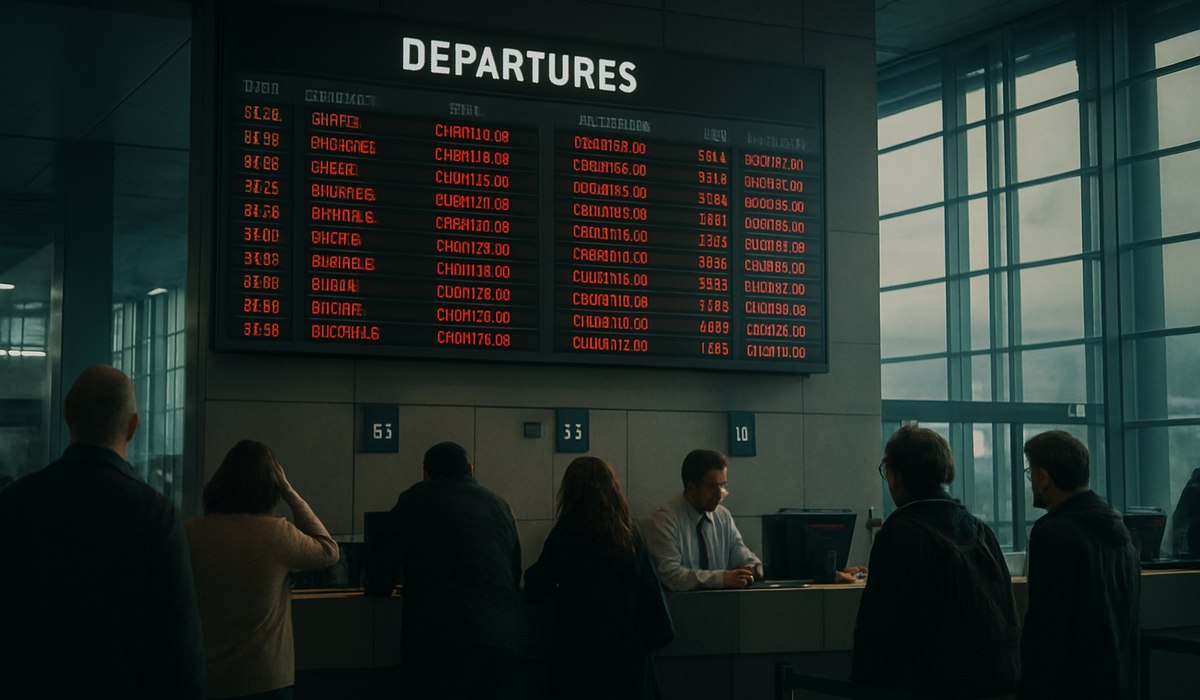
Image generated by AI
Breaking: April Flight Chaos Leaves Hundreds Stranded Across Middle Eastern Hubs
Hundreds of air travelers face stranded status across the UAE, Egypt, and Afghanistan as April flight chaos unfolds across the Middle East. Regional conflict-driven airspace closures have triggered cascading flight cancellations affecting major international hubs including Dubai International, Abu Dhabi International, and Cairo International Airport. Since early April 2026, carriers operating throughout the region report reduced schedules, limited rebooking options, and passenger backlogs stretching across multiple days. What began as network-level disruption in late February has transformed into an acute travel crisis impacting migrant workers, business travelers, and families attempting to transit through Gulf hubs and Egyptian gateways.
Regional Conflict Keeps Middle Eastern Airspace Volatile
The escalation of open conflict involving the United States, Israel, and Iran at the end of February 2026 created an unprecedented aviation crisis across the Middle East. Airspace restrictions now cover critical flight corridors over Iran, Iraq, Israel, Syria, Bahrain, and portions of the Persian Gulf. Airlines operating Gulf hubs must reroute flights through longer corridors, dramatically extending block times and fuel requirements.
Aviation advisory tracking from FlightAware and industry analysts documented thousands of cancellations directly tied to these closures by early March. The disruption has cascaded beyond regional operations, affecting European and Asian networks that depend on Middle Eastern connections. By April 2026, analysts tracking global schedule patterns confirmed the pressure had shifted from infrastructure problems to acute passenger experience deterioration.
Travelers in Dubai and Cairo report extended queues at customer service desks, severely limited rebooking alternatives, and hastily arranged overnight accommodations. Carriers have publicly announced reduced schedules continuing through mid-April, with particular vulnerability on routes crossing affected airspace. Last-minute cancellations remain probable as conditions remain volatile.
Hub Operations Curtailed in Dubai and Abu Dhabi
Dubai International and Abu Dhabi International airports, normally among the world's busiest transfer hubs, entered April operating at substantially reduced capacity. Flight banks declined measurably compared to late February 2026 schedules. Extended routings and contingency fuel loads limit daily aircraft cycles through each facility.
Early April operational data shows dozens of daily delays concentrated on services to Saudi Arabia, Kuwait, Qatar, and European destinations. Regional delay tallies have exceeded 500 flights on peak disruption days. High-traffic routes to Cairo, Jeddah, Riyadh, and Dhaka experienced the heaviest cancellation concentrations.
Egypt Air, Gulf Air, and Saudia flights were removed from schedules or turned back during the first week of April, creating bidirectional passenger chaos. Airlines including Emirates, Etihad, and regional carriers posted revised rebooking policies offering free rescheduling within limited windows, refunds for unused segments, and alternative routing through unaffected hubs. However, constrained capacity means available replacement seats often fall three to five days after original travel dates.
Passenger Experience Deteriorates Amid Limited Rebooking Options
The april flight chaos has generated unprecedented customer service strain. Rebooking bottlenecks persist despite airline flexibility announcements. Customers attempting to rebook face either multi-day wait lists or expensive alternative routings through non-Gulf hubs like Istanbul, Doha, or Muscat.
Migrant workers connecting between South Asian cities and Gulf employment hubs face particular hardship. Family visitors attempting time-sensitive travel report cancellations consuming their entire vacation windows. Business travelers experience lost meetings and contract delays.
Airlines have activated emergency policies including meal vouchers, hotel accommodations for overnight delays, and communication protocols. Yet passenger frustration intensifies as each day brings additional schedule reductions. Social media channels overflow with stranded traveler reports. Local media outlets document customer service desk congestion from early morning through evening hours across both Dubai and Abu Dhabi.
Ground handling teams report crews becoming out-of-position following irregular operations, compounding schedule disruptions. Crew rest regulations prevent quick recovery. Aircraft maintenance delays accumulate. The operational complexity extends recovery timelines beyond initial carrier projections.
Afghanistan Routes Disrupted as Cascading Effects Spread
Service disruptions have extended eastward into Afghanistan-connected routes with acute consequences. Gulf hub-to-Kabul flights operated by low-cost and regional carriers appear repeatedly on daily cancellation tallies compiled by aviation tracking services. With extremely limited alternative routing options into Afghanistan, each cancellation extends passenger waits significantly.
Migrant worker populations moving between South Asia and Gulf employment face extended displacement. Family visitors attempting urgent travel receive cancellation notices with no viable alternatives. Flights operating from secondary hubs like Doha face increased demand but cannot absorb displaced passengers effectively.
The cascading effect differs fundamentally from April flight chaos experienced on European or North American routes. The absence of redundant hubs into Afghanistan creates passenger gridlock. Transportation capacity into Kabul remains severely constrained compared to major global hubs. Each cancellation creates multi-day delays with significant personal and economic consequences for affected travelers.
Traveler Action Checklist
Passengers currently affected by april flight chaos should take immediate action:
-
Contact your airline directly through their official customer service channels (phone, app, or website) before seeking alternative rebooking through third parties or online platforms.
-
Document all cancellation communications including confirmation emails, SMS notifications, and customer service interaction records for potential compensation claims.
-
Check the U.S. Department of Transportation passenger rights guidelines to understand your entitlements regarding rebooking, refunds, and accommodation provisions.
-
Verify your rebooked flight status daily using FlightAware real-time tracking, as additional schedule changes remain probable through mid-April.
-
Request written confirmation of rebooking options, hotel accommodations, meal vouchers, and any compensation in writing before accepting alternative arrangements.
-
Photograph your boarding pass and cancellation notice as evidence for future claims if you purchased tickets through credit card or third-party booking platforms.
-
Monitor airline social media accounts and your email for schedule updates, as carriers are issuing changes with minimal advance notice.
-
Consider travel insurance claims if you purchased coverage, as force majeure conditions may qualify for reimbursement under specific policy terms.
Key Disruption Data Table
| Hub | Airport Code | Delays (Early April) | Cancellations | Capacity Reduction | Most Affected Routes |
|---|---|---|---|---|---|
| Dubai | DXB | 200+ daily average | 15-20 daily | 35-40% | Jeddah, Cairo, Riyadh, Dhaka |
| Abu Dhabi | AUH | 150+ daily average | 10-15 daily | 30-35% | Doha, Kuwait, European services |
| Cairo | CAI | 170+ (April 6 snapshot) | 12-18 daily | 25-30% | Gulf routes, African connections |
| Kabul | KBL | 80-100 daily average | 8-12 daily | 45-50% | Gulf connections only |
| Jeddah | JED | 120+ daily average | 10-15 daily | 28-32% | Gulf hubs, international transit |
What This Means for Travelers
April flight chaos represents one of 2026's most significant aviation disruptions. Travelers planning Middle East transit should anticipate extended delays, reduced scheduling, and severely limited rebooking alternatives through at least mid-April. Budget additional time for airport procedures and customer service interactions.
Business travelers should reconsider April departure timing if flexibility exists. Family visitors planning time-sensitive visits may experience canceled reservations with no immediate alternatives. International travelers connecting through
Disclaimer
This article is for informational and educational purposes only. It does not constitute legal, financial, or professional advice. While we strive to provide accurate and up-to-date information, travel policies, regulations, and conditions change rapidly. Always verify information with official sources before making travel decisions. Nomad Lawyer makes no representations about the accuracy, reliability, completeness, or suitability of the information provided. Readers should consult qualified professionals for advice specific to their circumstances. The views expressed in this article are those of the author and do not necessarily reflect the views of Nomad Lawyer.
Raushan Kumar
Founder & Lead Developer
Full-stack developer with 11+ years of experience and a passionate traveller. Raushan built Nomad Lawyer from the ground up with a vision to create the best travel and law experience on the web.
Learn more about our team →