
April Flight Chaos Strands Hundreds Across European Hubs
April flight chaos strands hundreds of travelers across Europe as 2,400+ daily delays and 150+ cancellations disrupt ten major hubs in early April 2026, exposing critical gaps in continental aviation infrastructure.

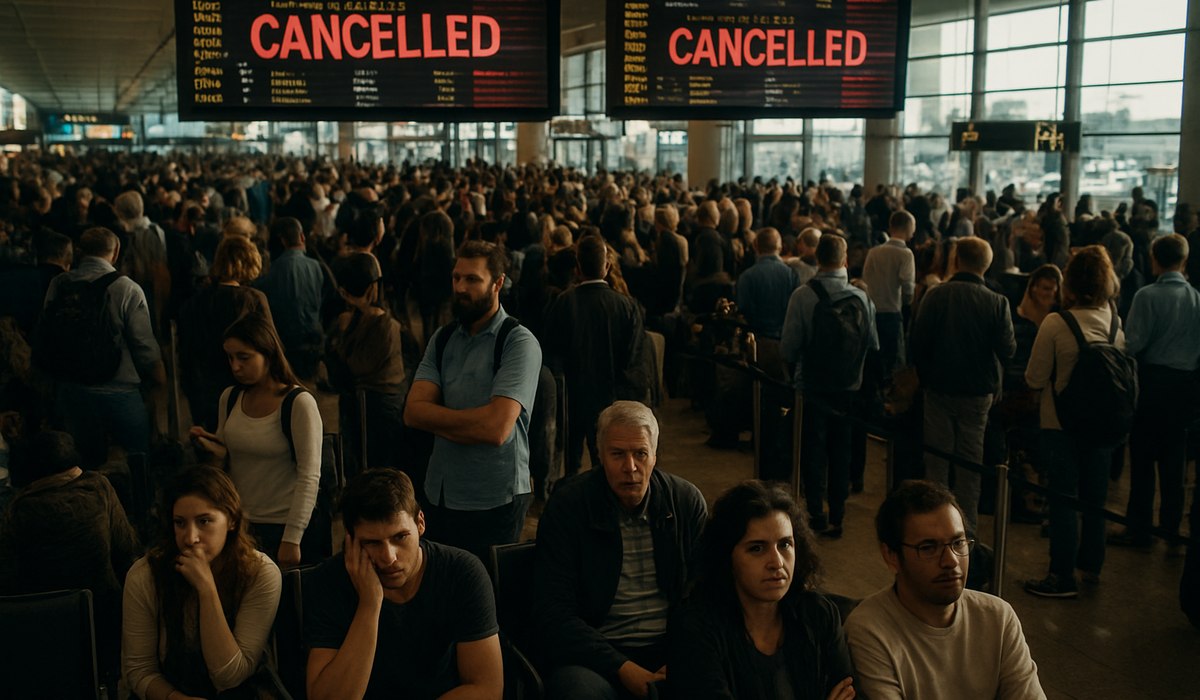
Image generated by AI
Hundreds Stranded as April Flight Chaos Cripples European Aviation
Hundreds of air travelers faced unprecedented disruption across Europe during the first week of April 2026 as a cascade of delays and cancellations rippled through more than ten major aviation hubs. Peak disruption days saw over 2,400 flights delayed and 150+ cancelled within single 24-hour periods, far exceeding typical spring-season disruption levels. From London to Rome, from Amsterdam to Helsinki, passengers faced missed connections, overnight hotel stays, and lost reservations as the continent's aviation system buckled under compounded operational strain.
Delays and Cancellations Mount Across the Continent
April flight chaos peaked during the first week of the month, with operational data revealing the severity of disruption gripping European airports. On April 1 alone, more than 1,200 flights experienced delays across Europe, accompanied by at least 65 cancellations that triggered widespread passenger displacement. Similar waves of disruption cascaded across April 6 and 7, when combined delay totals climbed into several thousand flights daily.
The April flight chaos wasn't confined to single-day incidents. Instead, rolling one-to-three-hour delays became standard at major connection points, transforming scheduled timetables into unreliable estimates. For nomadic workers operating on tight connection windows or travelers with fixed event deadlines, these cumulative delays proved nearly as disruptive as outright cancellations. Late-arriving aircraft created bottlenecks throughout the system, forcing dozens of subsequent flights into secondary cascading delays that affected passengers across multiple European countries who weren't even flying to or from the original trouble spots.
According to FlightAware, real-time flight tracking data confirmed the unprecedented scope of operational disruption during this period.
Cascading Disruptions: How Single Delays Multiply
The April flight chaos exposed a critical vulnerability in European aviation networks: interdependency among hubs amplifies minor disruptions into system-wide crises. When a single aircraft arrives late at a major hub, ground crews face compressed turnaround windows. Baggage handling, refueling, and aircraft cleaning must accelerate, increasing operational errors. Subsequent flights using the same aircraft launch late, creating knock-on effects through downstream connections.
This cascading mechanism explained why the April flight chaos stranded travelers across dozens of secondary cities when disruption originated at primary hubs. A passenger connecting from Barcelona through Frankfurt to Helsinki faced delays accumulating across both transfer points, even if neither airport experienced weather or staffing issues directly. The psychological burden compounded physical strain—travelers endured uncertainty about missed connections, potential loss of nonrefundable rail tickets, hotel rebookings, and cancelled tour reservations.
Ground-handling constraints further amplified cascade effects. European airports, still recovering post-pandemic ground crew staffing levels, lacked surge capacity when multiple aircraft queued simultaneously for service. This structural fragility meant that weather delays of two hours routinely stretched into six-hour departure delays as the system struggled to recover.
Major European Hubs Face Historic Disruption
At least ten major European aviation gateways experienced significant April flight chaos disruption. London's Heathrow and Gatwick airports recorded repeated episodes of heavy delays, with disruption rippling across the UK regional network. Passengers faced queues snaking through terminals as rebooking staff managed thousands of affected bookings simultaneously.
Paris Charles de Gaulle, one of Europe's busiest international gateways, registered hundreds of delayed flights on peak disruption days. This hub's role as a critical connection point for transatlantic and Mediterranean routes meant that April flight chaos affected travelers across three continents.
Scandinavian hubs including Copenhagen, Oslo, and Helsinki experienced clusters of cancellations, particularly on peak travel days. These airports function as essential connection points for Baltic and Northern European routes, meaning local disruption created international ripple effects.
Frankfurt, Amsterdam Schiphol, and Spanish hubs including Madrid and Barcelona faced sustained delays throughout early April. In Italy, Rome Fiumicino and Milan Malpensa were singled out as among the hardest-hit locations, with individual airports recording 200+ delays on single days during peak April flight chaos periods.
Weather, Staffing, and System Strain Converge
Multiple factors converged to trigger the April flight chaos affecting hundreds across Europe. Unsettled spring weather brought gusty winds, heavy rain, and low cloud formations that slowed runway movements and required increased aircraft spacing. When these conditions peaked at already-congested hubs, backlogs became impossible to clear before subsequent scheduled flight waves arrived.
Staffing constraints represented an equally significant contributor. Since 2020, European air traffic control centers and ground-handling operators struggled to fully rebuild capacity. Ground crews, security personnel, and air traffic controllers remained understaffed relative to demand, leaving minimal margin for absorbing sudden operational disruptions. Early April 2026 exposed this structural fragility—even modest disturbances escalated into large-scale timetable disruption affecting hundreds.
Additional complexity arose from lingering airspace restrictions outside Europe that forced airlines into longer, more fuel-intensive routing patterns. These extended flight times compressed airport turnaround windows and reduced buffer capacity, making the system increasingly vulnerable to minor delays.
The Federal Aviation Administration has published guidance on aviation disruption management, while the U.S. Department of Transportation maintains passenger rights information at its airconsumer portal.
Impact on Nomadic Workers and Remote Travelers
The April flight chaos disproportionately affected digital nomads and remote workers traveling across Europe. Individuals maintaining fixed client calls or project deadlines faced impossible choices: miss professional commitments or abandon travel plans entirely. Freelancers experienced lost billable hours awaiting rebookings. Teams coordinating across time zones lost entire workdays to airport delays and overnight disruptions.
Coworking spaces and co-living communities across European cities suddenly housed hundreds of stranded travelers managing work crises while trapped in transit. Mobile workers learned harsh lessons about scheduling tight connections during volatile weather seasons and avoiding hub-dependent routing whenever possible.
Traveler Action Checklist
If you're flying through European airports during volatile periods, take these protective steps:
-
Book direct flights whenever possible rather than routing through major hubs; single-leg journeys eliminate connection risks entirely.
-
Check FlightAware in real-time for your specific route 24 hours before departure to identify emerging delay patterns.
-
Monitor your airline's official app and website for status updates rather than relying on airport announcements that lag actual operational changes.
-
Allow minimum four-hour connection windows at major European hubs during spring months when weather volatility peaks.
-
Purchase travel insurance with disruption coverage before departure; comprehensive policies reimburse hotel costs and meal expenses during extended delays.
-
Register with your airline's SMS alert system to receive proactive notifications about schedule changes before reaching the airport.
-
Download offline copies of booking confirmations, passport pages, and insurance documents in case digital access fails during extended airport stays.
-
Contact your airline within 48 hours of disruption to claim compensation; European Regulation 261/2004 mandates €250–€600 payments for eligible delays exceeding three hours.
Key Disruption Data: April 2026 European Aviation Crisis
| Metric | Peak Day Values | Affected Hubs |
|---|---|---|
| Daily Flight Delays | 2,400+ flights | Across 10+ major hubs |
| Daily Cancellations | 150+ flights | London, Paris, Frankfurt, Rome |
| Typical Delay Duration | 1–3 hours per flight | Secondary cascading delays up to 6 hours |
| April 1 Disruption |
Disclaimer
This article is for informational and educational purposes only. It does not constitute legal, financial, or professional advice. While we strive to provide accurate and up-to-date information, travel policies, regulations, and conditions change rapidly. Always verify information with official sources before making travel decisions. Nomad Lawyer makes no representations about the accuracy, reliability, completeness, or suitability of the information provided. Readers should consult qualified professionals for advice specific to their circumstances. The views expressed in this article are those of the author and do not necessarily reflect the views of Nomad Lawyer.
Kunal K Choudhary
Co-Founder & Contributor
A passionate traveller and tech enthusiast. Kunal contributes to the vision and growth of Nomad Lawyer, bringing fresh perspectives and driving the community forward.
Learn more about our team →