
NCAA flags charter flight squeeze amid spring storms in 2026
NCAA flags charter aircraft shortages during 2026 spring tournaments as severe weather and network strain collide. Schools face tighter availability windows and longer booking delays for tournament travel.

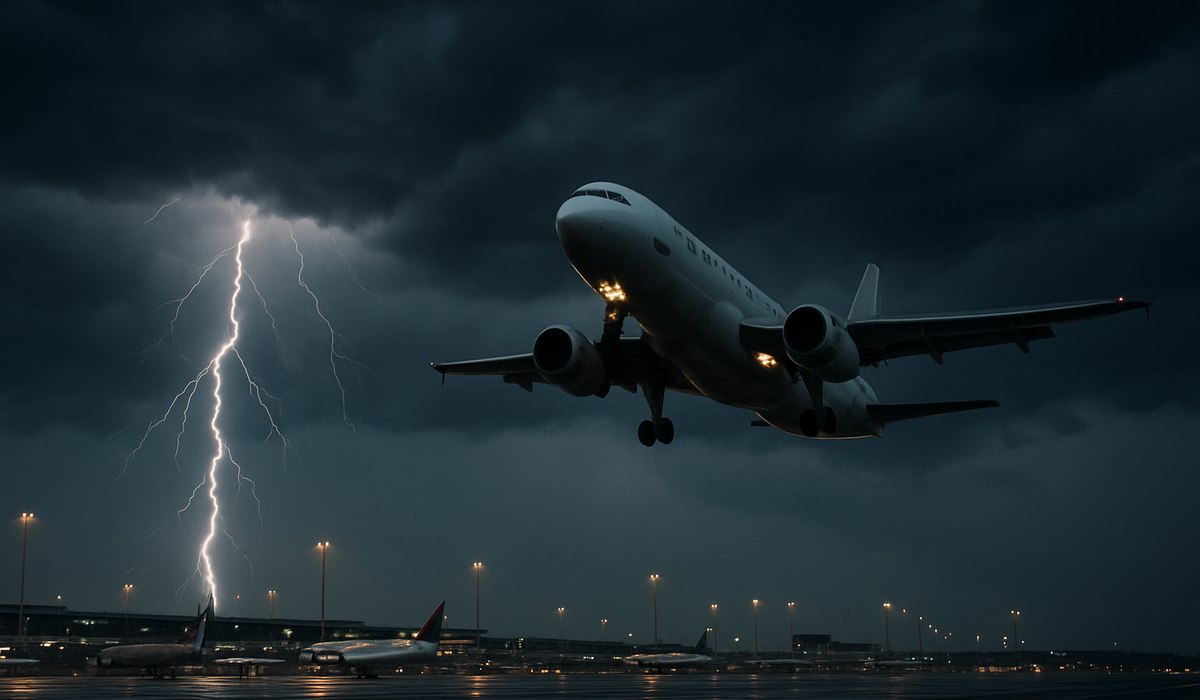
Image generated by AI
Lede
The NCAA is warning member institutions that securing charter aircraft will become significantly more challenging during the 2026 spring championship season. The alert comes as severe weather systems sweep across major U.S. aviation hubs while airline capacity constraints already stretch charter networks thin. With men's and women's basketball, hockey, and other tournaments converging on the same travel windows, schools are being advised to book flights early and prepare backup plans.
Weather Turbulence Collides With Tournament Travel
Spring 2026 has brought volatile atmospheric conditions across the continental United States, creating operational headaches for aviation networks nationwide. Since late March, storm systems have tracked from the Plains through the Midwest and into the Northeast, unleashing thunderstorms, heavy precipitation, and damaging winds at critical aviation hubs including Atlanta, Chicago, New York, and Dallas.
These weather events trigger cascading delays throughout the national aviation system. Commercial carriers experience flight cancellations numbering in the hundreds, while thousands of delays accumulate across just a few days. Disrupted aircraft rotations leave airlines scrambling to reposition planes, creating artificial scarcity even when physical inventory remains adequate.
Charter flights operate within the same airspace and infrastructure as commercial carriers. While they enjoy scheduling flexibility unavailable to scheduled airlines, they remain equally vulnerable to storm-related ground stops, air traffic control delays, and runway congestion. For college athletic programs traveling on tournament schedules, the consequences are particularly acute.
Tournament movement happens in compressed timeframes following bracket announcements and game outcomes. Teams must arrive for mandatory media sessions, practice periods, and precisely-timed tip-offs. When severe weather coincides with these narrow travel windows, alternatives vanish quickly.
Why Charter Networks Are Already Strained
The charter aircraft market was operating near maximum capacity even before spring storms emerged. According to NCAA guidance issued in February 2026, response times for charter flight quotes had lengthened considerably as multiple Division I athletic programs competed for the same limited inventory of suitable aircraft.
The NCAA coordinates tournament travel through a regulated network of national and regional charter operators. However, capacity constraints exist at specific points. Large-cabin group aircraft capable of accommodating entire rosters, equipment, coaching staffs, and band members represent only a small fraction of total charter inventory. When multiple tournament teams need simultaneous departures from the same region, the available fleet becomes inadequate.
Industry analysts characterize the situation not as an absolute aircraft shortage but as a temporal and geographic capacity squeeze. Demand spikes unpredictably following tournament games when winning teams must immediately relocate while eliminated programs return home. During these demand surges, charter operators juggle weather diversions, crew duty regulations, and scheduled maintenance—leaving minimal buffer capacity for unexpected needs.
Recent tournament seasons illustrate how quickly travel disruptions escalate. The 2025 men's basketball tournament saw one prominent program experience mechanical failures aboard an NCAA-arranged charter, resulting in late arrival and forfeited media obligations before a First Four game. The 2024 Final Four featured a title contender arriving at the host city in early-morning hours after enduring weather delays, mechanical issues, and mandatory crew rest periods spanning multiple aircraft changes.
Impact on College Basketball and Hockey Championships
The 2026 tournament season creates perfect conditions for travel chaos. Basketball and hockey championships operate on overlapping schedules, with preliminary rounds, regional competitions, and national championships spreading across multiple weeks. Each advancement to successive tournament rounds triggers new charter flight requirements on compressed notice.
Men's and women's basketball tournaments alone move dozens of teams across the country. Hockey tournaments operate simultaneously at regional and national levels. This convergence creates sustained pressure on charter availability that persists through April and potentially into early May.
Schools with fewer resources face particular vulnerability. Well-funded programs maintain relationships with preferred charter operators and access premium positioning. Mid-tier and smaller programs compete for remaining capacity, often at higher costs and with less favorable scheduling options.
Check real-time flight tracking and operational status through FlightAware to monitor charter operations across tournament routes. Current FAA advisories regarding weather impacts appear at www.faa.gov.
What Schools Should Do Now
Athletic departments must act proactively to mitigate tournament travel risks. The NCAA's cautionary guidance applies directly to schools planning charter operations during spring championship seasons.
Immediate actions include contacting charter operators within the next week to reserve preferred aircraft and backup options. Don't wait for bracket announcements—secured aircraft before peak demand prevents scrambling for marginal alternatives later. Request explicit confirmation of aircraft assignment and review cancellation policies carefully given weather volatility.
Develop contingency plans accounting for potential delays. If your team advances unexpectedly, having pre-negotiated standby charters reduces scramble-booking costs and ensures operational readiness. Coordinate with host cities, tournaments, and broadcasters about potential schedule flexibility should transportation delays occur.
Monitor weather developments obsessively during tournament season. Spring storms often develop rapidly. National Weather Service and commercial aviation weather sources offer specialized forecasting for routes your charter will traverse. Early awareness enables proactive rebooking before congestion develops.
Build travel logistics flexibility into team protocols. Identify secondary hotels, adjust practice schedules to accommodate transportation uncertainty, and establish communication systems for rapid team notification if changes occur. Airlines frequently request flexibility during weather events—teams that offer schedule adaptability sometimes gain priority rebooking on available flights.
Review U.S. Department of Transportation consumer protections regarding charter flight obligations, even though charter operations receive less regulation than commercial carriers. Understanding your rights clarifies expectations if disruptions occur.
Traveler Action Checklist
Follow these steps to protect your tournament travel plans during spring 2026:
-
Contact your preferred charter operator immediately. Don't wait for tournament bracket announcements to reserve aircraft. Secure commitments now while inventory remains available.
-
Request detailed aircraft specifications and backup equipment options. Confirm capacity for your full team, equipment, and travel party. Understand crew scheduling and positioning requirements.
-
Verify cancellation, delay, and rescheduling policies in writing. Get explicit terms regarding weather-related disruptions, mechanical issues, and compensation provisions.
-
Monitor weather forecasts daily during tournament season. Set up alerts for your travel routes and host cities. Spring storms develop rapidly—early awareness enables proactive responses.
-
Identify backup transportation options before you need them. Research commercial flight availability, ground transportation, and alternative airports serving your destination cities.
-
Communicate schedule flexibility to tournament organizers early. Broadcast networks and tournament hosts appreciate advance notice when teams might require adjusted timing for media appearances or game schedules.
-
Establish a rapid-communication protocol for your athletic department. Ensure coaches, players, and families receive real-time updates if changes occur to departure times or routing.
-
Document all communications with charter operators. Keep records of flight confirmations, weather bulletins, and any disruptions that occur for potential reimbursement discussions.
Key Data Table
| Factor | 2026 Spring Status | Impact on Charter Travel |
|---|---|---|
| Storm Activity | Significant, late March through April | Widespread delays, airport ground stops, crew unavailability |
| Charter Network Capacity | Operating near maximum utilization | Limited backup aircraft, higher booking costs, longer quote response times |
| Tournament Schedule Density | Multiple sports, overlapping competitions | Sustained peak-demand period, limited flexibility for delays |
| Large-Cabin Aircraft Availability | Below historical averages | Groups unable to charter single flights, potential splits across multiple aircraft |
| Regional Aviation Hub Status | Atlanta, Chicago, New York, Dallas affected | Delays cascade nationally, positioning aircraft becomes difficult |
| Response Time for Charter Quotes | Increased significantly since February 2026 | 24-48 hour turnarounds where 4-6 hour responses previously standard |
| NCAA-Approved Operator Network | Limited to regulated carriers | No option to book unauthorized charter providers without compliance risk |
What This Means for Travelers
College athletes, coaches, and support staff traveling on NCAA-arranged charters face meaningful uncertainty during spring 2026. The
Disclaimer
This article is for informational and educational purposes only. It does not constitute legal, financial, or professional advice. While we strive to provide accurate and up-to-date information, travel policies, regulations, and conditions change rapidly. Always verify information with official sources before making travel decisions. Nomad Lawyer makes no representations about the accuracy, reliability, completeness, or suitability of the information provided. Readers should consult qualified professionals for advice specific to their circumstances. The views expressed in this article are those of the author and do not necessarily reflect the views of Nomad Lawyer.
Raushan Kumar
Founder & Lead Developer
Full-stack developer with 11+ years of experience and a passionate traveller. Raushan built Nomad Lawyer from the ground up with a vision to create the best travel and law experience on the web.
Learn more about our team →