
Andhra Pradesh to Launch Waterdrome Tenders in 2026 to Boost Regional Connectivity
Andhra Pradesh Tourism Development Corporation (APTDC) to float tenders for state-of-the-art waterdromes in 2026, integrating seaplane services across coasts an

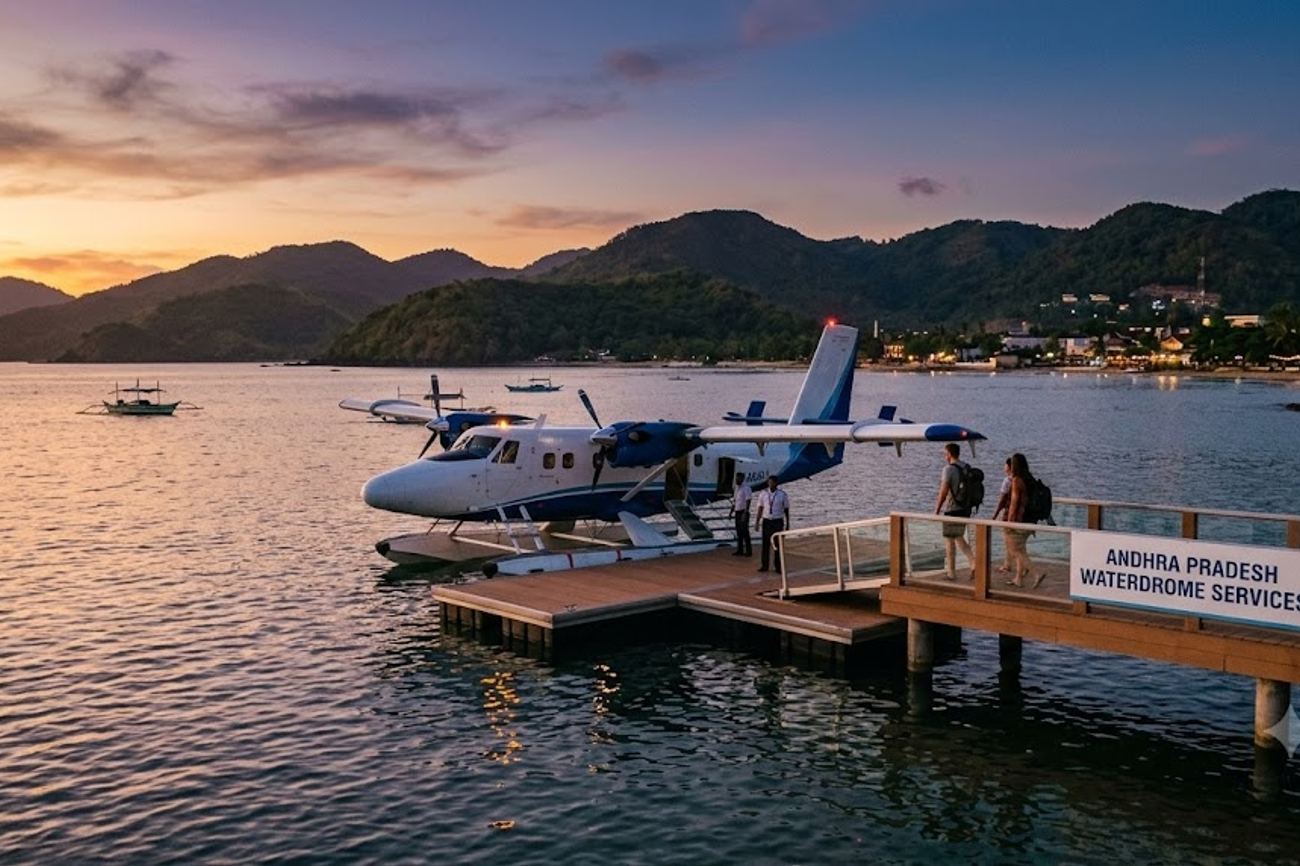
Image generated by AI
APTDC Set to Revolutionize Regional Transit
The Andhra Pradesh Tourism Development Corporation (APTDC) is preparing to issue official tenders for the construction of state-of-the-art waterdromes. This initiative aims to integrate seaplane and amphibious aircraft services into the state's transport network, opening up previously inaccessible regions.
The project is backed by financial and strategic support from the Central government, ensuring that the infrastructure aligns with national aviation goals. By leveraging existing water bodies, the state intends to create a high-speed transit layer that connects urban centers directly to leisure destinations.
The Strategic Role of Waterdromes in Tourism
Unlike traditional airports, waterdromes serve as aquatic facilities designed for the takeoff, landing, and mooring of seaplanes. This model removes the need for land-intensive runway construction, making it an ideal solution for Andhra Pradesh's diverse geography.
The deployment of these facilities is expected to:
- Reduce Travel Time: Transform grueling multi-hour road trips through coastal or mountainous terrain into short, scenic flights.
- Stimulate Local Economies: Drive demand for hospitality and ecotourism in remote areas.
- Create Employment: Generate new jobs in transport logistics, retail, and local tour operations.
Federal Collaboration and Regulatory Framework
The venture is a coordinated effort between state administration and federal bodies. This partnership ensures that the waterdromes adhere to international safety and environmental standards while streamlining the regulatory process.
A public-private partnership (PPP) model will be central to the rollout. The state is targeting private infrastructure developers and marine engineers to provide sustainable, long-term engineering solutions.
Priority Zones for Infrastructure Development
While official tenders are pending, preliminary evaluations have identified three primary aquatic zones for phase-one development. These areas are selected based on their potential to attract high-yielding travelers and improve access to cultural landmarks.
Proposed Waterdrome Distribution
| Region / Zone | Proposed Aquatic Asset | Anticipated Tourism Benefit |
|---|---|---|
| Coastal Corridors | Bay of Bengal Seashores | Enhanced island-hopping and marine leisure tours |
| Riverine Basins | Major River Systems | Accelerated access to inland heritage and eco-resorts |
| Highland Reservoirs | Hill-Station Water Bodies | Seamless connectivity to remote scenic retreats |
Environmental Safeguards and Construction Standards
Because waterdromes are situated in ecologically sensitive zones, the project must comply with strict protocols set by the Ministry of Environment, Forest and Climate Change, as well as civil aviation authorities.
Tender requirements will likely mandate:
- Rigorous Impact Assessments: Detailed studies on noise abatement and aquatic ecosystem preservation.
- Sustainable Engineering: Use of floating pontoon docks and modular terminal buildings.
- Eco-friendly Anchoring: Systems designed to protect aquatic flora and fauna from construction damage.
Key Takeaways
- Timeline: Official tenders for waterdrome construction are expected in 2026.
- Infrastructure: Focus on floating terminals in the Bay of Bengal, major rivers, and highland reservoirs.
- Economic Driver: Aims to boost ecotourism and hospitality by connecting urban hubs to remote retreats.
- Compliance: Strict adherence to environmental and civil aviation safety standards is mandatory.
FAQ
What is a waterdrome? A waterdrome is a specialized aquatic facility that provides the necessary infrastructure for seaplanes and amphibious aircraft to land, take off, and moor.
How will this benefit travelers in Andhra Pradesh? Travelers will be able to avoid long, winding road journeys to remote coastal or hill-station destinations, replacing them with faster, direct seaplane flights.
Who is funding and managing the project? The project is led by the Andhra Pradesh Tourism Development Corporation (APTDC) with financial and strategic support from the Central government.
Related Travel Guides
Disclaimer
This article is for informational and educational purposes only. It does not constitute legal, financial, or professional advice. While we strive to provide accurate and up-to-date information, travel policies, regulations, and conditions change rapidly. Always verify information with official sources before making travel decisions. Nomad Lawyer makes no representations about the accuracy, reliability, completeness, or suitability of the information provided. Readers should consult qualified professionals for advice specific to their circumstances. The views expressed in this article are those of the author and do not necessarily reflect the views of Nomad Lawyer.
Preeti Gunjan
Contributor & Community Manager
A passionate traveller and community builder. Preeti helps grow the Nomad Lawyer community, fostering engagement and bringing the reader experience to life.
Learn more about our team →