
Anchorage Delays Ripple Across Asia-Pacific Routes in May 2026
Over 40 flight delays at Anchorage airport trigger cascading disruptions across transpacific cargo and passenger networks linking Asia to North America in May 2026, exposing fragility in critical connectivity.

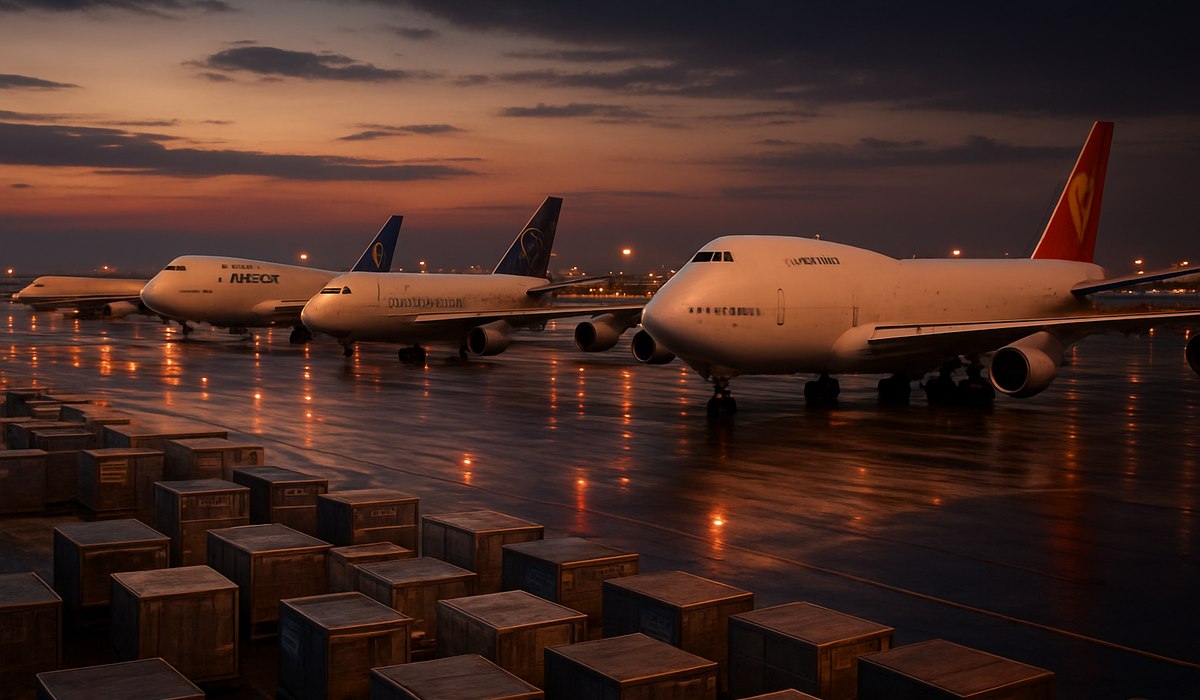
Image generated by AI
Forty-Plus Flights Delayed at Anchorage Hub Trigger Transpacific Cascade
Ted Stevens Anchorage International Airport experienced over 40 flight disruptions this week, creating widespread cascading delays across Asia-Pacific cargo and passenger networks. The disruptions—spanning departure holds, late arrivals, and unplanned aircraft substitutions—have exposed critical vulnerabilities in the transpacific supply chain connecting North America to major Asian hubs including Tokyo, Seoul, and Shanghai. What began as a localized airport issue has rapidly spread across long-haul corridors serving millions of passengers and billions in cargo value annually.
Anchorage's Critical Role in Transpacific Networks
Anchorage functions as the linchpin in transpacific operations, serving as the primary technical and cargo gateway between Asia and North America. The airport handles critical crew changes, fuel transfers, and cargo redistribution between Asian logistics hubs and major U.S. West Coast metropolitan areas. Airlines operating freighter services depend heavily on Anchorage's efficiency to maintain tight schedules across 10-plus hour transpacific sectors.
When schedule disruptions occur at Anchorage, downstream effects ripple across connected networks within 24 to 48 hours. A single delayed departure can push arrival times into congested gate banks at Tokyo Narita, Incheon, or Shanghai Pudong—hubs already operating at near-capacity levels. Passenger connections fail in cascade, forcing rebooking onto later flights or alternative routings through competing gateways.
Crew scheduling constraints compound these challenges. Pilots and flight attendants operate under strict duty-time regulations enforced by aviation authorities. When early segments overrun due to Anchorage delays, crews may reach maximum duty limits, necessitating last-minute substitutions or sector cancellations. This regulatory constraint limits airlines' ability to absorb operational irregularities. Reference: [Federal Aviation Administration (FAA) Duty Time Rules](https://www.faa.gov)
Ripple Effects on Cargo Operations and Crew Scheduling
The cargo sector faces intensifying pressure from Anchorage disruptions. Approximately 35% of North America-Asia cargo traffic flows through Anchorage, making the airport essential for time-sensitive shipments serving automotive, electronics, and pharmaceutical industries. Late arrivals at Asian hubs compress turnaround windows for outbound regional distribution flights.
Regional congestion across Asia magnifies these delays. Chinese domestic networks reported thousands of delays on parallel days, creating compounding bottlenecks when transpacific flights arrive out of sequence. Korean and Japanese airports similarly operated near maximum capacity, leaving minimal flexibility for absorbing secondary waves of disrupted traffic.
Crew rotations became another critical constraint. When aircraft miss their scheduled bank at major Asian hubs, crew connections dissolve. Airlines must either deadhead crews on alternative flights or delay subsequent sectors—both expensive options that propagate disruption through regional networks. Budget carriers operating Southeast Asia routes announced summer frequency cuts, further reducing network elasticity and alternative routing options.
Fuel cost pressures amplify vulnerability. Several Asia-Pacific carriers recently suspended routes to Japan, Korea, and China due to elevated jet fuel prices and geopolitical uncertainty. With fewer alternative paths for passenger and cargo rerouting, the network has less capacity to absorb shocks like those generated by Anchorage delays.
Passenger Impact: Missed Connections and Route Changes
Travelers experienced the most visible disruptions through missed connections and involuntary rebookings. Passengers holding tickets on banked connections—where flights feed into hub banks timed for onward departures—found themselves stranded by delays flowing from Anchorage. Secondary city routes to Osaka, Fukuoka, and regional Chinese airports absorbed the greatest passenger impact.
Long-haul leisure and business travelers faced journey extensions of 12 to 48 hours. Airlines rebooked affected passengers onto flights departing 6 to 24 hours later, requiring hotel accommodations and meal vouchers. Some passengers were rerouted through completely different hubs—for example, Seattle-based connections shifting to San Francisco or Los Angeles alternatives, extending total travel time by 4 to 8 hours.
The passenger experience deteriorated as airline rebooking teams manually processed thousands of ticketed passengers. Online rebooking tools experienced capacity limitations, forcing travelers to contact customer service phone lines with wait times exceeding two hours. Ground service teams at major airports worked extended shifts to manage unexpected crowds awaiting rebooking.
Travelers holding award miles or premium cabin tickets reported difficulty securing alternative routings due to reduced inventory. Airline scheduling algorithms prioritized revenue-generating bookings, leaving elite frequent-flyer members on standby lists. This pattern reflects industry-wide capacity constraints that limited options during the disruption window.
Network Vulnerability Exposed: Structural Fragility in Transpacific Logistics
The Anchorage delays revealed structural fragility in the transpacific network. Unlike Atlantic routes with multiple redundant hubs and diverse routings, Pacific networks rely heavily on concentrated gateways. Anchorage, Seattle, Los Angeles, and San Francisco handle the majority of transpacific traffic; disruption at any single hub immediately constrains options.
Capacity cuts announced by Asian carriers reduced network resilience. Airlines suspended 15+ routes connecting Asia to North America, eliminating alternative paths for passenger and cargo rerouting. The network now operates with minimal slack—ideal for cost efficiency during normal conditions but dangerous during irregular operations.
Crew base constraints further limit flexibility. Major carriers maintain pilot and flight attendant bases in specific cities; unexpected crew unavailability at Anchorage cannot be easily replaced from distant bases due to duty-time regulations and union agreements. This structural constraint means minor delays quickly escalate into operational crises.
Ground infrastructure at major Asian hubs already operates near maximum capacity. Beijing Capital, Shanghai Pudong, Tokyo Narita, and Incheon handle 80+ million passengers annually across dense schedules. Limited gate availability and ramp space meant arriving aircraft sometimes waited 30+ minutes for parking assignments, further degrading turnaround times.
The disruption highlighted dependence on just-in-time logistics. North American and Asian supply chains rely on predictable air cargo transit. Manufacturing delays at plants in Vietnam, Thailand, and Indonesia cascade to assembly facilities in Mexico and the southwestern U.S. when cargo flights fall behind schedule. This structural vulnerability suggests the transpacific network remains fragile despite decades of optimization.
Real-Time Flight Tracking and Passenger Communication
Live flight status tools documented the extent of disruption. FlightAware showed average delays of 2 to 4 hours on affected Anchorage departures, with some flights experiencing 6+ hour holds. Transpacific flights originating from Tokyo and Shanghai showed cascading delays as crews and aircraft arrived behind schedule from Anchorage connections.
Airlines published irregular operations notices on their websites and mobile apps, but passenger communication lagged actual disruptions by several hours. Many travelers discovered their flights were delayed only after arriving at airports, creating frustration and operational bottlenecks. International carriers served by Anchorage—including major Japanese, Korean, and Chinese airlines—struggled to provide real-time updates due to communication lags between Anchorage operations and regional passenger services teams.
Social media channels flooded with passenger complaints about lack of proactive communication and compensation offers. Airlines posted generic irregular operations statements citing weather or operational constraints but provided limited transparency about recovery timelines. This communication gap drove some passengers to seek alternative booking platforms and competitor airlines for future travel.
What This Means for Travelers: Action Checklist
Travelers experiencing disruptions during transpacific routing should follow these steps:
-
Check real-time status immediately using FlightAware or your airline's mobile app rather than relying on email notifications, which often lag actual operational changes by 30-60 minutes.
-
Proactively contact your airline if your flight departs from or connects through Anchorage during scheduled disruption windows. Request confirmation
Raushan Kumar
Founder & Lead Developer
Full-stack developer with 11+ years of experience and a passionate traveller. Raushan built Nomad Lawyer from the ground up with a vision to create the best travel and law experience on the web.
Learn more about our team →