
ANA Facilities and Jamco Launch New Business Jet Hangar and Maintenance Rental Services at Sendai Airport 2026
ANA Facilities and Jamco Corporation have introduced a specialized business jet hangar and maintenance equipment rental service at Sendai Airport to address Japan's growing private aviation demand.

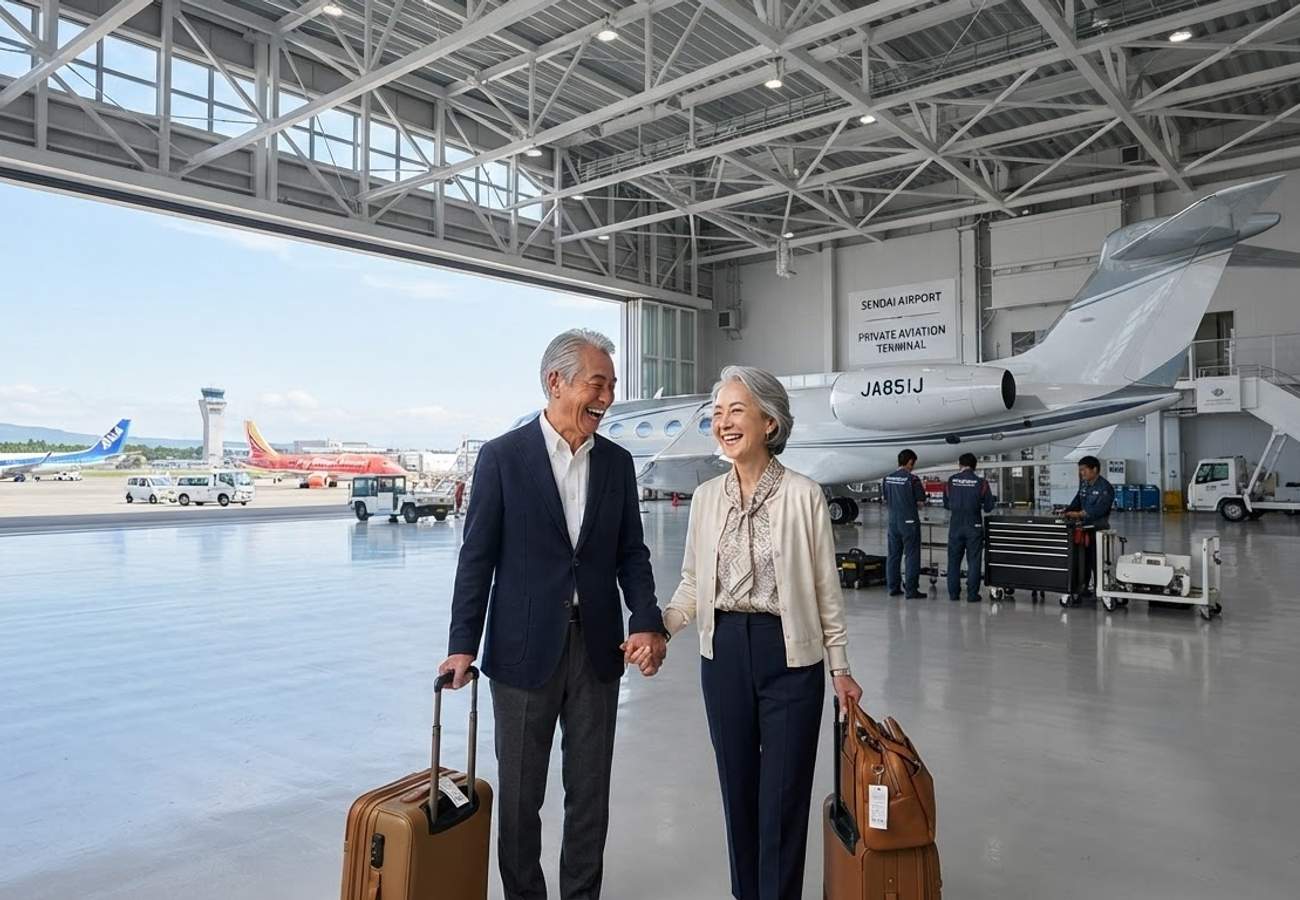
Image generated by AI
[Iwanuma City, July 11, 2026] — ANA Facilities Corporation, a subsidiary of the ANA Group, has officially introduced a new maintenance equipment rental and hangar service at Sendai Airport. This strategic initiative, launched in collaboration with Jamco Corporation, provides a comprehensive parking and technical support solution designed specifically for business jet operators and private aircraft owners.
The project leverages existing hangar capacity within Miyagi Prefecture to mitigate the chronic shortage of dedicated business jet parking facilities across Japan. By integrating the facility management expertise of ANA Facilities with the technical maintenance capabilities of Jamco, the partnership offers a streamlined approach to aircraft storage and regional operational coordination.
Addressing the Infrastructure Gap in Japan's Business Aviation Sector
The demand for private aviation in Japan has seen a steady climb as corporate entities, high-net-worth individuals, and international visitors increasingly prioritize flexible travel arrangements. Despite this growth, the industry has struggled with a lack of secure, dedicated hangar space, which often complicates the logistics of aircraft parking and scheduled maintenance.
The new operation at Sendai Airport is specifically engineered to utilize unused hangar space, offering flexible access for aircraft owners. This development allows operators to secure indoor protection for their assets while maintaining the ability to conduct necessary technical checks without relocating the aircraft to distant hubs.
Key operational components of the new service include:
- Joint hangar operations managed by ANA Facilities and Jamco Corporation.
- Provision of both indoor protected parking and outdoor apron options.
- Flexible leasing terms ranging from short-term daily access to long-term monthly contracts.
- Integrated support for both general parking and active maintenance tasks.
- Strategic placement within Iwanuma City, Miyagi Prefecture.
Strategic Importance of Sendai Airport for Regional Connectivity
Sendai Airport serves as the primary aviation gateway to the Tohoku region, offering a critical link for corporate travel and private investment. The airport is highly accessible, with the Sendai Airport Access Line connecting the terminal to the city center in approximately 17 minutes.
From a logistical perspective, Sendai's location is highly advantageous. Situated between the dense Greater Tokyo area and Hokkaido, the airport serves as an ideal alternative positioning site. When primary hubs face capacity constraints or congestion, business jet operators can use Sendai as a relief valve for parking and repositioning.
This flexibility is essential for operators who require proximity to major business districts but wish to avoid the operational bottlenecks common at Japan's largest international airports. The expansion of these facilities enhances the airport's role as a diversified aviation hub, moving beyond traditional commercial passenger traffic.
Integrated Parking and Technical Maintenance Solutions
The core value proposition of this initiative is the "one-stop" nature of the services provided. By housing both storage and maintenance under one roof, the partnership minimizes the operational friction typically associated with private aircraft management.
While ANA Facilities oversees the physical hangar and facility management, Jamco Corporation brings decades of specialized experience in aircraft modification, manufacturing, and maintenance. This synergy allows aircraft to remain in a secure environment while maintenance schedules are coordinated and executed.
The operational benefits for jet operators include:
- Enhanced protection of aircraft hulls and systems via indoor steel-frame storage.
- Direct coordination with Jamco technicians for maintenance and repairs.
- Customizable usage periods that align with specific flight schedules.
- A significant reduction in the need for "ferry flights," which are often required to move aircraft to a separate maintenance facility.
Influence on Corporate Travel and High-Value Tourism
The development of specialized aviation infrastructure is intrinsically linked to the growth of high-value tourism and international corporate mobility. By improving the ease with which private jets can operate in the Tohoku region, Japan is positioning itself to attract more executive-level investors and luxury travelers.
For the broader tourism industry, these facilities support the creation of customized, premium itineraries. Regional airports that can accommodate private aviation are more likely to draw high-spending visitors who bypass standard commercial airline networks in favor of private charters.
Furthermore, this initiative optimizes the use of existing airport infrastructure, creating new revenue streams for the airport authority while supporting the national goal of strengthening regional connectivity.
Technical Specifications of the Sendai Facility
The hangar provides a dedicated environment tailored to the dimensions and requirements of modern business jets. The following data outlines the physical and operational parameters of the facility:
| Category | Details |
|---|---|
| Facility | Sendai Airport Hangar |
| Location | Iwanuma City, Miyagi Prefecture, Japan |
| Usage Area | Approximately 600 square metres |
| Structure | Steel-frame building |
| Main Purpose | Business jet parking and maintenance support |
Access to the facility is subject to current capacity and the specific requirements of the aircraft. Operators are required to coordinate directly with both ANA Facilities and Jamco to secure availability.
Future Trajectory of Japan's Private Aviation Infrastructure
The partnership between ANA Facilities and Jamco signals a shift in how Japan manages its aviation assets. As the nature of international business travel evolves, the requirement for flexible, regional aircraft support is expected to intensify.
This model of utilizing regional airports for specialized private aviation services may serve as a blueprint for other prefectures. By diversifying the services offered at regional hubs, Japan can reduce the pressure on its primary gateways while fostering economic growth in outlying regions.
For aircraft operators, the availability of strategically located hangars improves overall fleet efficiency. For the aviation industry, it represents a transition toward more integrated, service-oriented infrastructure that caters to the sophisticated needs of the private sector.
The integration of maintenance and storage at Sendai Airport marks a pivotal shift in Japan's approach to supporting the high-growth business aviation market.
Related Travel Guides
Disclaimer
This article is for informational and educational purposes only. It does not constitute legal, financial, or professional advice. While we strive to provide accurate and up-to-date information, travel policies, regulations, and conditions change rapidly. Always verify information with official sources before making travel decisions. Nomad Lawyer makes no representations about the accuracy, reliability, completeness, or suitability of the information provided. Readers should consult qualified professionals for advice specific to their circumstances. The views expressed in this article are those of the author and do not necessarily reflect the views of Nomad Lawyer.
Preeti Gunjan
Contributor & Community Manager
A passionate traveller and community builder. Preeti helps grow the Nomad Lawyer community, fostering engagement and bringing the reader experience to life.
Learn more about our team →