
American Airlines Passenger Deplaned After Door Closure Over Missed Connection Sparks Security Concerns 2026
A passenger on an American Airlines flight was allowed to exit the aircraft after doors closed due to a missed connection, triggering a corporate investigation and passenger backlash over aviation security protocols.

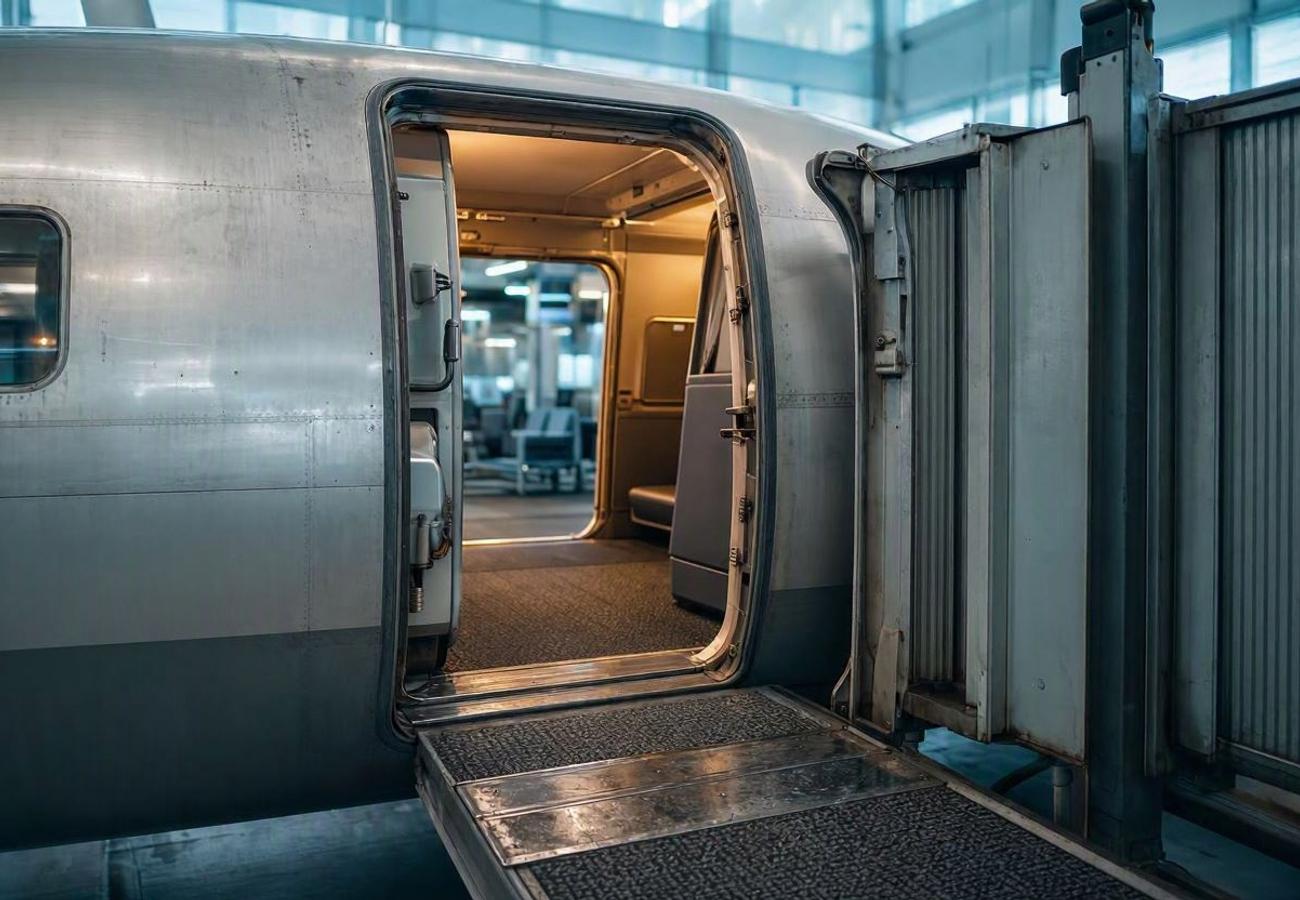
Image generated by AI
[New York, October 5, 2026] — American Airlines is launching an internal investigation after a passenger was permitted to exit an aircraft after the cabin doors had closed and the plane was preparing for departure. The incident, which occurred on the evening of October 4, has sparked a heated debate among travelers and aviation observers regarding security loopholes and standard operating procedures.
The situation came to light via a report from passenger David F. Watson on X (formerly Twitter), who noted that the flight was ready to pull away from the gate when a traveler requested to deplane. The reason provided was that the passenger realized she would miss her subsequent connecting flight. In a move described by witnesses as highly unusual, crew members reopened the aircraft door, delayed the departure, and allowed the passenger to exit.
Protocol Breach and Passenger Backlash
The decision to reopen the door for a non-emergency reason has raised significant red flags. Under standard aviation protocols, once the "sterile" environment of the aircraft is established and doors are sealed, passengers are generally only permitted to exit for critical reasons.
According to the report, the flight crew not only allowed the individual to leave but were then required to poll the remaining passengers to see if anyone else wished to deplane, further delaying the schedule. This sequence of events contrasts sharply with the rigid policies typically enforced by airlines and the Transportation Security Administration (TSA), where passengers are often denied boarding if they arrive at the gate even a few minutes after the door has closed.
Comparison of Deplaning Justifications
To illustrate why this incident is viewed as an anomaly, the following table compares the American Airlines event with standard industry reasons for allowing a passenger to exit an aircraft after boarding.
| Reason for Deplaning | Industry Standard Status | Typical Outcome |
|---|---|---|
| Medical Emergency | Valid / High Priority | Immediate exit; emergency services meet aircraft |
| Security Threat | Valid / Mandatory | Immediate removal; law enforcement intervention |
| Disruptive Behavior | Valid / Mandatory | Removal for safety; potential banning of passenger |
| Personal Emergency | Valid / Discretionary | Allowed if verified; often involves baggage retrieval |
| Missed Connection | Non-Standard | Passenger typically stays on flight to destination |
| Forgotten Documents | Rare / Discretionary | Allowed if destination entry is impossible |
What This Means for Travelers
For the average flyer, this incident highlights a confusing inconsistency in how airline policies are applied on the ground.
1. Inconsistent Policy Enforcement Travelers who have missed flights by seconds are routinely told that "the door is closed" and boarding is impossible. Seeing a passenger granted an exit for a convenience-based reason (a missed connection) creates a perception of arbitrary rule enforcement.
2. Potential Security Risks The primary concern raised by the traveling public is the "security gap." When a door is reopened, the integrity of the passenger manifest and the secure environment of the cabin are technically compromised. Critics argue that allowing a passenger to leave without a rigorous security re-screening of the remaining cabin or a clear emergency justification could be exploited.
3. Increased Delay Risks When a passenger deplanes late, the airline must often locate and remove that passenger's checked luggage from the cargo hold to comply with safety regulations (preventing "unaccompanied" bags from flying). This can turn a five-minute delay into a hour-long setback for all other passengers on board.
Corporate Response and Next Steps
American Airlines has acknowledged the incident on social media, expressing surprise at the sequence of events. In a public reply to Watson, the carrier stated, "Hmm, this is interesting, and we'd like to investigate further," and requested flight details to route the information to the appropriate review team.
The airline's response suggests that the crew may have acted outside of standard company policy. If the investigation finds that protocols were ignored, it could lead to retraining for the flight crew or a tightening of gate agent mandates. Aviation regulators, including the Federal Aviation Administration (FAA), typically monitor such reports to ensure that safety and security mandates are not being bypassed for customer service convenience.
FAQ: American Airlines Deplaning Incident 2026
Can I request to get off a plane after the doors close? Generally, no. Once doors are closed, you are considered "on the flight." Unless there is a medical emergency or a severe security issue, airlines rarely allow passengers to exit due to the logistical burden of removing luggage and the security risks involved.
Why is a missed connection not a valid reason to deplane? Airlines expect passengers to manage their connections. Once the flight is ready for departure, the delay caused by reopening the door and offloading baggage outweighs the convenience of one passenger exiting to find an alternative route.
Is it a security risk to reopen the aircraft door? Yes, potentially. Reopening the door after the manifest is finalized and the cabin is sealed disrupts the secure environment. It creates a window where unauthorized individuals could potentially attempt to enter or where security protocols are bypassed.
What happens to my bags if I am allowed to deplane late? If you have checked luggage, the ground crew must manually locate and remove your bags from the aircraft hold. This is a mandatory safety requirement and is the primary reason why late deplaning causes significant delays for other passengers.
A rare lapse in protocol or a gesture of extreme customer service—either way, the door is now open on a corporate investigation.
Related Travel Guides
Disclaimer
This article is for informational and educational purposes only. It does not constitute legal, financial, or professional advice. While we strive to provide accurate and up-to-date information, travel policies, regulations, and conditions change rapidly. Always verify information with official sources before making travel decisions. Nomad Lawyer makes no representations about the accuracy, reliability, completeness, or suitability of the information provided. Readers should consult qualified professionals for advice specific to their circumstances. The views expressed in this article are those of the author and do not necessarily reflect the views of Nomad Lawyer.
Naina Thakur
Contributor & Travel Specialist
Travel enthusiast and legal writer covering visa regulations, responsible tourism, and cultural journeys across global destinations.
Learn more about our team →